- Art
- Autumn/Winter 2026-27
- October
Glimmers
in the tides
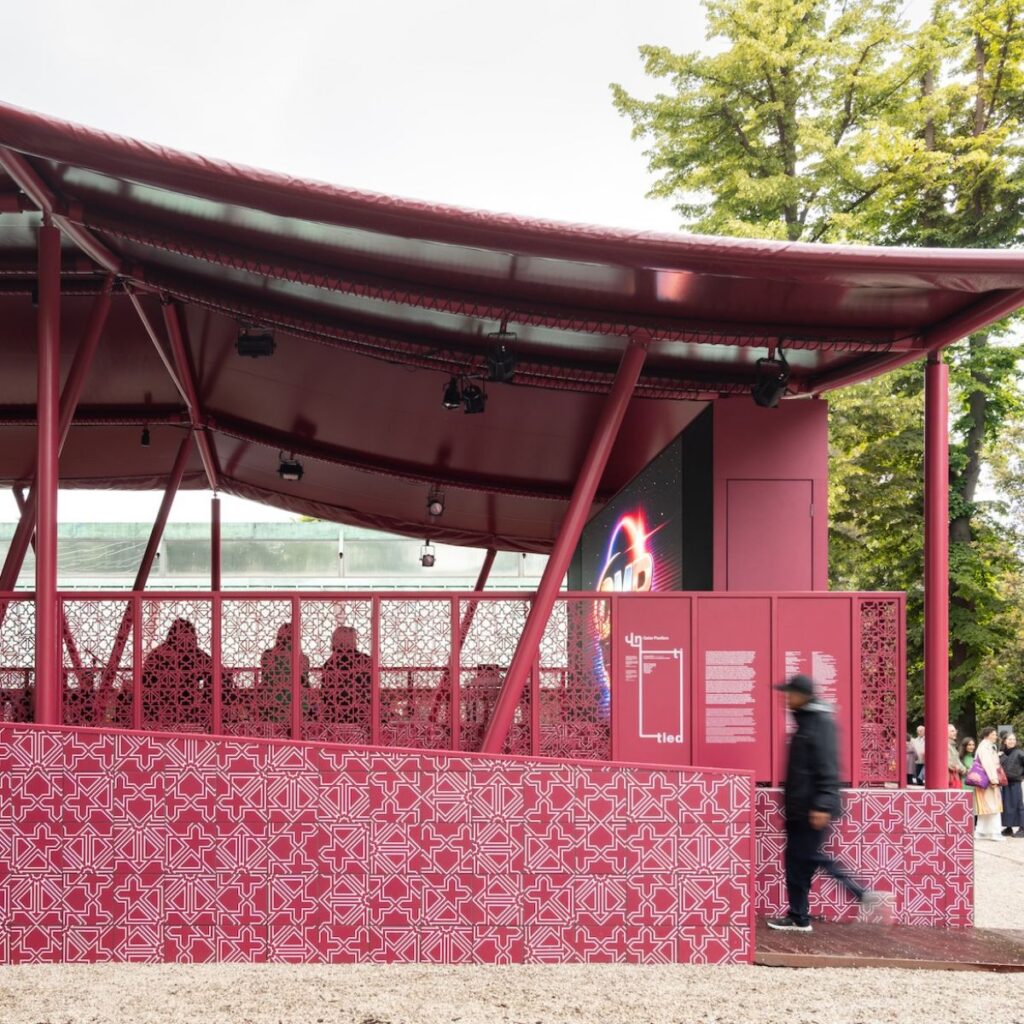
The flagship exhibition of the inaugural Rubaiya Qatar is themed around water. Taking inspiration from the Cirebon shipwreck and its journey through ancient seas, it explores the ecological, political and cultural impact of water through contemporary artwork in dialogue with historical artefacts
Words Rebecca Anne Proctor
Profiles Rima Sabina Aouf
Illustrations Sofia Iva
- Art
- Autumn/Winter 2026-27
- October
Glimmers
in the tides
The flagship exhibition of the inaugural Rubaiya Qatar is themed around water. Taking inspiration from the Cirebon shipwreck and its journey through ancient seas, it explores the ecological, political and cultural impact of water through contemporary artwork in dialogue with historical artefacts
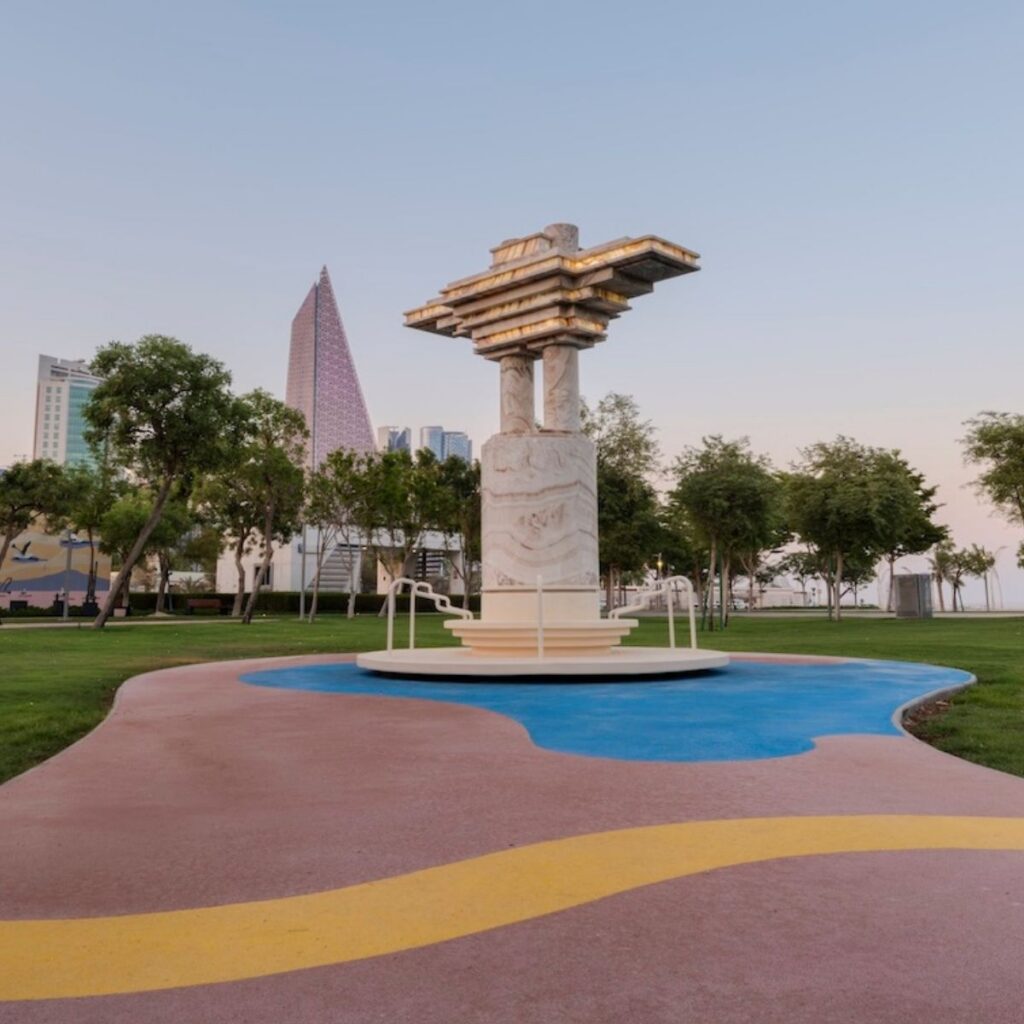
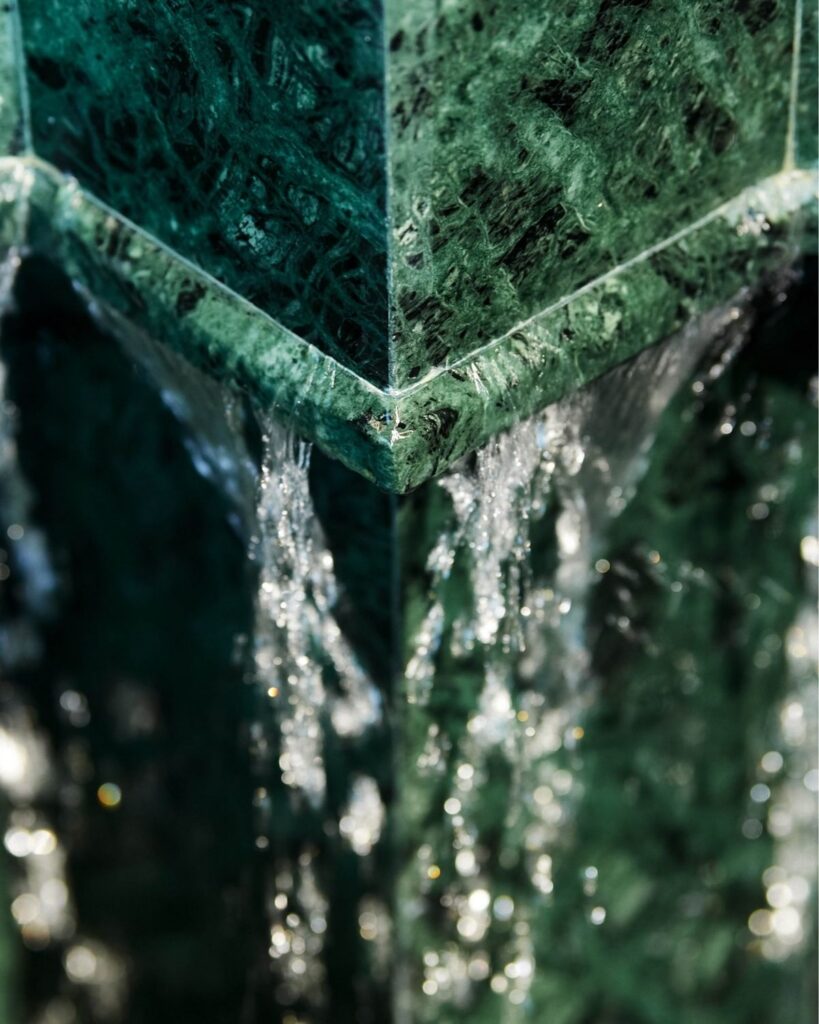
Water, with its unpredictable yet mesmerising rises and falls, is a necessary life force. It also shapes human culture and economic activity, fluctuating between its role as an important passageway and a powerful element that has the power to both give life and destroy it. The waters of the Arabian Gulf have long served as a vital nexus for ancient civilisations, maritime trade networks and cultural exchange. For over 5,000 years, the waters have connected ancient civilisations in the Gulf to the wider Indian Ocean and global commerce. These waters carry traditions, global energy, personal and collective memories and culture. As recent geopolitical events will have us remember, the ebbs and flows of these waters, for better or worse, continue to shape humankind and global history. More than ever, it is urgent to recount and document the histories of this region, which are intertwined through the surrounding bodies of water – and this is the curatorial ambition behind Unruly Waters, the flagship exhibition of the inaugural Rubaiya Qatar, which is taking place in Doha from November 2026 until spring 2027.
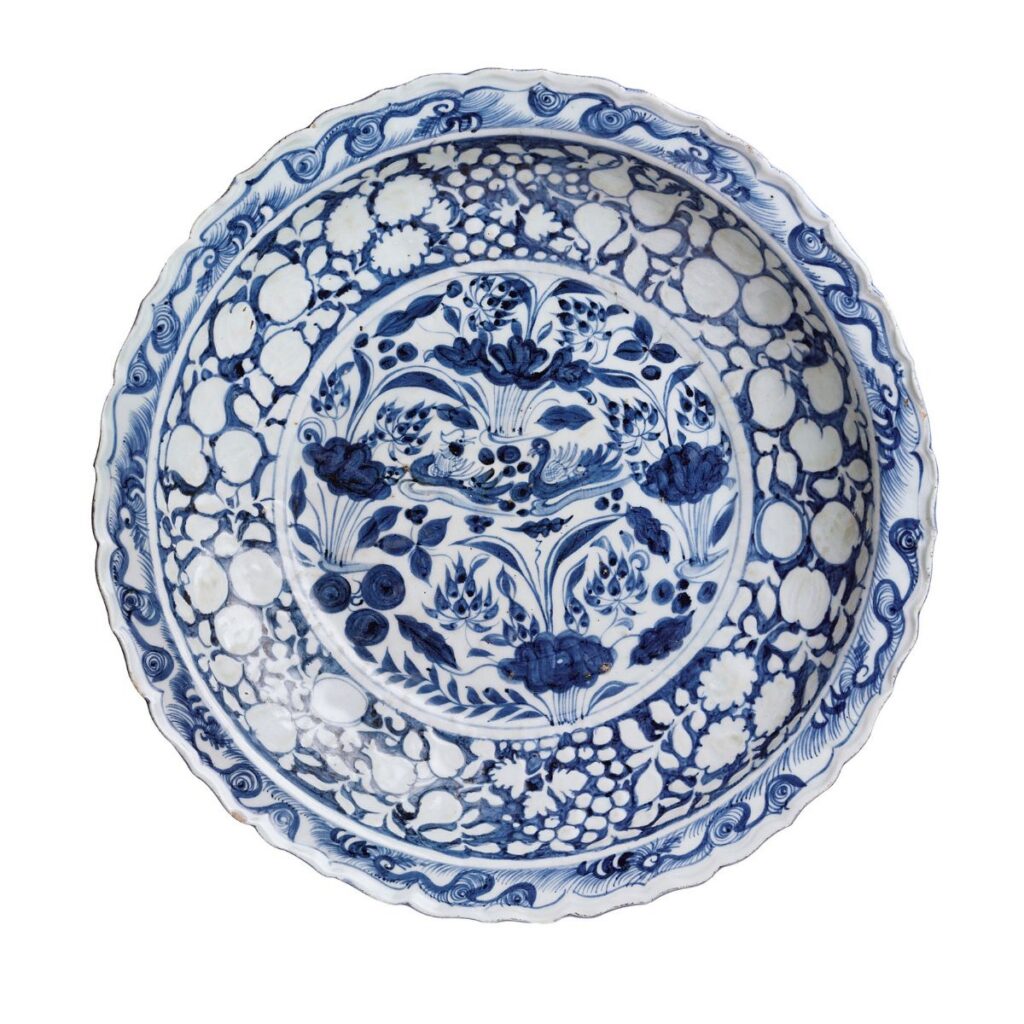
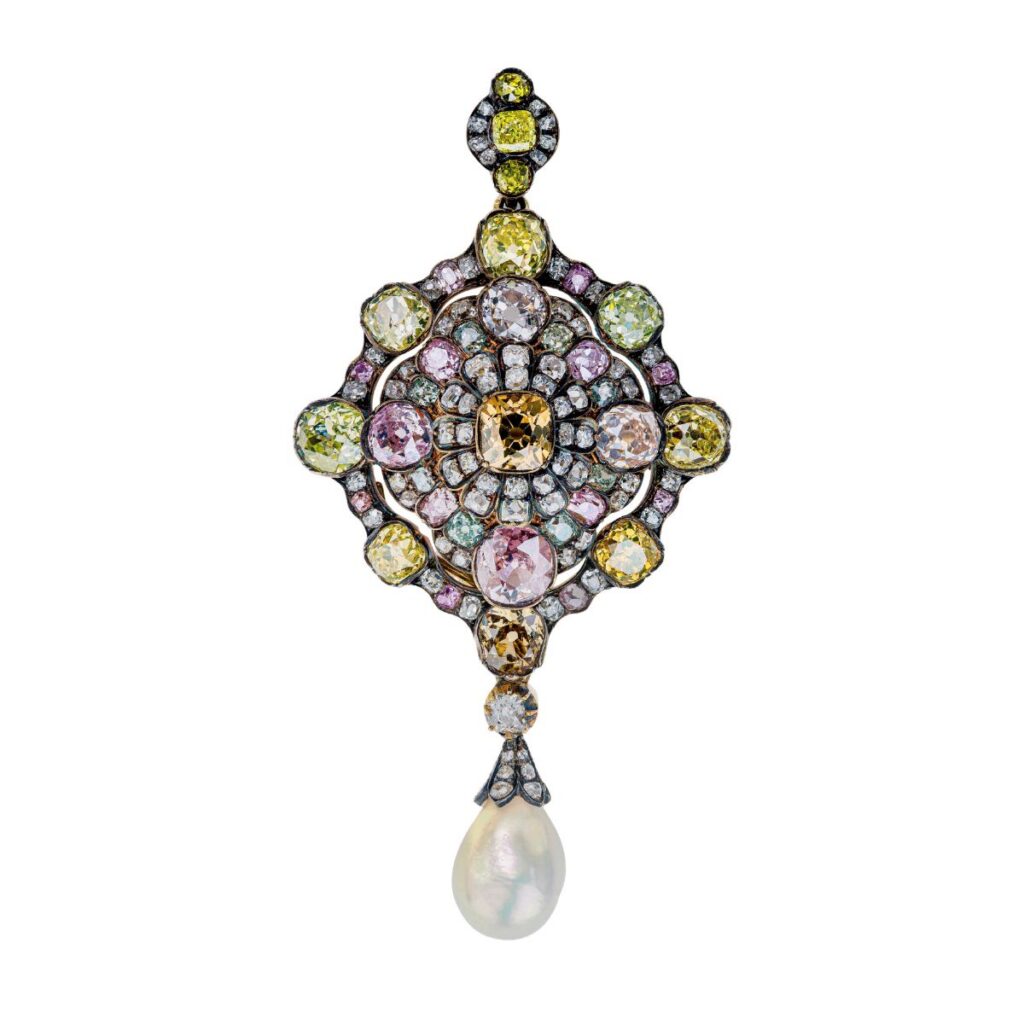
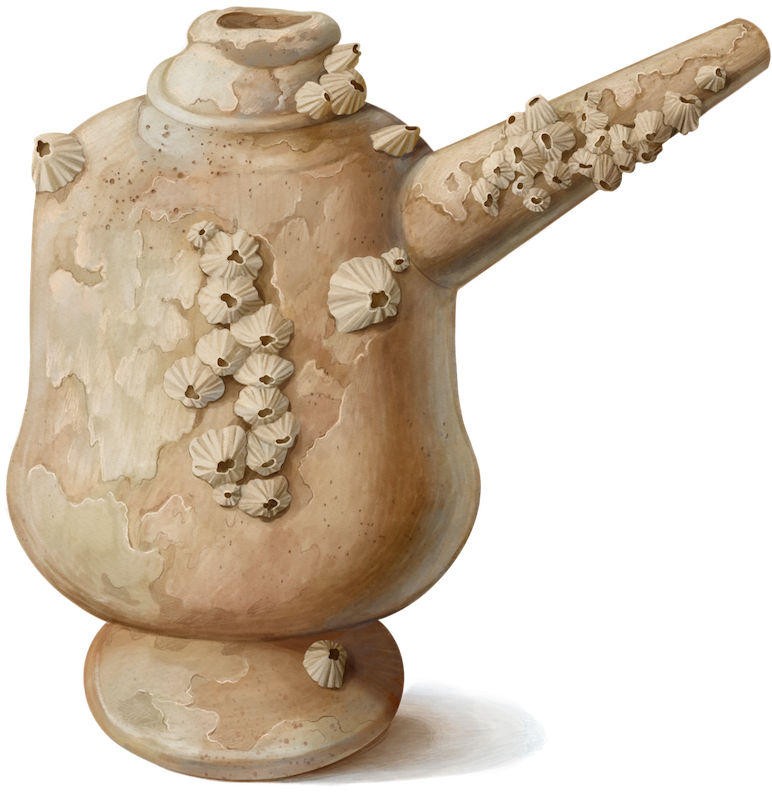
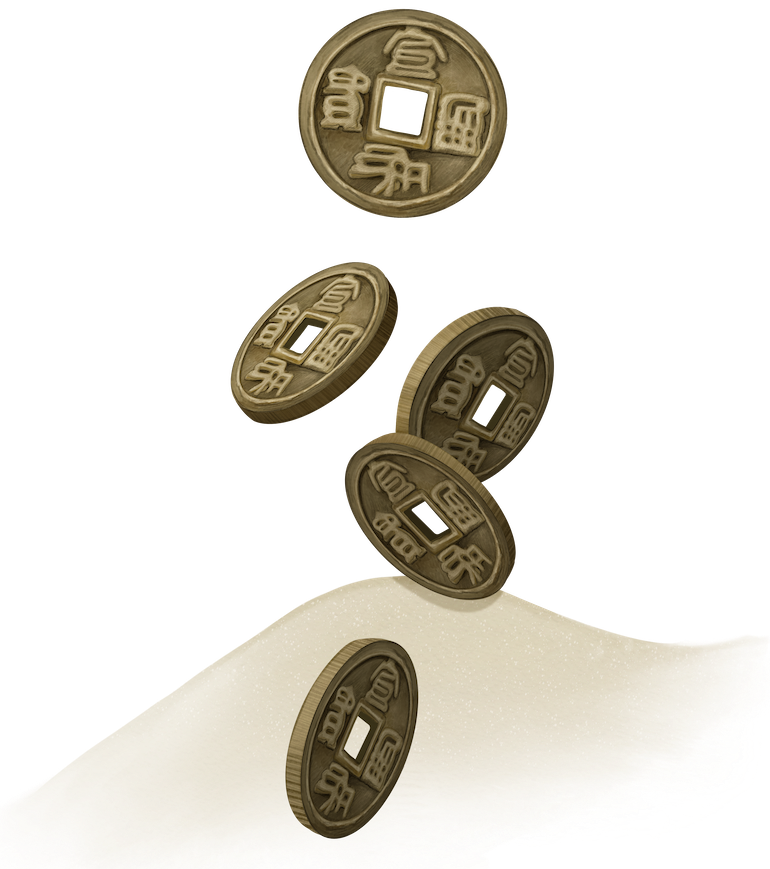
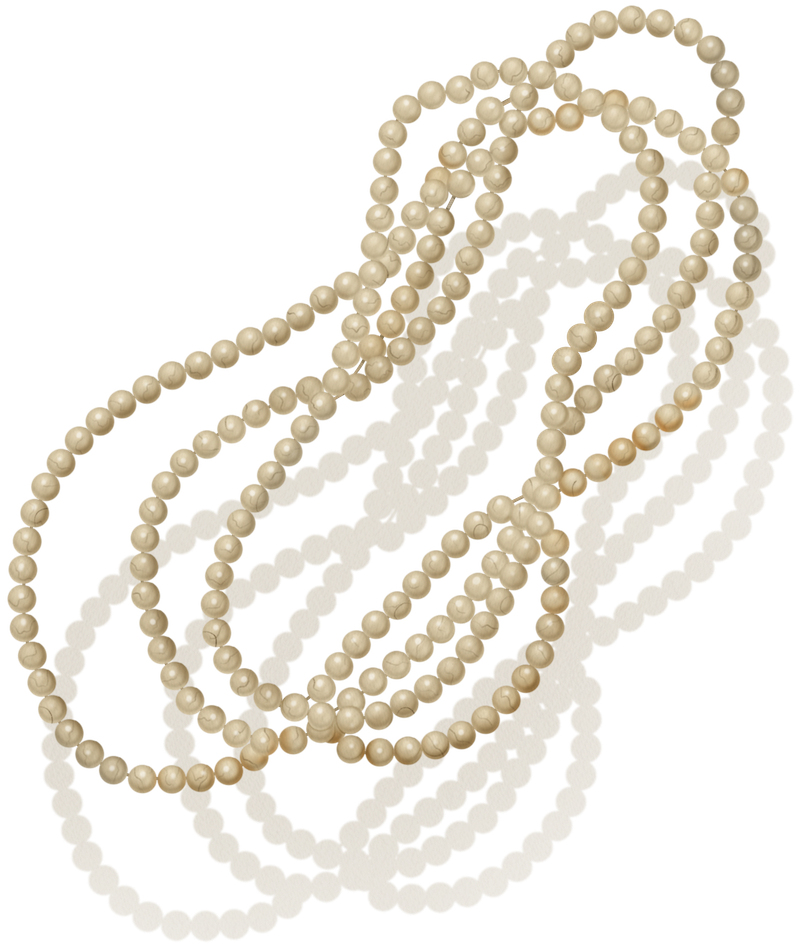
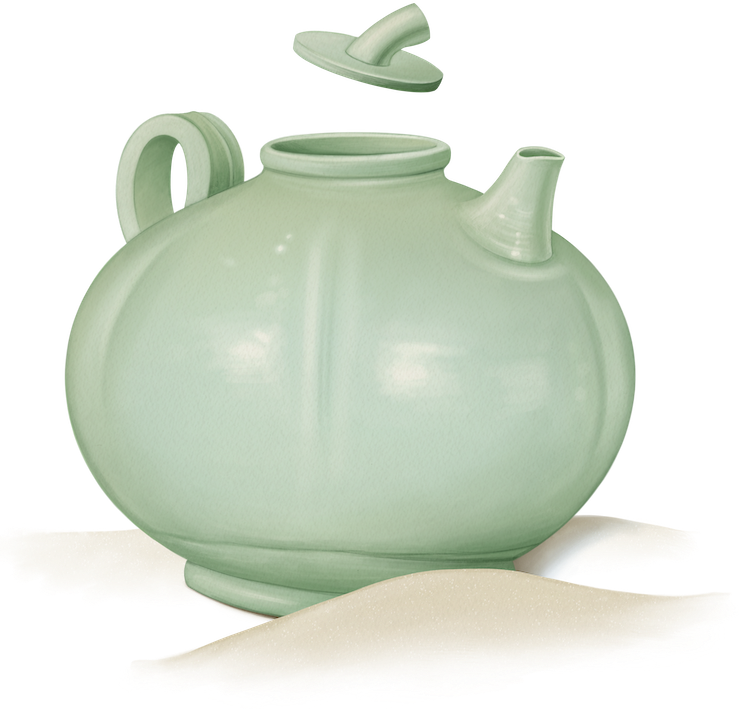
Around 970CE, a merchant vessel sank into the Java Sea – a large, shallow body of water between the islands of Borneo to the north and Java to the south. In February 2003, it was discovered by local fishermen around 100km off the coast of the port city of Cirebon, Indonesia. Inside were over 250,000 artefacts, including coins minted in 917CE by the Nanhan Kingdom during China’s Five Dynasties period, Chinese Yue ware ceramics, gemstones, jewellery and Middle Eastern glassware.
Since then, Qatar Museums has acquired around half of the recovered trove of artefacts. Selected items from the collection are now featured publicly in the National Museum of Qatar and the Museum of Islamic Art in Doha. These remains offer evidence of a 1,000-year trade route stretching from the Gulf through south and southeast Asia to China, driven by monsoon winds across a maritime Silk Road.
“Water plays a large role in all of their work, often as a metaphor for something else”
Tom Eccles
The shipwreck’s geography loosely mirrors the migration patterns that have shaped modern Qatar, a connection that has inspired Unruly Waters, which will take place at Alriwaq: Arts and Architecture. The exhibition title is taken from Sunil Amrith’s 2018 book Unruly Waters: How Rains, Rivers, Coasts, and Seas Have Shaped Asia’s History, in which he reimagines the development of modern Asia through the lens of its water supply, reflecting on the seasonal monsoon and major river systems to explore the modern history, ecology and politics of south and southeast Asia. Through the artistic interpretations of more than 50 artists, including over 20 new commissions, the exhibition broadens Amrith’s geographic scope to include the Gulf, and demonstrates through art how the local environments of the Arabian Peninsula and south and southeast Asia have been impacted by the systems of the natural world.
Instead of an open call, artists were selected through specific institutional networks, environmental work and historical research – and the result is an impressive list of participating artists from across the Middle East, north Africa and south Asia (MENASA) region and beyond, including Lawrence Abu Hamdan, Sophia Al-Maria, Mohamed Bourouissa, Ade Darmawan, Alia Farid, Naiza Khan, Dala Nasser, Lydia Ourahmane, Marina Tabassum and Rirkrit Tiravanija.
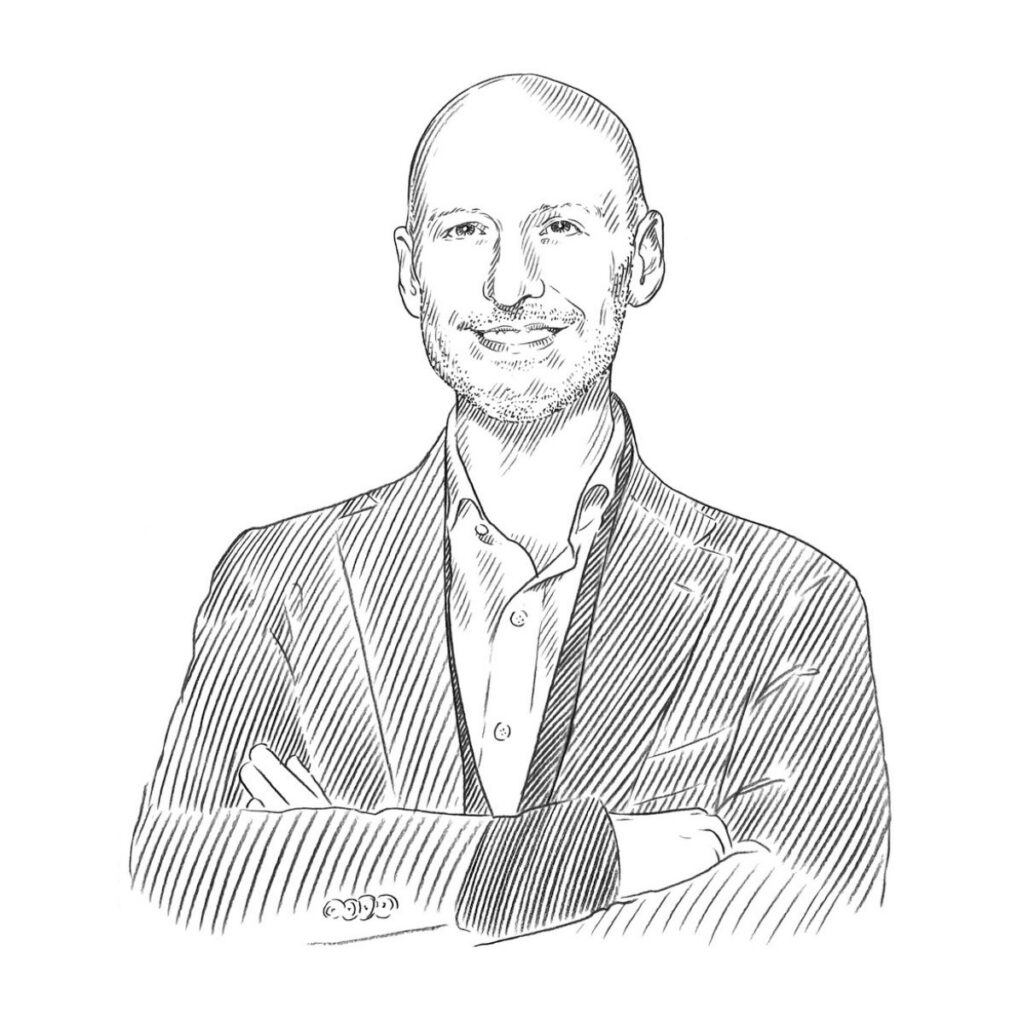
Unruly Waters is curated by Tom Eccles, the executive director at the Center for Curatorial Studies and the Hessel Museum of Art at Bard College; Ruba Katrib, the chief curator and director of curatorial affairs at MoMA PS1 in New York; Mark Rappolt, the editor-in-chief of ArtReview and ArtReview Asia; and Shabbir Hussain Mustafa, the chief curator at the Singapore Art Museum.
Ade Darmawan
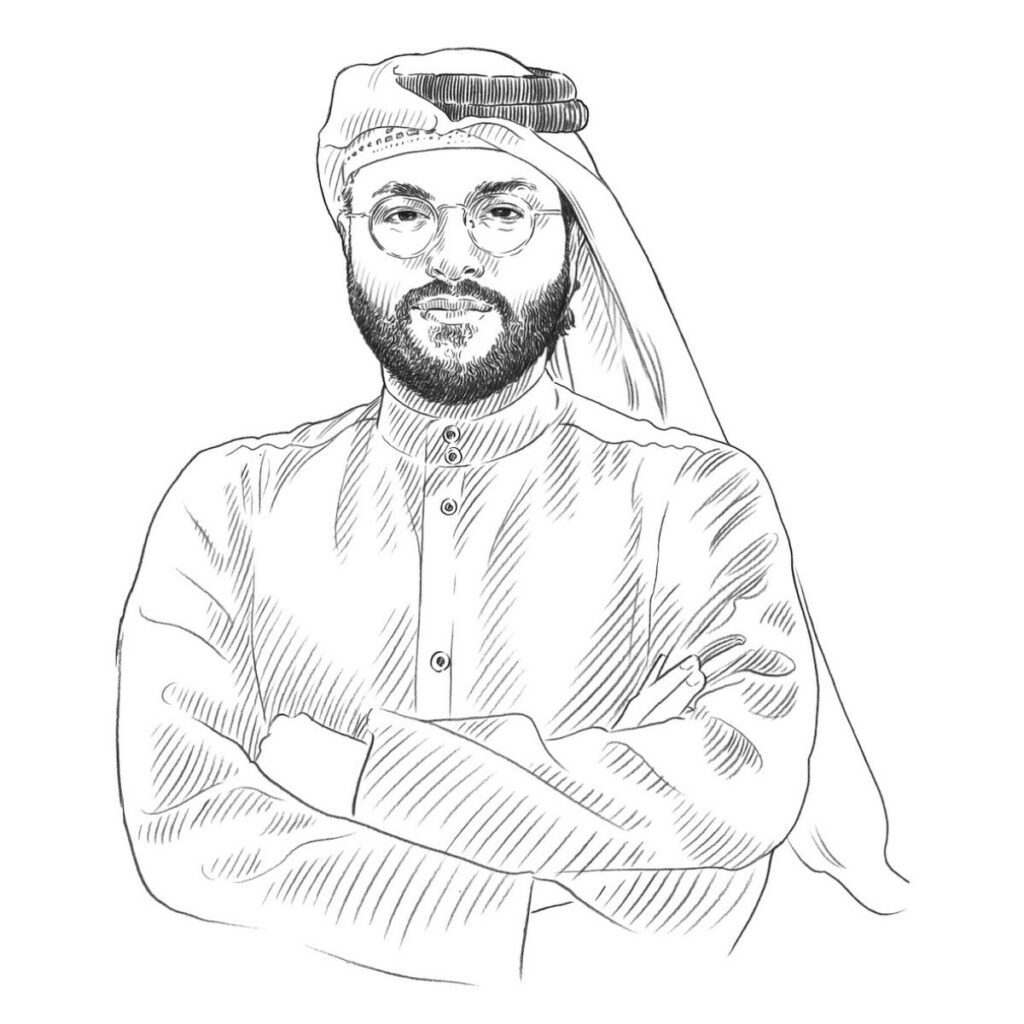
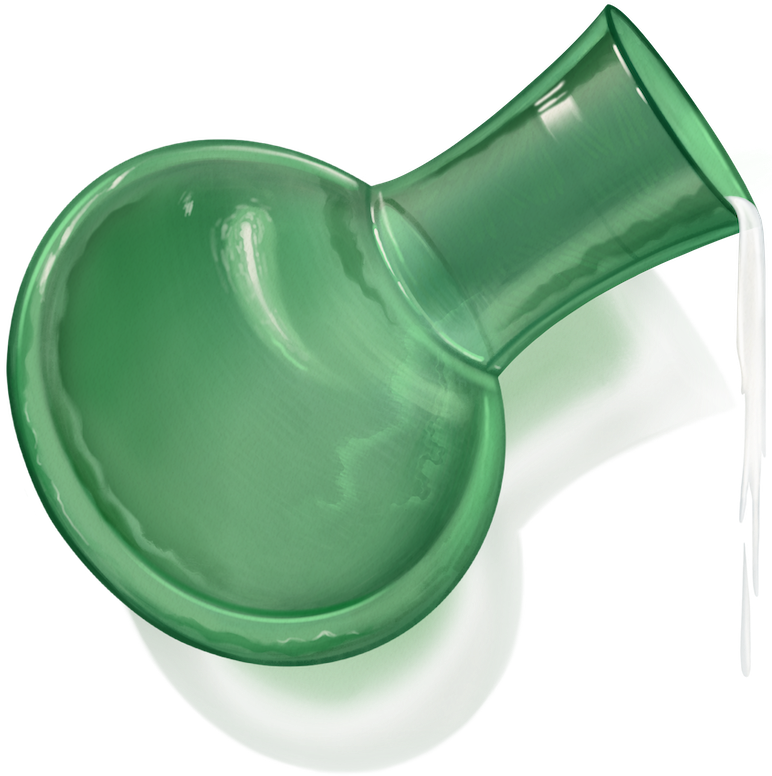
Ade Darmawan is best known in his native Indonesia as the co-founder and director of the art collective Ruangrupa. The platform nurtures contemporary art locally but also gives it a voice on the world stage. Their influence is such that they were awarded top spot on the ArtReview Power 100 list of 2022, following their spirited curation of the renowned but usually Eurocentric quinquennial Documenta 15. Outside of his curation, Darmawan is a powerful artist in his own right, working primarily in installation and objects for over two decades. He comes to Rubaiya Qatar off the back of his impactful 2024 show Water Resistance, with works that were spread across two venues in Indonesia and that subsequently toured to Belgium, taking their focus on colonial legacy closer to the heart of empire. Darmawan’s take on these subjects shows through works like Tuban (2019-), in which a system of lab equipment distils water from seeds and woods like nutmeg, cinnamon and sandalwood, paralleling the way the archipelago’s plant life has been exploited and exported. The distillate leaks and gradually erodes a number of books about Indonesia’s notoriously corrupt former president Suharto.
While the exhibition is clearly focused on the contemporary creations of living artists, these works sit in dialogue with objects from the Cirebon shipwreck as part of an immersive installation by the Bangladeshi architect Marina Tabassum (see p122). These artefacts provide an anchor to the artworks on show, serving as evidence of the 1,000-year trade route between the Gulf and China, which, as noted in Unruly Waters’ curatorial text, “facilitated not only the exchange of goods but also of people, ideas, religions, technologies and cultures”. Seen together, the artwork and the artefacts express the idea that the interconnection between culture and global trade is far from new – inhabitants from this part of the world have dealt with the prosperous and treacherous tides for thousands of years.
“I thought, let’s start with what Qatar Museums has already collected,” says Eccles. “We began by looking at the collection while figuring out the demographics of Qatar. We were trying to find one object that would unpack something about the country. That was when a member of Qatar Museums told me they had just acquired pieces from the Cirebon wreck.”
The shipwreck became the object that connects the exhibited works visually, metaphorically and historically. As the curators discovered through their research, water shaped the development of settlements in Qatar as it did mercantile and cultural exchange across the Gulf, Indian Ocean and beyond.
“The Indian Ocean offers another way of seeing: one shaped by monsoon winds, trade, migration, spiritual exchange, heavy industry, new technologies and, more broadly, the movement of ideas,” says Mustafa, whose work has largely been shaped by southeast Asia – a region, he believes, that cannot be understood only through national borders or land-based cartographies. “The Cirebon shipwreck, which forms the central spine of the exhibition, is fundamental to this thinking. Its cargo points to a maritime network that connected the Gulf, southeast Asia and beyond, well before European colonial expansion into the Indian Ocean. It reminds us that these regions were never isolated from one another, and that what we now call ‘globalisation’ has much richer histories.”
Mustafa emphasises that the Unruly Waters exhibition is not looking to the past with nostalgia. “These waters are now also shaped by extraction, industrialisation, militarisation and the compounding effects of climate change,” he says. “The curatorial approach moves between historical traces and contemporary pressures, asking how events in one place continue to alter lives elsewhere. It allows us to recognise the Indian Ocean as a space connected through deep and often difficult histories.”
“The Cirebon shipwreck reminds us that... what we now call ‘globalisation’ has much richer histories”
Shabbir Hussain Mustafa
In the lead-up to the exhibition, the Doha Institute for Graduate Studies and Rubaiya Qatar staged the conference Water Ways: Epistemologies and Aesthetics in February 2024, exploring the role of water and its relationship to life. For the conference, an open call was staged for academics to contribute around the themes of “Unruly Waters”. A number of creatives – including artists, writers and filmmakers – also responded. Eccles recalls how within just one month, there were already 50 applications from around the region, spanning Gaza to Indonesia. “It was proof positive of the concept,” he says. The response was global and organic, with applicants hailing from north Africa or north African descent now based in Paris all the way to Vietnam, the Philippines and Indonesia. “In Unruly Waters, water plays a large role in all of the work, often as a metaphor for something else – not necessarily as a source of life,” he says.
Unruly Waters also develops new narratives by repositioning geographic regions based on history and trade. “Conversations about the Gulf, and even southeast Asia, are still often viewed through their relationship with western Europe or north America,” says Mustafa. “Looking across the Indian Ocean brings other histories and intellectual traditions into view. It does not replace one centre with another. It simply acknowledges that many important conversations have long been taking place within and between these regions, and that they remain urgent today.”
Such discourses are closely aligned with recent Qatar Museums exhibitions which elevate artistic discourse from nations and regions that are often underrepresented in western-centric global art circles. Take, for example, Manzar: Art and Architecture from Pakistan 1940s to Today, which was organised by the upcoming Art Mill Museum and staged at the National Museum of Qatar in 2024, exploring eight decades of Pakistan’s creative and cultural evolution.
Lawrence Abu Hamdan
There are few artists in the world whose work has been used as evidence in asylum hearings. But Lawrence Abu Hamdan is not an ordinary artist, having pioneered a unique use of sound to investigate human rights abuses and politically charged events. Born in Jordan to a Lebanese father and an English mother, educated in the UK and currently based in Dubai, Abu Hamdan began, like so many teenagers, playing in underground bands before becoming interested in applying the logic of music production outside of the recording studio. Now he considers himself a “private ear” – a term that he has previously said is both “a bad joke” and a neat encapsulation of the investigative, independent and impartial nature of his work. In the Turner Prize-winning installation Saydnaya (the Missing 19dB), 2017, created with Forensic Architecture and Amnesty International, this involved gathering “ear witness” accounts from Syria’s notorious military prison, using sound effects to help former detainees recall their memories and map its hidden subterranean structure. Others have been more about surveillance technologies, including one work that exposed how potato-chip packets have been used as microphones, their foil recording conversations through minute vibrations. Abu Hamdan’s rich audiovisual work is held in the collections of leading international institutions including MoMA, the Guggenheim, the Centre Pompidou and Tate Modern, and comes to Unruly Waters on a rising tide of relevance in a world of eroding human rights norms.
Naiza Khan
With her longtime interest in maritime histories and submerged meanings, Naiza Khan is a natural fit for Unruly Waters. A leading light of contemporary south Asian art, Khan was the multidisciplinary artist behind Pakistan’s inaugural Venice Biennale pavilion and has exhibited the world over. Last seen in Qatar as part of the National Museum’s Manzar: Art and Architecture from Pakistan exhibition, she is also renowned as an academic and is currently teaching as an associate professor at VCUarts Qatar. Khan’s work begins with research and mapping. Drawing, painting and printmaking become tools for observation, deconstruction and deliberation, with frequent forays into film and sound to deepen the enquiry. Circulation is a common theme – from the swirling of monsoons and their ties to empire, to the circulation of objects in museum collections and the histories of migration. For Rubaiya Qatar, Khan has honed in on the objects in the Museum of Islamic Art, using her analytical methods not for literal representation but to chart a personal geography shaped by memory, history and lived experience. “My curiosity about cultural objects and their historical relevance is often a pathway to think about the present moment more critically,” she says. “For Unruly Waters, I am looking at maps and archives of weather history, which open up so many interesting questions about our relationship to imperial technologies of surveillance and mapping.”
Many of the contemporary works exhibited as part of Unruly Waters are film-based, which Rappolt emphasises reflects the nature of present-day art creation. An example is Saudi artist Ayman Zedani’s The Heavens Underwater, 2026, a speculative and parafictional video installation that explores a forgotten shared heritage inspired by ongoing archaeological discoveries in the Arabian Peninsula. It specifically explores how, for centuries, cultures across the world have speculated about lost civilisations beneath the sea. From the Garden of Eden to Atlantis, these legends largely involve the idea of advanced societies lost to the ocean. Given the widespread nature of such stories, Zedani poses the idea that, perhaps, at the beginning of human history, an advanced civilisation for its time was, quite literally, swallowed by the waters, its remnants remaining lost and forgotten.
Dhaka-based Bangladeshi artist Munem Wasif has created an installation of photography, archival fragments and maps, as well as traces of plants, architecture and people titled Refusal to Sow, 2026, that looks to Bengal’s Indigo Revolt of 1859-60 and posits it as a major historical moment and ongoing wound. The elements in the installation were gathered during fieldwork across Bengal and the United Kingdom, and chart the lasting entanglements between colonial extraction and the natural and social landscapes colonialism continues to haunt.
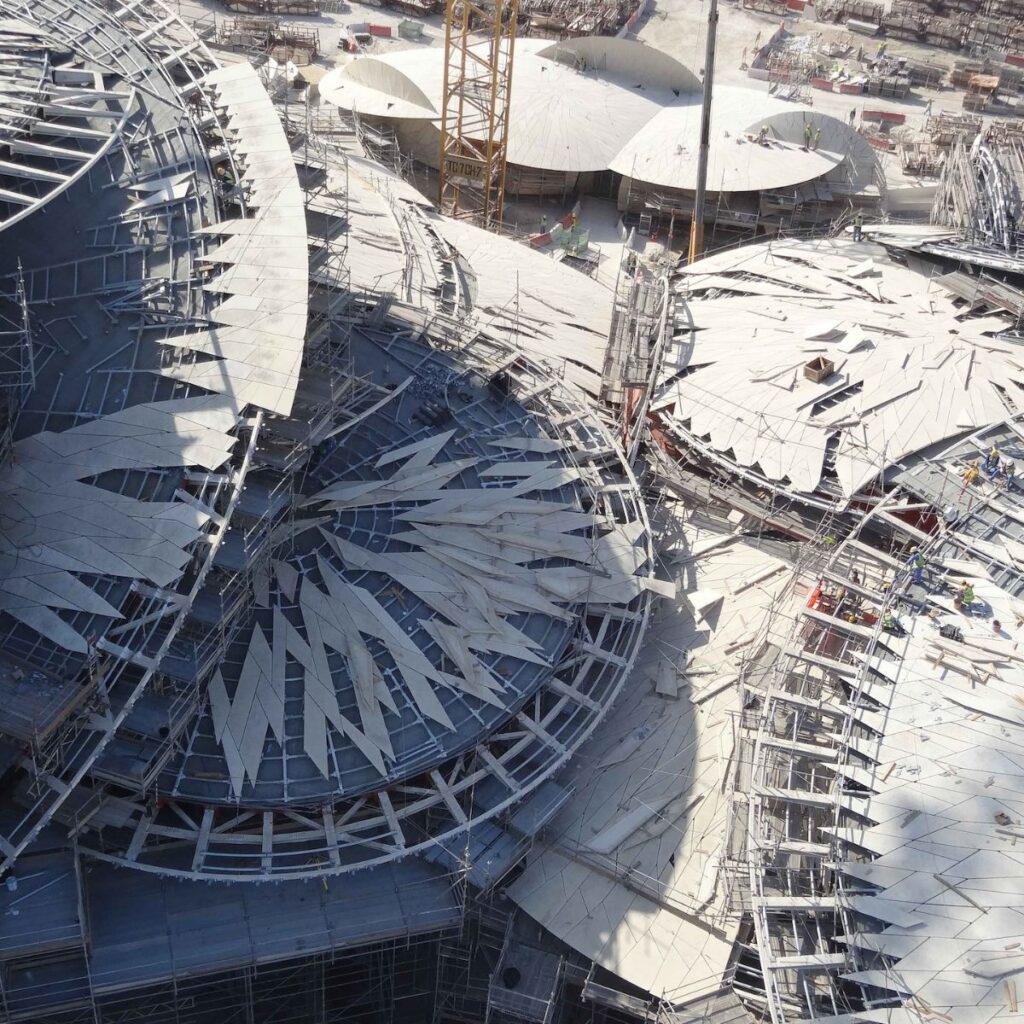
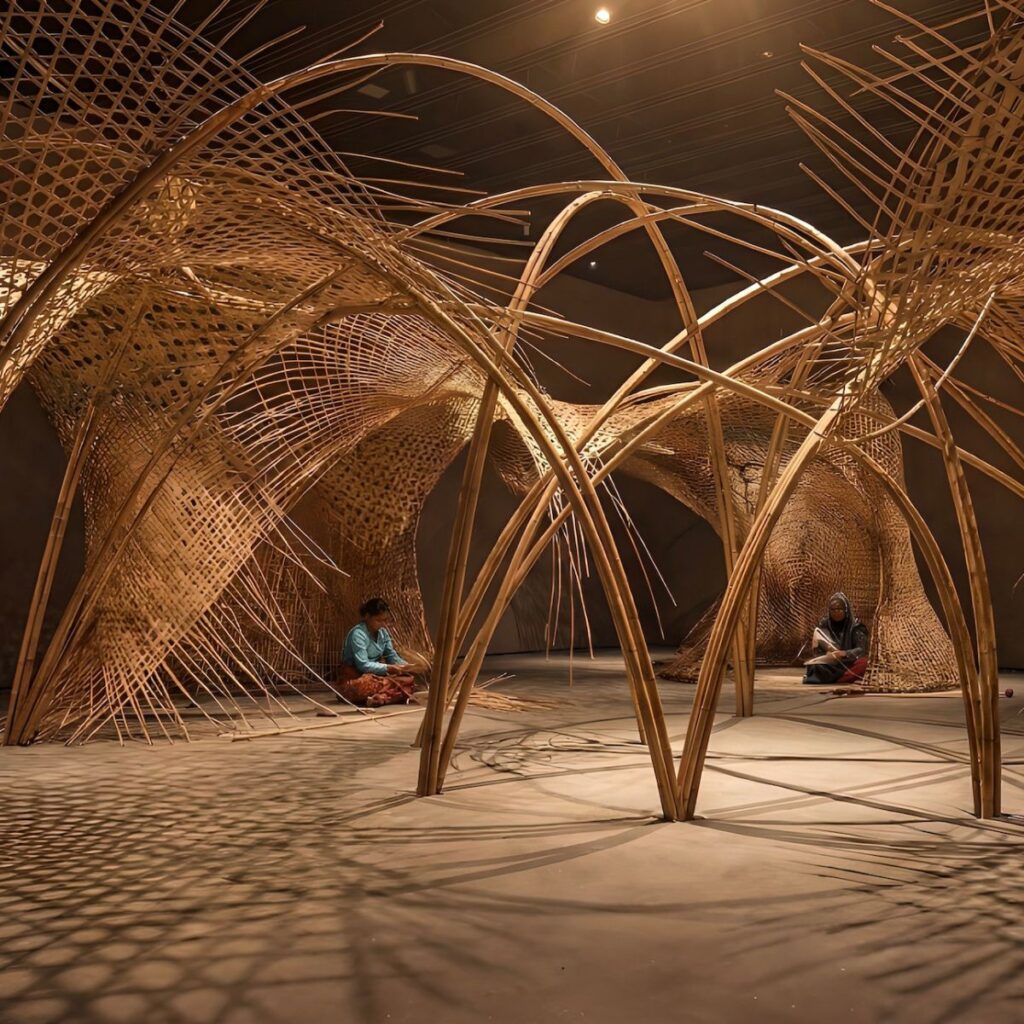
Forming the core of the exhibition is Marina Tabassum’s installation, which showcases the artefacts from the Cirebon shipwreck. Alriwaq itself becomes a site of historic reconstruction, and Tabassum also incorporates fragments from a Bangladeshi river boat to replace the now-lost original southeast Asian vessel, reflecting the ways in which history is built through science and the imagination.
“The show as a whole offers many echoes in the way that history is constructed or fabricated”
Mark Rappolt
Other artists on show offer literal and metaphorical explorations into the theme of water. Kathmandu-based Sheelasha Rajbhandari’s work She keeps living, in the intuition of our gut, 2026, offers an immersive installation that approaches human intuition as both bodily knowledge and inherited memory, exploring how the body registers fear, desire, uncertainty and safety before these emotions can be fully articulated. The installation explores what happens when such understanding is lost, dismissed or suppressed.
Also centred around the body is Simone Fattal’s bronze sculptural work Ghaylan and Mayya, 2023/2024. This work is inspired by the Arab poetry, folk tales and legends celebrating seafaring lovers from Arabian folklore and classic literature, who own a flotilla of vessels used during the pearl trade. Qatari-American artist Sophia Al-Maria, meanwhile, has brought back her work DAMAR TV, 2026, which was commissioned by Rubaiya Qatar for the Qatar national pavilion at the 2026 Venice Biennale. Produced using the latest editing and AI techniques in Milan, the film critiques how media systems broadcast distressing images of war and genocide, blurring the line between active witnessing and passive consumption.
Lebanese-British artist Lawrence Abu Hamdan’s work is an installation that uses digital and audio elements to reflect on the histories of water in the Arabian Gulf. The two-part work draws on scientific literature and experiments to explore the acoustic enrichment of coral habitats.
As Amrith reflects in his timely book from which the exhibition takes its name, nature and the environment aren’t just passive receivers of history. Nature is as much an active participant in historical creation, oscillating between fact and fiction, as humans are. Similarly, fact and fiction dance through the Unruly Waters exhibition and the art on show. Like an artwork, explains Rappolt, an undocumented shipwreck is a liminal place where truth and imagination meet each other. “We’re interested in showing how the shipwreck works like a work of art, hovering between fact and fiction, occupying a grey area,” he says. “The show as a whole offers many echoes in the way that history is constructed or fabricated.”
Dala Nasser
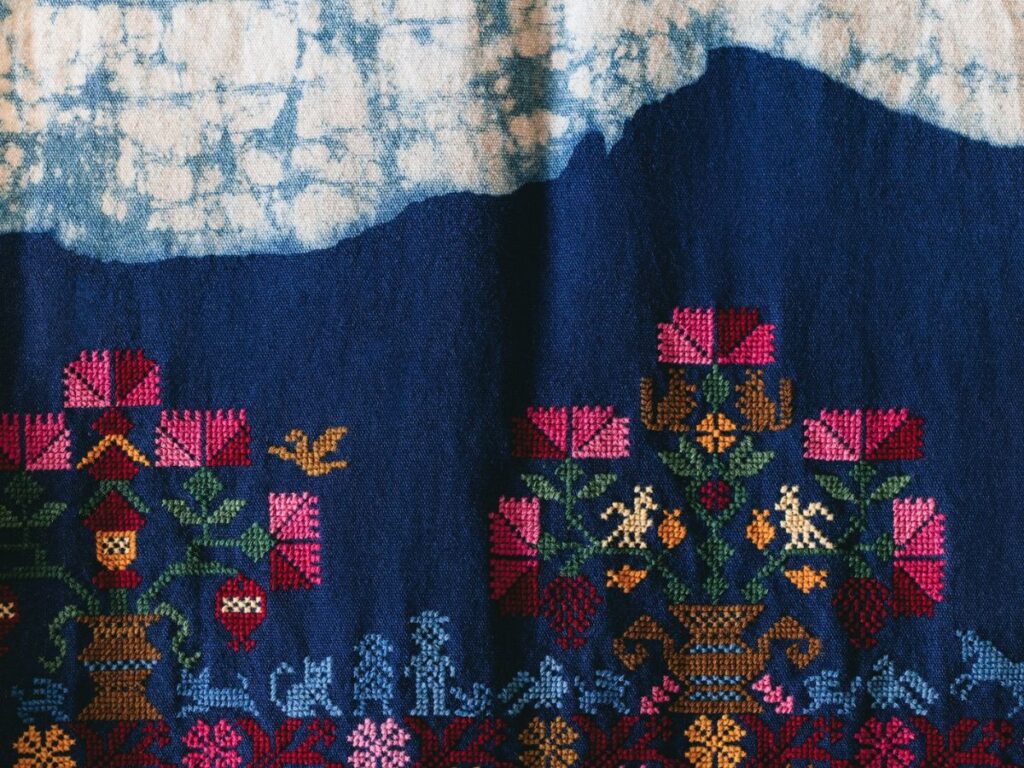
Ancient civilisations speak through the earth in the work of Lebanese artist Dala Nasser. Believing that traces of lived experience endure in the soil, rock and even plant and insect life of a place, Nasser has spent the past decade visiting sites where history, geopolitics, religion and mythology intersect, immersing herself in their dirt and stories. The works she emerges with are multilayered structures of remembrance. Made of fabric that is worked and reworked through processes of staining, soaking, dyeing, rubbing and frottage, she records a ghostly topography using nothing but a site’s natural elements. Stone, ash, clay, charcoal, plants and bugs all form part of the palette. For Unruly Waters, Nasser will continue her exploration of the relationship between landscape, memory and material, this time with a focus on the 5,000-year history of Gaza and its connection to the sea. “I think of material not simply as form, but as a witness to historical conditions of displacement, colonial erasure, ecological degradation and the psychological disintegration they produce,” she says. “At the core of my practice is a desire to foreground histories and ecologies that have been obscured, erased or rendered difficult to articulate.”
Mohamed Bourouissa
With his longtime interest in an image-saturated world, where visual content flows through our eyes on infinite scroll, and advertising or branding is forever in our periphery, French Algerian artist Mohamed Bourouissa is an essential voice. The photographer is known for his critical take on mass media imagery and for revealing the stories of marginalised communities normally excluded from the vision of mainstream society. He has also increasingly broken the boundaries of photography, incorporating video, sound and sculpture and even releasing his debut album LILA this year. The insider’s perspective in his work comes from deep personal immersion: he often spends months getting to know his subjects, whether they are shoplifters in Brooklyn, Black horse riders in Philadelphia or the residents of Paris’s denigrated outer suburbs. A warning to visitors to Rubaiya Qatar, however: his works ask that you slow your pace and deeply engage, looking beyond the “cool” surface veneer and thinking about your own relationship to image. “All I’m doing is questioning perceptions of what [the viewer] sees in my pictures,” Bourouissa told the British Journal of Photography. “If you don’t do the job of looking past that first layer, you don’t get to the tension. My work is in the tension.”