
A vibrant exhibition at M7 looks at a new wave of contemporary Mexican artisans reinventing the crafts of their grandparents
Words Rima Sabina Aouf
Photography Gustavo García-Villa
Qatar’s pavilion at the centre of the Venice Biennale marks the growing influence of Arab states in the international art world
Words Jane Morris
Work by Indigenous Nahua textile artist Liliana Filomeno Oritz, who uses natural dyes and traditional weaving and embroidery to depict the community’s flora, fauna and iconography
Cover image: Work by Indigenous Nahua textile artist Liliana Filomeno Oritz, who uses natural dyes and traditional weaving and embroidery to depict the community’s flora, fauna and iconography
Mexican craft is undergoing a kind of revolution. Ornate lacquerware, densely embroidered huipiles (woven tunics) and colourful painted ceramics are intertwined with childhoods shaped by Mexican telenovelas, adolescences defined by TikTok, and contemporary concerns about identity and the state of the environment in the eyes and hands of young practitioners. This new generation of makers aren’t outsiders brought in to glamorise fading practices, but usually the children and grandchildren of crafting families, trained to embody generations of know-how and itching to tell their stories in the mode of expression most natural to them.
Their stories are being brought to Doha as part of Expanded Tradition: Contemporary Craft Practices in Mexico, a new exhibition at Doha’s creative hub M7. Curator Ana Elena Mallet has spent her career immersed in Mexican design. Following 2024’s Crafting Modernity: Design in Latin America 1940–1980 at New York’s MoMA – the first exhibition on the subject by a North American institution – she continues the conversation into the present moment with the M7 exhibition. Part of the Qatar Canada Mexico Year of Culture, the show, which runs until 26 December 2026, brings together the threads of Mexico’s past and future, with the work of 26 artisans under the age of 35 who are putting their stamp on the nation’s rich and varied historical crafts.
“I do believe that tradition is not static,” says Mallet. “Tradition at some point was innovation, and it became tradition. Then, there was some rupture, and someone did something new.” This view pervades Expanded Tradition, which asks audiences to question how tradition is defined and by whom. In the process, the exhibition shows young people reinventing iconography, reforging connections to the land, combining ancient and new materials, and reckoning with complicated histories as they look to the future.
Continue below for our conversation with Mallet, as she introduces us to some of the artists and themes in the show, and shares the connections she sees between her homeland and Qatar.
“Tradition evolves...the only way to inhabit ancestral futures is to know the past”
Ana Elena Mallet
Q+A What is it about the traditional crafts of Mexico that you think makes them stand out on the world stage?
Ana Elena Mallet The diversity is incredible. We have every technique – but in every territory, every technique has a different representation. People talk about Mexican textiles, but Mexican textiles are not the same in Chiapas as they are in Oaxaca; what they’re doing with Mexican textiles and feathers in Oaxaca is not the same as what they’ve been doing in Michoacán.
Why did you want to make these crafts and their evolution the focus of Expanded Tradition?
I've been working for a very long time with craft in Mexico. Over the past 10 years, I’ve noticed the government and private entities trying to preserve traditions but in a very traditional way. They say we have to “preserve tradition”. “Don’t touch tradition.” “We have to keep the artisanal communities doing what they know how to do, forever and ever.” And then they complain because more young people are not coming into the tradition.
I started realising on my trips around the country that many young people want to innovate within tradition. First, knowing the skills, understanding what’s theirs, what their grandparents taught them, and then innovating from there. So when I was invited to be part of the Qatar Canada Mexico Year of Culture, I knew I wanted to follow up with those young craftspeople.
Who are some of the young practitioners you’ve selected and how are they reinterpreting these age-old techniques?
So, for example, Marcela Calderón Bony is creating painted ceramics that are really amazing, very contemporary, but keeping the traditional way of using clay. Her parents started a painting workshop in Michoacán with traditional craftswomen in the 1970s, recognising the painting tradition in the area.
Or there are textile artisans such as José Miguel Ramírez and Boris de Jesús García Ildefonso. Previously, textiles and garments had always been made by women, but now there’s a new generation of men going into weaving and natural dyeing. It was very exciting to see the singer Lila Downs at the opening of the Fifa World Cup 2026 wearing a garment by Ramírez, a young artisan from Chiapas.
Isaac Castañeda Perez works with different woodworking techniques, including hand carving and Japanese shou sugi ban, which involves charring the surface of the timber
Are there any skills that feature in this show that take years to learn and that you’re worried might disappear?
There’s maque, a pre-Columbian technique that resembles Japanese lacquer. It’s made with plants from the Michoacán region and an insect called aje (a type of scale insect) that lives in Árbol del Tule trees. But Michoacán is where all of the avocados that are exported to the US are grown, so that particular insect has disappeared because of the insecticides used. Now artisans have to travel far away to different states to get the bug that allows them to create the traditional lacquer. There are now only five families doing it.
I’m really excited that Erandine de Saint Phalle Navarro is in this show, because she is a young practitioner of maque and has founded a small workshop where she is teaching this technique and creating new craftspeople. It’s a very difficult technique, very elaborate, and you need the organic materials from the area. Avocados are great, but in a way we lose many things because of the frenzy and fervour around them.
What are you hoping to make visitors think and feel as they move through the exhibition?
First, I want to showcase all of these techniques that are still alive and thriving, even though it is difficult to preserve them. Despite having this huge and diverse tradition, our craft museum is really small – we ought to have one three times the size of the Louvre.
I’ve read that while Qatar is building new cities with new architects, they are also creating museums to preserve their tradition and their art – and that’s important. I hope this exhibition makes Qataris and the international audience think about how, as they continue building, tradition doesn’t need to be confined to museums. You can grow with the contemporary and the avant-garde but also bring tradition into dialogue with that. I think now is a good time to reflect on that.
Have you observed any similarities or connections between the crafts of Mexico and the crafts of the Arabian Peninsula?
I’ve been really amazed by the material cultures of the nomadic tribes in the region. And I think resistance is something that Mexico and Qatar have in common. We have our strengths, and the western world is not going to come and tell us how to preserve, how to represent, how to do it. We are creating our own theory, our own museums, our own way of doing things. That’s a resemblance I feel between the two regions.
The final section of the exhibition is about “inhabiting ancestral futures” – a striking phrase that also seems contradictory. What does it mean to you for something to be both ancestral and future-facing?
It’s about the idea that tradition moves and evolves. I think the only way to inhabit ancestral futures is to know the past, so we can project a really responsible future – in historical terms, in ecological terms and in heritage terms.
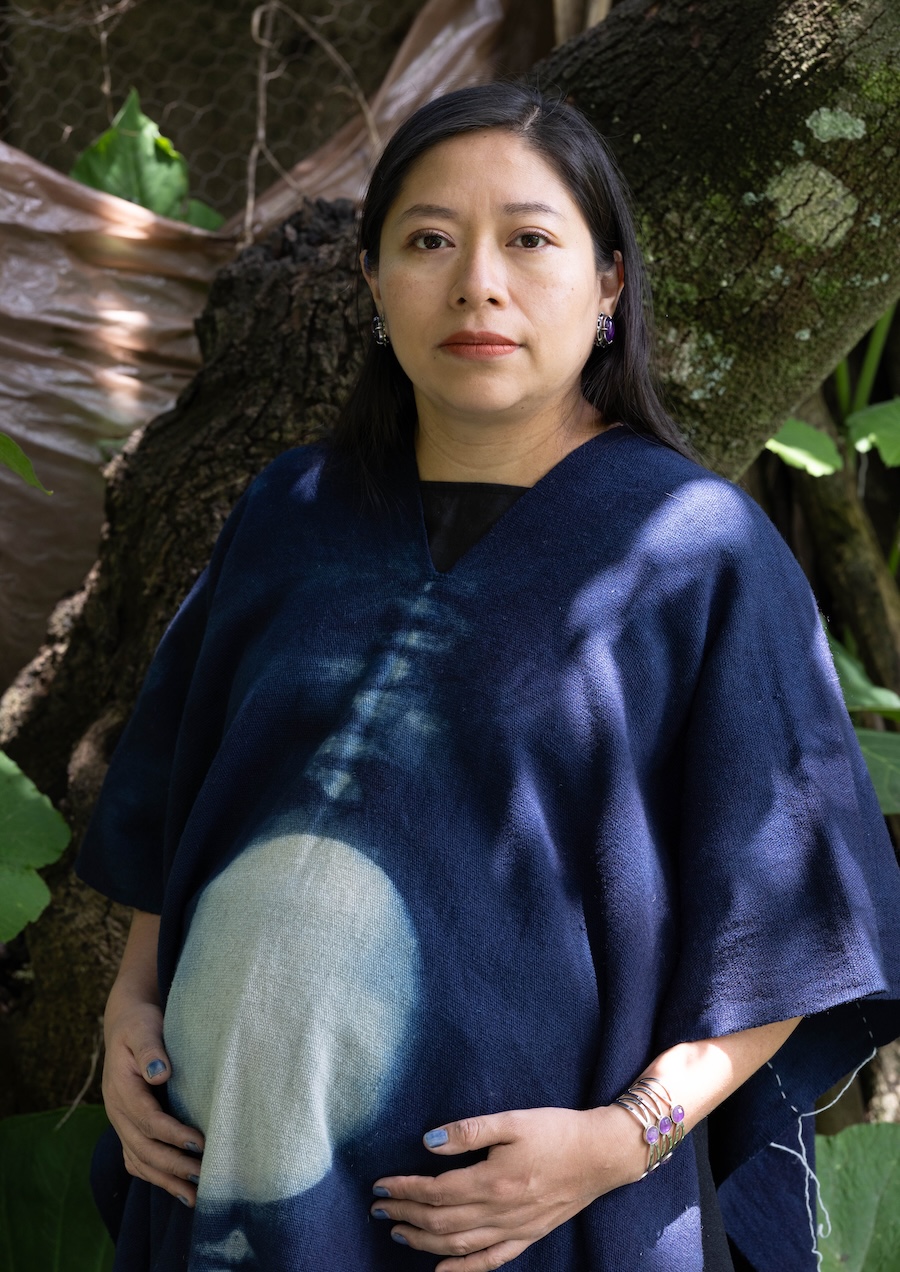
I’m an Indigenous Nahua textile artist specialising in natural dyes from Hueyapan, Puebla – a place known as the “jewel of the mountains” [joya de la sierra] and the “cradle of the embroidered shawl”. My work is a personal and contemporary interpretation of the textile, cosmogonic and biocultural richness of my community. I use traditional techniques including backstrap- and pedal-loom weaving, embroidery and dyeing to explore life cycles and our connection to the land. I also carry out ethnographic research into the cultural practices of Hueyapan and create spaces for intercultural exchange through teaching, strengthening Indigenous identity and raising awareness of the challenges our communities face.
My mother taught me my first embroidery stitches, but I engaged with the community’s iconography and its interpretation in 2014, when I was doing ethnographic research while studying. I met many master dyers, but the artisan who became my teacher was Guillermo Pascual Lozada and his family. I spent months with them, gathering plants, dyeing, embroidering and learning the worldview conveyed through a textile and its colours.
My main material is wool, dyed with plants including cempasúchil [Mexican marigold], pericón [Mexican tarragon], walnut, indigo, and cochineal. I incorporate techniques such as Japanese katazome and shibori, and reinterpret traditional garments and Mexican iconography to communicate personal narratives. I also founded Tayol Jardín with my parents, an ethnobotanical and dye-plant garden to safeguard, cultivate and make sustainable use of the plants of our region. I want to create a circular artistic-artisanal system, from the seed through to a piece’s return to the earth.
For me, tradition is never static. Traditional techniques contain technical, scientific, philosophical and spiritual knowledge, but they can continue to evolve.
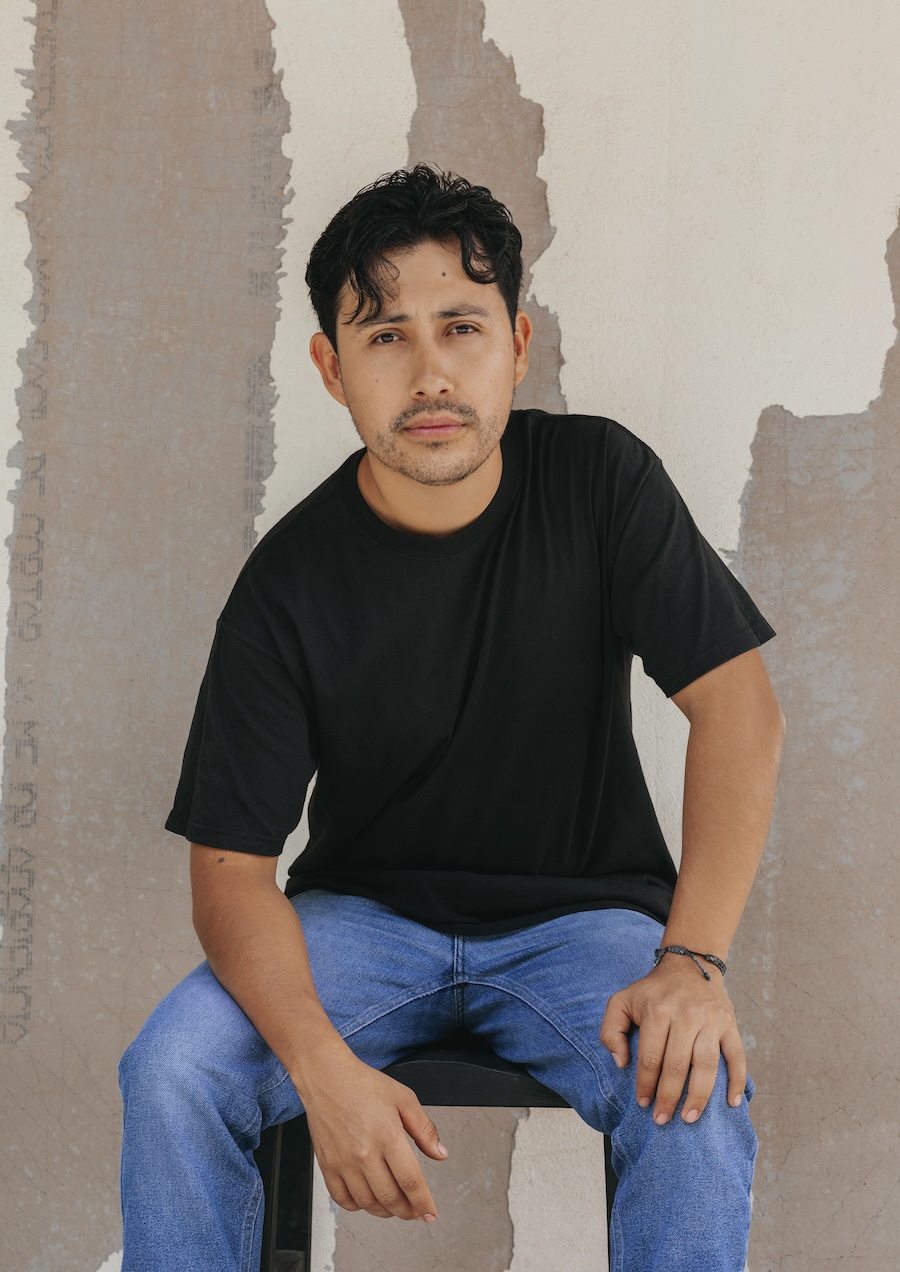
I learned my craft in my father’s carpentry workshop. I had no academic training in design or carpentry – instead, I learned by observing, asking questions, doing, making mistakes and trying again. From a very young age, I was surrounded by tools, wood and manufacturing processes, and we had a furniture shop on our family ranch where I learned to understand how objects relate to people. I still feel I am learning my craft and every project forces me to question what I thought I already knew.
I would define my practice as a process of experimentation and rediscovering knowledge. We work mainly with wood, using different species, finishes and textures to emphasise the grain, cracks and marks that make each piece particular. We also collaborate with artisans working in metal, casting and ceramics. These collaborations allow us to engage with other forms of knowledge and, above all, to have very interesting conversations about the nature of materials and about how craftsmanship is able to make each piece unique.
For me, learning to work with a material by hand is like learning a new language. Each material has its own language and you have to learn to listen to it. We try to guide it towards a particular form, but at the same time, it tells us what is possible. That constant conversation is one of the most important and most interesting parts of craftsmanship.
I think the way we are reinventing and expanding tradition is by avoiding understanding it as something static. We begin with techniques and knowledge passed down through previous generations, but allow them to evolve. I want each object to have a kind of memory: something of my father, my community, the artisans I have worked with and the material itself, while still becoming something new.
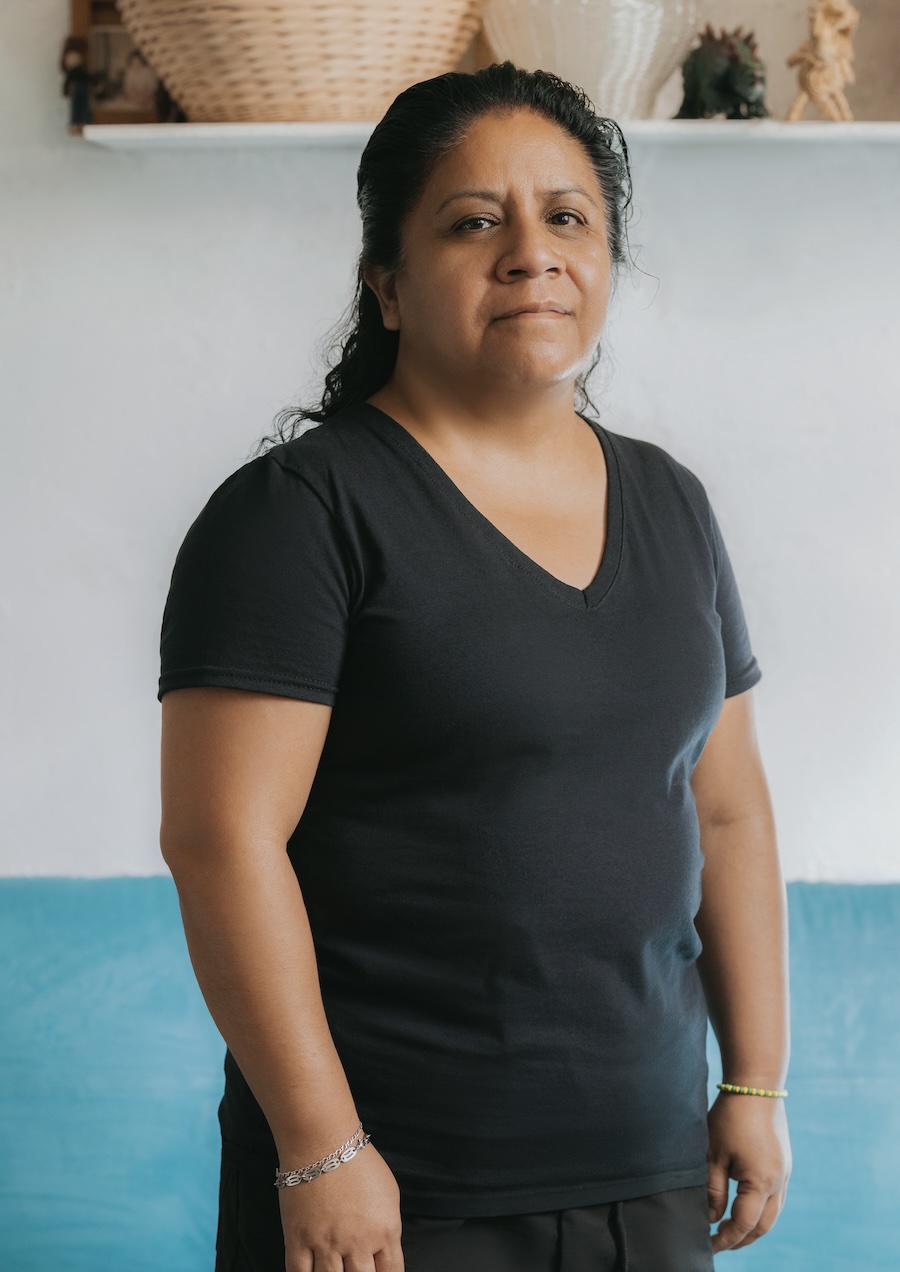
I specialise in weaving plant fibres, mainly working with wicker. The weaving of plant fibres is one of humanity’s oldest crafts, found throughout the world. It takes on different expressions in materiality and form depending on factors such as climate and geography, so it’s a reflection of place and I believe it is important to preserve.
I studied textile crafts at the Instituto Nacional de Bellas Artes y Literatura in Mexico City, but I learned plant-fibre weaving from master artisans in Indigenous communities. Tacho, my teacher from Tequisquiapan, Querétaro, taught me to work with wicker. He used to tell me what life was like for a weaver and fibre gatherer in the early 1900s. With each project, I continue to learn.
I like to combine traditional materials such as palm, water hyacinth and wicker with various woods, metals, cords, leather and almost anything that can be woven. I like to play with combinations of materials that are not so traditional, and I colour some materials with natural dyes such as brazilwood, cochineal, cempasúchil, muicle [Mexican honeysuckle] and walnut shells. I use every branch, root, bark, fibre and cord as fully as possible to produce minimal waste.
I don’t make replicas or traditional pieces. Instead, I develop unique pieces. I have a view of both worlds: that of communities and regions where tradition is what matters, and that of cities, where the value of objects lies in decorating spaces and acquiring utilitarian pieces with a contemporary aesthetic.
I also teach in Indigenous communities, cities, schools and museums. I want people to understand the work involved in weaving an object, to value artisanal labour and consider fair prices for each piece.
For me, discovering where we come from means understanding where we are and not losing the things that are worth preserving: manual skill, creativity, sustainability and the value of what is made by hand and with the heart.
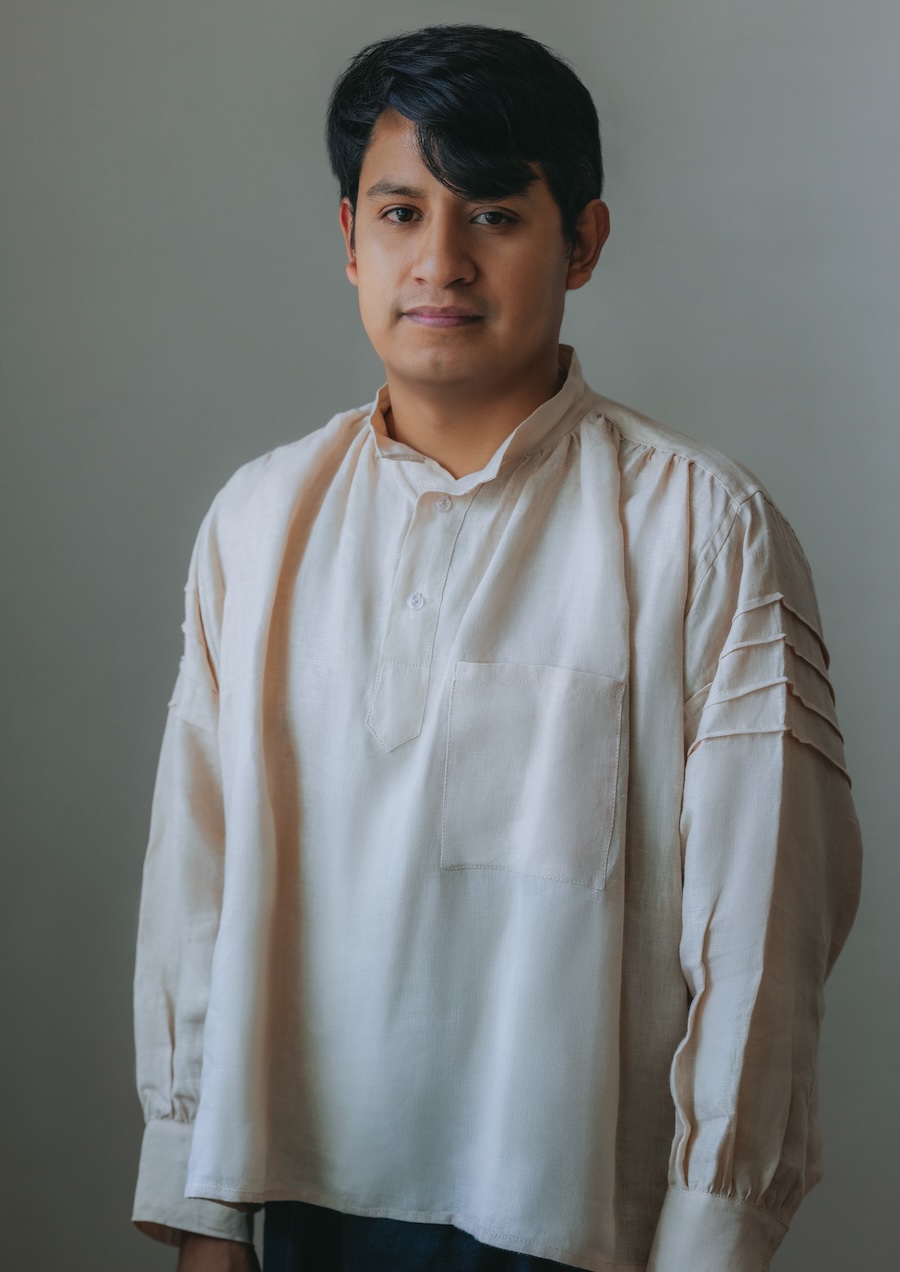
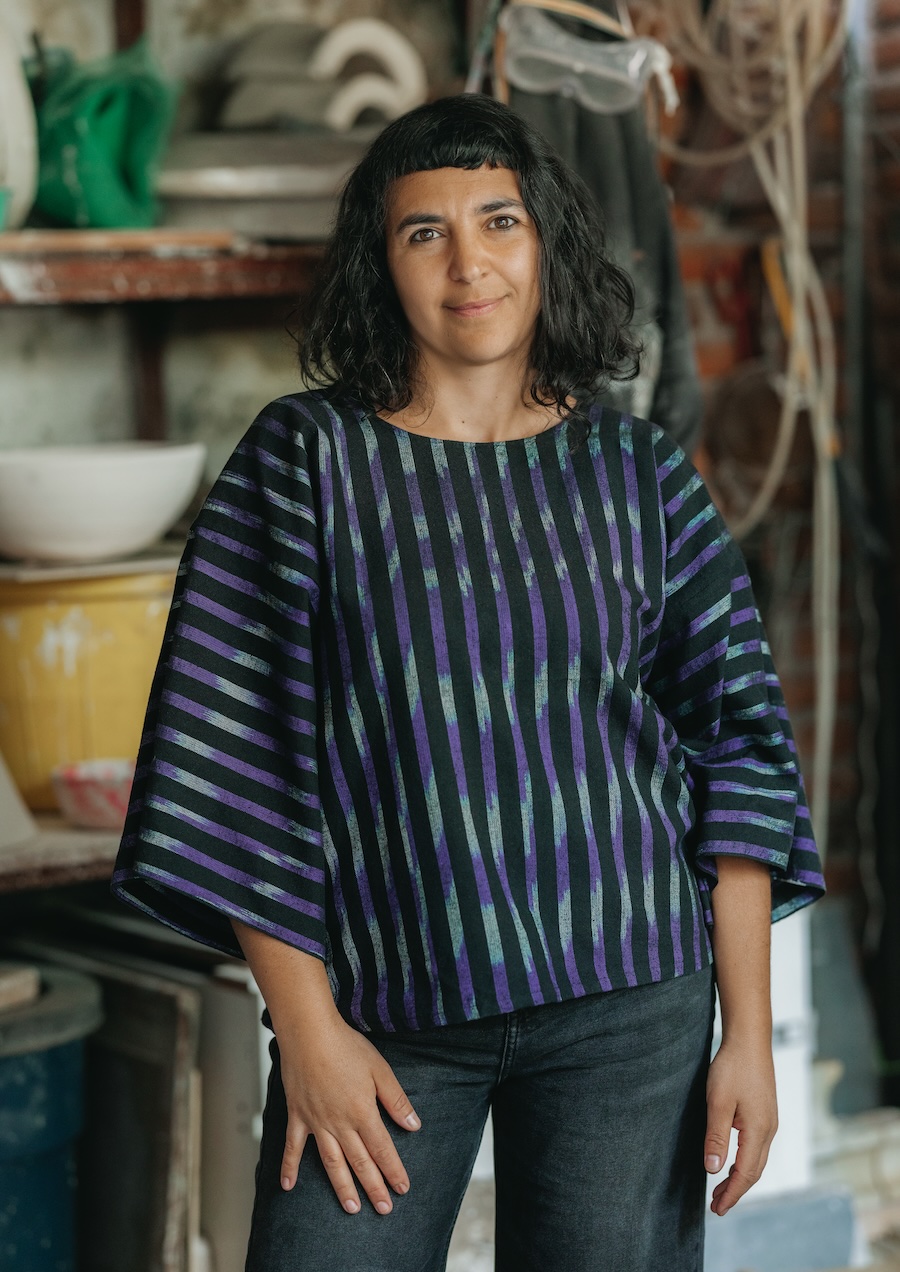
I consider my work a way of understanding the body. I am an heir to the textile tradition of the Nahua communities in the Sierra Norte de Puebla and grew up surrounded by stories, threads, embroidery and weaving that taught me to see the body as a unique expression in coexistence with nature.
Unlike the women in my family who learned the textile processes from their mothers, I had to investigate, ask questions and be persistent in order to understand the textile languages. Eventually, women from my family and other communities shared their knowledge with me, so I could continue my work.
At the Yolcentle Textile Workshop that I founded, the team develops two lines of work: one that recreates textile pieces from different periods in order to document Nahua expressions, and another that brings these styles to a younger audience, using traditional silhouettes but with fabrics such as silk, linen, cotton and wool. My grandmother used to tell me stories about the textile past of our community and natural materials that were becoming difficult to obtain. She made me imagine the past through touch. I want our textiles to do the same, so we use linens of different weights, silks in various weaves, mercerised and unbleached cottons, and naturally dyed wool. I carry out fieldwork across much of the country, searching for the best fibres.
Our creations are inspired by the landscape: a blouse might evoke the mountains, a rebozo (shawl) the mist, and a quechquemitl (traditional garment) the sky. Together, they form a symbolic map of the nature with which we coexist.
In a world where everything seems accelerated, artisans and creators draw on tradition and empirical knowledge to create objects that follow timeless logic, but are continually evolving. These pieces reflect what we live and learn, forming a true expression of ourselves, our collective and our society.
I make utilitarian ceramics, working with both form and decoration and drawing on the traditional designs from the community where I grew up. I recover forms that have fallen out of use, such as the cántaro, once used to store water, and the jícara, a plate with a central ombligo or “navel” used for drinking atole de grano [fennel and corn soup]. I want these pieces to remain useful in everyday life while also being beautiful to look at and use.
I have been a potter since I was a young child, as I grew up in a family and community dedicated to pottery – specifically red burnished and green glazed pieces. I learned the craft and its gestures by watching the artisans, observing their movement and connecting with the clay-rich earth and my surroundings.
I work with the red clay of Patamban, the small mountain village in Michoacán where I grew up, as well as a white clay that is easier to find in Mexico City, where I now live. I use high-temperature firing to reinterpret traditional forms and techniques. Firing the pieces at these high temperatures means I can decorate them in a different way to the traditional pieces. My work is distinguished by its hand decoration, and I use my own mixtures of pigments and oxides, meaning that each piece is unique.
I think it is very important to make these traditional pieces contemporary so that they can reach a wider audience, and to reclaim the beauty of the form itself within the pottery tradition.
We should also take time to learn about practices that are passed down through observation and oral history, as these are practices that are connected to the natural environment and that have endured. I believe that we should incorporate contemporary practice while preserving the tradition – the more exchange there is, the more these traditional practices will be enriched.
We use cookies to improve your experience on our site. By using our site, you consent to cookies.
Manage your cookie preferences below:
Essential cookies enable basic functions and are necessary for the proper function of the website.
These cookies are needed for adding comments on this website.
Statistics cookies collect information anonymously. This information helps us understand how visitors use our website.
Google Analytics is a powerful tool that tracks and analyzes website traffic for informed marketing decisions.
Service URL: policies.google.com (opens in a new window)