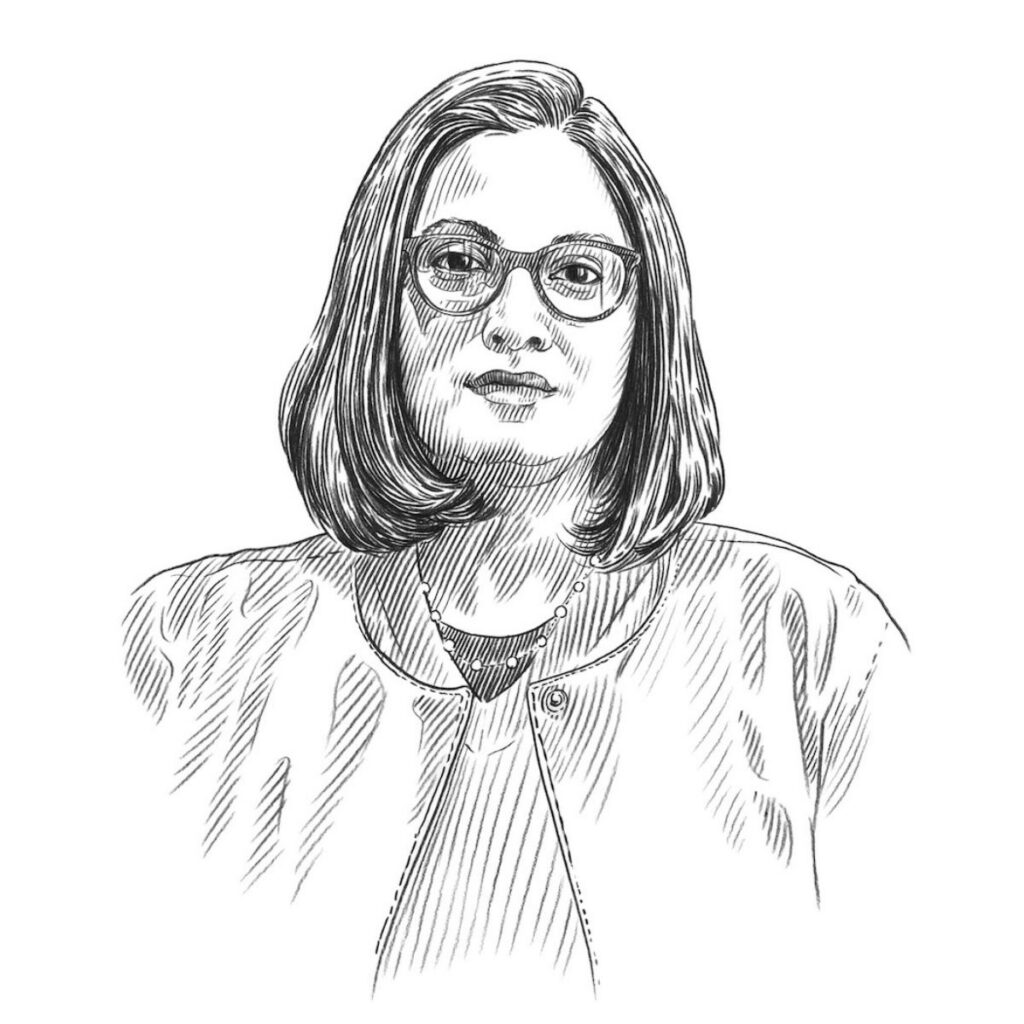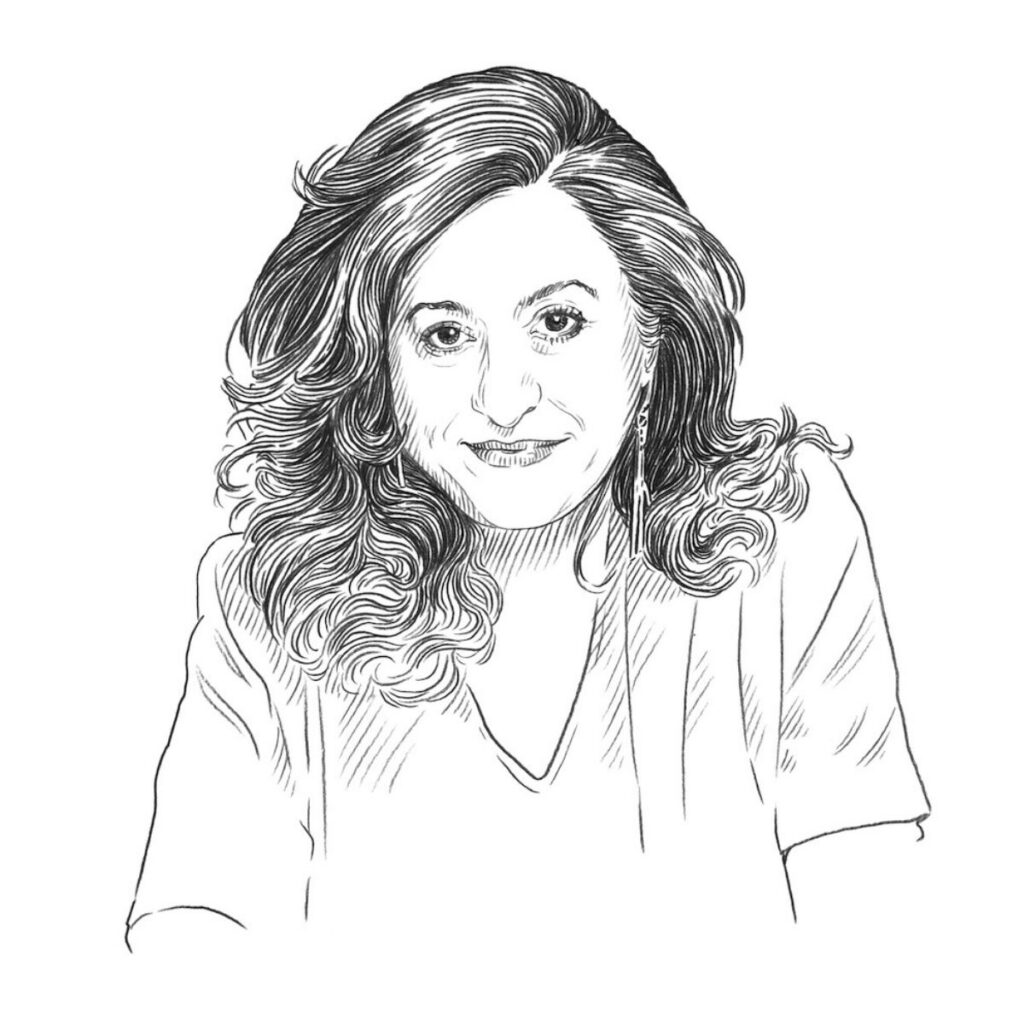
Luis
Monreal
Sheikha al-Mayassa and Luis Monreal, general manager of the Aga Khan Trust for Culture, reflect on heritage as an engine of social and economic development, from the building of the Museum of Islamic Art to conservation projects across the Middle East, north Africa and south Asia
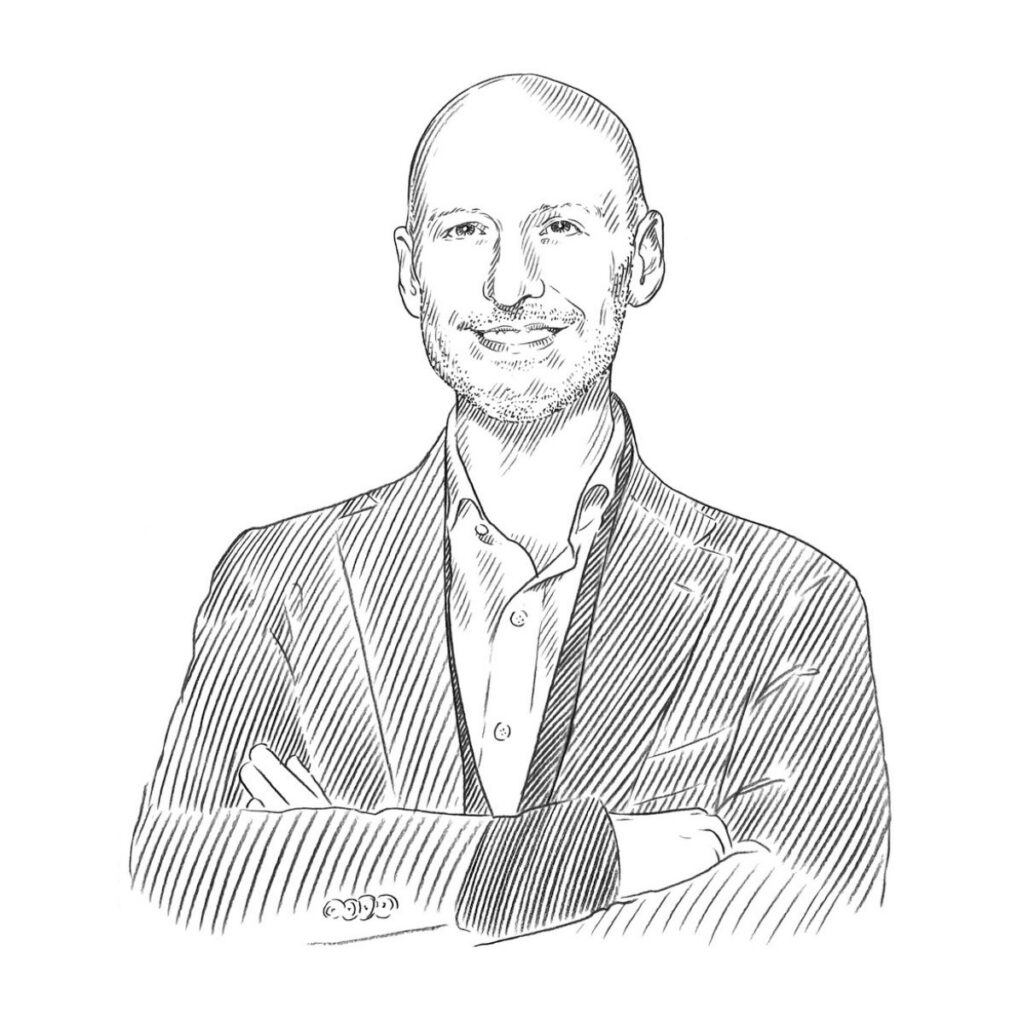
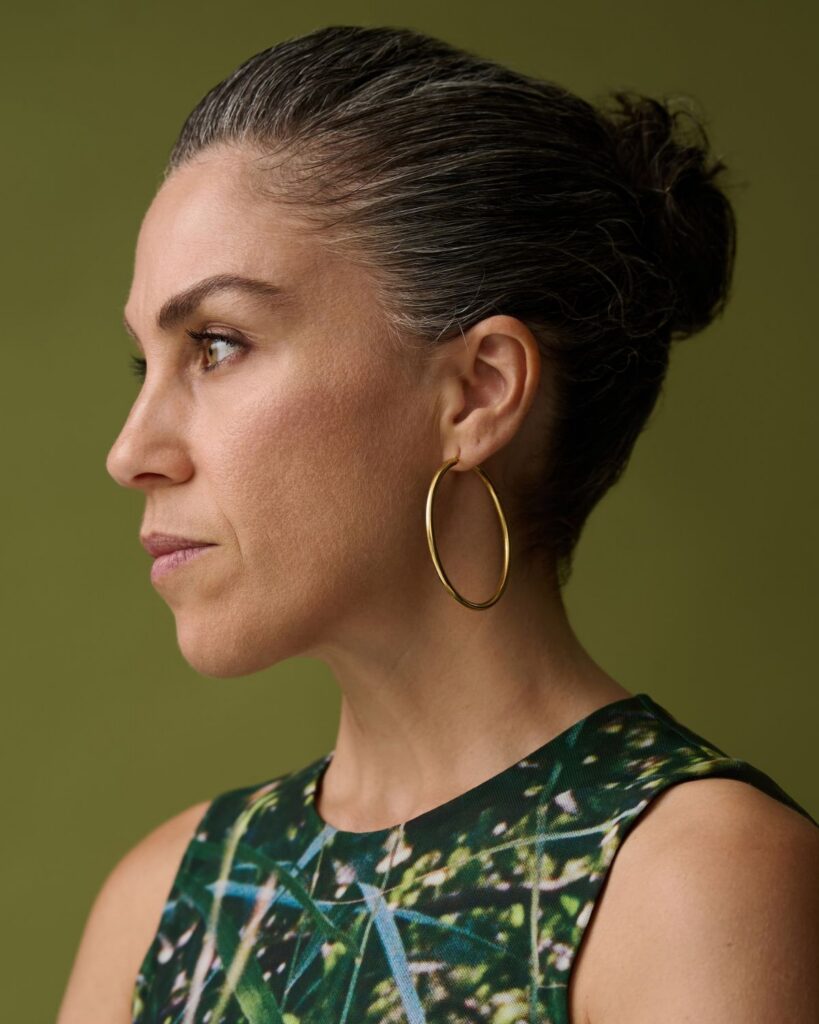
Cover image: Luis Monreal at the head office of the Aga Khan Foundation in Geneva, photographed in 2026.
Photo: Alex Teuscher
Luis Monreal at the head office of the Aga Khan Foundation in Geneva, photographed in 2026. Photo: Alex Teuscher
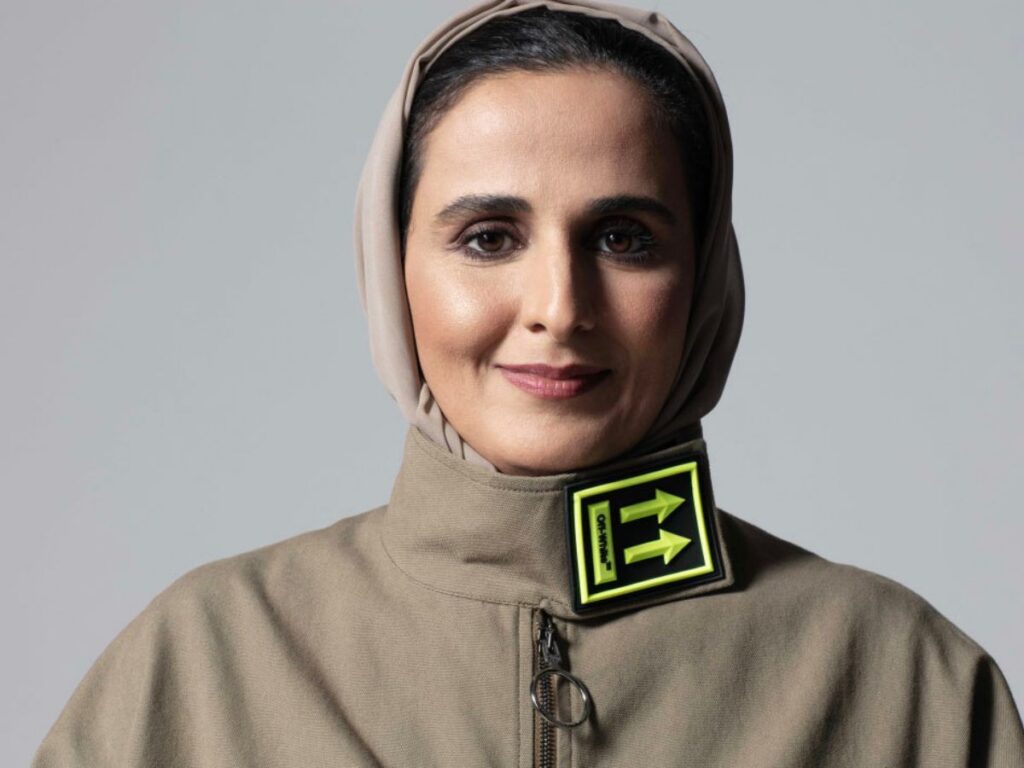
SHEIKHA AL-MAYASSA: Many of us are aware of the Aga Khan Foundation, a leading global development organisation working to address the root causes of poverty, particularly in Africa, Asia and the Middle East. Luis, can you tell me about the work of the Aga Khan Trust for Culture and how these organisations are related?
LUIS MONREAL: Our work at the Trust is within a much larger organisation, the Aga Khan Development Network. The Aga Khan Trust for Culture is the cultural agency of that institution and was founded by His Late Highness Prince Karim Aga Khan IV. He believed that culture is a powerful instrument for many things, including political relationships and economic development.
SHEIKHA AL-MAYASSA: Culture isn’t the obvious vehicle for socioeconomic development. Could you elaborate on why His Highness Prince Karim chose to focus on this?
LUIS MONREAL: I believe culture is an economic asset. There are many countries in the developing world that have a disproportion between the wealth of their cultural heritage, their monuments from the past and their current economies. People travel to see this cultural heritage, and that is an incentive for the development of local economies. The first major project of the Trust was building a new urban park in Darb al-Ahmar, one of the poorest neighbourhoods of Cairo, in 2002. This experience showed us that developing a new urban park and restoring a neighbourhood, its monuments and public spaces, not only brings capital into those areas, but also stimulates meaningful economic growth and creates employment.
SHEIKHA AL-MAYASSA: Let’s talk about your relationship with Qatar, which dates back 30 years.
LUIS MONREAL: Before working for the Trust, I was elected as a member of the Aga Khan Award for Architecture jury. When this concluded, I was asked to be involved with an operation launched by the government of Qatar – building the Museum of Islamic Art (MIA). In 1995 or 1996, I met Domenico Negri, an Italian architect living in Qatar, who accompanied Qatari art collector Sheikh Saud bin Muhammed Al Thani to Geneva, Switzerland, to talk about how this new museum could be built. The recommendation was to create an architectural competition, and I was subsequently invited to be the chairman of the jury.
SHEIKHA AL-MAYASSA: What happened with the competition? I remember having lunch with Zaha Hadid, and she was very upset that the competition didn’t go ahead. Can you tell us how Qatar ended up with the landmark building by IM Pei?
LUIS MONREAL: The competition was not very successful. We invited eight architects to submit, with the intention that the jury would select two winners.
The Aga Khan Development Network
The Aga Khan Development Network works to improve the quality of life and build greater self-reliance in communities across Asia, Africa and beyond, from healthcare and education to economic development and cultural preservation. The Network is active in over 30 countries and encompasses over 1,000 programmes and institutions − some established more than a century ago – and employs around 96,000 people, the majority of whom are based in developing countries.
The Aga Khan Trust for Culture
The Aga Khan Trust for Culture was founded in 1998 and is built on the idea that culture can be a powerful driver of social and economic change. Its work ranges from restoring historic neighbourhoods and supporting musical traditions to recognising excellence in contemporary architecture. Its programmes include the Aga Khan Award for Architecture, the Historic Cities and Music programmes and the Aga Khan Museum in Toronto, which explores the diversity of Muslim cultures and their connections with the wider world.
Al-Azhar Park in Cairo, Egypt, the Aga Khan Trust for Culture’s first major project in 2002, which restored one of the poorest neighbourhoods, its monuments and public spaces. Photo: © AKTC
LUIS MONREAL (continued): They selected Indian architect Charles Correa and Saudi Arabian/Jordanian architect Rasem Badran. The rest of the story is rather complex. Pei was not in the competition and was, at that time, already retired. Badran was chosen as the winner and began developing the project conceptually, but it got out of hand. It became much larger than proposed, and we thought it would not be buildable without going through very complex engineering consulting.
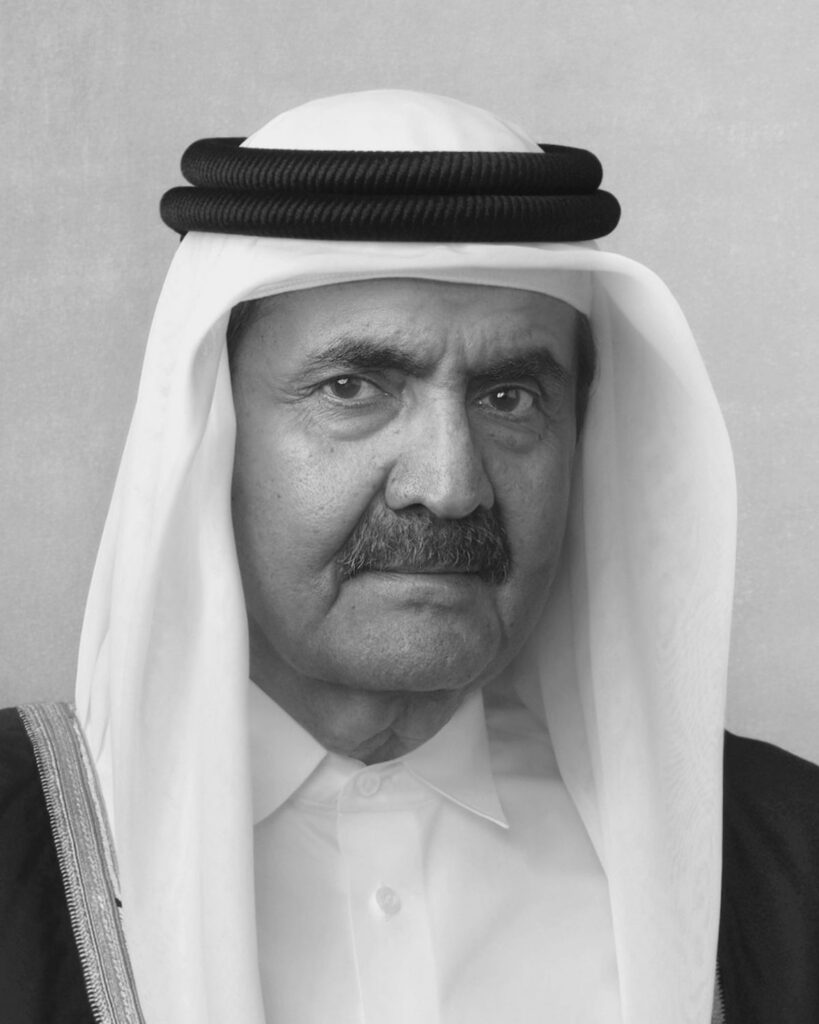
Your father, His Highness the Father Emir Sheikh Hamad bin Khalifa Al Thani, called me for a consultation with members of the government and Sheikh Saud. He asked how the project was developing, and I told him I thought it was going to be difficult to build what was being proposed. The capital investment required would be enormous. For that kind of investment, we could have a major building designed by a signature architect. He immediately asked if I thought it would be possible to convince Pei to do the project.
I had a long friendship with Pei and so decided to organise a trip to New York to introduce Sheikh Saud to him. We met at his club for lunch and got a very polite answer. He said: “I’ve already built my last museum, I’m very old and I don’t want to build another. On top of that, I’m not an expert in Islamic architecture.”
SHEIKHA AL-MAYASSA: So how was he convinced?
LUIS MONREAL: His Highness the Father Emir Sheikh Hamad bin Khalifa Al Thani spoke with Pei. Then, Sheikh Saud and I continued the dialogue. It ended with a visit to Cairo, and when we stood in front of the Mosque of Ibn Tulun, he had what I would call a conversion to Islamic architecture. He said: “OK, I think I can do the museum.”
After Cairo, we had dinner with His Highness the Emir, Sheikha Moza and Sheikh Saud, during which the agreement was set up. The next morning, we visited His Highness and Pei said: “Oh, I didn’t mention – and it’s a small detail – but I don’t want the land that you proposed for my museum.” He took His Highness to the window of his office, pointed to the middle of the water and said: “I want my museum there. I don’t want my building to be occluded by the urban development and skyscrapers that are going to continue to grow on the Corniche.”
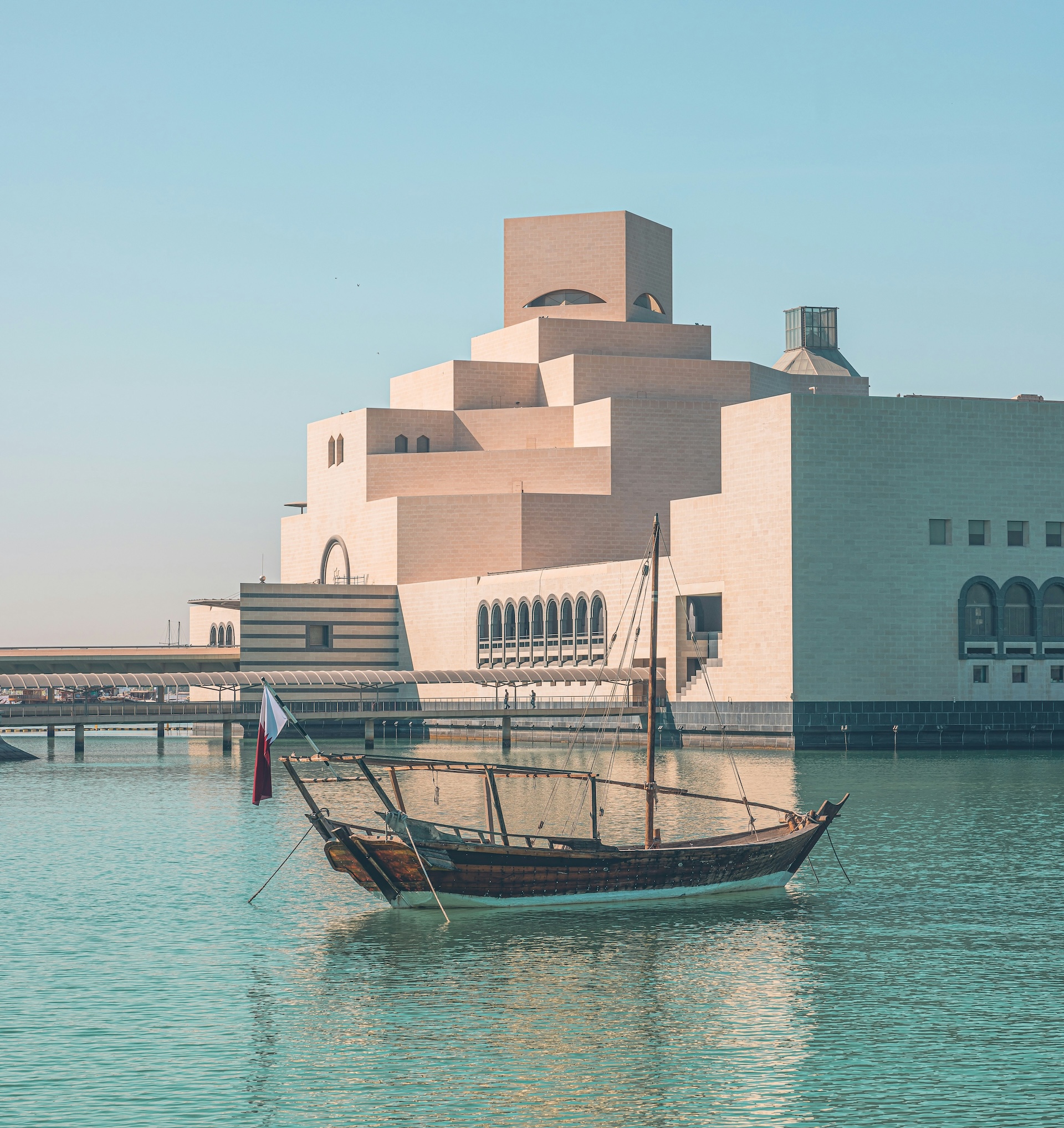
That choice was as brilliant as the architecture itself. It allows MIA to be a beacon that can be viewed from everywhere. Together with the National Museum of Qatar (NMoQ), MIA has become an iconic symbol of the country.
SHEIKHA AL-MAYASSA: When NMoQ first opened in 1975, it was one of the very first museums established in the Gulf region, and it was awarded an Aga Khan Award for Architecture in 1980.
Musuem of Islamic Art
The success of the Museum of Islamic Art established a model for Qatar Museums of commissioning celebrated international architects to design landmark buildings. In 2019, the National Museum of Qatar – first founded in 1975 – was reimagined by prominent French architect Jean Nouvel.
LUIS MONREAL: Given every three years, the Aga Khan Award for Architecture is different to other architectural awards that exist today because, like the Trust, the objective is to promote and celebrate the role of architecture in its social function. It not only recognises important contemporary buildings, but also what I call “architecture without architects” – community projects that resolve social questions – and the effort made by contemporary architects to respond to the housing needs of the most vulnerable parts of the population.
The Aga Khan Award for Architecture also has a unique structure. We have about 750 volunteer nominators around the world, and they send a number of proposals to our offices in Geneva to be examined by the master jury. The proposals are all for existing buildings that have been in operation for at least two years, not future projects.
The award not only judges design, but also user satisfaction. Each year the master jury receives about 450 proposals and shortlists 20 projects. Reviewers are sent to look at the selected projects in person and report their findings to the master jury, which then decides which ones to award.
SHEIKHA AL-MAYASSA: The work of the Aga Khan Foundation is phenomenal. In 2024, Qatar Museums signed an agreement with the Qatar Fund for Development to work with the Foundation on projects. I’d love to hear what you anticipate will happen with these restoration and conservation projects in Uzbekistan.
LUIS MONREAL: This is a very important project, as we will be restoring one of the most important mosques of the Timurid period, the Bibi-Khanym Mosque in Samarkand. It’s challenging, as the mosque was built very hurriedly in the 14th century and then suffered large interventions, particularly during the Soviet occupation of Uzbekistan. These introduced tonnes of concrete into the structure that is negatively affecting the stability of the building. It’s the last chance to preserve a building of great importance in the history of Islamic architecture.
SHEIKHA AL-MAYASSA: It’s great to see that the conservation of the Bibi-Khanym Mosque is a priority for the leaders and government of Uzbekistan. This is an opportunity to not only preserve a very important part of Islamic architecture but also to revive traditional skills, techniques and craftsmanship. These are all important threads of history that need to be made available to younger generations.
When we visited Uzbekistan together, I was so impressed by the level of craftsmanship – it’s superb. One of our objectives in our new projects is to highlight craftsmanship from this part of the world. You have also worked in Afghanistan and Pakistan – I would love your insight into the level of craftsmanship there.
LUIS MONREAL: In countries such as Pakistan, Afghanistan, India and Uzbekistan, there is a living craftsmanship that is very useful in terms of conservation. When we restore monuments, there are a number of technical skills that we need to bring together – architects who have been trained in the restoration of historic buildings, a very specific type of engineer, and craftspeople who are the basis of all the work done. When we work on urban conservation projects, our aim is to create teams of national citizens, both men and women. In many places we have women working as archaeologists. It is necessary to continue to develop these skills in all countries for the future conservation of our cultural heritage.
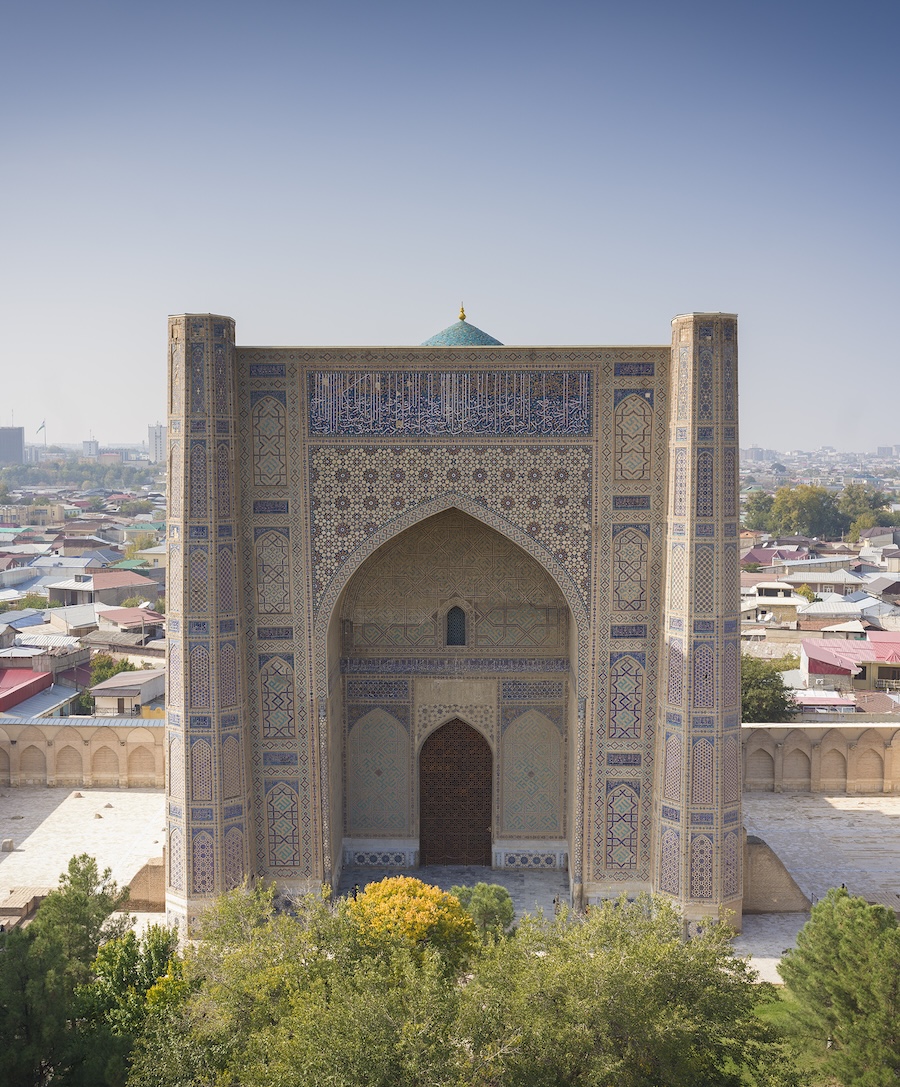
The 14th-century Bibi-Khanym Mosque in Samarkand, Uzbekistan. Photo: © AKTC
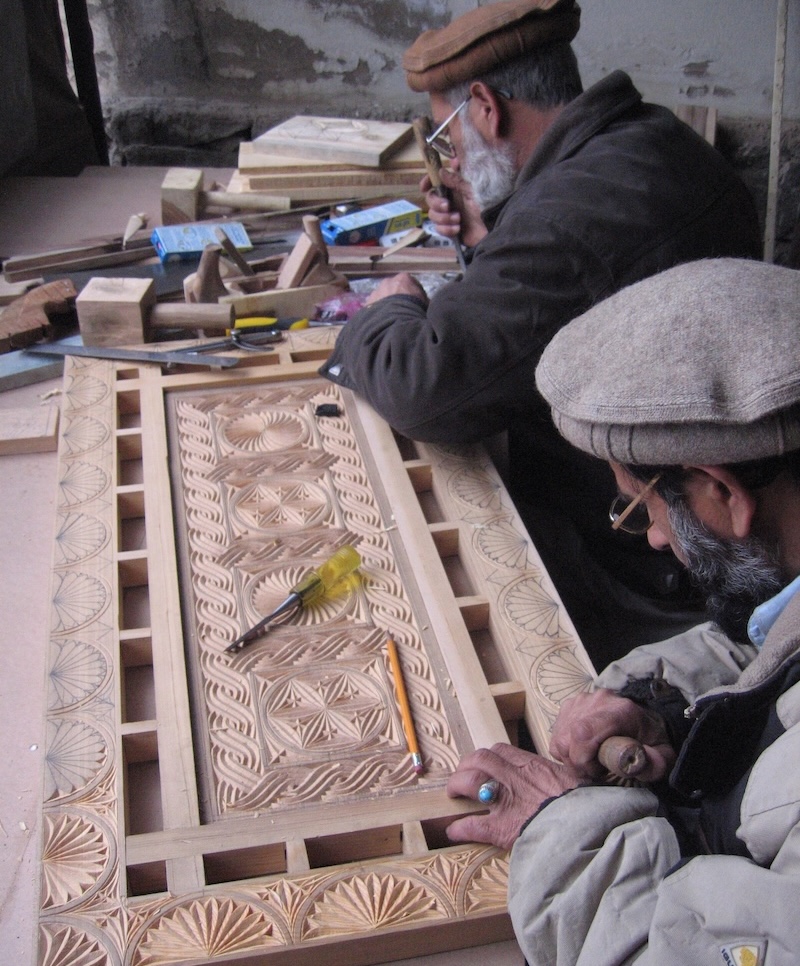
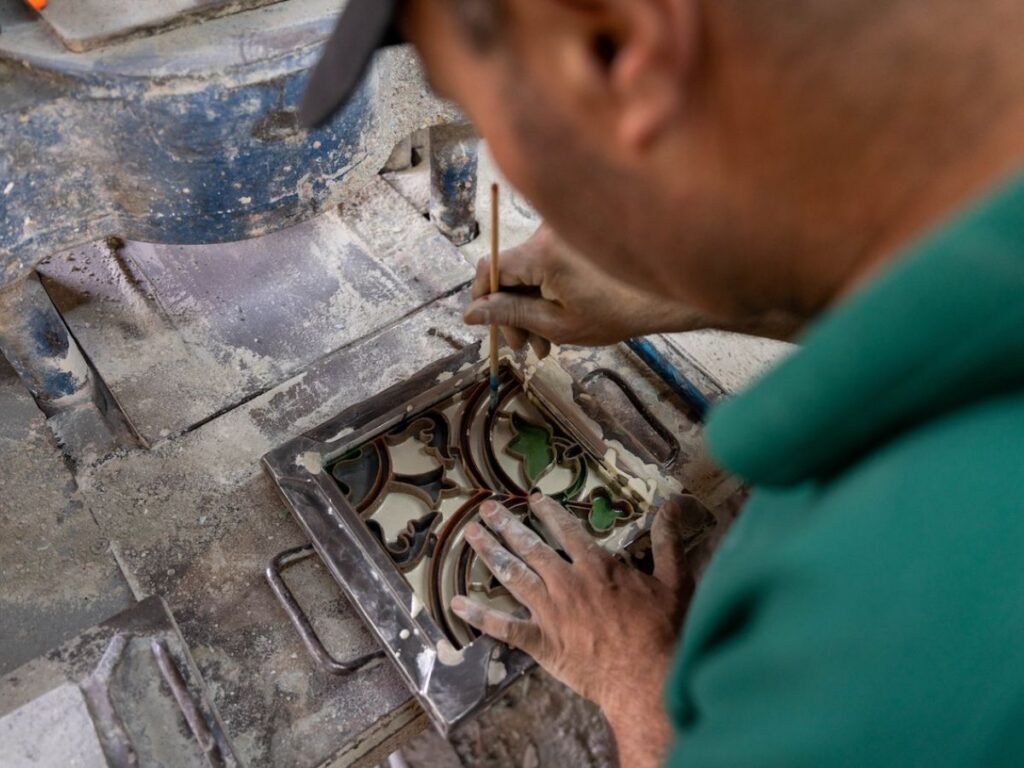
Craftspeople at work in Afghanistan, where the revival of traditional skills and techniques is being encouraged as a socioeconomic activity. Photo: © AKTC
SHEIKHA AL-MAYASSA: I recently read a quote from you where you said: “Culture is not a mortgage but an asset to be exploited for the benefit of communities.” I think that’s really interesting, as you don’t look at only the beauty and conservation of cultural heritage, but also the economic benefit to communities.
LUIS MONREAL: For the past 20 years, we have been developing the notion that culture is a viable economic asset. The mentality is slowly changing, but there are still many who believe that all buildings are a “mortgage”. Firstly, because they need to be maintained; secondly, because without imagination you cannot adapt them to contemporary uses. That’s a fundamental problem. Historic buildings cannot be restored and then abandoned with no function, only to be restored again 25 years later. In order to justify the investment in restoration, you need to give them a contemporary use.
Unfortunately, in many developing countries, monuments are often publicly owned and budgets for maintenance are not adequate. This perception has to change at a government level. The notion of privatising historical monuments in a reasonable way and the participation of the private sector in maintaining them is fundamental to preserving cultural heritage.
SHEIKHA AL-MAYASSA: I think you have a lot to share with the world about how this can be done effectively and efficiently without losing the historical significance of the monuments. How would you perceive our region if more people made it a priority to make culture an economic driver for development, progress and growth?
LUIS MONREAL: Around the Middle East, North Africa and South Asia region, there are a number of nations that have made great progress, Qatar in particular. The development of museums, the preservation of architecture, what the French call mise en valeur (highlighting the value) of the archaeological sites you have – all this generates a creative economy, creates new professions and stimulates the younger generations. Fundamental to this is the engagement of the younger generations and strategies within education to introduce these new specialities into the curriculum.
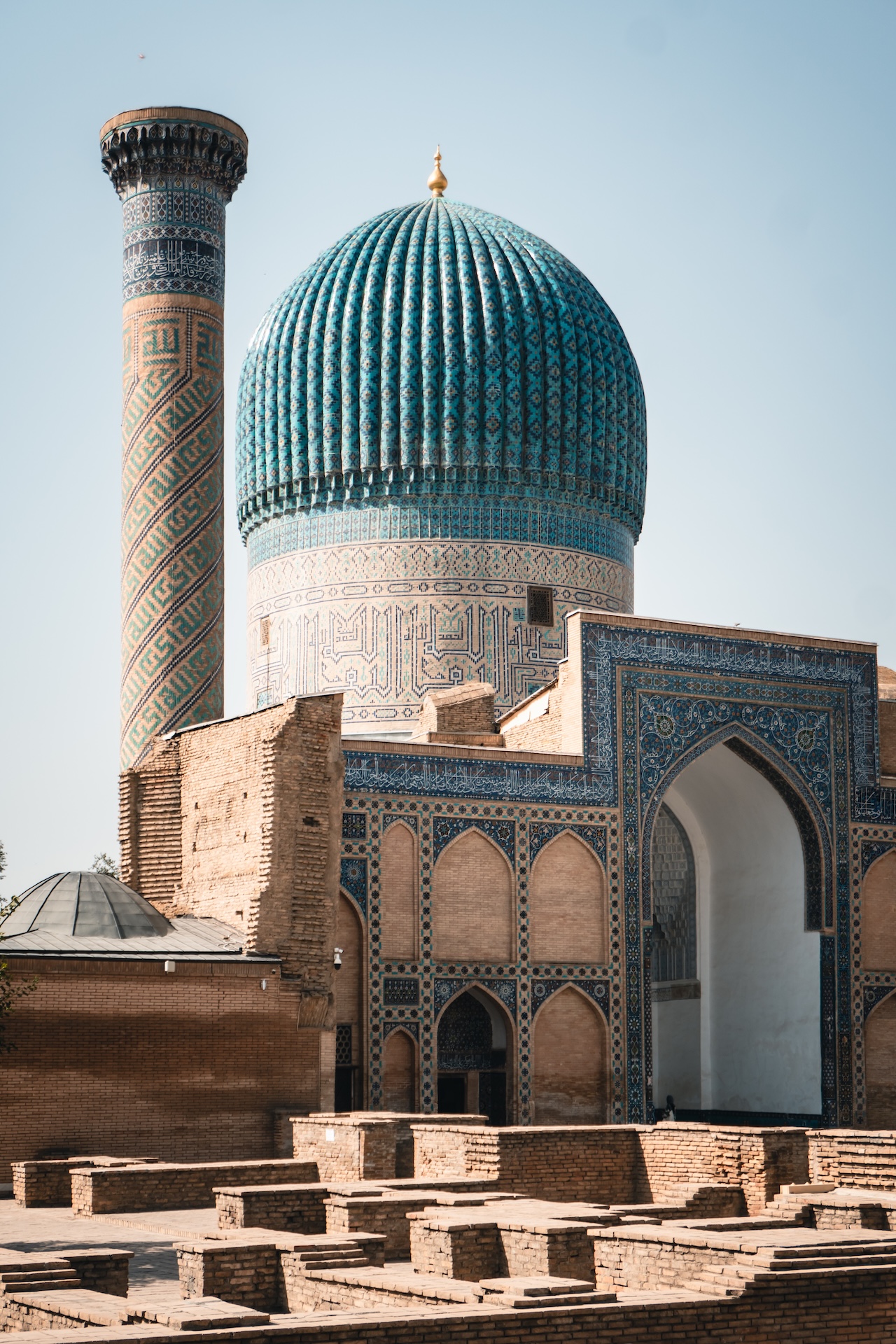
The restoration of the Bibi-Khanym Mosque is one of many Aga Khan Foundation conservation projects that are planned in Uzbekistan
SHEIKHA AL-MAYASSA: During the 1980s you personally oversaw the conservation of the tomb of Nefertari in Luxor and the Sphinx in Giza, Egypt, and Buddhist temples in the Mogao Caves, China. Can you tell me more about those experiences and how they have informed your life journey?
LUIS MONREAL: If you want to interest people in conservation, you need to create a story that is engaging. That’s why in 1987, when I was the director at the Getty Conservation Institute in California, I proposed the restoration of the tomb of Nefertari to the Egyptian government.
At the time, nobody could think of what kind of treatment could be applied to the tomb of such an important figure in Egyptian history, with some of the best-quality mural paintings of the New Kingdom period. Because of my relationship with Ahmed Kadry, the director general of antiquities in Cairo, and his belief in the project, however, we were able to do it.
The problem was very simple and very complex at the same time. Eight hundred years ago, there was a catastrophic flood in the Valley of the Queens that flooded the tomb. This generated humidity that was pushing all the painted stucco out of the walls. A treatment was found and the tomb was restored. That created a story in the media and had a lot of influence in creating a positive public opinion about the conservation of cultural heritage.
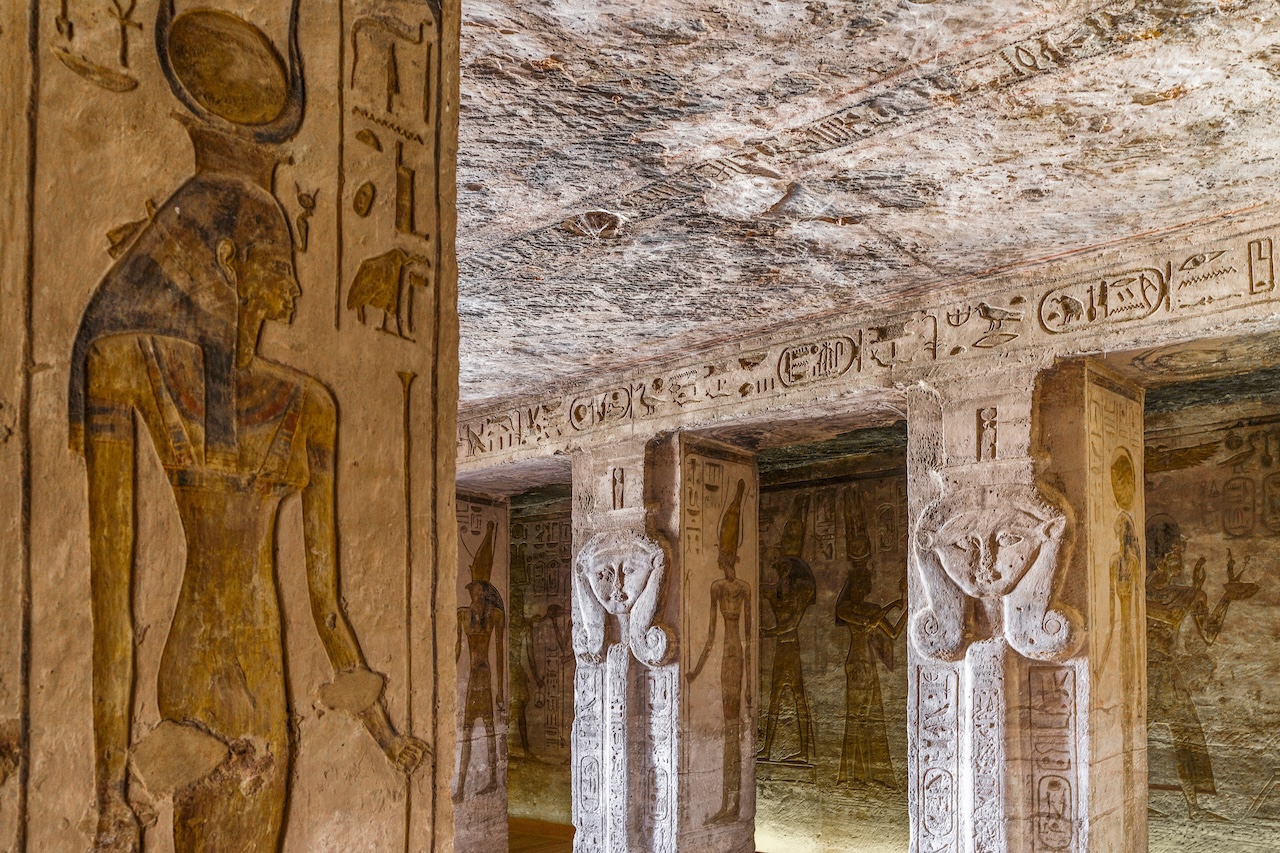
The restored tomb of Nefertari in Luxor, Egypt. Photo: © Getty
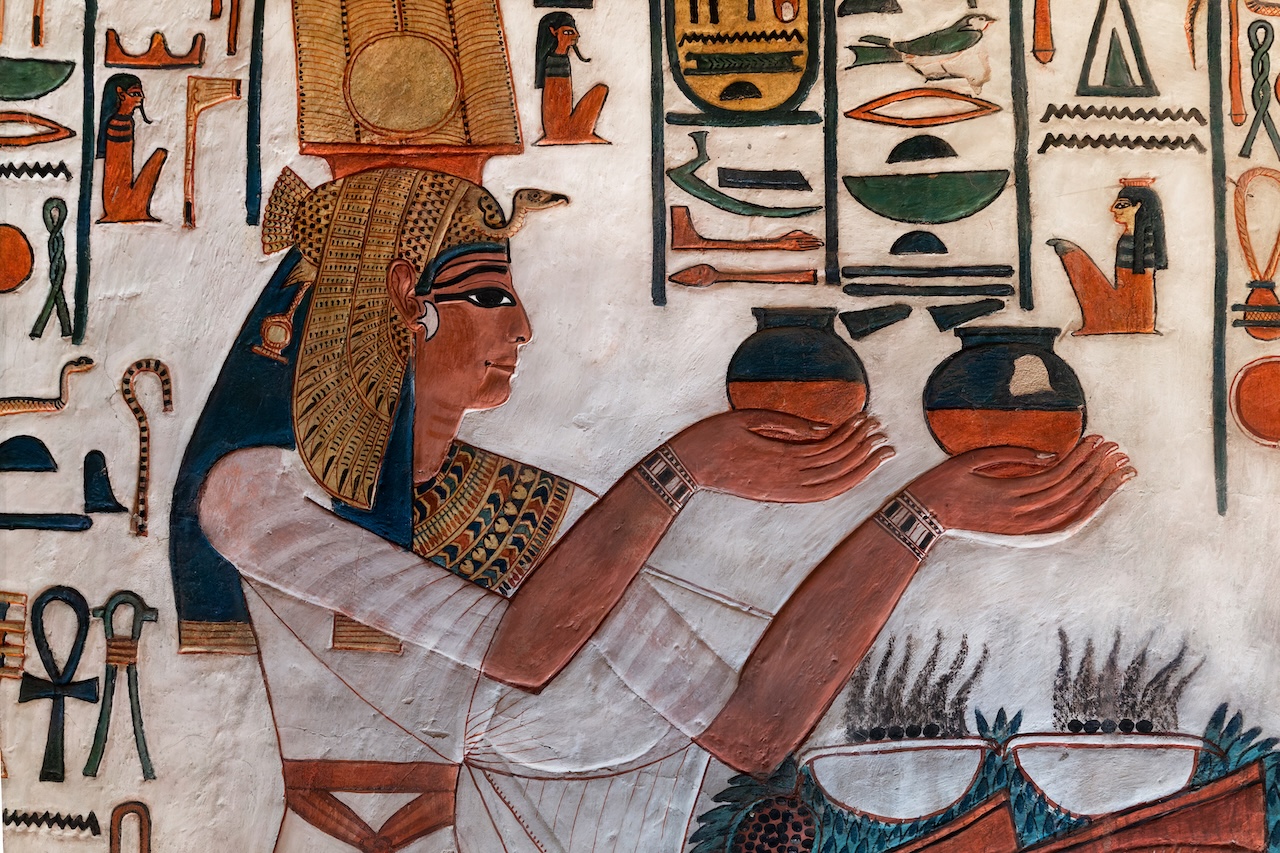
Some of the treated stucco paintings on the tomb walls. Photo: © AKTC
LUIS MONREAL (continued): The Mogao Caves at Dunhuang in China is another story. This operation, also initiated with the Getty Conservation Institute, has allowed the Chinese to create a very powerful research and conservation institute in Dunhuang. Ultimately, that is our objective – not just to restore cultural heritage, but to make sure that the countries don’t need foreign support to continue conservation work and to ensure conservation knowledge is transmitted to future generations.
SHEIKHA AL-MAYASSA: Is the work of the Getty Conservation Institute similar to that of the Trust?
LUIS MONREAL: There are similarities and differences. They use the same technological resources, but the Getty Conservation Institute deals with individual works of architecture and art, while the Trust develops projects that last for a long time in historic cities. We stay in cities for 15 or 20 years, which is the only way to achieve change. Our work is geared towards socioeconomic development and brings not only conservation skills but ancillary resources. We create microfinance programmes to support social development and vocational training programmes alongside the conservation work to train hundreds or thousands of young people.
SHEIKHA AL-MAYASSA: When we presented the Dan Flavin / Donald Judd: Doha exhibition, you surprised me by telling me you collected these artists many decades ago for CaixaBank. How did you develop an eye for this kind of art?
LUIS MONREAL: After I left the Getty Trust, I was the director general for La Caixa Foundation from 1990 to 2000. The savings banks in Spain at that time were considered charities and had to invest part of the net profits in social, cultural or research activities. We invested in Aids research, built several science museums and collected contemporary art. Today, La Caixa Foundation has one of the most important contemporary art collections in Europe.
The Mogao Caves
The Mogao Caves are a sprawling Unesco World Heritage-listed complex in Gansu Province, China. First carved in 366CE, the ancient Silk Road site contains roughly 500 surviving grottoes housing over 45,000 sq m of Buddhist murals and more than 2,000 painted sculptures.
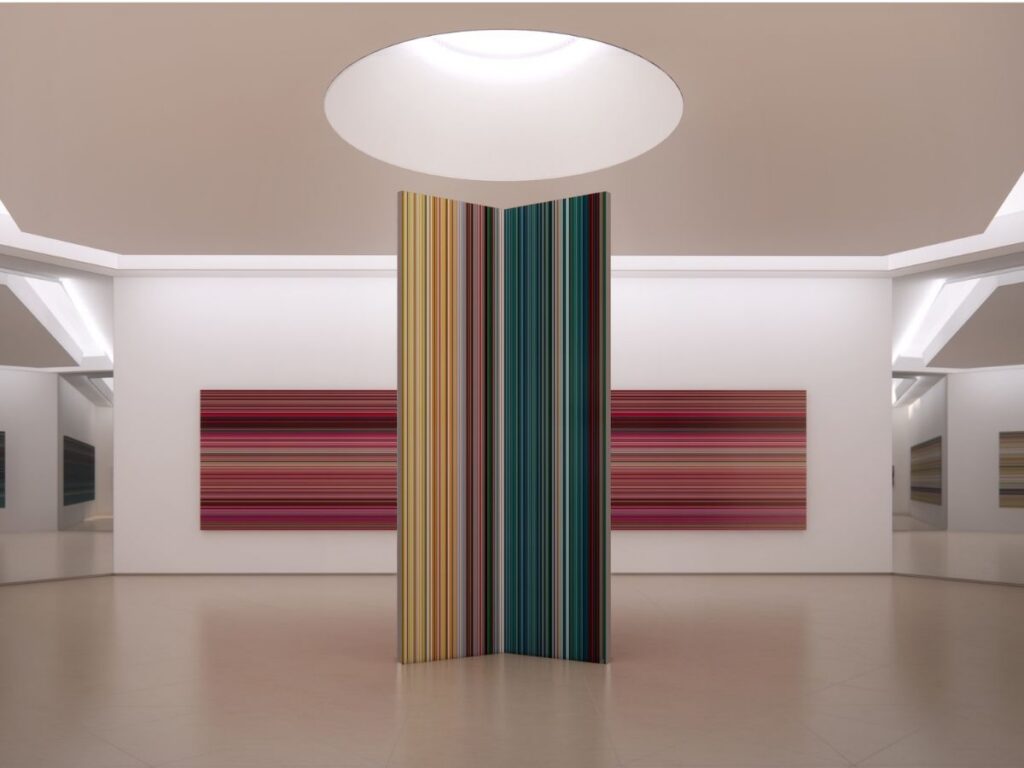
Dan Flavin / Donald Judd: Doha
Organised by the Los Angeles County Museum of Art (LACMA) in collaboration with Qatar Museums, Dan Flavin / Donald Judd: Doha featured two of the most influential figures of minimalism. The exhibition took place at QM Gallery – Al Riwaq from October 2023 to February 2024.
SHEIKHA AL-MAYASSA: You have so many different chapters in your life. How did you get so involved in arts and culture? Was there a particular childhood experience that inspired you?
LUIS MONREAL: My father was an art historian specialising in medieval art, and I visited museums with him from the age of 10. I also had very good professors in art history and archaeology at university. When I finished my studies, my father was not at all in agreement with my plan to be an archaeologist. Spain was a poor country at that time, outside of Europe and suffering the effects of civil war. My parents were concerned that the direction I was taking would not support me in the future. I didn’t listen to them, and for my first job I enrolled myself with a Spanish archaeological mission to Egypt and Sudan during the construction of the Aswan Dam.
Young people should understand that a career cannot be fully planned. It is the result of accidents and coincidences. In my case, they were positive and I’m very grateful for that.
SHEIKHA AL-MAYASSA: When you are passionate about something and pursue it, despite advice you may get from your elders, it is an interesting journey. On your journey, you’ve worked in so many different fields. What would you like your legacy to be?
LUIS MONREAL: I don’t think in terms of legacy. I have built many things and they have all given me pleasure. When I look at the projects I have worked on, I think about the people who will use them, have a better quality of life and be proud of their environment. I hope that some of the younger people I have worked with have perhaps been inspired by things I have said and that they find their own road in life. That’s the important thing. My legacy, if any, is going to be so diffuse that it will be difficult to identify.
THE POWER OF CULTURE is a record of conversations between Sheikha al-Mayassa and some of the most influential creative minds working today, exploring how culture operates as a force for change, shaping cities, identity and the ways we understand each another on a global stage.