
From a coastal palace built in 1906 to Jean Nouvel’s desert-rose-inspired landmark, the National Museum of Qatar has spent more than a century preserving the country’s stories
Words Greg Morrison
The new NMoQ under construction. The design features 76,000 individual facade elements. Photo: Ateliers Jean Nouvel
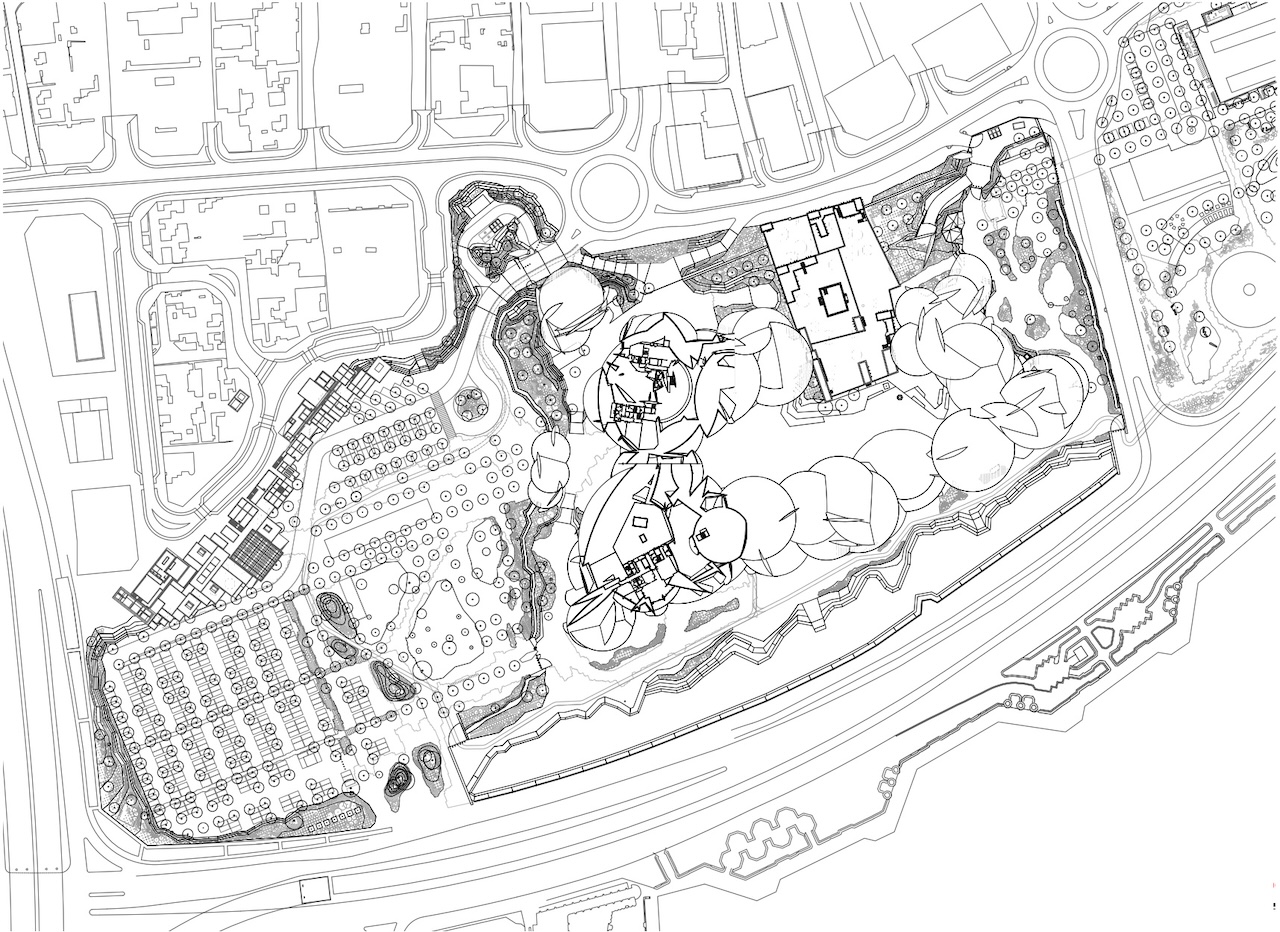
A site plan of the renovated National Museum of Qatar (NMoQ) by Jean Nouvel. Drawing: Ateliers Jean Nouvel
“This building is at the cutting edge of technology, like Qatar itself”
Jean Nouvel, architect of NMoQ
Walking along the waterfront of the Doha Corniche as the sun sets over the Persian Gulf, the skyline is otherworldly. A dramatic structure made up of huge, overlapping discs jutting at improbable angles creates a unique flower-like protrusion. The National Museum of Qatar (NMoQ) plays with the light, mirroring the dusk hues and throwing ever-shifting patterns of shadow across the surrounding landscape. What many people don’t realise is that this distinctive Doha landmark – designed by French architect Jean Nouvel and opened in 2019 – has a legacy that stretches back over 120 years.
The museum’s story begins in 1906, when Sheikh Abdullah bin Jassim Al Thani, Emir of Qatar from 1913 to 1949, built a palace on Doha’s coast. This served as the seat of government and the royal residence for many years until Sheikh Abdullah relocated to what is now the Amiri Diwan. The palace sat unoccupied for over 50 years until 1972, when His Highness Sheikh Khalifa bin Hamad Al Thani resolved to protect the intangible heritage that defined the nation.
Qatar has for millennia had an oral culture, with the nation’s traditions, folklore and history retold through song and spoken word, meaning written records are almost non-existent. As the country’s oil, gas and commercial industries grew rapidly, the pace of change was swift – and Qatar’s heritage needed to be archived before it was lost altogether. “The opening of NMoQ represented an early expression of Qatar’s commitment to preserving its cultural heritage and fostering a deeper understanding of its national identity,” explains deputy director of curatorial affairs, Tania Al Majid. The restored palace was home to NMoQ’s first iteration from 1975 to 2004.
In 1995, the Late Father Emir, His Highness Sheikh Hamad bin Khalifa Al Thani came to power and a new national cultural policy was set. “The vision of Qatar Museums is deeply rooted in the aspirations of the Late Father Emir, who recognised culture, heritage and education as essential pillars of Qatar’s national development,” says Al Majid. “His passing on 12 July 2026 serves as a moment to reflect on the profound impact of his leadership and vision in shaping Qatar’s cultural landscape.”
It was in 2004, after nearly three decades, that the museum closed its doors to undergo a major redevelopment project. The reimagined NMoQ sought to tell a story dating back 700 million years to the country’s geological origins, via the Roman era, when Qatar became a key player in the centuries-long global pearl trade, through to the discovery of oil in 1939 and natural gas in 1971, up to the present day and beyond. “Our curatorial philosophy is grounded in memory, ensuring that history remains a dynamic and evolving source of knowledge, reflection, and inspiration,” explains Al Majid. “To speak of the National Museum of Qatar is to speak of Qatar itself – its history, its present, and its aspirations for the future.”
In planning the museum, the board, leadership and wider team conducted rigorous community engagement, exploring how to create an institution that felt inclusive and representative for the Qatari people. The team conducted 252 interviews with people who either had lived experience of the nation’s history or learned about it through generational storytelling. These interviews, which covered various aspects of Qatari life, give personal insight to the museum’s vast collections.
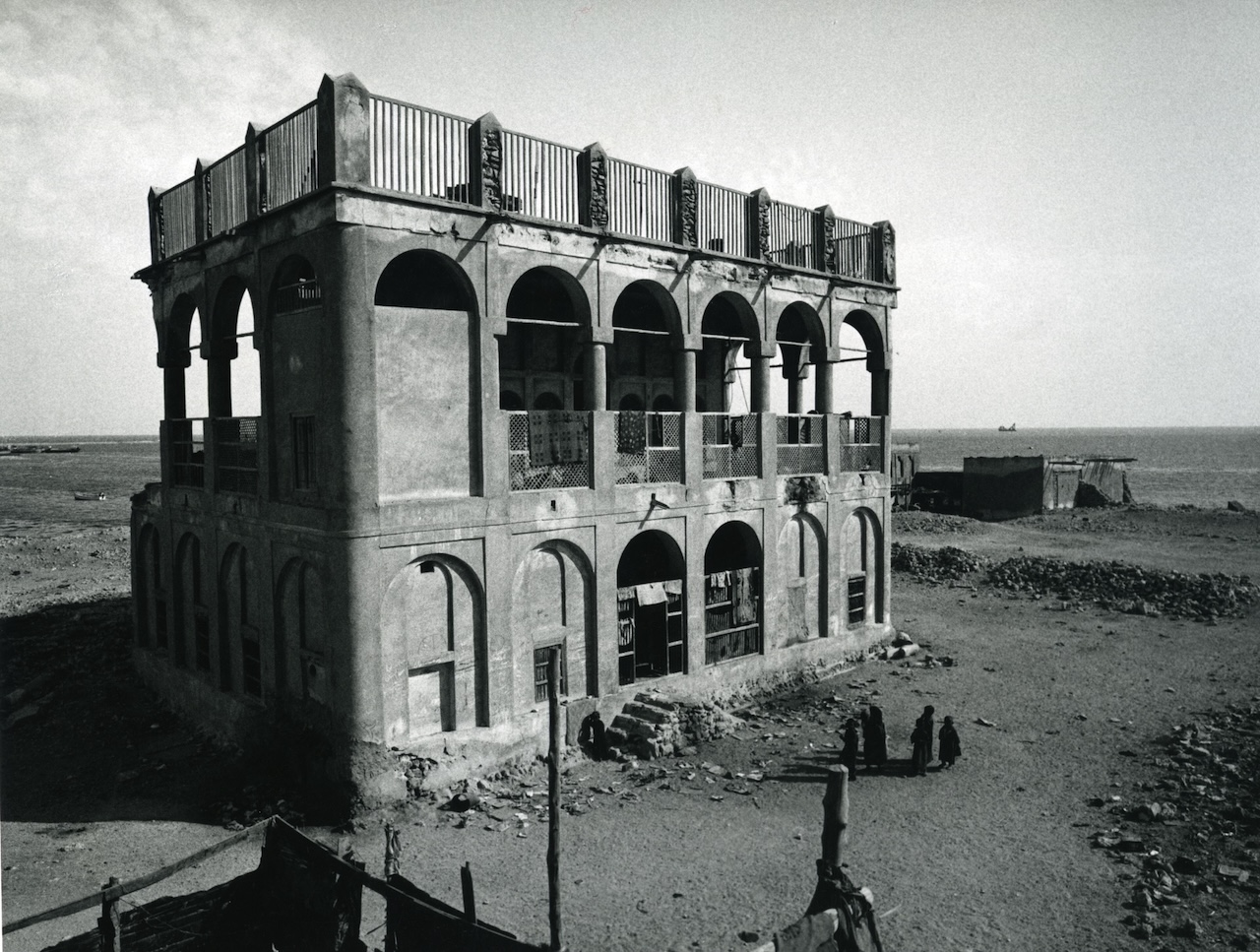
The historic palace of Sheikh Abdullah bin Jassim Al Thani in the 1970s. Photo: Courtesy of Qatar Museums
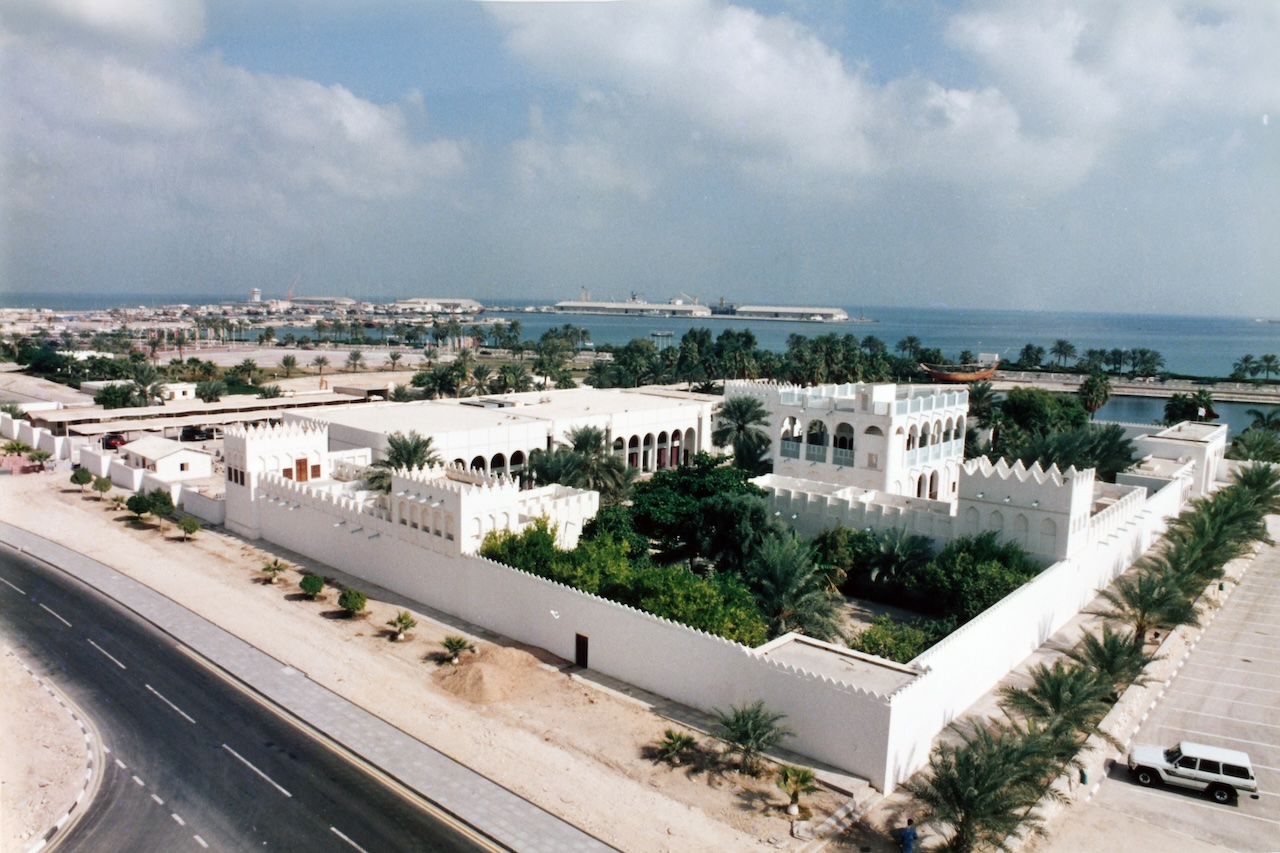
An aerial view of the old NMoQ, an early expression of Qatar's commitment to preserving its cultural heritage. Photo: Courtesy of Qatar Museums
Spanning 11 galleries, the museum’s permanent exhibitions cover 10,000 sq m and use image, film, sound and sensory cues. “Today, the museum’s mission continues to focus on bringing the unique story of Qatar and its people to life through inclusive, innovative, and holistic approaches,” says Al Majid.
The new NMoQ architecture was just as ambitious as the curatorial vision. The Pritzker Prize-winning architect Nouvel was first engaged for the project in 2002. Having scrapped his initial concept for an underground museum, he sought a structure that would become a landmark. Nouvel settled upon the desert rose – a naturally occurring cluster of gypsum crystals formed by wind, water and sand. “Taking the desert rose as a starting point turned out to be a very progressive, not to say utopian, idea,” he explains. “I say ‘utopian’ because, to construct a building 350 metres long, with its great big inward-curving disks and its intersections and cantilevered elements, we had to meet enormous technical challenges.”
The result is a marvel of engineering and aesthetics, and the discs are functional as well as sculptural. The structure forms a natural screen to create shaded areas, while recessed windows reduce solar gain, cutting the energy required to cool the interior.
The house of Sheikh Abdullah bin Jassim survives as the site’s oldest structure, sitting at the museum’s centre. “It’s the literal and figurative heart of the institution,” says Al Majid. “It retains many of its original architectural details, including the arcaded Inner Majlis and three original gates.”
Today, NMoQ’s building and collection preserve and celebrate Qatar’s rich history, while also cementing the country’s position at the forefront of international culture. In 2025 it commemorated its 50th anniversary through the landmark exhibition A Nation’s Legacy, A People’s Memory: Fifty Years Told. “The museum has become a dynamic cultural institution that fosters dialogue, learning, and exchange,” says Al Majid. “Through its permanent galleries, temporary exhibitions, international collaborations and educational initiatives, it continues to provide a space where Qatar’s past, present and future can be explored and understood.”
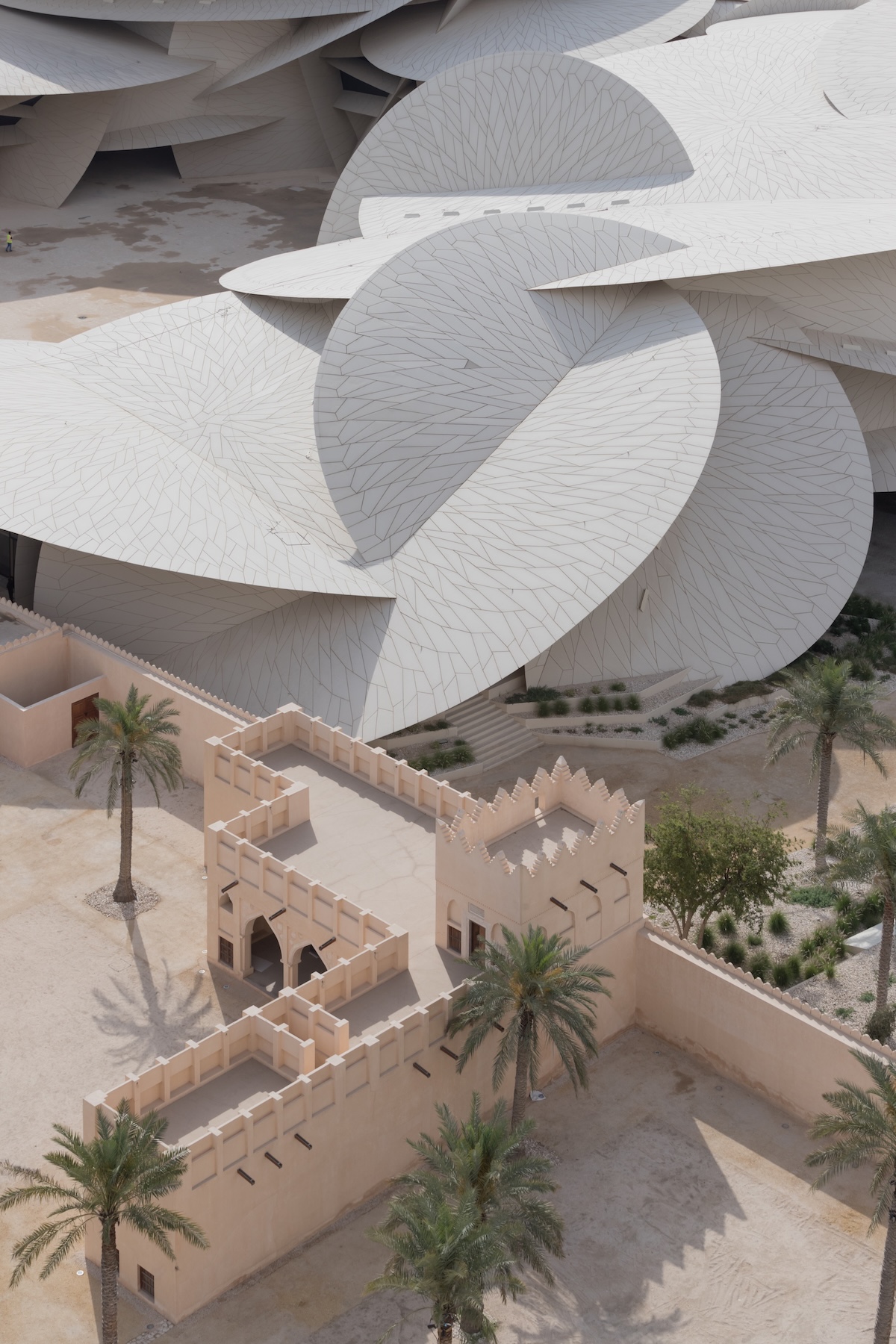
The new building, designed by Jean Nouvel, wraps around the old palace that housed the original museum. Photo: Iwan Baan
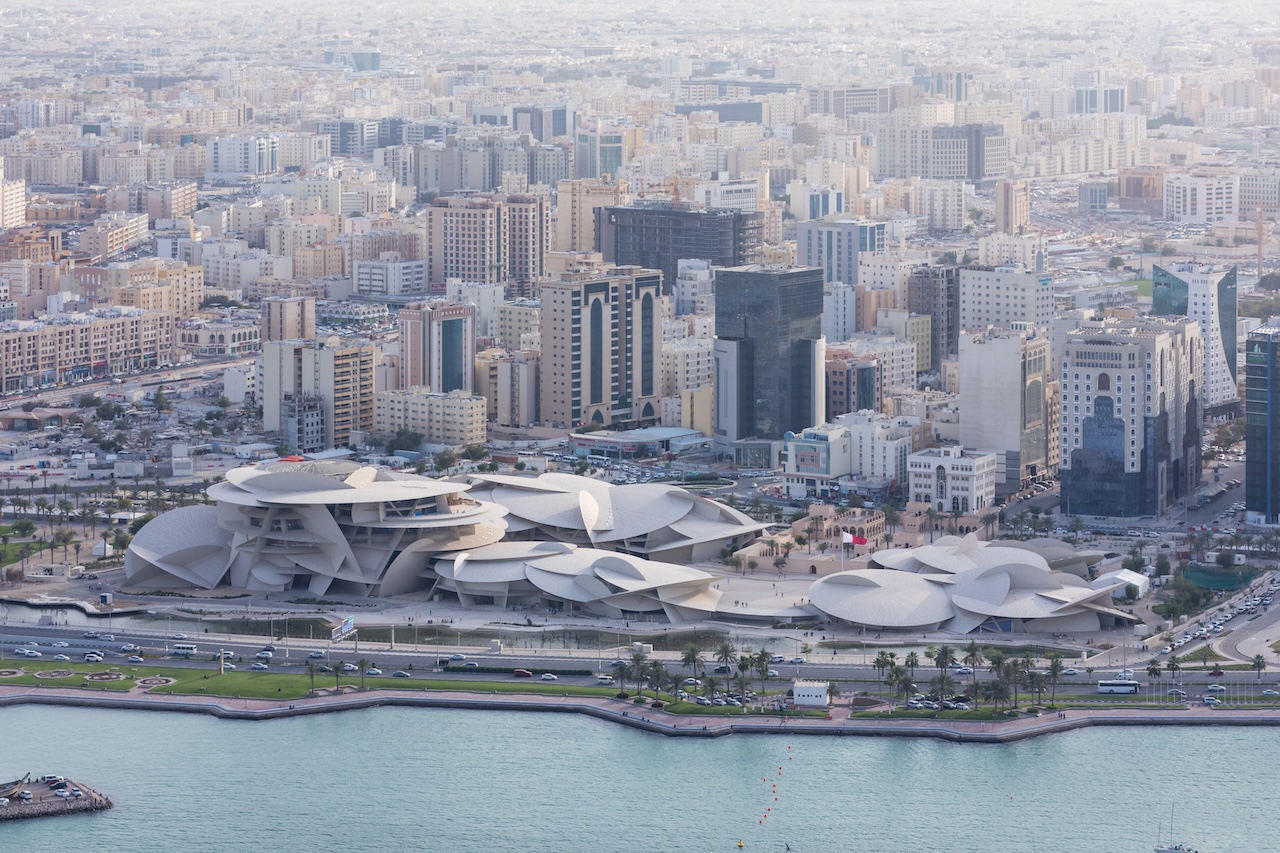
The new NMoQ stretches 350m along the Doha Corniche. Photo: Ateliers Jean Nouvel
“Just as the museum itself is a journey, so too was the process that led to its creation”
Sheikha Amna bint Abdulaziz bin Jassim Al Thani, former director of NMoQ
1972
The late Father Emir, Sheikh Khalifa bin Hamad Al Thani, initiates an ambitious project to create a national museum
1975
The Qatar National Museum officially opens within the Sheikh Abdullah bin Jassim Palace on 23 June
1977
The late Father Emir, Sheikh Hamad bin Khalifa Al Thani, opens the Marine Section of the museum
1980
The restoration of the historic palace wins the Aga Khan Award for Architecture
2004
The museum closes for a major redevelopment with a design by French architect Jean Nouvel
2015
The historic palace undergoes restoration to prepare for integration with the new design
27 March 2019
The new NMoQ is inaugurated by His Highness the Amir Sheikh Tamim bin Hamad Al-Thani
28 March 2019
The new NMoQ officially opens to the public
2025
NMoQ celebrates its 50th anniversary with the exhibition A Nation's Legacy, A People's Memory: Fifty Years Told. It also launches the “Evolution Nation” campaign, honouring individuals who have shaped Qatar’s cultural scene for the past five decades
We use cookies to improve your experience on our site. By using our site, you consent to cookies.
Manage your cookie preferences below:
Essential cookies enable basic functions and are necessary for the proper function of the website.
These cookies are needed for adding comments on this website.
Statistics cookies collect information anonymously. This information helps us understand how visitors use our website.
Google Analytics is a powerful tool that tracks and analyzes website traffic for informed marketing decisions.
Service URL: policies.google.com (opens in a new window)