Returning to Doha as the artistic director of Art Basel Qatar 2027, curator Wassan Al-Khudhairi reflects on the creative ecosystem she helped to shape as the founding director of Mathaf: Arab Museum of Modern Art – and whether the second edition of Qatar’s new fair can cultivate a lasting culture of collecting
Words Nadine Khalil
Portraits Jim Lafferty
Speaking to curator Wassan Al-Khudhairi returns me, unexpectedly, to a moment before the institutionalisation of culture in the Gulf had taken hold. I am reminded of a time when museums were still being imagined into existence, and when the cultural field operated with the immediacy of what Al-Khudhairi describes as “start-up” mode. When Al-Khudhairi first arrived in Doha in the summer of 2007, much of what now defines the city’s cultural identity had yet to materialise.
The Museum of Islamic Art, designed by the Pritzker Prize-winning architect IM Pei, opened at the end of that year – a landmark that, in many ways, signalled the beginning of Doha’s institutional trajectory. An exhibition staged in Doha in 2025-26, I.M. Pei and the Making of the Museum of Islamic Art: From Square to Octagon and Octagon to Circle, reflected back on that formative moment, tracing its conceptual and architectural evolution.
Mathaf: Arab Museum of Modern Art – which was foundational to the development of a modern and contemporary art scene in Doha and where Al-Khudhairi was founding director – opened as the city’s second major institution in 2010. “It’s interesting to reflect on the city of Doha when I moved here and before the World Cup in 2022,” says Al-Khudhairi. “It was a different place then. I feel grateful that I could be part of that period of its cultural growth. When I came on board, we were thinking about what it means to build a museum of modern and contemporary art in a place like Doha. And that question, if you asked it now, is so different than if you had it asked then.”
Al-Khudhairi speaking at the opening of the Hawai’i Triennial 2025, for which she was co-curator. Photo: Hawai’i Triennial 2025
Al-Khudhairi’s own trajectory in life, like many of us, is marked by movement and shaped by conflict. Born in Kuwait to Iraqi parents, with a brief period spent in Riyadh during early childhood, her parents moved to the US just before the 1991 Gulf War. Growing up at a distance from the region, she describes searching for points of pride and connection within Arab culture, which initially led her toward Egyptology and academia before contemporary art became a way of engaging with the present. “For me, Mathaf was a wonderful opportunity to work directly with a collection of artworks – 6,000 divided into two villas at the time – and with artists that I had only read about. The early days at Mathaf felt like a start-up. We built the museum from the ground up, put a collection management system in place, developed the conservation programme and even did the branding exercise. There was so much good energy. We all wanted to create the museum we wanted to see – a place that was of the region but speaking to the world.”
She explains that part of her curatorial practice is to take locally rooted perspectives while accessing global connections. Fifteen years ago, she was conceptualising the region through its wider networks of exchange, looking beyond a framework defined primarily by its relationship to the West. A 2011 exhibition she curated at Mathaf, Saraab: Cai Guo-Qiang, was an expression of this approach, connecting Qatar and China through the histories of the Maritime Silk Road and using these shared routes of movement and trade as a way to rethink an institution’s place. “I was interested in creating a show that doesn’t look like what it could be in New York or Bilbao or Paris,” she says.
In the exhibition, Guo-Qiang’s Arabic-engraved boulders evoked the cemeteries in his hometown Quanzhou, a port city where many Arabs have settled since the Tang dynasty (618-907CE), as a way of honouring those who died away from their homeland. The work is now part of Qatar’s prominent public art programme, which encompasses more than 100 commissions nationwide.
Interestingly, it was a formative encounter in 1995 with Forces of Change – a travelling exhibition of works by 70 pioneering Arab women artists, curated by the Palestinian-American art historian Salwa Mikdadi – that opened up a different understanding of how cultural narratives could be shaped through institutions. “My mother was the vice president of the Arab American Women’s Association in Atlanta, where we were living, and they raised money to bring the show to the city,” recalls Al-Khudhairi. “I was 14 when I saw it. My mother always took us to museums as part of our upbringing. She was also making things at home – silk painting, sewing, ceramics or painting – so I was surrounded by her curiosity even though she never pursued art professionally.”
Al-Khudhairi served as one of six co-artistic directors for the 9th Gwangju Biennale held in 2012 in South Korea. Photo: Courtesy of Gwangju Biennale Foundation
Another pivotal moment came in March 2007, when Al-Khudhairi was undertaking a fellowship at the Brooklyn Museum in New York. The museum opened the Elizabeth A. Sackler Center for Feminist Art, which is anchored by The Dinner Party, 1979, a permanent installation by artist Judy Chicago honouring mythical and historical women. The Center’s founding curator, Maura Reilly, co-curated the inaugural exhibition Global Feminisms: New Directions in Contemporary Art, and Al-Khudhairi organised the artist talks around the exhibition.
Seeing how museums could create spaces for voices and histories that had previously been overlooked led her to other places. After Doha, Al-Khudhairi became co-artistic director at the 9th Gwangju Biennale, 2012, then co-curator of the 6th Asian Art Biennial in Taiwan, 2017, and more recently of the 2025 Hawai’i Triennial.
Her new role as artistic director of Art Basel Qatar 2027 represents a different proposition. Doha’s cultural landscape has been shaped by strong institutional foundations in the form of museums, universities and government-supported initiatives. The fair engages other parts of this ecology, moving from the primacy of the public institution toward investment in the private sphere. The question is not simply whether Art Basel will bring international galleries to Doha, but whether it can cultivate a deeper culture of collecting locally. As Al-Khudhairi acknowledges, building a sustainable marketplace takes time, requiring access to international networks as well as education and the gradual development of a collector base. “Art Basel coming in at this moment is another way to think about the role it is hoping to play in the larger regional art ecosystem,” says Al-Khudhairi. “When I arrived in Doha, VCUarts Qatar was offering arts programmes. When I think about an art ecology, I think of art schools, museums, academia, auctions, galleries and the art fair as part of that larger ecology.”
Stories of Resistance was a major group art exhibition curated by Al-Khudhairi in 2021, when she was the Ferring Foundation chief curator at the Contemporary Art Museum St. Louis. Photo: Dusty Kessler
This broader understanding is reflected in the way Al-Khudhairi has begun to rethink curatorial practice. Following the Hawai‘i Triennial, she worked with the American art curator and writer Christopher Y Lew, establishing The Curatorial Office to explore models that move beyond a museum’s boundaries. The practice works with artists, galleries, developers and public art projects, considering how curatorial thinking can respond to new forms of connection between parts of the system.
The theme for the upcoming Art Basel Qatar, which takes place from 28 to 30 January 2027, is “between / بين”, and is more of a launchpad than a curatorial framework. Unlike a museum context, a fair is more about “setting the tone”, as Al-Khudhairi puts it, so she approached it with an intentional looseness. “I want to create a space for galleries to respond without being exclusionary. Metaphorically, it speaks to a state of being unfixed, of transformation or a space of possibility. More literally, it can describe artists working between media – photography and installation, for example – or temporalities.”
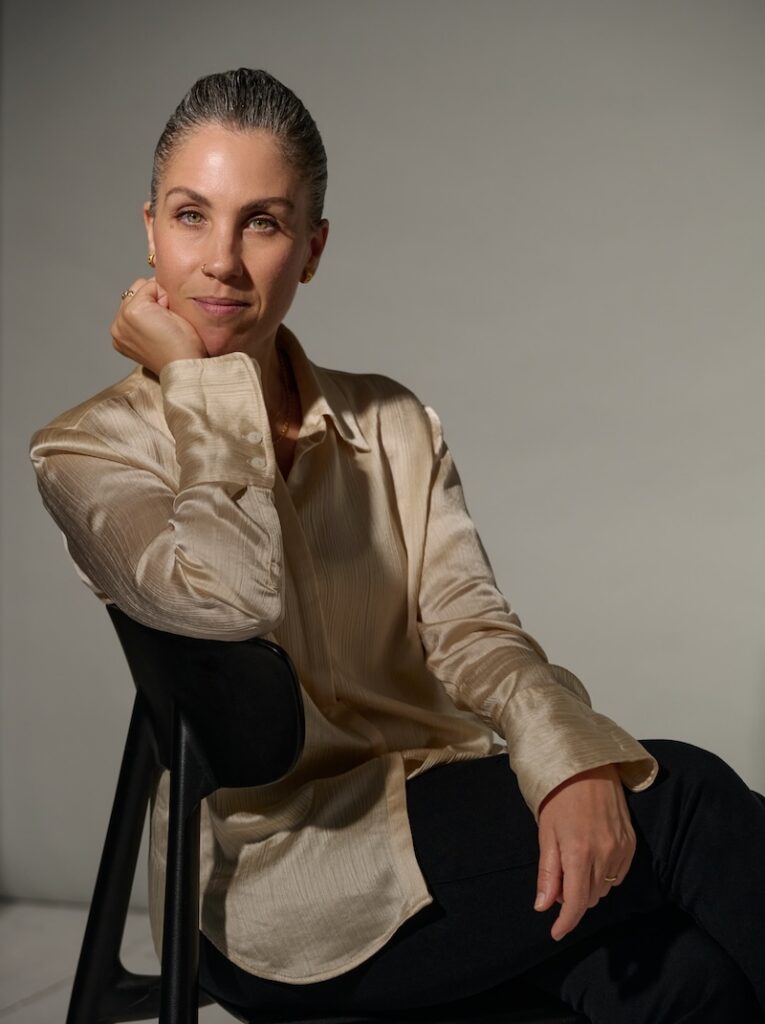
“I want to create a space for galleries to respond without being exclusionary. Metaphorically, it speaks to a state of being unfixed, of transformation or a space of possibility”
Wassan Al-Khudhairi
Following in the footsteps of Wael Shawky, the fair’s previous artistic director, Al-Khudhairi will continue the commitment to solo artist presentations, keeping artists at the centre of the fair’s approach.
Although our conversation begins with artists who respond most acutely to the urgencies of the present, I am struck in retrospect by the fact that we never arrive at the question of the current war and its reverberations for a Gulf that is often positioned as both adjacent to and insulated from geopolitical rupture. Perhaps that silence was itself a reflection of the uncertain moment we are living through, opening the space for us to develop a language for it. In the same way, Al-Khudhairi’s return to Doha is less a “full circle moment” than, in her terms, a spiral.
Art Basel Qatar takes place at M7 from 28 to 30 January 2027 and is sponsored by a dynamic long-term partnership with Qatar Sports Investments and QC+
Cover image: Wassan Al-Khudhairi photographed in New York in 2026. Dress by Eckhaus Latta. Photo: Jim Lafferty
We use cookies to improve your experience on our site. By using our site, you consent to cookies.
Manage your cookie preferences below:
Essential cookies enable basic functions and are necessary for the proper function of the website.
These cookies are needed for adding comments on this website.
Statistics cookies collect information anonymously. This information helps us understand how visitors use our website.
Google Analytics is a powerful tool that tracks and analyzes website traffic for informed marketing decisions.
Service URL: policies.google.com (opens in a new window)