Putting
down roots
An interactive artwork seeks to create a sense of community through the evocation of nature and traditional crafts
Words Jessica Klingelfuss
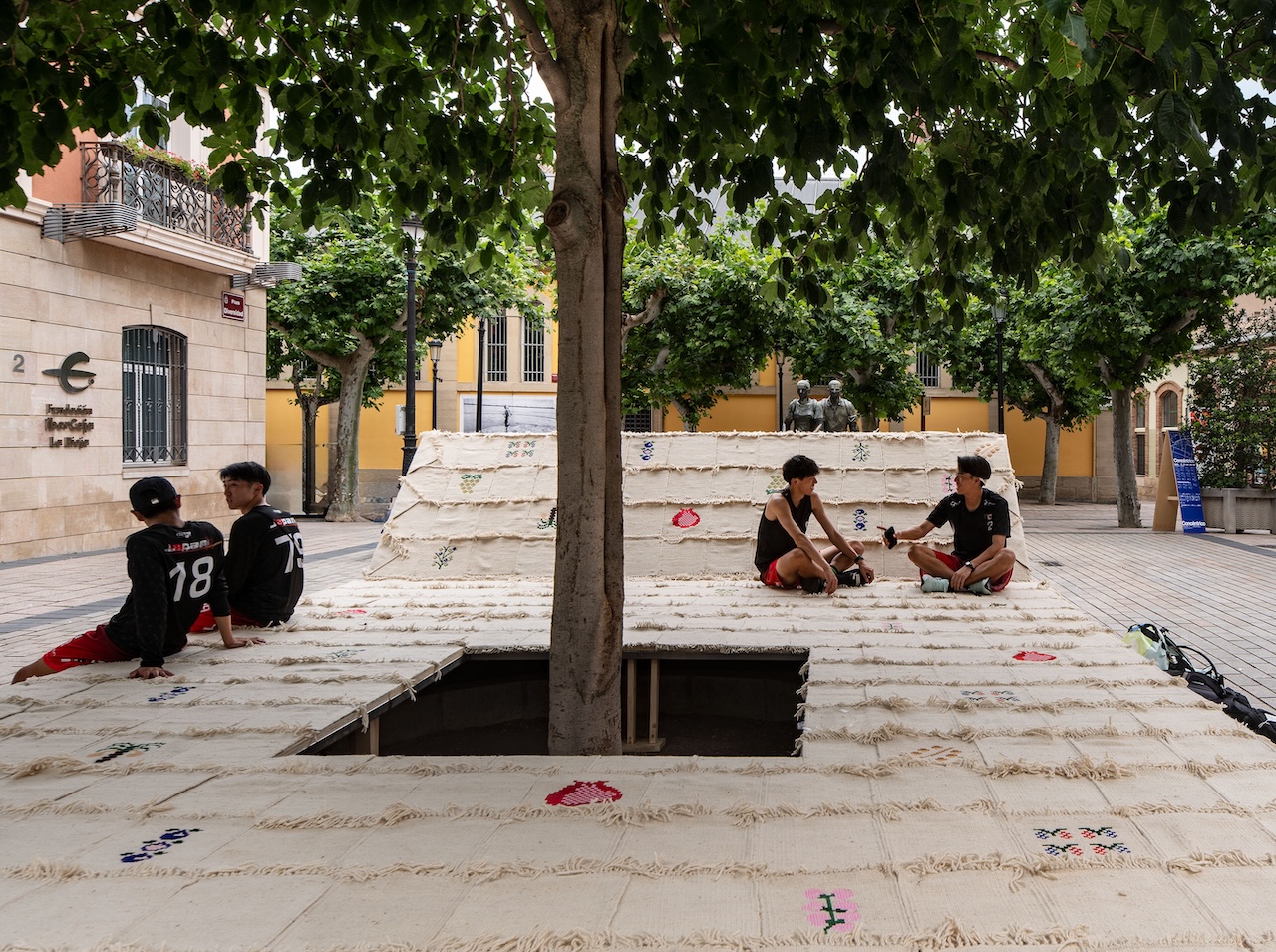
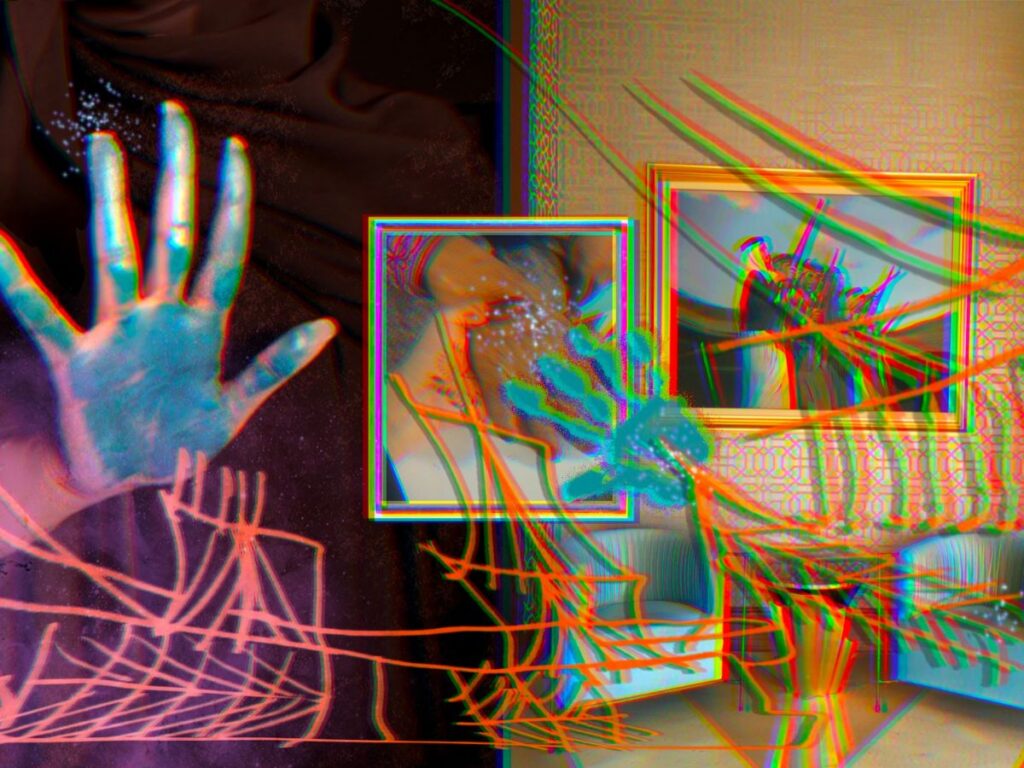
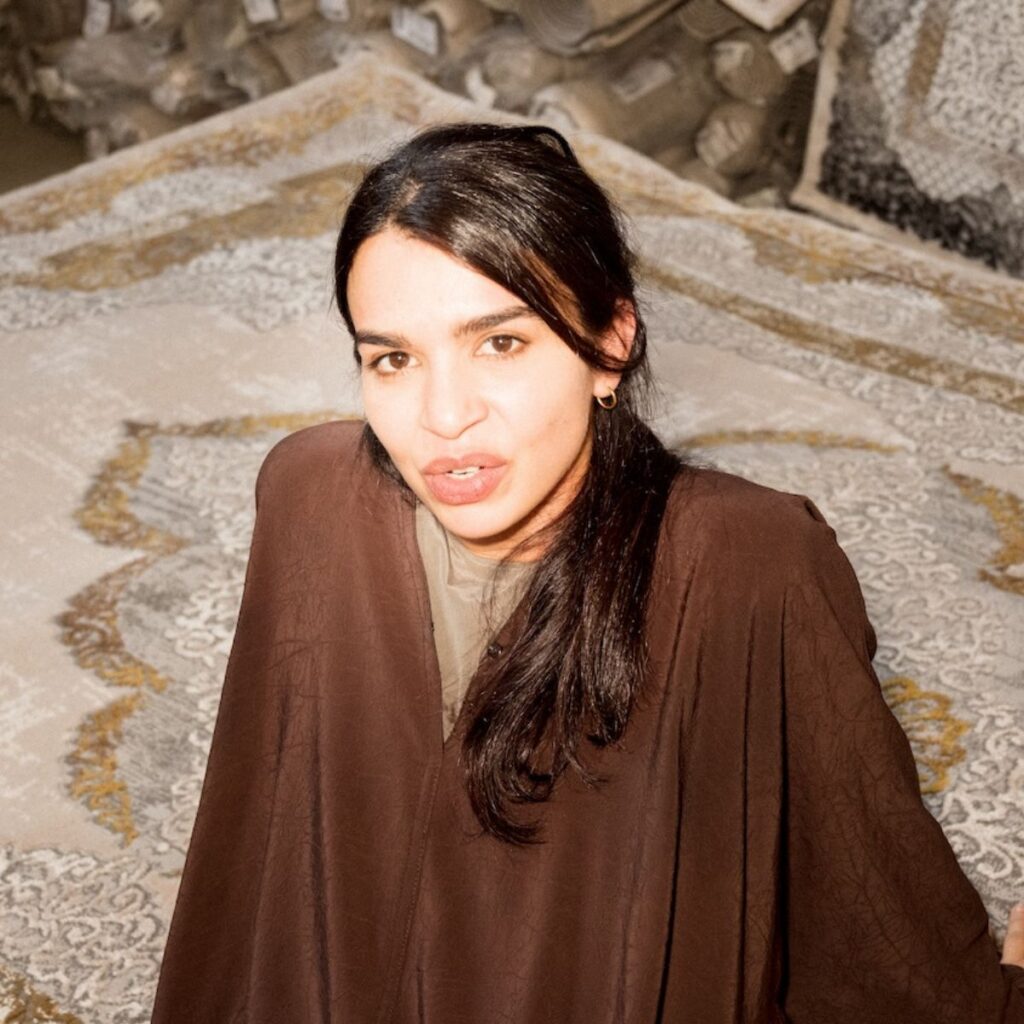
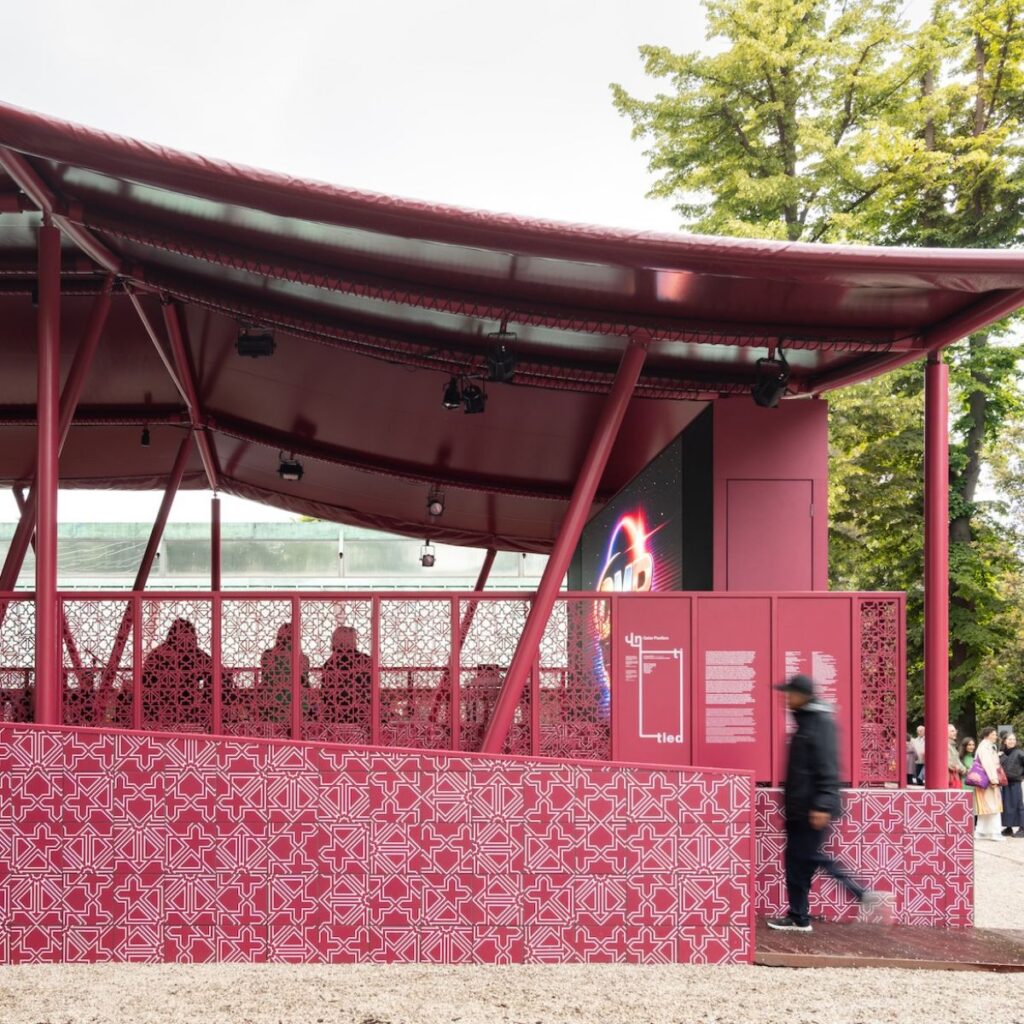
One of the first impressions visitors may have of Saudi artist Raghad Al Ahmad’s installation Rooted in Warmth – one of three projects at Design Doha Biennial 2026 supported by the Saudi Arabian cultural centre Ithra, as part of the Design from Oasis exhibition – is that it does not ask to be looked at, so much as inhabited. The sculptural platform, which is adorned with embroidered fabric, is anchored by a tree at its centre. It provides an oasis that offers shade and invites rest; where sound softens and the air feels cooler.
Al Ahmad was born and raised in Jeddah, Saudi Arabia, returning each summer with her family to Taif, a mountainous region known for its farms and greenery and long regarded as a sanctuary for Saudi royalty. Those seasonal sojourns form the emotional terrain of the installation, a memory she wants visitors to enter through a shared experience.
“The installation is deeply connected to me,” she says of the work, which was first commissioned by Ithra for Spain’s Concéntrico Festival in 2025. “I hope it is connected to visitors in a personal way too.” That sense of intimacy is not incidental: she frames Rooted in Warmth both as a dedication to her late grandfather and as a homage to the farming communities she feels are too often overlooked.
In places such as Taif and the south of the Kingdom, she explains, agriculture is sustained through networks of mutual support: independent farms help large-scale ones by producing ingredients that feed into wider systems of cultivation and distribution. When Ithra approached her with a sustainability brief, her mind returned to the farmers’ own elegant solutions – especially the tree. “We sit under the tree, we gossip under the tree, we nap under the tree, we take a coffee under the tree,” she says. In this sense, the tree is both memory and method: a “natural system of shading”, uncomplicated and communal, carrying the warmth of family life. Rooted in Warmth seeks to reflect that simplicity and to rekindle a connection with nature – and each other – that city life can so easily obscure.
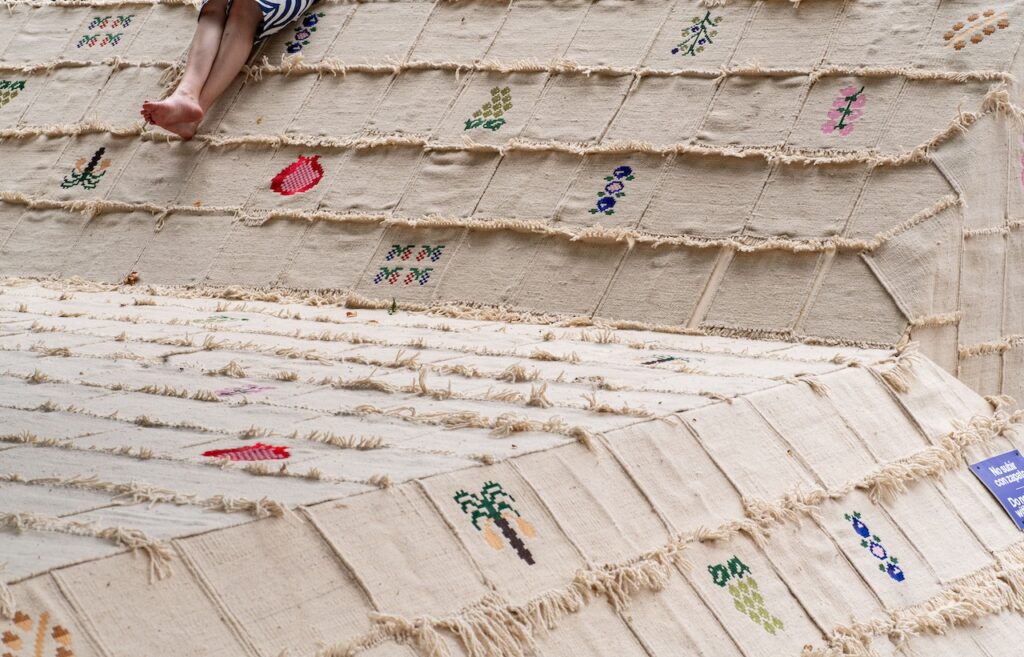
Craft gives that ethos material form: Rooted in Warmth incorporates Sadu weaving, a traditional Bedouin textile practice recognised by Unesco. Al Ahmad worked with more than 50 female artisans, many of whom are highly skilled yet rarely acknowledged as designers or artists. For her, the process was about visibility and empowerment, positioning these women not simply as hands behind the work, but as co-creators. “Creating this artwork was a valuable experience for me as an artist,” she says. “I wanted to connect with others who could help me make it. That is the value of life – together we can make things, and together we can build things.”
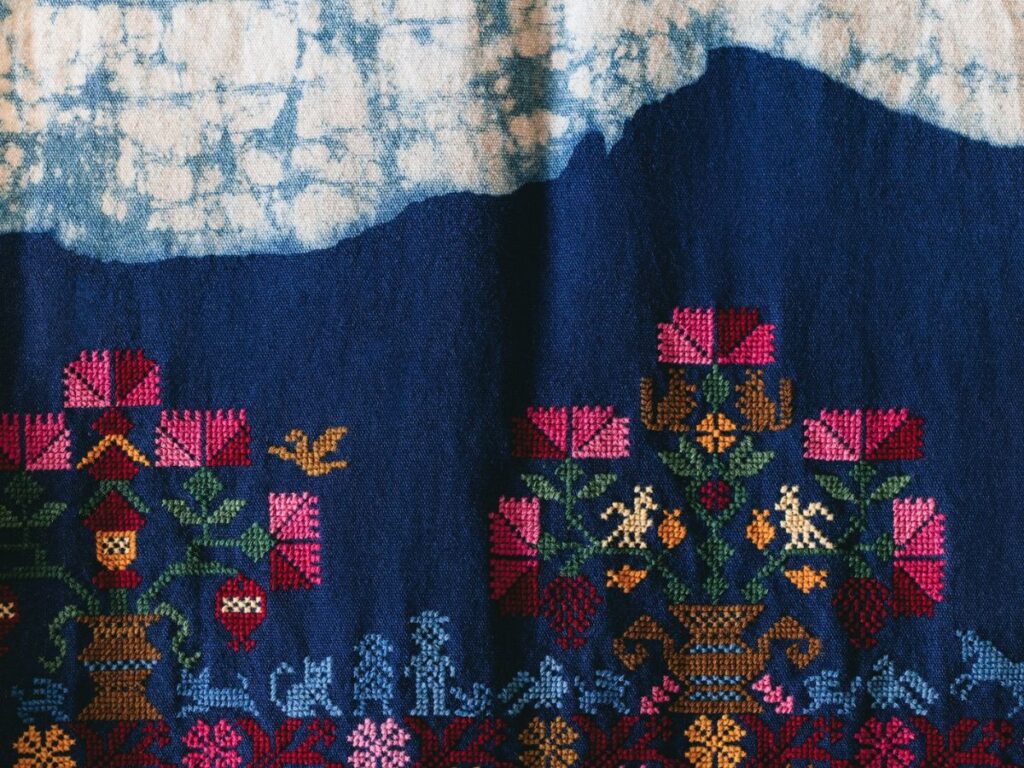
What makes the installation distinctive is how Al Ahmad pushes Sadu beyond expectation. Drawing inspiration from saddle-making techniques, she became fascinated by the square, modular logic of the weave. “From far away, it looks like pixel art,” she explains. “When you get closer, you see the threads stitching together.” The geometry allows the textile to adapt to different forms, while preserving its handmade integrity. She then layers the traditional weave with machine embroidery – introducing technology to a practice historically shaped by handwork.
The embroidered motifs take inspiration from fruit crates she remembers from childhood, each arranged in vivid blocks, almost like a digital palette rendered by hand. These colourful patterns challenge the perception of Saudi Arabia as a beige expanse steeped in sun-bleached earth tones. “From the outside, Saudi is often imagined as nothing but desert, with no flowers, fruit or colour,” she says – yet her memories from childhood argue otherwise.
Al Ahmad is confident that the work travels because its vocabulary is not exclusive to any one place. “Everyone has a connection with nature,” she explains. She hopes the work invites visitors to Design Doha to interact with its form: lying down, reading under the canopy, gathering with friends in the shade. If audiences arrive with different references, they still recognise the gestures – sitting on the floor, making space for one another – and, in that shared behaviour, Rooted in Warmth reflects Al Ahmad’s conviction that community is formed through collaboration.
The Design Doha Biennial 2026 runs from 5 November 2026 – 31 January 2027