- Art
- Autumn/Winter 2026-27
- October
Bridging the Gulf
Qatar’s pavilion at the centre of the Venice Biennale marks the growing influence of Arab states in the international art world
Words Jane Morris
- Art
- Autumn/Winter 2026-27
- October
Bridging the Gulf
Qatar’s pavilion at the centre of the Venice Biennale marks the growing influence of Arab states in the international art world
Words Jane Morris
The pavilions in Venice’s Giardini della Biennale say a lot about how nations see themselves – or at least the way they saw themselves at the time they were built. Finland’s is a wooden structure not unlike a boatshed or a rural church. It was designed by the architect Alvar Aalto and his wife Elissa for the 1956 edition and speaks of simplicity and community.
Nearby, the United States pavilion is a grander affair. Built in 1930 it nods to impressive Palladian-style mansions, notably President Thomas Jefferson’s Monticello residence – a symbol in America of democracy and rationality. (This famous estate was also once a slave plantation, a fact periodically now referenced by the artists chosen to represent the US in Venice.)
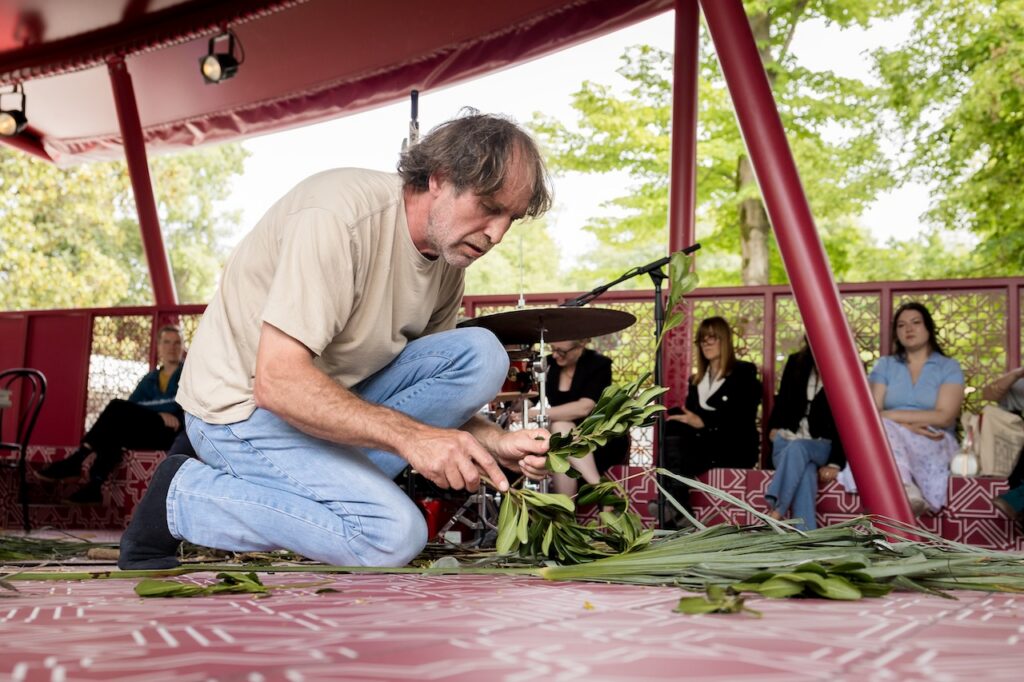
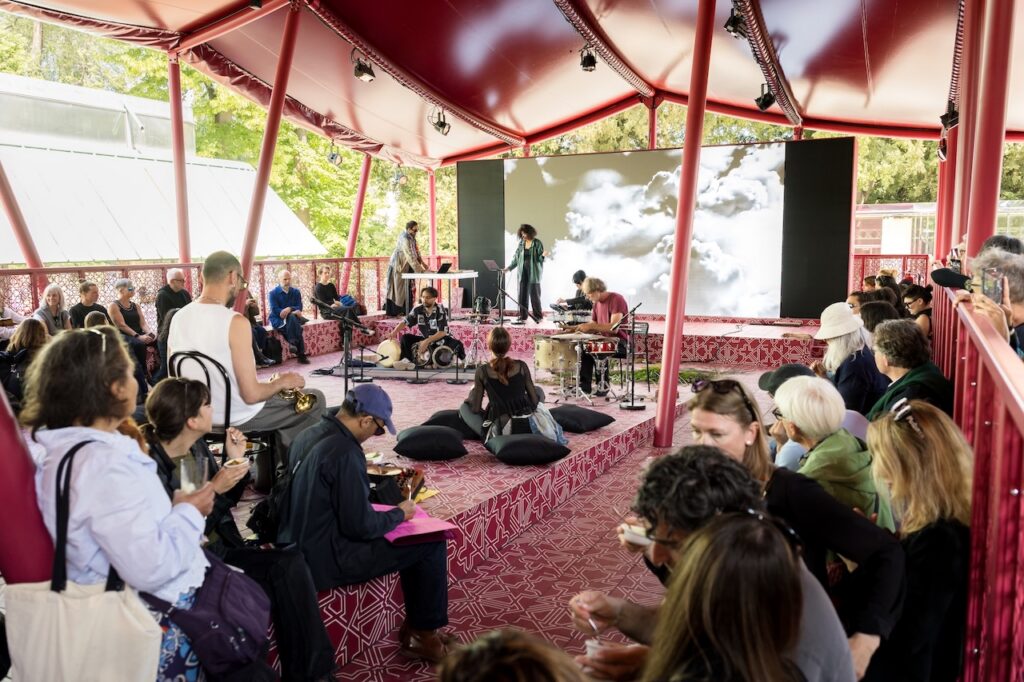
Qatar will soon have the first new permanent pavilion in the “garden” – the historic heart of the Venice Biennale – since South Korea was admitted in 1995. In the meantime, it has filled the site with a large maroon tent, its perforated side walls and patterned flooring inspired by Islamic mashrabiya (traditional lattice-like screens). “We liked the idea of an open structure [that] suggests a country that is open to many different peoples and embraces experimentation and creativity,” explains Tom Eccles, the co-curator of the pavilion.
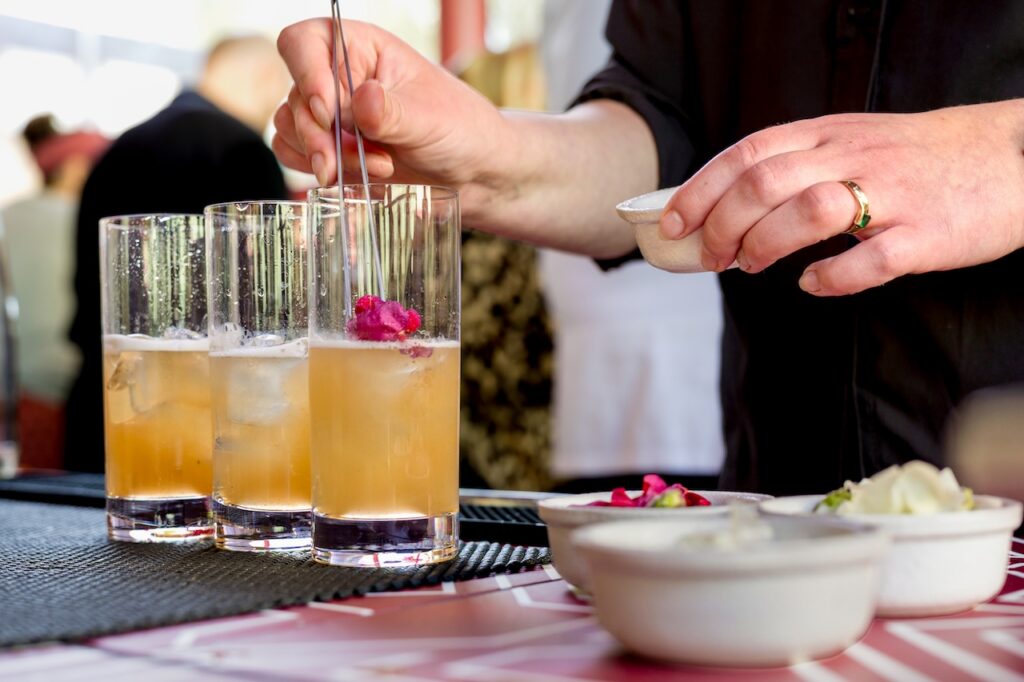
The tent is the setting for untitled 2026 (a gathering of remarkable people), a project conceived by the Argentina-born Thai artist Rirkrit Tiravanija. He designed the experience with a group of international artists, musicians and chefs as a music space, an open-air art cinema, a sculpture gallery and a pop-up restaurant serving free Middle Eastern “tapas”. What is unique about the project, he says, is that “it’s not a nationalised idea of a pavilion. It’s more like a meeting place. [Qatar] wants it to be a place of openness and diversity… that gives a voice to everyone.”
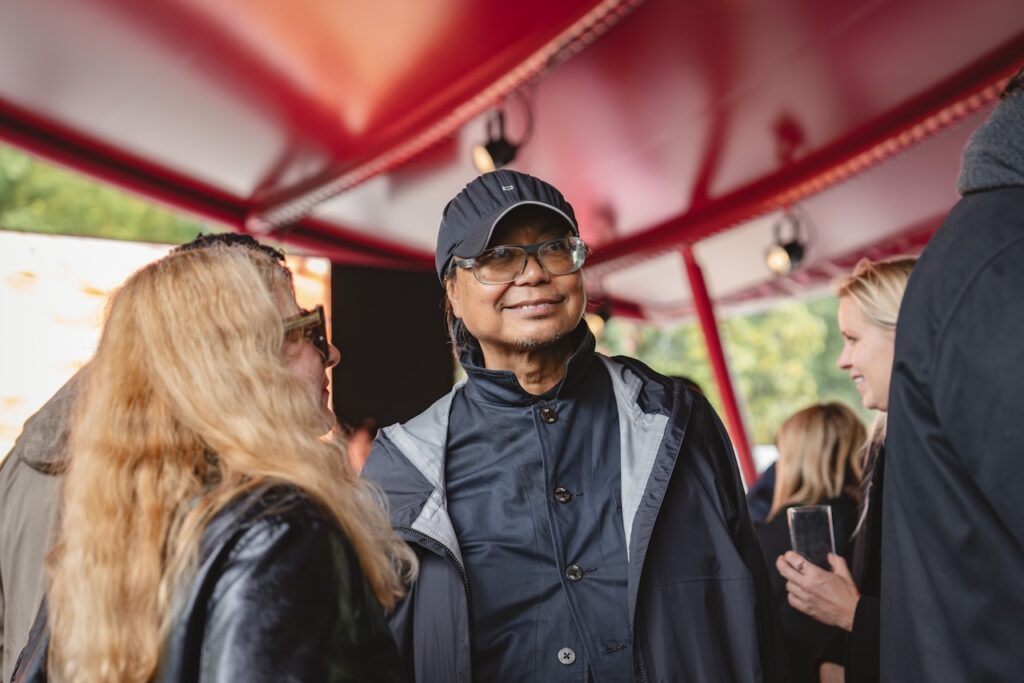
“The Qatar pavilion is not a nationalised idea of a pavilion. It’s more like a meeting place... a place of openness and diversity… that gives a voice to everyone”
Rirkrit Tiravanija
Tiravanija first came to prominence with performances such as untitled 1990 (pad thai), where he cooked the traditional noodle dish for anyone who turned up in a New York gallery. Since then he has gone on to create many site-specific projects, including last year’s untitled 2025 (no bread no ashes), a participatory flatbread-baking event in MIA Park in Doha.
For Venice, he is joined by London-and-Toronto-based Palestinian chef Fadi Kattan, with collaborators such as Qatari chef Noof Al Marri. Lebanese sound artist Tarek Atoui has created an improvisational music programme called “Frame Drums” with musicians including Lebanese trumpeter Mazen Kerbaj and British-Algerian cellist and singer Sarah Ourahmane. A frame drum is an ancient hand-percussion instrument but the performances also include electronics, keyboards, found items and even palm leaf “brushes” made by Atoui. The resulting experience is both convivial and cacophonous.
When there is no food and music, the tent functions as a more conventional art gallery. At one end Kuwaiti-Puerto Rican artist Alia Farid has placed an enormous, lacquered fibreglass water container, Jerrican, 2026. At more than two metres high and mimicking the manufacture of the region’s public drinking fountains, it continues the artist’s exploration of the importance of water and labour in the parched Gulf region.
At the other, Qatari-American artist Sophia Al-Maria has installed DAMAR TV, 2026, a dark, semi-narrative film. It follows TV journalist Damar Darwash, who loses her voice and escapes from the horrors of the real world into a dreamlike cyberworld of music and manufactured beauty. Al-Maria says it was a response to the challenge of making art when conflicts have broken out around her. It is an unsettling mix of the comedic and the tragic.
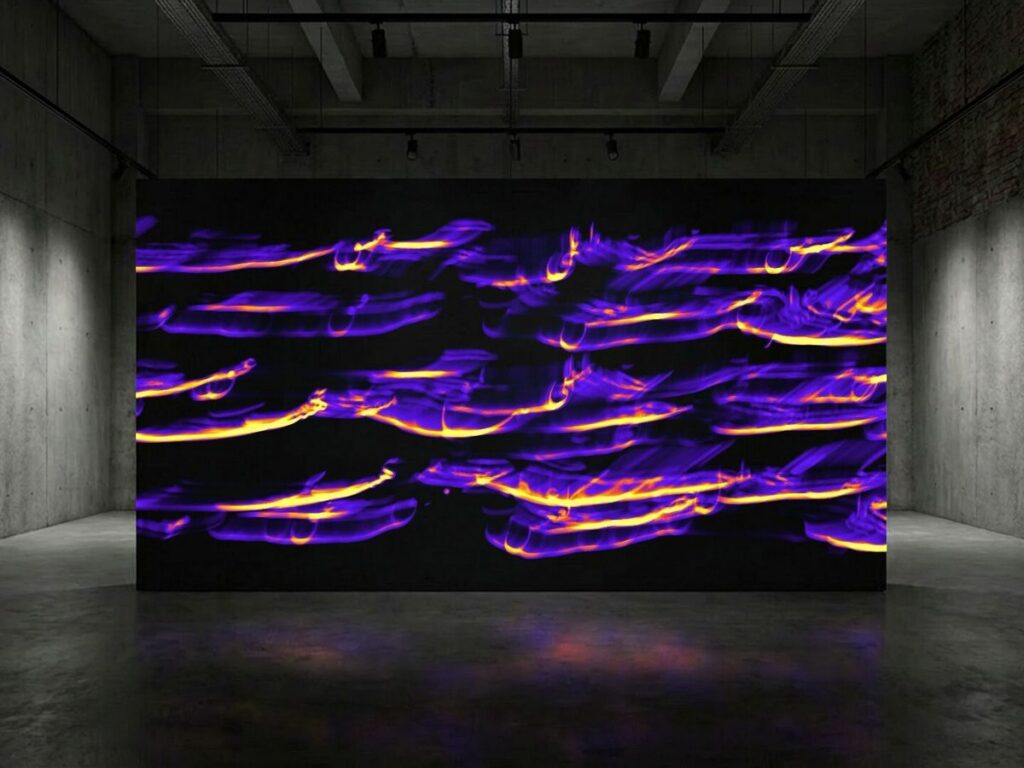
A similar spirit of collaboration is visible in other Gulf pavilions in the historic Arsenale, Venice’s medieval navy yard. The UAE is presenting six artists – some Emirati, some international – but all with strong ties to the country, united by the concept of washwasha (Arabic for “whispering”). They have used video, sculpture, photography and installation to create a reflection on landscape, migration and the UAE’s transformation into a modern state. Sound is at the core of the pavilion, drawing on oral traditions and poetry as well as contemporary broadcast media. The works hint at the benefits and tensions of such rapid change.
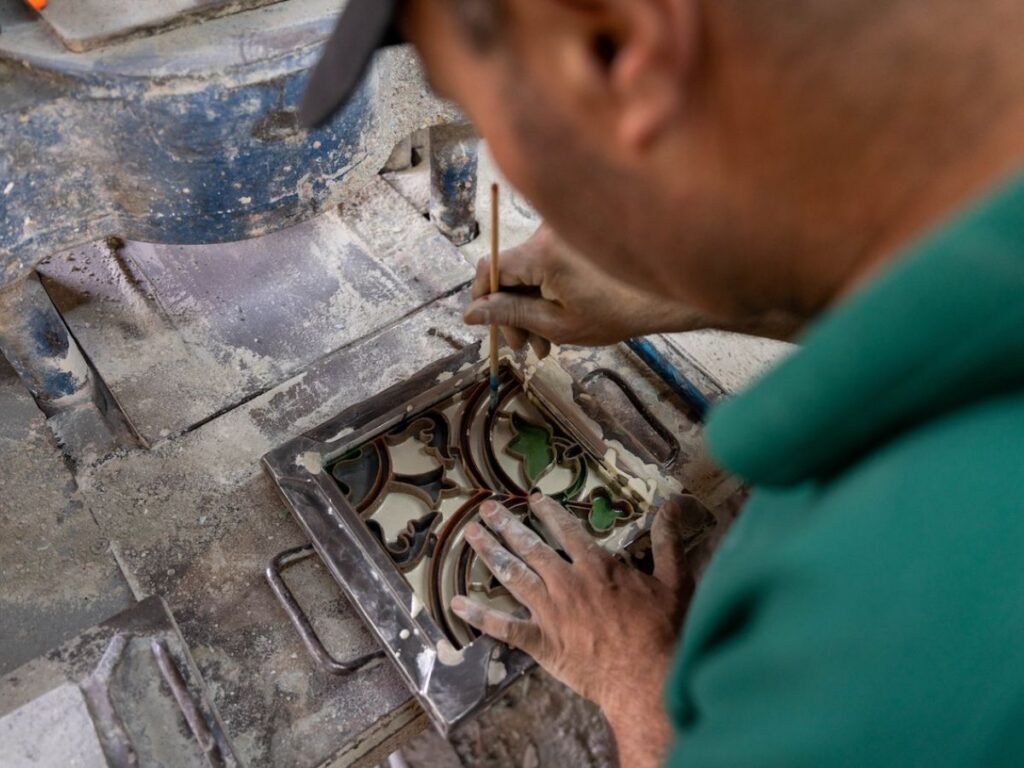
In the nearby Saudi Arabia pavilion, Dana Awartani has created a dramatic mosaic-tiled floor made up of 29,221 bricks, handmade by artisans from raw Saudi clays baked in the Riyadh sun. The initial impression is of an ancient ritual space – meditative and calming. But there is a deeper message. The work, May your tears never dry, you who weep over stones, 2026, draws on motifs from 23 threatened historic sites – churches, synagogues, monasteries and mosques – in Syria, Lebanon and Palestine.
Installation views of Dana Awartani’s May your tears never dry, you who weep over stones at the Saudi Arabia pavilion. Photo: Alvise Busetto, Courtesy Visual Arts Commission, Ministry of Culture
Antonia Carver, the pavilion’s curator and director of the Dubai- and Jeddah-based not-for-profit organisation Art Jameel, says Awartani was selected because “she creates work that is deeply seated in Saudi but has universal importance”. The work responds to the biennale’s theme, “In Minor Keys”, which was chosen by its original director Koyo Kouoh, who died in 2025 before her vision was realised. She wanted to encourage visitors to “exhale” and “slow down”. But its concerns are also political. “One of the sites [the work draws on] in Tyre was under live attack [in May],” Carver says. “The persistent nature of violence against culture had become even more acute as the pavilion opened.”
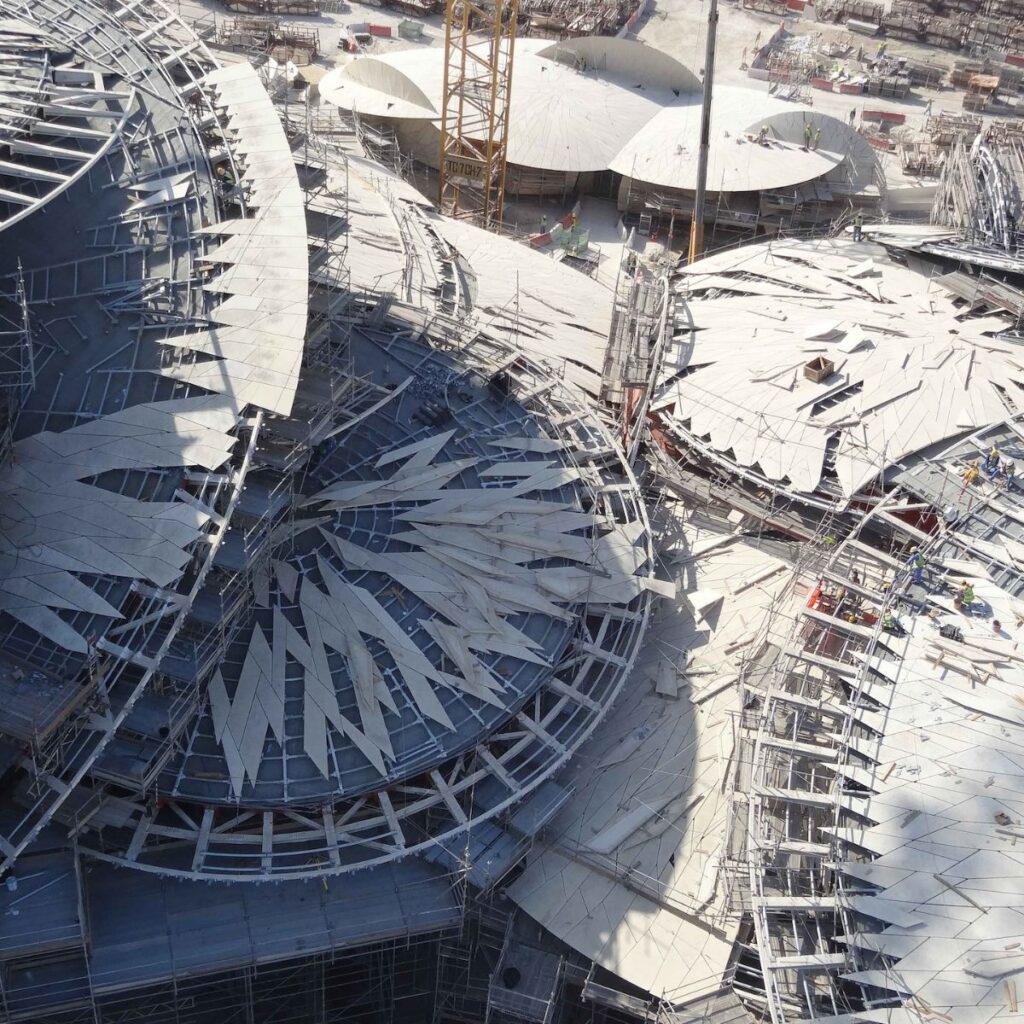
The presence of the Gulf states at the Biennale is relatively recent. The UAE had its first pavilion in 2009 and Saudi Arabia in 2019. With its Lina Ghotmeh-designed permanent space scheduled to open in 2027, Qatar will be the only Middle Eastern state with a pavilion in the Giardini.
Some of the earlier presentations made limited impact on the international art world in what can be an overwhelming exhibition in terms of its size and variety. But that has changed rapidly. In the opening week of the 2026 edition of the Biennale, Qatar’s pavilion was filled with artists and curators from around the world – Serpentine artistic director Hans Ulrich Obrist, outgoing Hayward Gallery director Ralph Rugoff and Beatrix Ruf, former director of the Stedelijk Museum Amsterdam among them.
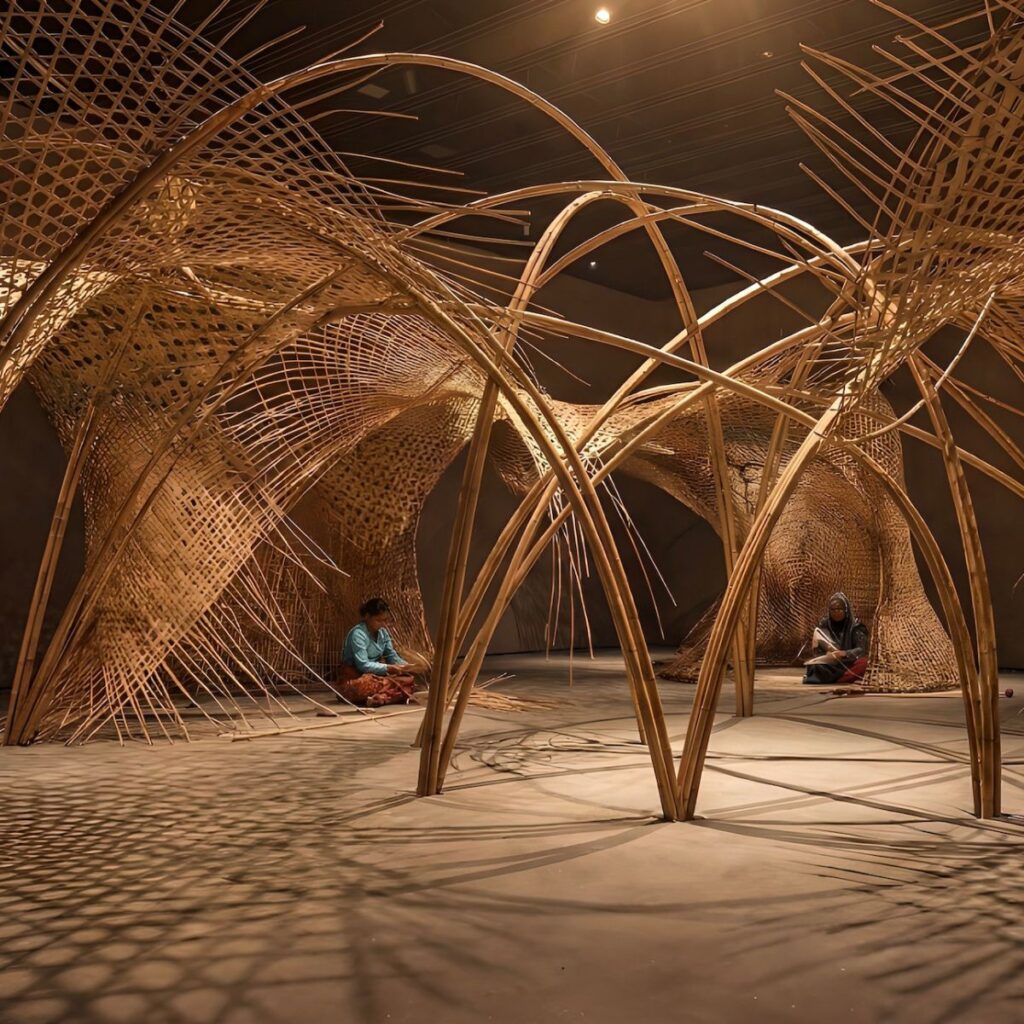
About 15 minutes from the Giardini at Zattere, VCUarts Qatar – the state’s main art school – presented an official collateral exhibition, أغرب إدراك / Aghrab Idrāk: Thresholds of Perception, which is showing until 22 November 2026. It features students, former students, teachers and other artists and designers who collaborated with the university on a series of thematic “environments”.
The fact that Qatar mounted an international pavilion and a research-based, grassroots show in Venice is, says the university’s director Amir Berbić, a sign of how far the country has come. “The university is nearly 30 years old,” he says. “There’s been decades of cultural and artistic development in the region. This year’s Venice Biennale is an obvious, major and visible expression of that long trajectory.”
Cover image: Tiravanija walking into the temporary structure on the site of the future permanent Qatar Pavilion in the Giardini. Photo: Giuseppe Miotto / Marco Cappelletti Studio