- Design
- Autumn/Winter 2026-27
- October
Hearts
and hands
Inspired by a tile maker’s lost romance, the Aslan’s Love exhibition by Turquoise Mountain explores Palestinian craft, from glassblowing to embroidery
Words Alyn Griffiths
Community and collaboration are the two main themes of Turquoise Mountain’s presentation of traditional Palestinian craft at this year’s Design Doha Biennial 2026. The exhibition, titled Aslan’s Love, features work by Palestinian artisans, providing an insight into how the UK charity, founded in 2006 by the then Prince of Wales (now King Charles III), supports craftspeople and communities to protect and revitalise cultural heritage.
Having participated in the inaugural Design Doha in 2024, Turquoise Mountain is returning with a wide-ranging display of crafts including traditional Palestinian tile making, glassblowing, carpentry and embroidery. According to Tamara Tamimi, the charity’s Palestine director, the event represents an opportunity to showcase these crafts to a new audience. “A key part of our mission is connecting artisans in different countries to global markets and promoting their skills on the world stage,” she explains. “We hope our presence at Design Doha will help the artisans we work with gain the kind of international recognition they deserve.”
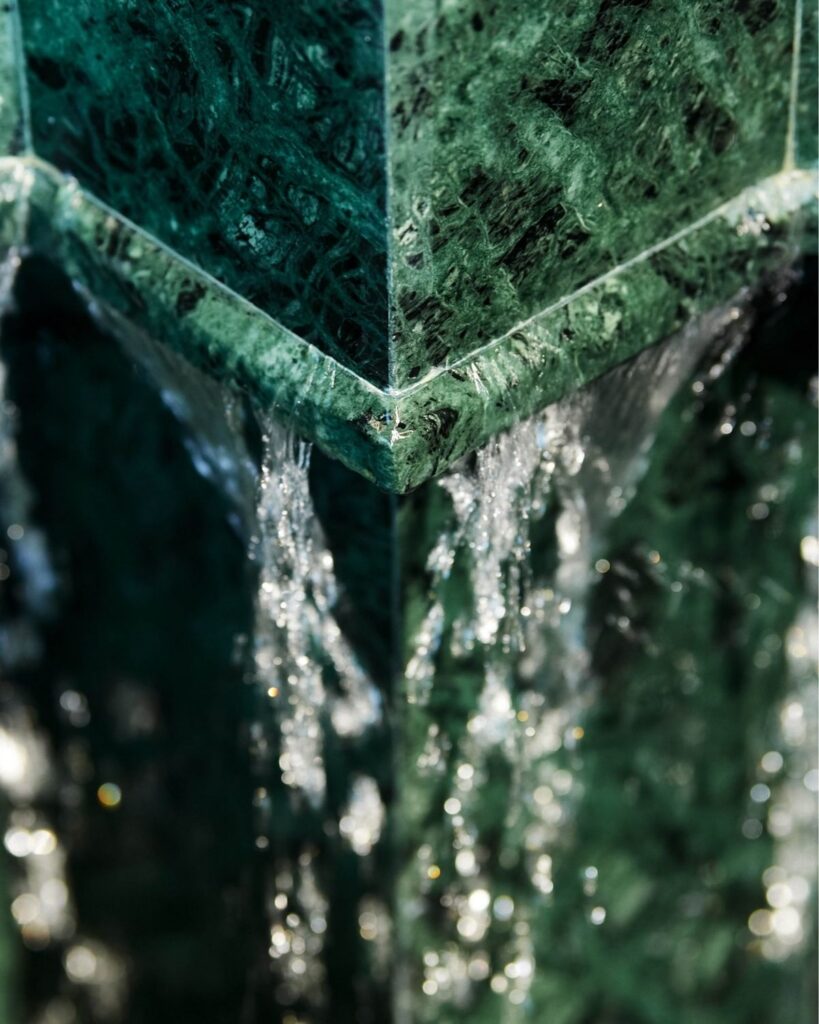
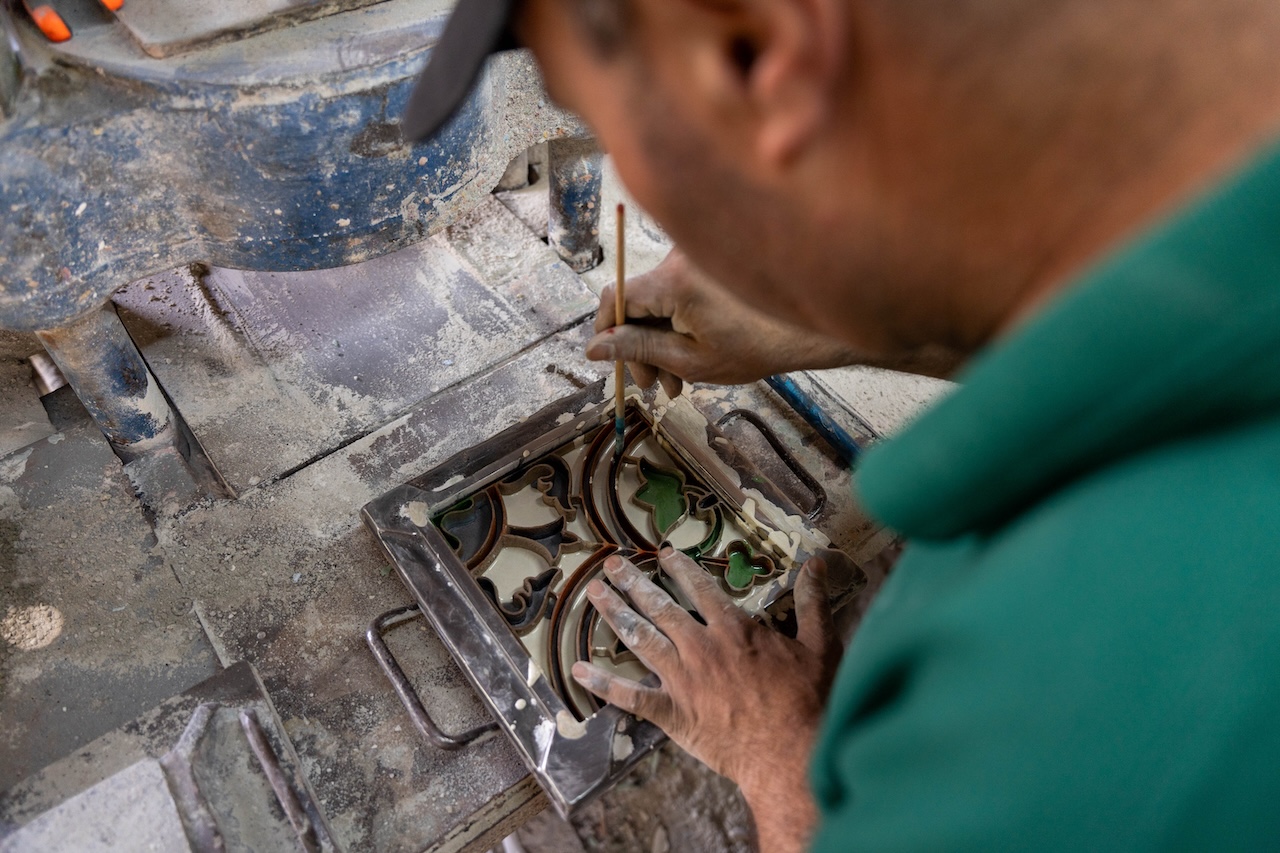
Aslan’s Love is curated by George Tadros, Turquoise Mountain’s creative lead in Palestine, who is based at the organisation’s crafts hub, Dar Al-Ghazawi in Bethlehem. The exhibition brings together individuals and collectives that Tadros collaborated with during a deep dive into the region’s craft heritage, following the establishment of Turquoise Mountain Palestine in 2023. The centrepiece is an installation created by Aslan Tiles, one of the last remaining artisans producing traditional shami tiles in Palestine. The work showcases an endangered local craft and symbolises the importance of community for the region’s crafts and infrastructure.
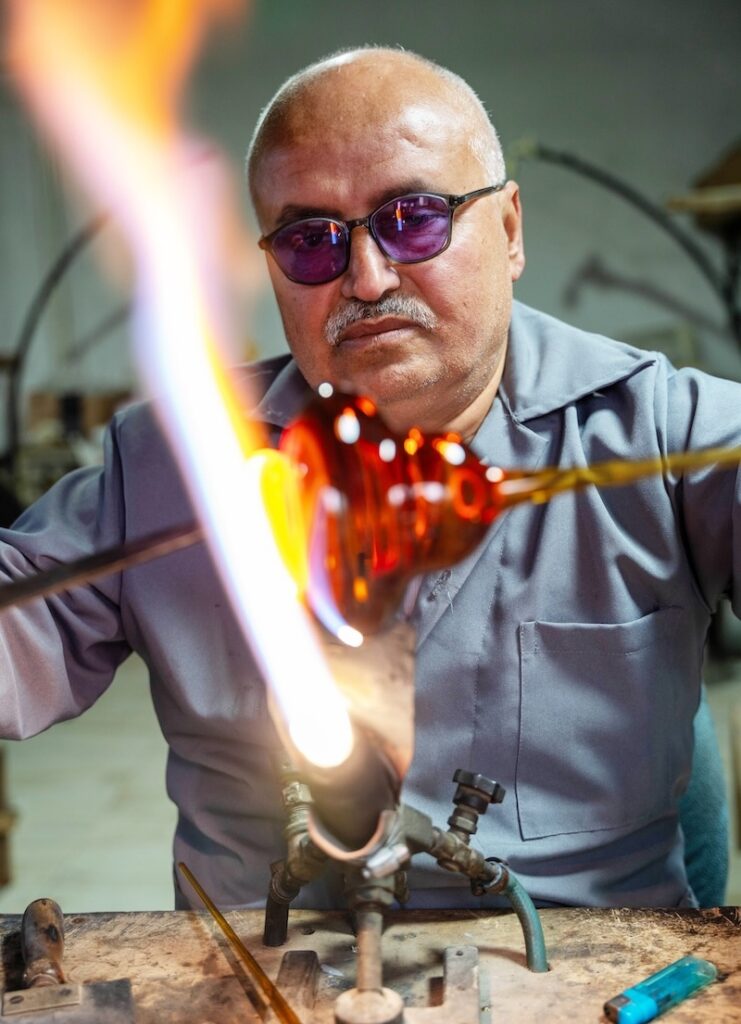
Palestinian glass-blower Mohammad Twam crafted a series of glass birds for the exhibition. Photo: © Turquoise Mountain
The exhibition is inspired by the personal story of Jalal Aslan, a third-generation Nabulsi tile artisan, whose love story shaped his craft. During a visit to the Aslan factory in the city of Nablus, Tadros heard the tale of how, in his youth, Aslan had fallen in love with a woman whose father owned a tile workshop in Syria. Aslan’s father forbade him from spending so much time visiting her, so he began breaking the moulds in his own atelier, giving himself an excuse to return to Syria for replacements. Having set a date to elope, Aslan sadly arrived to find that his beloved had lost her life during the war. The story forms the basis for a display of tiles created using Aslan’s broken moulds, which serve as a metaphor for his lost love, as well as the disruption of Palestinian craft traditions.
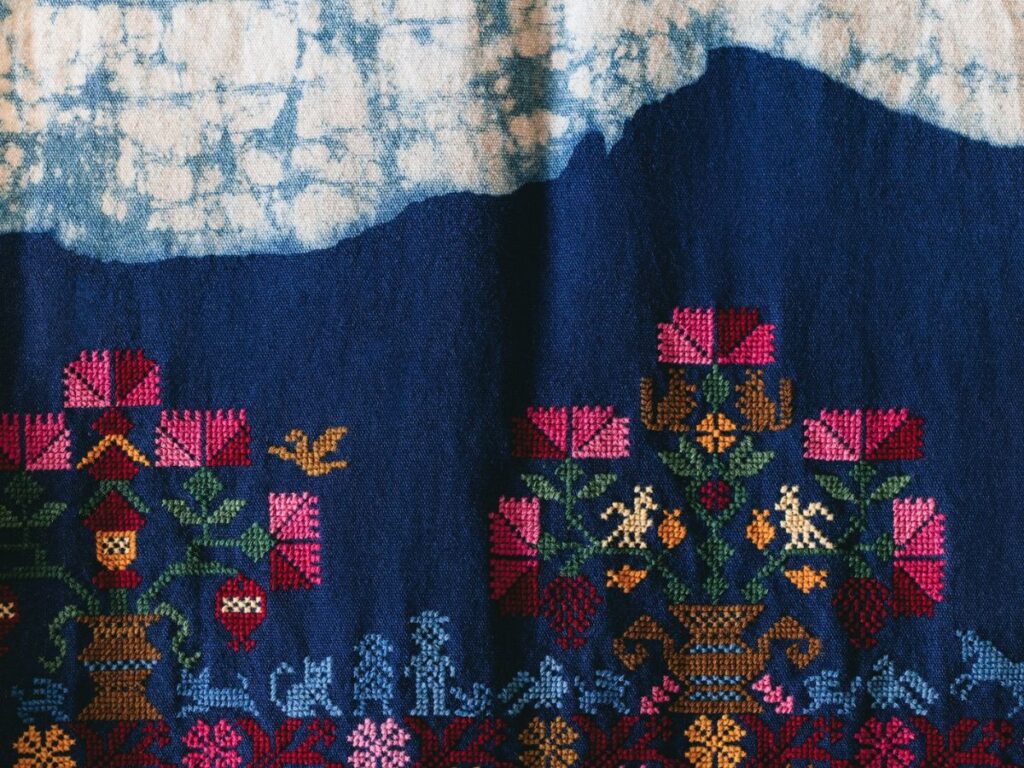
The exhibit also features works by several other artisans, aimed at demonstrating the breadth of creative talent and heritage skills present in Palestine. The format is inspired by a typical Palestinian wedding, with four major craft traditions representing different stages such as the engagement, the marriage contract, the ceremony and the wedding gifts. In particular, this idea informed a series of embroidered panels created by women from refugee camps across Palestine, as well as members of the Doha-based embroidery collective Hazati, who each hand-stitched a square reflecting an idea relating to the wedding theme.
The other pieces on display include a series of glass birds created by long-term Turquoise Mountain collaborator Mohammad Twam, which represents the idea of cross-border collaboration, while the charity’s first project with carpenter Afeef Sakhleh has resulted in an exquisitely crafted bridal chest that extends the exhibit’s wedding theme.
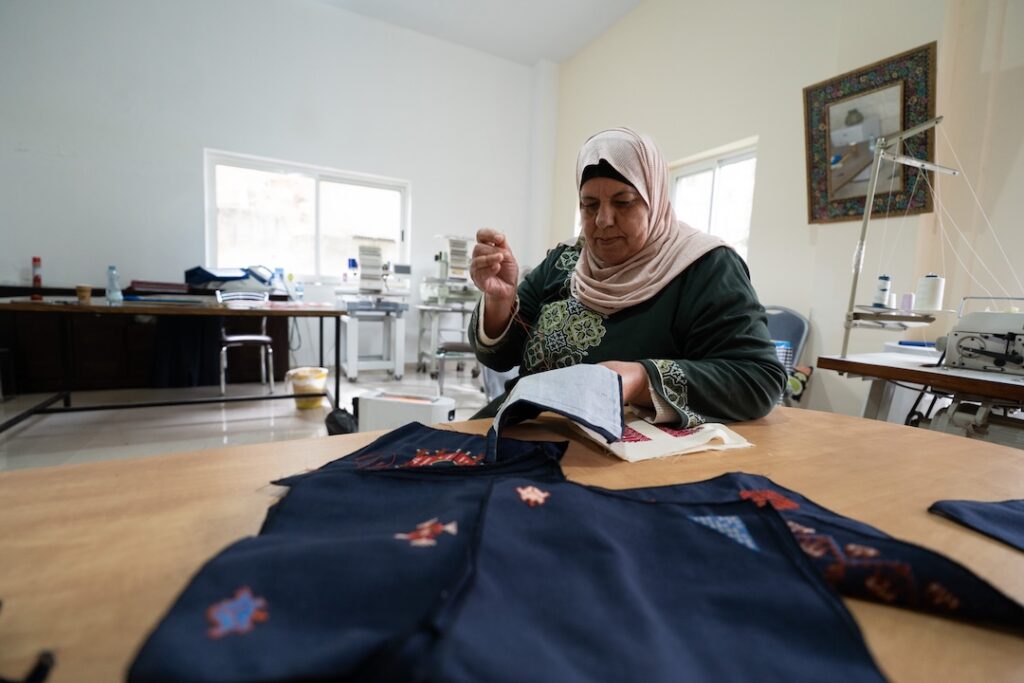
Palestinian embroidery artisan Amneh Dagher from the Inash Al Usra Association created embroidery for the exhibition. Photo: © Turquoise Mountain
“Craft can forge connections that will endure for generations”
George Tadros
Tadros points out that the range of crafts on display reflects Turquoise Mountain’s focus on collaboration and knowledge sharing. “This presentation forms the basis for an evolving network of artisans, some that we already know and others that we are now building relationships with,” he says. “We really want to showcase the importance of community and how craft can help forge connections that will endure for generations.”
Aslan’s Love is the latest in a programme of events and projects organised by Turquoise Mountain, which marked its 20th anniversary with a retrospective exhibition at London’s Garrison Chapel in February. Having previously presented work at global institutions including Sotheby’s, the King Abdulaziz Centre for World Culture (Ithra) and the Smithsonian’s National Museum of Asian Art, the Design Doha exhibition provides a platform for promoting the activities of Turquoise Mountain Palestine to visitors from across the Middle East, north Africa and south Asia region.
“Design Doha has become an important hub for displaying outstanding craft and design,” says Tadros. “Presenting Palestinian craftsmanship here really elevates the work and demonstrates how it can sit comfortably alongside some of the Middle East’s leading artisans.”
The Design Doha Biennial 2026 runs from 5 November 2026-31 January 2027