A person in a fuzzy pink outfit stands against a neutral background. The image is intentionally blurred, giving a dreamy, ethereal effect.
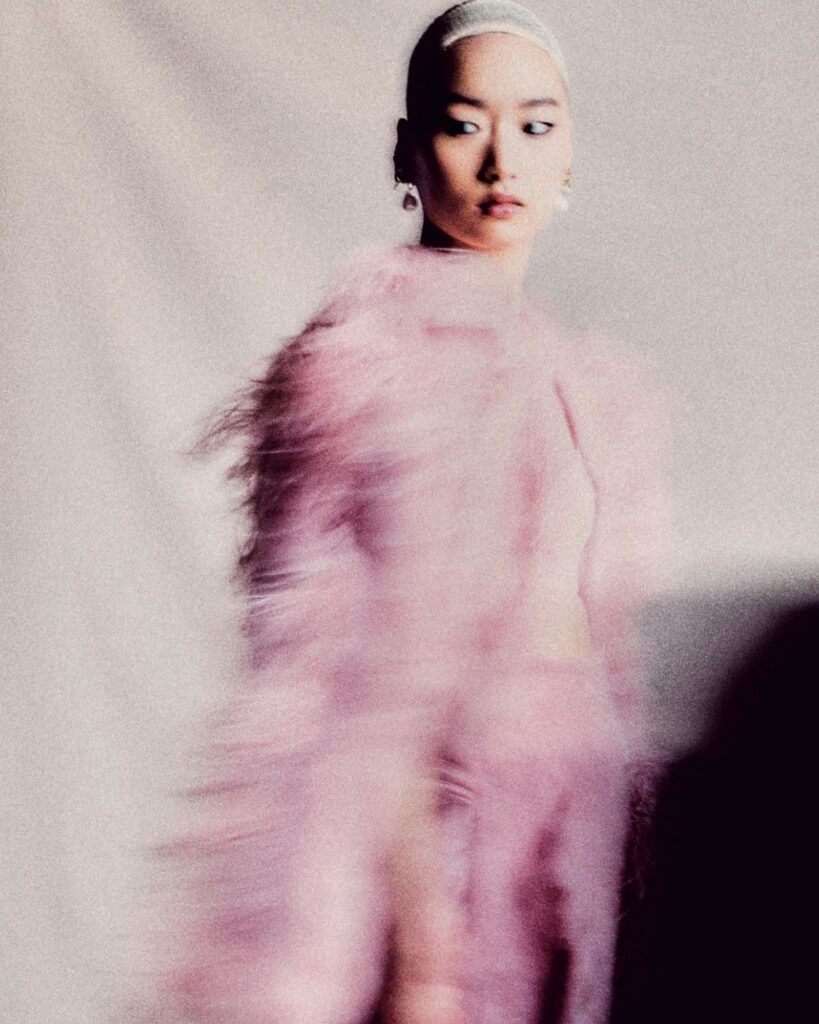
A pink dress from AW24 crafted from ostrich feathers was inspired by a performance of Medea by Maria Callas at La Scala in 1953. In reference to this past material palette, ostrich feathers have been used prominently throughout the AW26 collection. Photo: Daniel Archer

Spinning yarns

For 20 years, Erdem Moralioglu has translated the lives of extraordinary women from history into richly layered sartorial narratives. With his first major retrospective recently opened at M7 in Doha, he looks back at the stories and creative encounters that have shaped his work

Words Helen Jennings

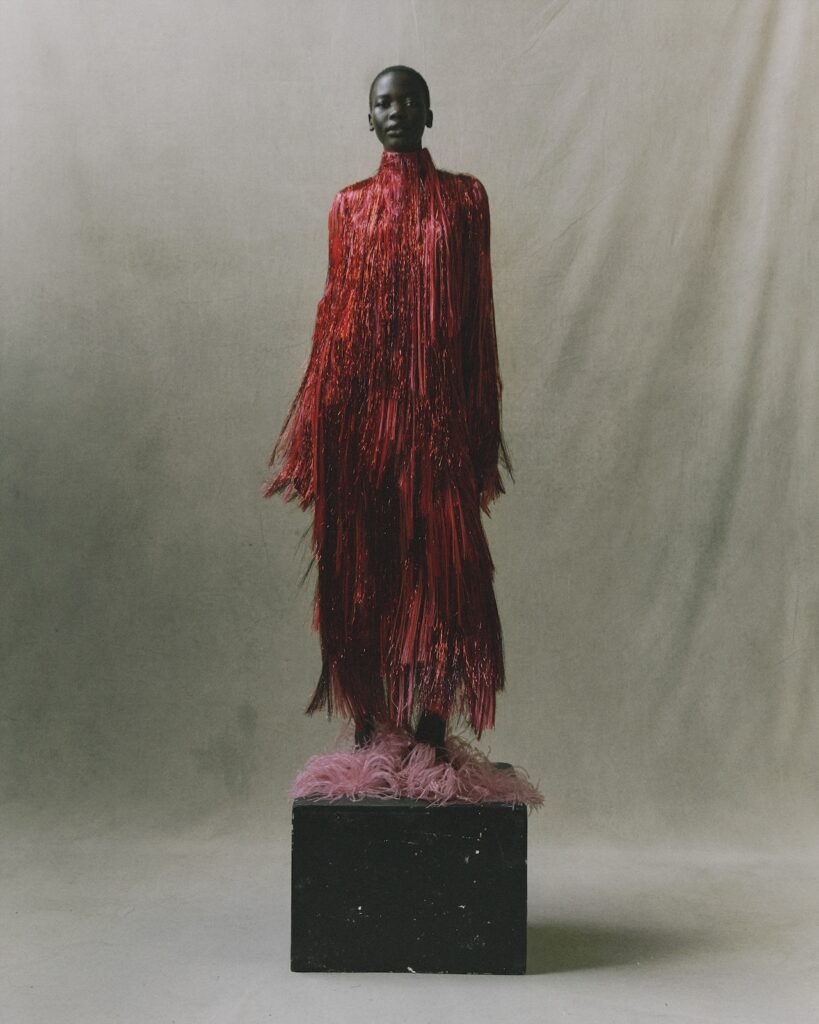
Cover images: (left to right) A red metallic fringed dress from the AW26 collection; A pink dress from AW24 crafted from ostrich feathers was inspired by a performance of Medea by Maria Callas at La Scala in 1953. In reference to this past material palette, ostrich feathers have been used prominently throughout the AW26 collection. Photos: Daniel Archer; Ruby Pluhar

A person stands on a black pedestal wearing a long, red fringed dress with matching pink fringed shoes, against a neutral background.
A red metallic fringed dress from the AW26 collection. Photo: Daniel Archer

What do radical florist Constance Spry, vaudeville dancer Adele Astaire and English poet Radclyffe Hall have in common? Seemingly very little, but through the folds and flourishes of Erdem Moralioglu’s eloquent collections, these historical figures have joined an ever-evolving “imaginary conversation” between brilliant women. Since establishing Erdem in London some 20 years ago, the designer has steeped each season in the lives of complicated heroines in extraordinary circumstances. These are not muses in the traditional sense – somehow imperious and untouchable. Rather, it’s their courageous imperfections that have inspired his sartorial narratives to waltz across space and time.

“What I’m looking for is contradiction,” Moralioglu explains of his research. “I’m drawn to women who resist easy definition, often someone overlooked, arcane or slightly outside the expected frame. I’m much more interested in the questions around a person than arriving at a definitive answer about her.”

Once his interest is piqued – whether that’s through a painting, a poem, or even his own transcontinental family tree – a lingering desire begins to reveal itself. The tale that emerges is no longer so much about facts and more about an unravelling liberation expressed through craftsmanship and cloth. “Narrative is the beginning of everything,” he says. “It might start with a woman, a photograph or something found in an archive. But over time, I’ve become much less interested in telling the story literally.” The process is also not an exercise in nostalgia. “It’s about what remains unresolved within history and why certain lives continue to feel urgent,” he explains. “I believe profoundly in making beauty, particularly in difficult times. Beauty can have its own kind of defiance.”

Moralioglu’s ability to conjure up emotive dialogues is a poetic thread that runs through Erdem: About Time, About Her, an exhibition showing at M7 in Doha until 26 December. Qatar Museums’ creative hub for fashion and design hosts this first major survey of Erdem by exploring the lyricism that underlies his work. “The use of ‘Her’ is deliberately elusive,” he explains of the show’s title. “She might be Maria Callas, Margot Fonteyn or Marianne North, but she is also the woman wearing the clothes now. I’m interested in how different lives and different moments in time can somehow coexist within a garment.”

Curated by Olivier Gabet, director of the department of decorative arts at the Louvre in Paris, the exhibition mines two decades of the fashion house, from early sketches and experiments to defining garments, along the way reminding us of Erdem’s expansive influence. “Olivier has looked at the archive with a distance that I could never have,” says Moralioglu. “The exhibition isn’t simply chronological. It’s about a language, typologies. Around 150 works move between the atelier, the house signature, the women who have inspired collections and The Imaginary Conversation [the brand's 20th-anniversary Autumn/Winter 2026 runway show].”

Notably, Erdem pieces sit alongside works from the Museum of Islamic Art, teasing out the unexpected cultural collisions to be found in Moralioglu’s practice. “I hope it feels like a genuine exchange,” he says. “There are connections between the work, the region and the collections in Qatar that reveal themselves throughout the show.”

The fashion house is no stranger to institutional settings. Moralioglu often chooses such storied locations for his London Fashion Week shows. The British Museum, National Portrait Gallery and White Cube have all set the scene for his seasonal catwalks. In addition, Erdem garments have featured in several significant exhibitions including the Metropolitan Museum of Art’s Camp: Notes on Fashion in New York in 2019 and Louvre Couture – Art and Fashion: Statement Pieces at the Louvre in 2025.

In his contribution to Erdem’s 20th anniversary monograph, which was recently published by Rizzoli, Gabet ruminates on why Moralioglu’s designs deserve their position on the plinth – a place of permanence and contemplation, removed from fashion’s frenzied cycle. “Museums offer calm, a refuge where the gaze can focus and things are given the attention they merit. Amid ancients and old masters, Erdem’s pieces are objets d’art,” Gabet writes, adding that it’s not just the timeless quality of the work that makes it collectible, but the graceful sensibilities that inform it. “What matters here is life, creative energy, an appetite for shape and colour, details that reveal rather than decorate – rejecting superficial prettiness for unique aesthetic expression.”

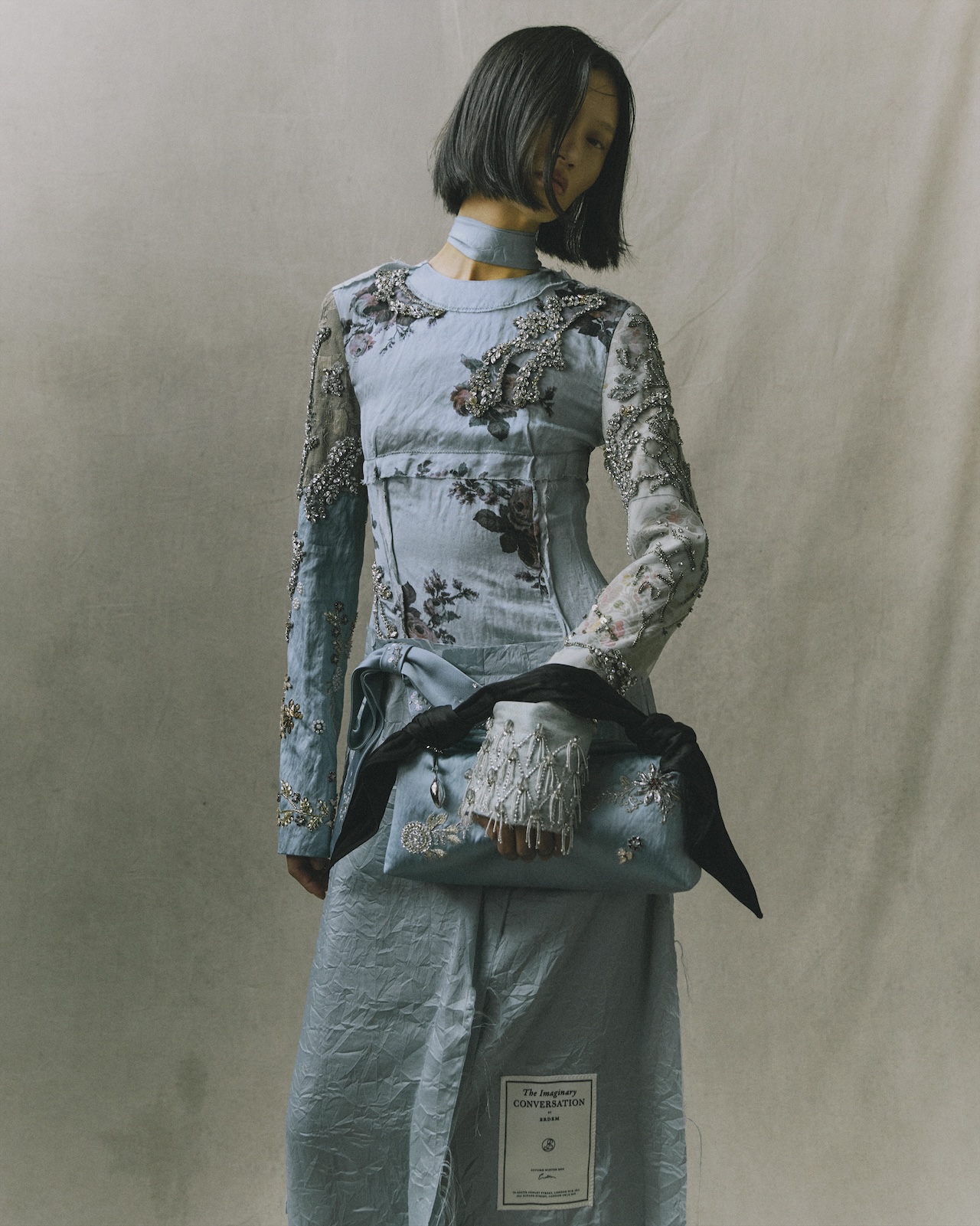
A person wearing an Erdem Moralioglu blue floral-print dress with beaded sleeve detailing and a matching blue clutch bag.
Crafted from crushed satin with tactile raw edges, this midi dress from AW26 features a spliced design that references Erdem’s archive. The embellished bodice is decorated with a floral motif, while the skirt is detailed with a smooth satin cady bow. For 2026, the brand’s signature Bloom Bag is reimagined in a satin design, adorned with crystal embellishments. Photo: Daniel Archer

Erdem’s objects of desire speak for themselves. A chine taffeta dress from Autumn/Winter 2024 boasts a hand-draped bodice, golden floral print and tonal green brushstrokes running down its lustrous lengths. A pair of opera gloves from Spring/Summer 2018 come in dove grey leather with metallic threadwork and pearl and crystal hand embroidery. A deconstructed tailored skirt suit from Spring/Summer 2018 is realised in black grain de poudre with pieced Victorian jet hand-embroidery and a pleated peplum detail. Cherished heirlooms, one and all. And yet for Moralioglu, the real magic happens when the conservator’s white gloves retreat and the garment gets slipped on and lived in by “her”.

“I think fashion can absolutely have an artistic life, but its relationship to the body is what makes it particular,” he says. “A dress can sit in a museum and hold memory, craft and history, but the moment someone wears it, it begins another life. I find that duality much more interesting than defining fashion as art.”

Similarly, Moralioglu hopes that the stories imbued into each piece are passed on to its wearer; received like a gift, a whisper or an emotion perhaps, but far from dogmatic in their intent. “I don’t want the clothes to prescribe a character,” he explains. “They should carry something with them, a memory, an atmosphere, but ultimately the woman wearing them makes them her own.”

Moralioglu’s early years sowed the seeds of his creativity. He was raised in Montreal, Canada, “in a house filled with books… and so much love” by his British mother and Turkish father. There, he would spend his time sketching puff-sleeved dresses and making versions of them for his twin sister’s dolls. “Fashion felt impossibly far away from suburban Montreal, so drawing was a way of constructing another world,” he says. “Strangely, the things I drew then haven’t entirely disappeared. She was always there, this ‘muse’.”

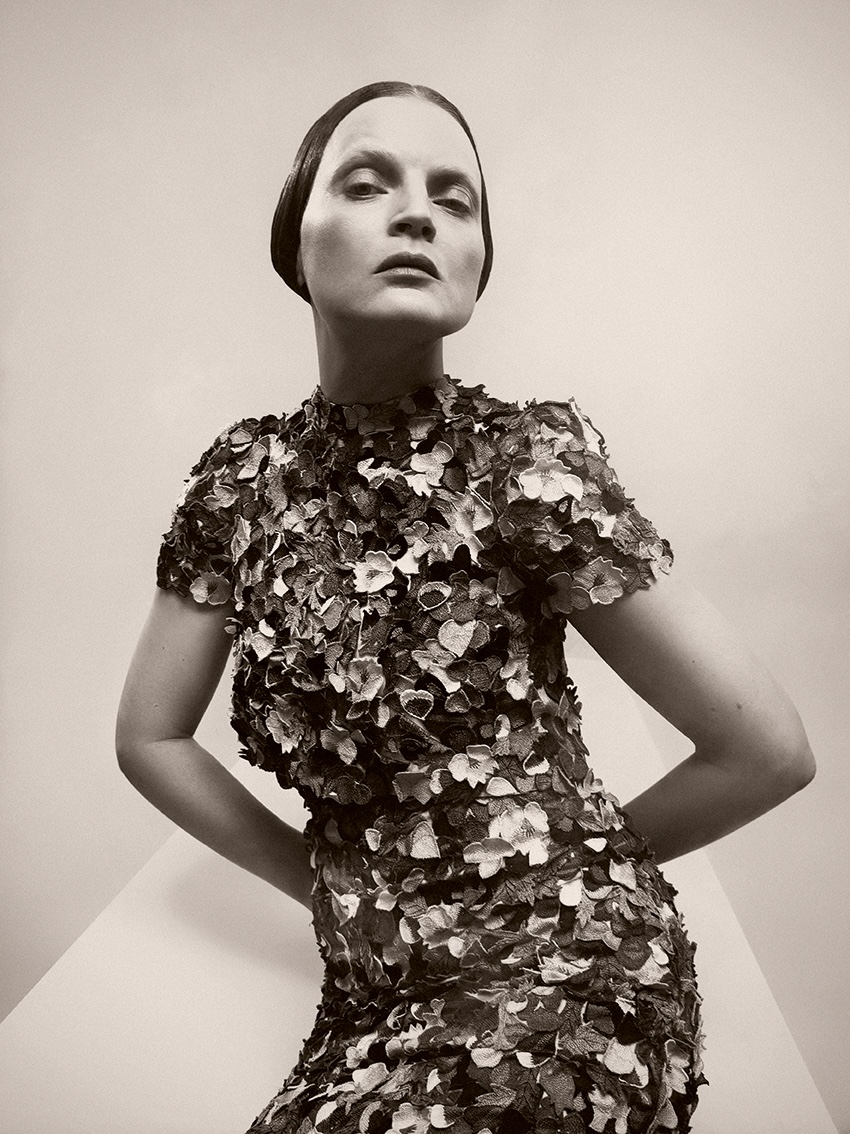
A person poses confidently in a short-sleeved dress covered in textured floral patterns. The portrait is in black and white, creating a dramatic and elegant mood.
A fitted dress from SS10 featuring appliqued flowers, photographed by Paul Kooiker to celebrate the 20-year anniversary of the fashion house. Photo: Paul Kooiker

He completed a BA in fashion at Ryerson University in Toronto before being awarded the prestigious Chevening Scholarship, allowing him to move to London for his MA at the Royal College of Art. He then won the 2005 Fashion Fringe Prize, leading to showing his debut Autumn/Winter 2006 collection at London Fashion Week – a collection inspired by George Sand, the nom de plume for pioneering French writer Amantine Lucile Aurore Dupin de Francueil. “What I remember most about that moment is the complete uncertainty of it,” he recalls. “It was self-funded and made with the help of the Royal College of Art seamstresses. Suddenly, we were showing at the Victoria & Albert Museum. Julie Gilhart from Barneys saw it and bought the collection. I remember the shock of something very small and private suddenly becoming real.”

The London scene he stepped into had a rebellious energy. Moralioglu – alongside contemporaries such as Giles Deacon, Roksanda Ilinčić, Jonathan Saunders and Richard Nicoll – bolstered the fashion capital’s reputation as a breeding ground for emerging talent. But unlike many others, who transitioned from being enfants terribles to joining luxury conglomerates, or simply faded out of view, Moralioglu’s studious approach led to him evolving an independent fashion house steeped in evocative artistry of the highest order.

This unwavering vision has paid off, as his many accolades and achievements attest, among them winning the British Fashion Council’s Establishment Designer Award in 2015 and receiving an MBE in the 2020 Queen’s honours list (Queen Elizabeth II was once an Erdem muse). Along the way, he has collaborated with Barbour and Nars, designed costumes for The Royal Ballet and opened flagship stores in London and South Korea. All this, and his show finale bows still remain resolutely modest.

“Twenty years is difficult to comprehend because I still feel incredibly connected to the beginning,” he says. “What feels most significant are the people I’ve had the privilege of working with along the way, from the extraordinary craftspeople in the atelier to artists, photographers, dancers and writers. For example, working with [artist] Kaye Donachie brought the language of painting into the clothes, while designing for [the choreographer] Christopher Wheeldon and The Royal Ballet made me think about clothes entirely through movement. I like being taken somewhere I couldn’t have arrived at alone. It makes you realise that a house is really an accumulation of those encounters. The work keeps changing because the conversation keeps changing.”

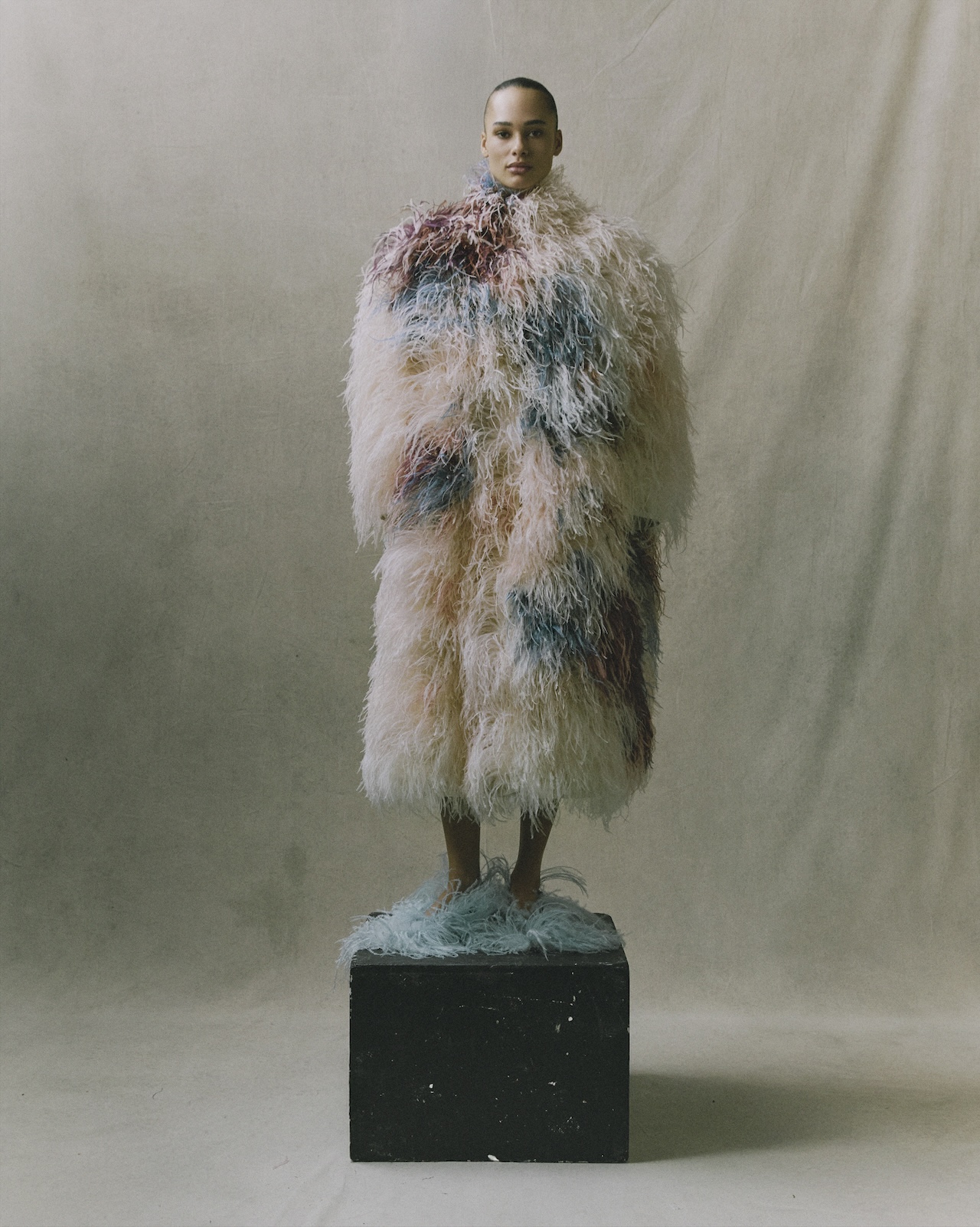
A model wearing a voluminous Erdem Moralioglu coat covered in pink, blue, and white feathers stands on a black block.
A bespoke ostrich feather cocoon coat in powder pink from AW26 is a nod to the materiality of previous collections. Photo: Daniel Archer
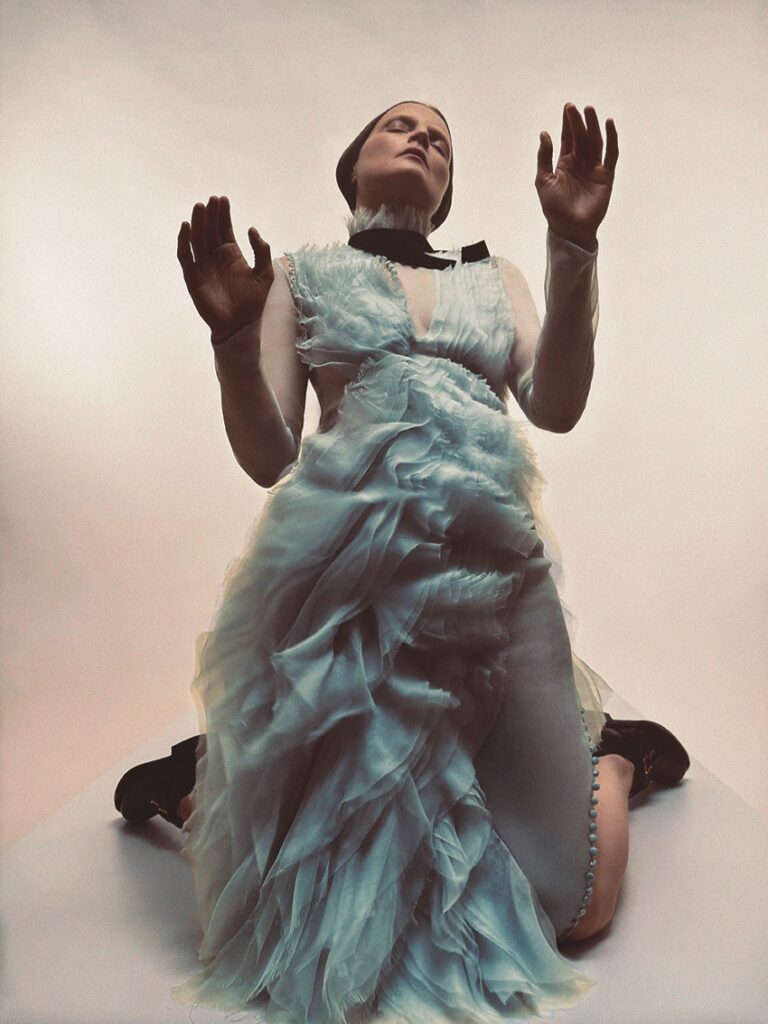
A person wearing a ruffled, light blue gown and sheer sleeves kneels with eyes closed and hands raised
Model Guinevere Van Seenus in a blue ruffled chiffon dress from SS16 photographed by Paul Kooiker
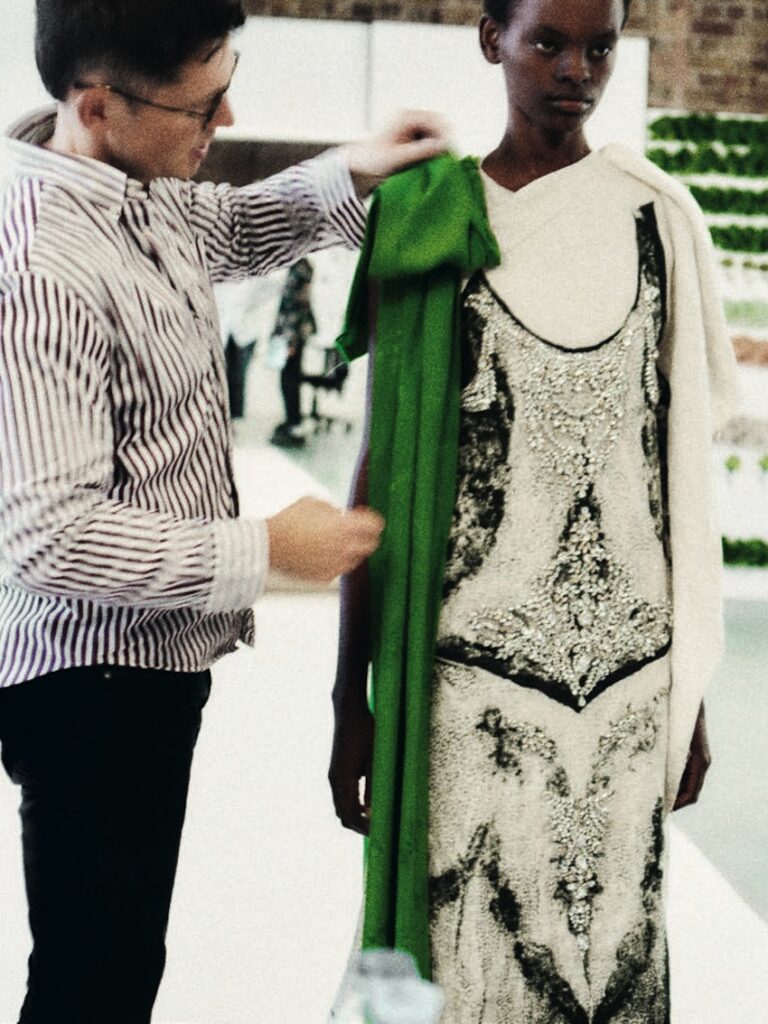
A person in a striped shirt adjusts a vibrant green fabric on a model wearing an ornate black and white dress
A dress from SS25 that features an embellished screen print of a cyanotype of a 1920s flapper dress
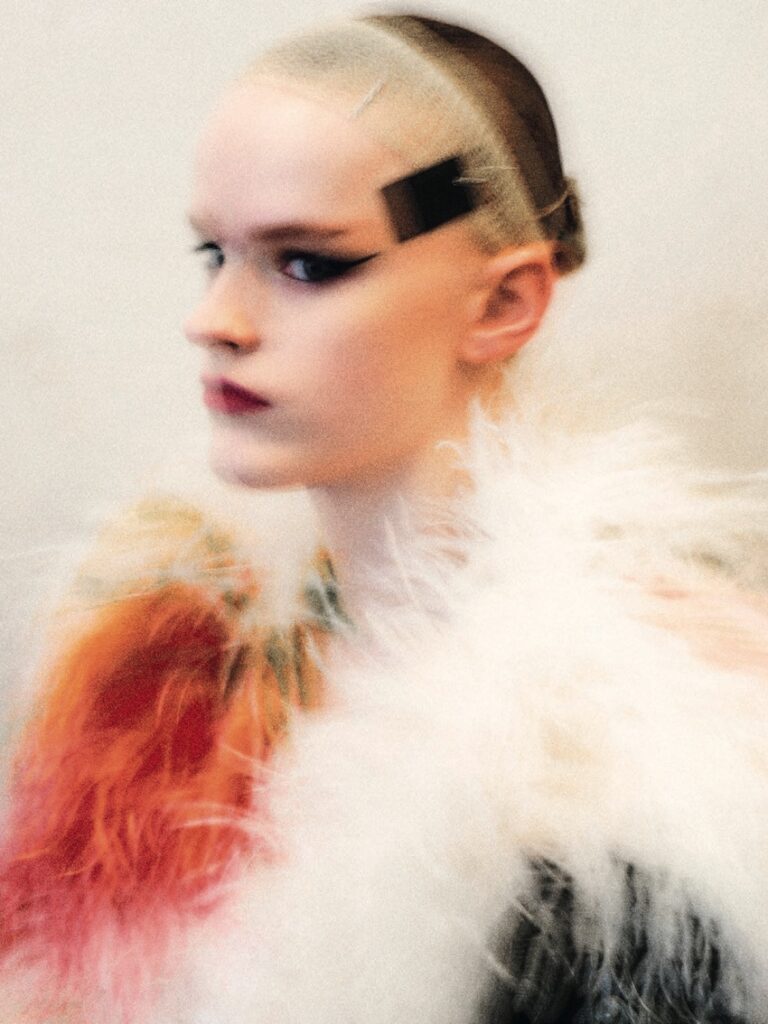
A person with slicked-back hair, bold black eyeliner, and a hair clip wears a fluffy, multicolored fur garment reminiscent of Chef Noof Al Mari’s avant-garde style. The image is softly blurred, creating an ethereal, dreamy effect.
An ostrich-feather coat from AW24. Photo: Ruby Pluhar
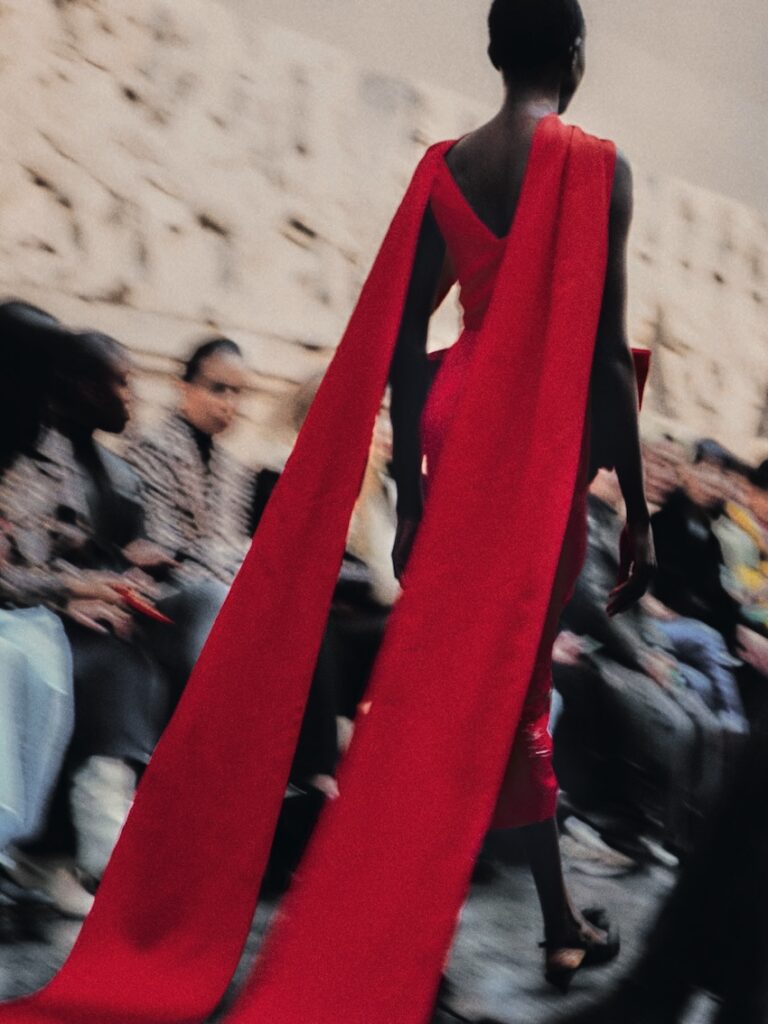
A model walks a runway wearing a striking red dress with long, flowing cape-like extensions
A draped, red satin gown from AW24 on the runway at the British Museum during London Fashion Week

“I believe profoundly in making beauty, particularly in difficult times. Beauty can have its own kind of defiance”

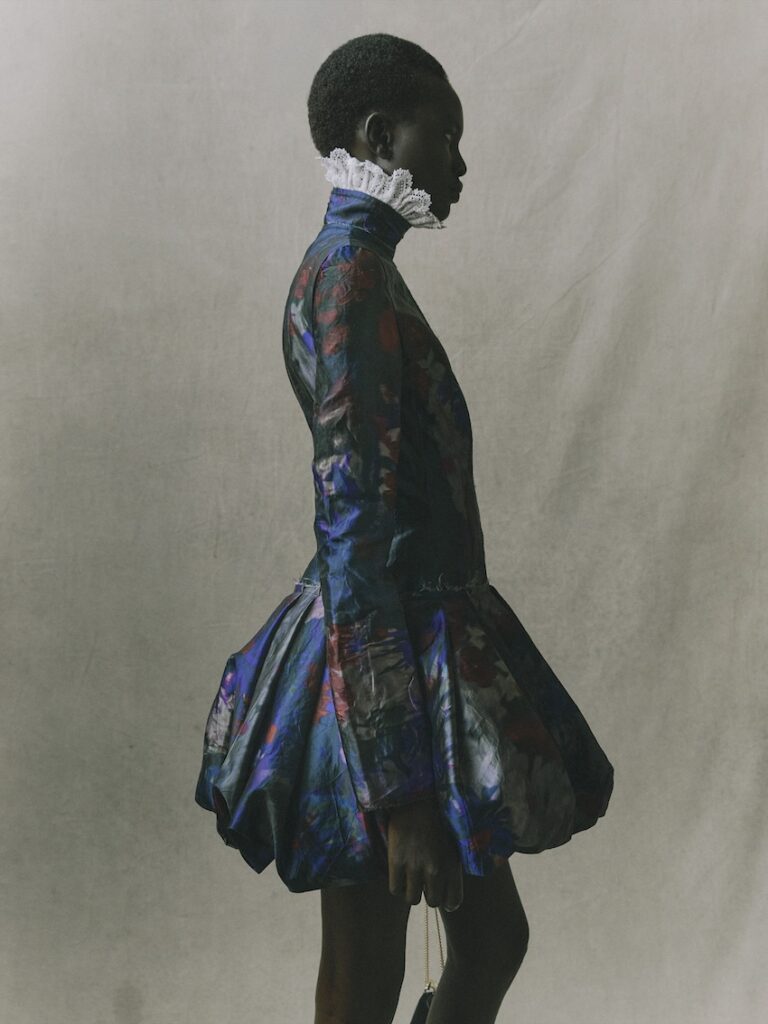
A person stands in profile wearing a blue, floral-patterned dress with a voluminous skirt and a white ruffled collar, against a plain, light background
A mini dress from AW26 that showcases archival Erdem prints. Photo: Daniel Archer
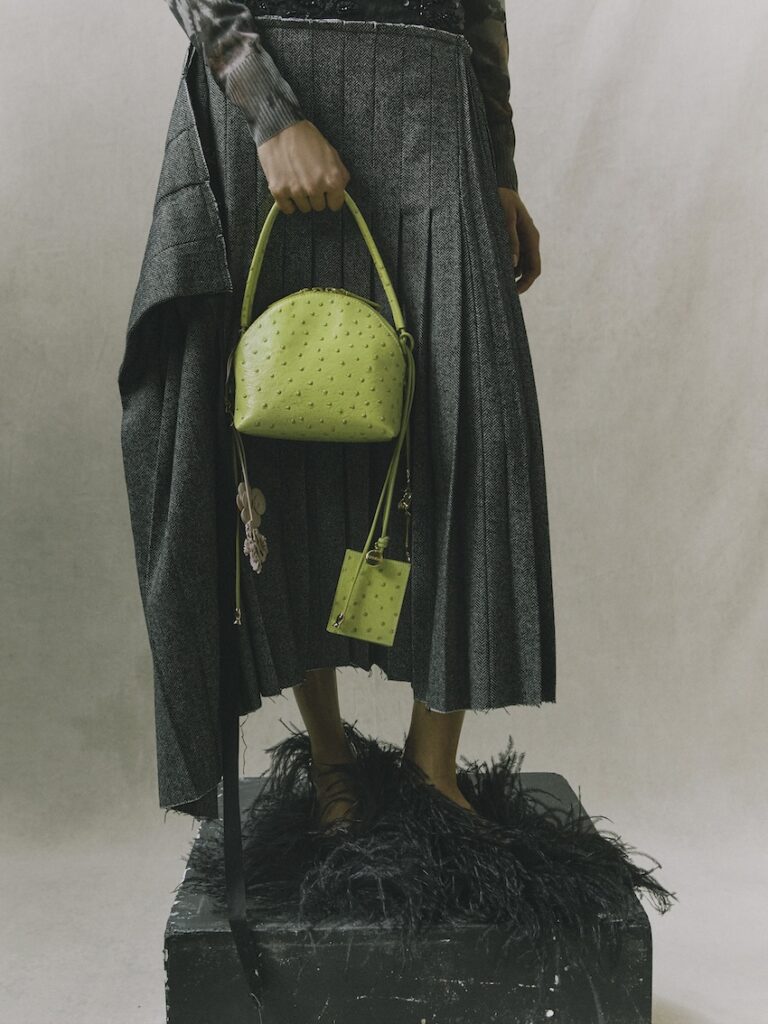
Person wearing a pleated gray skirt and feathered shoes stands on a black box, holding a textured lime green handbag and a small matching accessory, with a neutral backdrop behind them
A signature Flora bag in green ostrich-skin leather from AW26. Photo: Daniel Archer
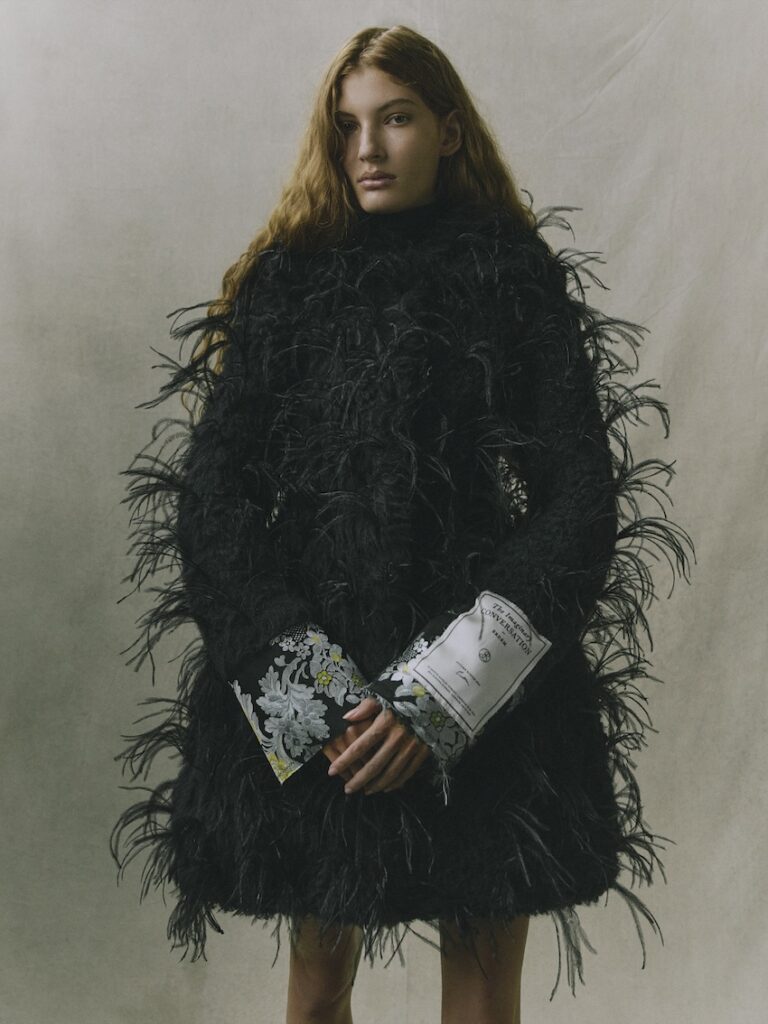
A person with long wavy hair wears a textured, feathered black coat with patterned cuffs, standing against a plain, light-colored background
An ostrich feather coat with jacquard cuffs in archival Erdem prints from AW26. Photo: Daniel Archer
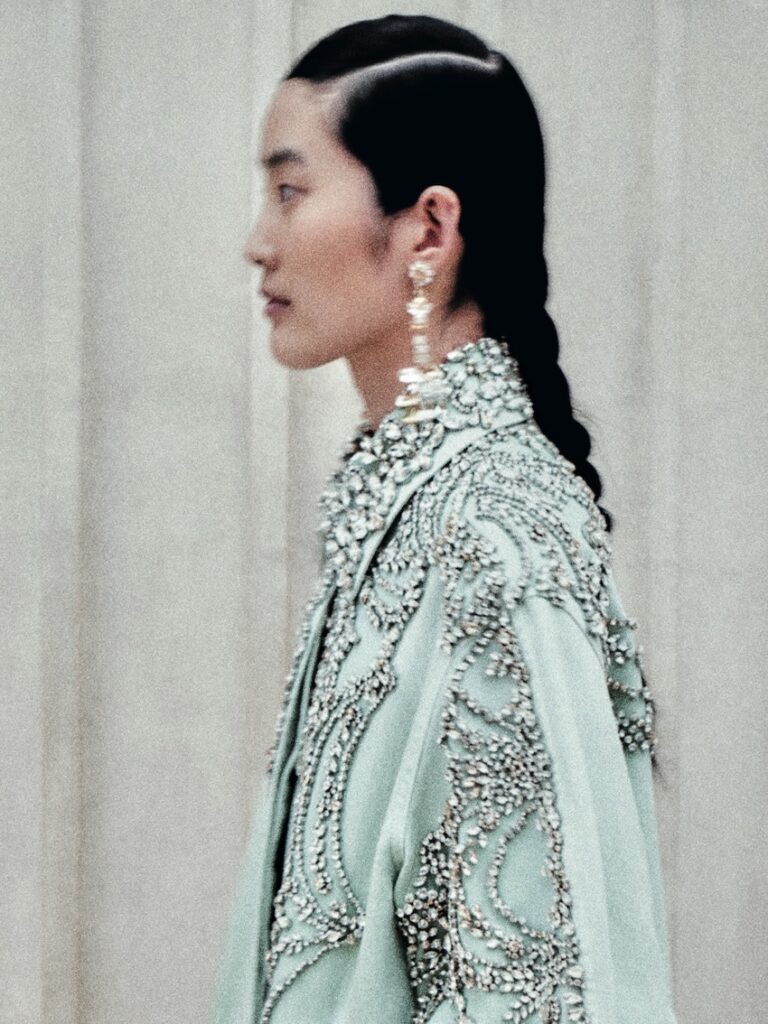
A person with a braided hairstyle wears a pale, embellished garment adorned with intricate beadwork and large dangling earrings, facing left against a soft, neutral background
A crystal-embellished mint-green jacket inspired by Radclyffe Hall, from SS25

This evolving constellation ensured that Erdem’s 20th anniversary collection for Autumn/Winter 2026 was much more than a “best-of”. Bringing together some of the characters that have remained most dear to him over the years, their wardrobes were pulled apart, clashed together and made anew. Such an exercise could have resulted in a cacophony but in Moralioglu’s delicate hands, the chaos became a harmonious chorus delivering these stories into the present day. “I knew immediately that I didn’t want to make a retrospective,” he says. “I wanted to be quite irreverent with the archive. We cut things apart, changed proportions, collided prints and allowed different collections to interrupt one another. Everything has a memory, but nothing is reproduced.”

Two fierce muses take centre stage in the line-up. From Spring/Summer 2025, English poet Radclyffe Hall comes back into view, bringing with her a tussle between masculine and feminine style, and an honouring of all those who have refuted social norms. And from Spring/Summer 2024, we re-meet Deborah Cavendish, the idiosyncratic Dowager Duchess of Devonshire, whose Chatsworth House wardrobe has previously been laid open to the designer – a treasure trove as rich in couture gowns as in mud-splattered wellington boots. “Radclyffe Hall has always fascinated me because of the tension between vulnerability and absolute defiance,” says Moralioglu. “While Deborah is almost her opposite: pragmatic, eccentric, completely herself. I liked imagining them occupying the same room. The collection really began with that impossible conversation.”

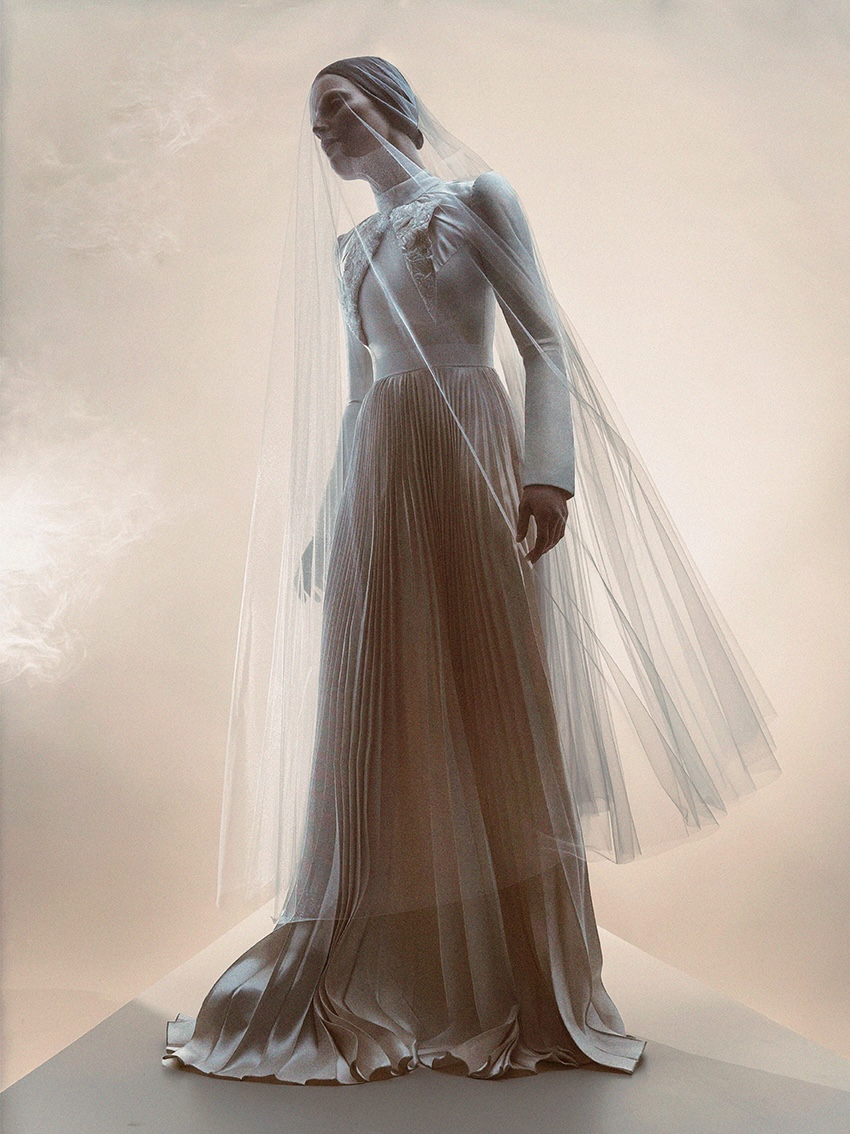
A person wearing a long, pleated, light-colored gown with long sleeves and a sheer veil stands against a soft, neutral background
The wedding dress from AW06 that closed Erdem’s debut London Fashion Week, photographed by Paul Kooiker to celebrate the 20th anniversary of the fashion house
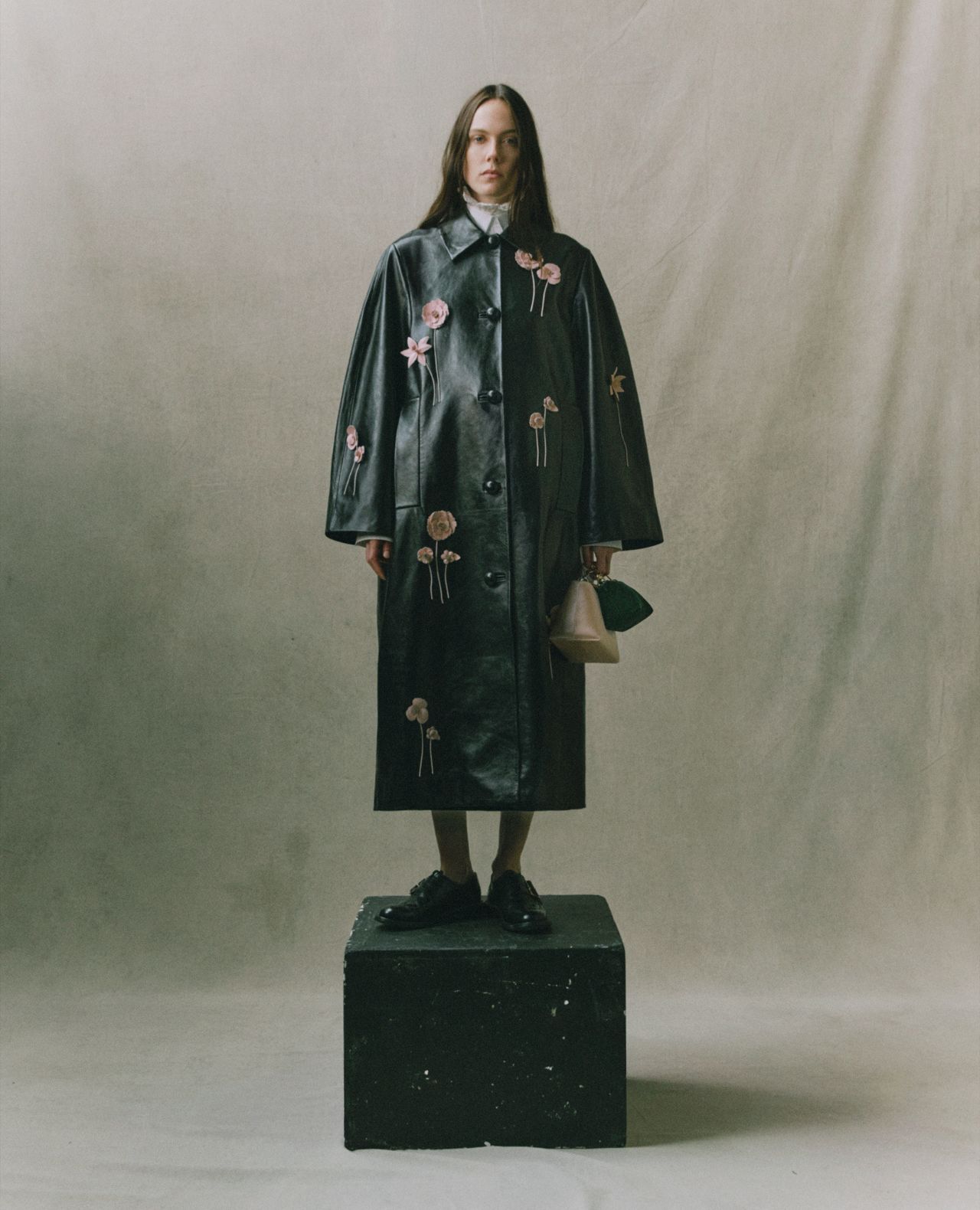
A person stands on a black box wearing a long, black leather coat with pink flower appliqués, black shoes, and holding a small beige bag
A long black coat from the Erdem AW26 collection featuring delicate pink floral appliqués – a nod to the house’s signature floral motifs. Photo: Daniel Archer
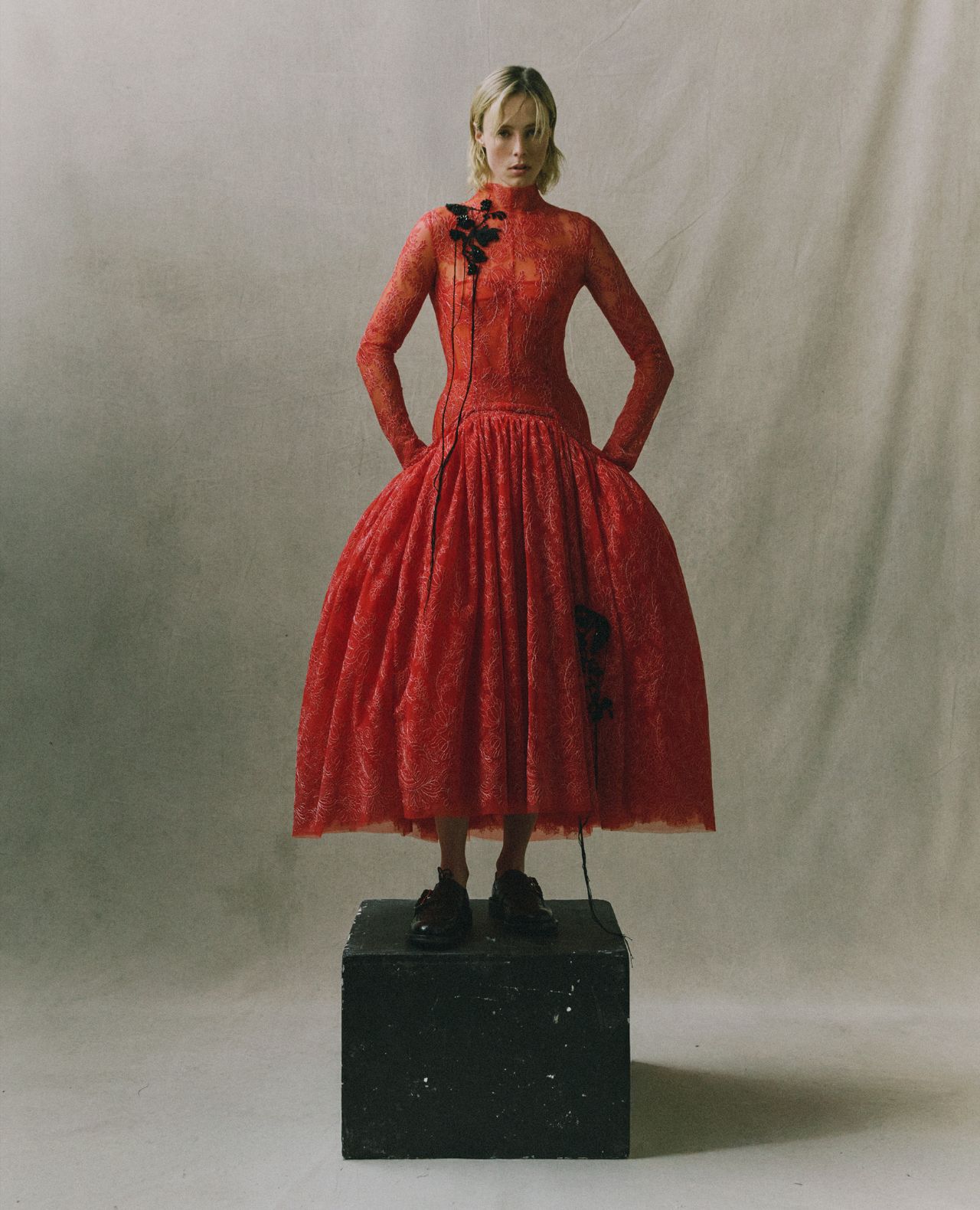
A woman stands confidently in a long, bright red lace dress atop a black box against a neutral backdrop. With hands on hips and black floral accessories draped across her dress and neck, she exudes both elegance and poise.
A ruby red dress from AW26 is made from delicate lace adorned with silver threadwork and a soft tulle base. Loose threads hang from embroidered flowers embellished with black sequins and beads. Photo: Daniel Archer

Sarah Mower at Vogue called this patchwork of dreamy fashion a celebration of “two decades building a house making women all over the world feel happy”. Similarly, Erdem’s hefty anniversary tome is teeming with reflections from friends and admirers cementing this landmark. In the foreword, Anna Wintour describes him as “London’s premier storyteller”. Celebrated novelist Hanya Yanagihara writes a moving fiction inspired by a dress. And British fashion journalist Charlie Porter dissects Moralıoğlu’s ongoing obsessions, among them Derek Jarman, Madonna and the Bloomsbury Group.

Yet as the fanfare around this anniversary milestone continues forward with the M7 exhibition, the designer is not resting on his laurels. His days are spent in his east London atelier with his team, where they continue to grow, learn and play. “The studio is always in a state of becoming,” he says. “There are half-finished embroideries, toiles being cut apart, drawings, fittings, swatches pinned to walls. I love the moment when an idea leaves the page and someone in the atelier interprets it in a way I hadn’t imagined.”

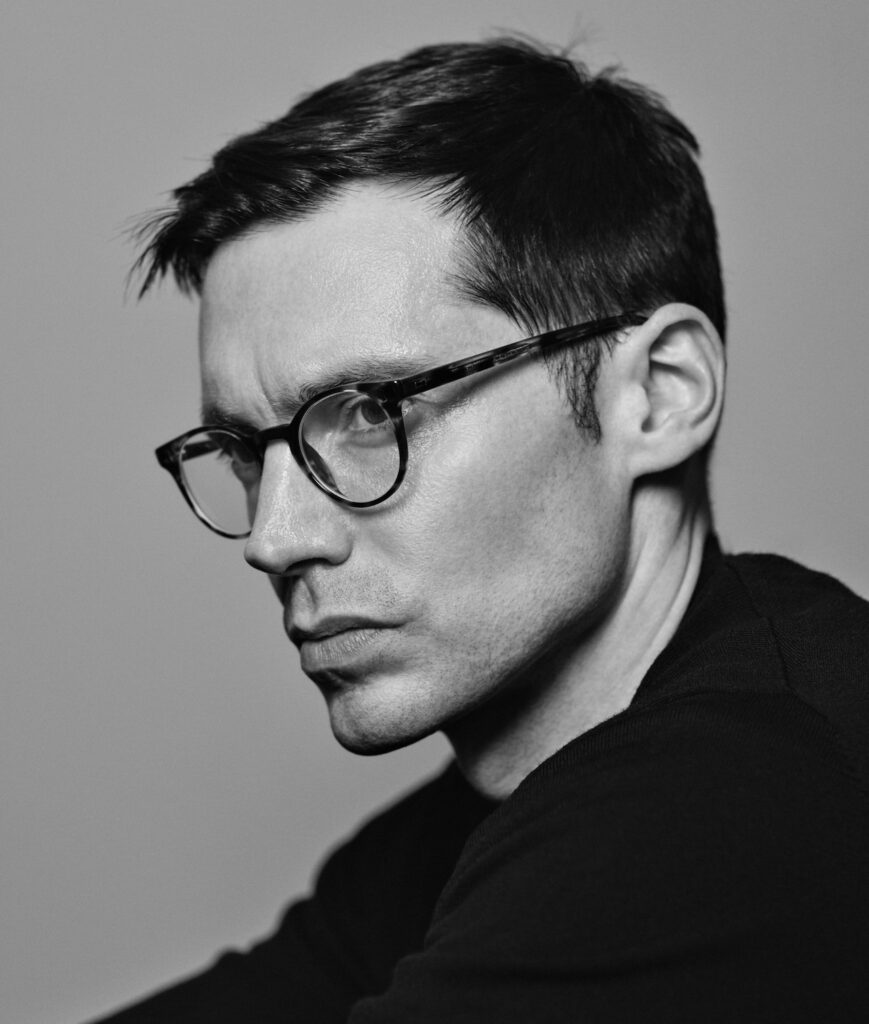
Black and white portrait of a man with short dark hair, wearing round glasses and a dark shirt, looking to the left with a serious expression against a plain background
Erdem Moralıoğlu photographed by Tom Mannion in 2026

“I wanted to be quite irreverent with the archive... everything has a memory, but nothing is reproduced”

Whether or not he is comfortable accepting his accolades for establishing such a distinctive global brand and continuing to thrive in these trying times for luxury fashion, Moralioglu knows he’s a rare breed. And that while looking back is pleasurable, the only way to remain relevant is to keep gazing forward. “I’m wary of defining a legacy while you’re still making the work,” he says. “I’d rather remain curious and allow the house to evolve in ways I can’t yet anticipate. What matters is that the work continues to have a distinct point of view, while never becoming fixed by its own history.”

These are sage words from a self-confessed bibliophile who, even now, still makes time to school himself in the library once a week. Because despite the unrelenting pressures of the industry, what is it all for, if not to spin yarns that fill “her” with joy and optimism? And armed with such a bounty of lofty knowledge, Moralioglu can at least be content enough to share his wisdom with any young protegee who crosses his path. “My advice? Look at everything. Read, go to exhibitions, travel, be curious. Taste comes from looking, but a point of view comes from learning what to do with what you’ve seen.”

Erdem: About Time, About Her is on view at M7 in Doha until 26 December 2026. Presented as part of Qatar Canada Mexico 2026 Year of Culture

Issue 000 Contents

FEATURES
NEWS

Contents

Features

NEWS