- Design
- Autumn/Winter 2026-27
- October
Between
the lines
Gerhard Richter brings art and architecture together in a new permanent pavilion in Doha, transforming the algorithmic patterns of his Strip Paintings into a kaleidoscopic installation
Words Jane Morris
For more than six decades German artist Gerhard Richter has experimented with the formal and conceptual possibilities of painting. He has explored the relationship between photography and paintings with near-photorealist works, making images of landscapes, people and objects slightly blurred by feathering a brush into almost-dry paint. He has made grids of colour on a white background, minimalist in appearance but inspired by commercial paint charts. He has made expressive, abstract paintings by using perspex squeegees to drag paint across canvases.
From 2011 Richter started creating works by digitising one of his paintings – Abstract Painting 724-4, 1990 – and slicing it into pieces, first two, then four, then eight, then ultimately 8,192 pieces. These pieces were then rearranged into patterns and stripes, following strict steps with the help of a computer program. He documented and further explored this process in an artist’s book and visual project, Gerhard Richter: Patterns, and these works became the basis for his Strip Paintings series. He makes these by taking a small digital sample from the original painting, splitting and mirroring each piece to create repeated inkjet lines – some just 0.08mm wide, others repeated until they are as fat as a finger – that can stretch up to 10m. Close-up, the paintings can be dizzying.
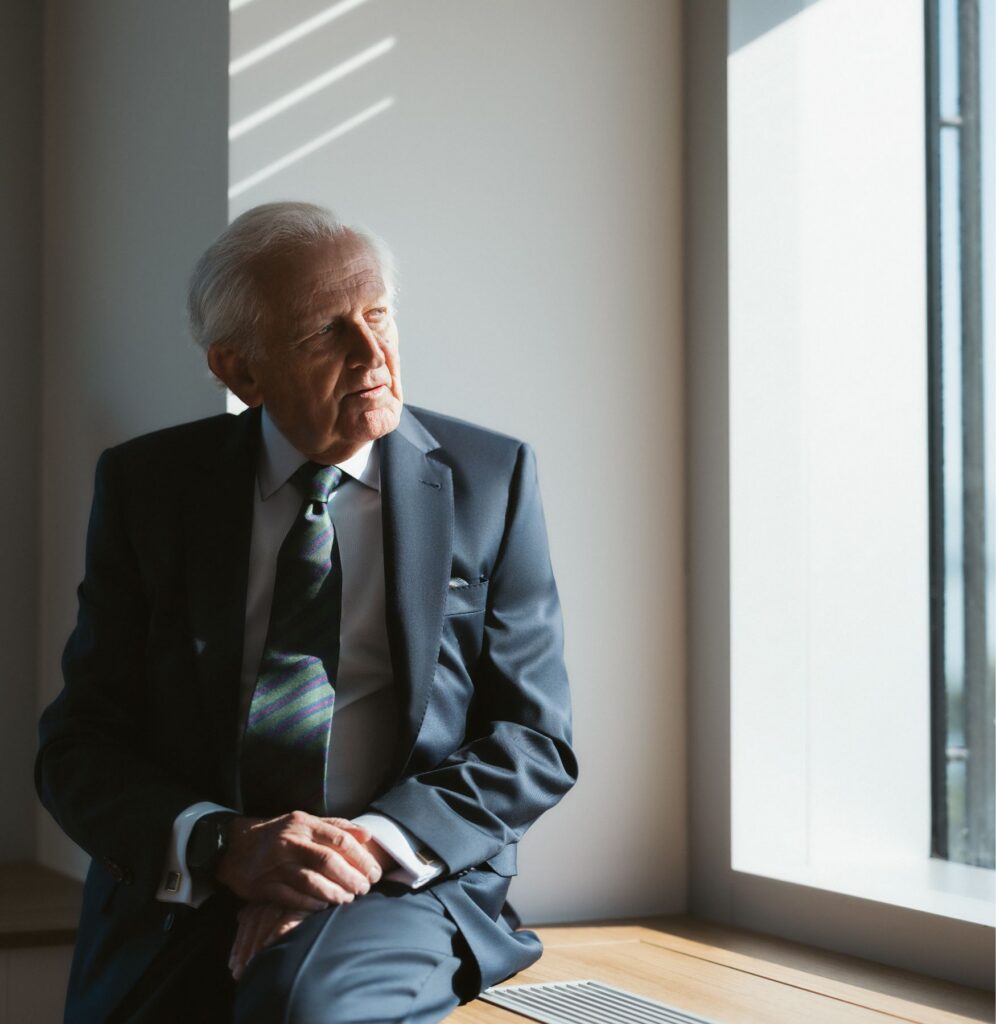
Richter visited Doha in 2013, two years after publishing Patterns, and the city’s architecture inspired him. Now the 94-year-old German artist, considered by many to be one of the most influential of his generation, has created a space in Qatar that functions as both a walk-in sculpture and a gallery for his work. Doha Pavilion: Gerhard Richter is a new permanent, site-specific structure that opens in November 2026 in MIA Park. It will be surrounded by the landscaped waterside esplanade that connects the Museum of Islamic Art, the National Museum of Qatar and the much-anticipated Art Mill Museum, scheduled for 2030.
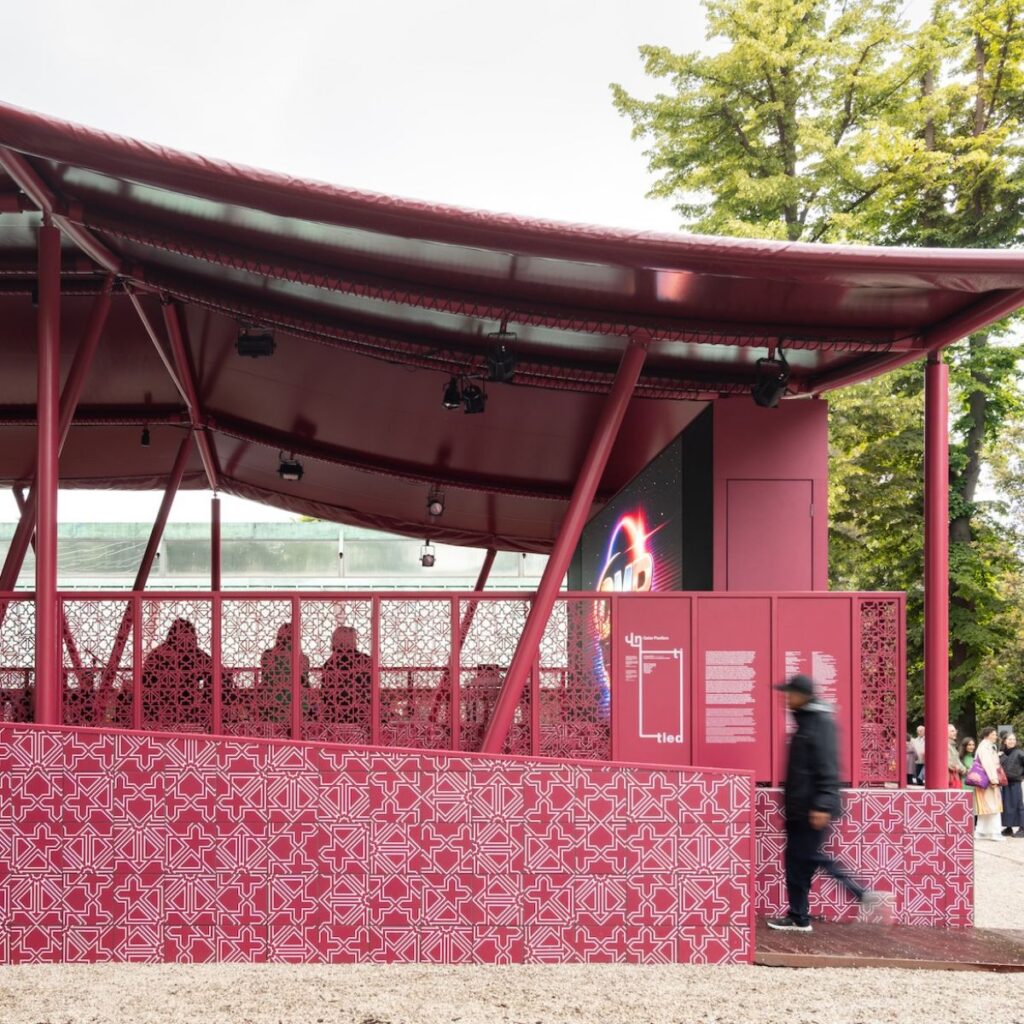
The pavilion is an irregular, six-sided gallery, constructed with celebrated architect Annabelle Selldorf, and covered on the exterior with brilliant kaleidoscopic patterns generated using the same computer software Richter uses for his work. “The city’s architecture and history sparked an idea for a pavilion that could unite the thematic threads of this body of work,” explains Richter. “The exterior features decorative tiles based on Patterns, which first led me to the Strip Paintings.”
Sheikha al-Mayassa, the chairperson of Qatar Museums, which has commissioned the project, describes the pavilion “as a three-dimensional experience of Gerhard Richter’s works in different variations”. She says that the location of the structure could not be more appropriate. “The new pavilion is across from the Museum of Islamic Art, and Gerhard Richter’s design has connections to both Islamic geometry and the mathematical equations that are linked to it,” she says. The Museum’s collections are also filled with patterned mosaics, tapestries, ceramics and metalwork.
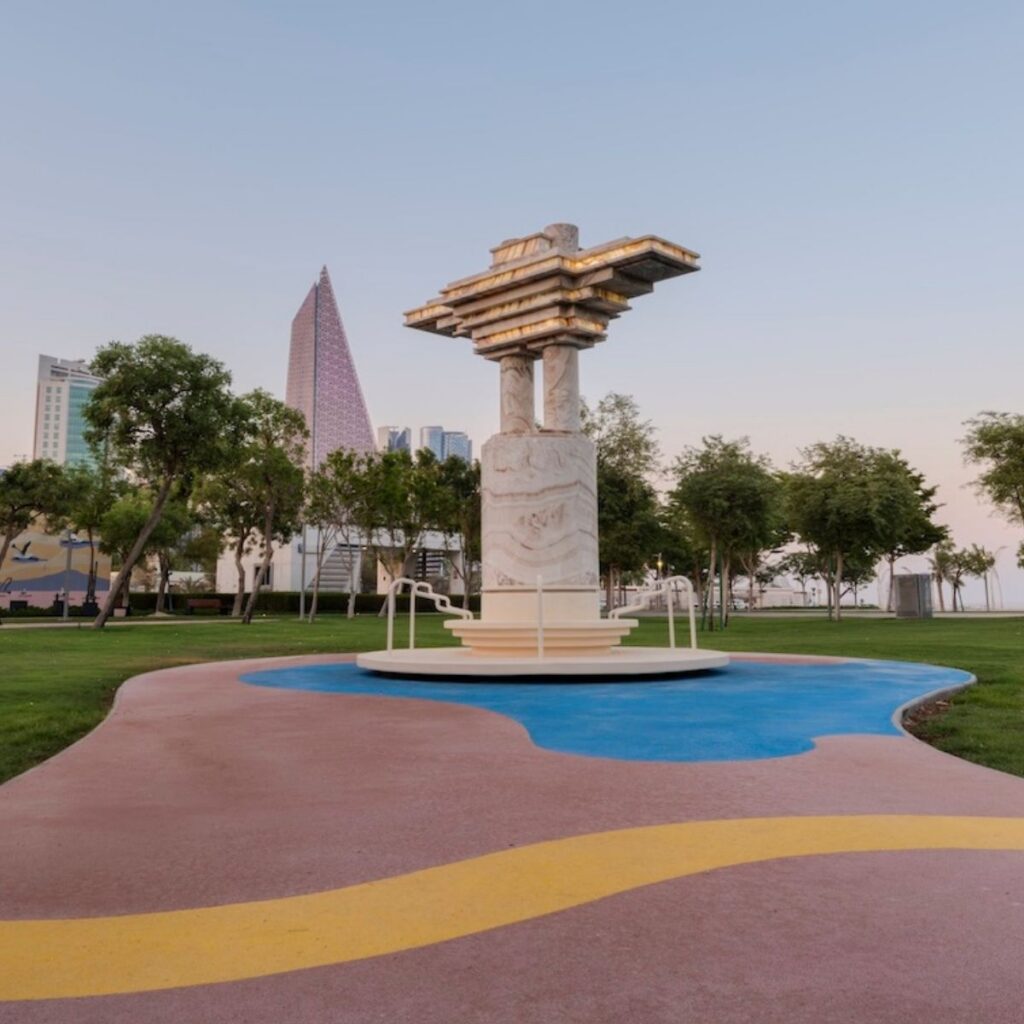
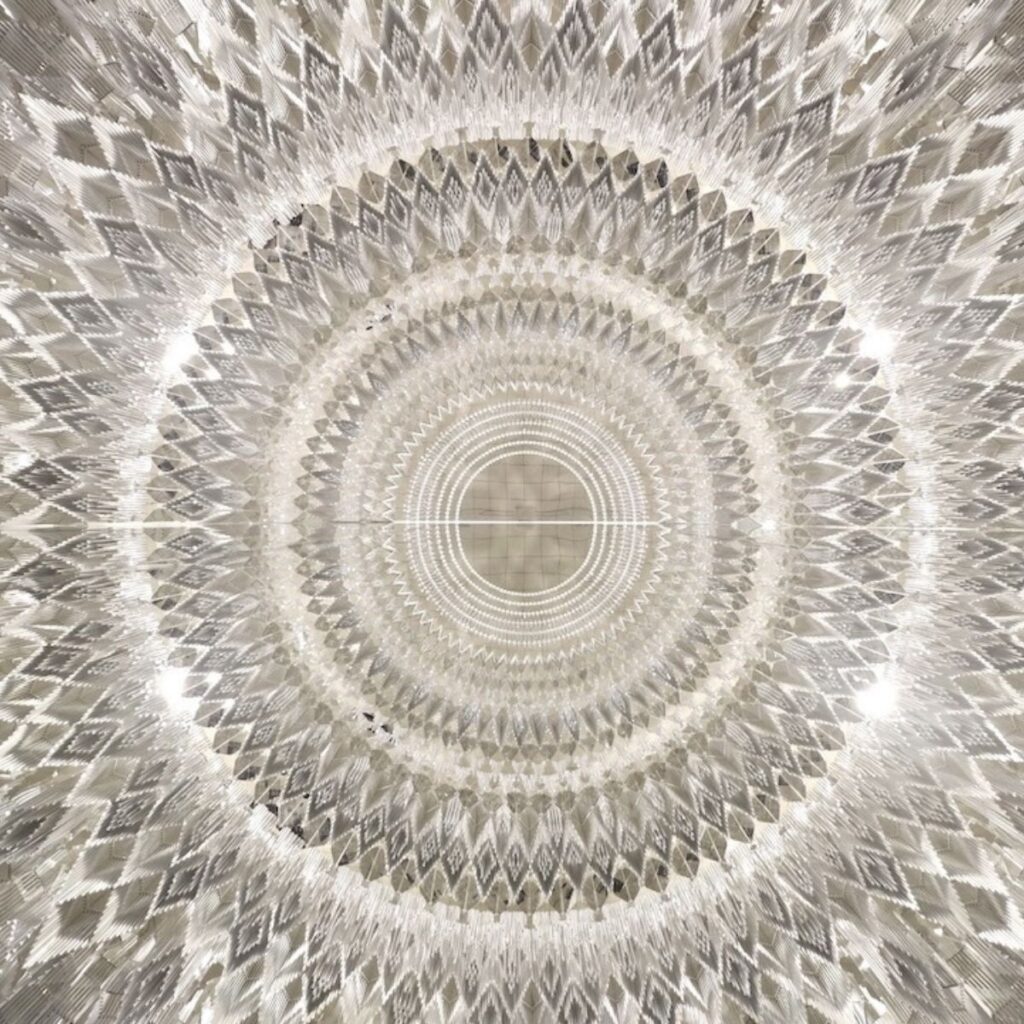
There is a single entrance to the pavilion, with a stone sculpture, Brunnen (German for “well”), placed in front. Inside, there will be three large horizontally striped Strip Paintings and two floor-to-ceiling works from Richter’s Mirror series, which he began in the 1980s. A central, three-sided Strip Tower echoes the hexagonal form of the gallery, and natural light pours in through an oculus in the ceiling. Selldorf, who worked with Richter to realise the pavilion, describes it as “a remarkable work of architecture and a profound work of art”. She adds that the repeated patterns, inside and out, “invite you to immerse yourself in the pavilion, in the continuity and dynamic endlessness of it all. The Mirrors on the two walls mean that the visitor is in a continuous conversation with themselves and with the art.”
There is often a tension in Richter’s work between his use of mechanical devices to create images and the associations and meaning they evoke. Some find his work cool, even cold, and conceptual, others find it beautiful with hidden traces of the sublime. The same doublethink appears present in this new structure: the images inside and out have been created by an algorithm yet the effect – perhaps like Mark Rothko’s non-denominational Houston chapel – suggests an artist searching for the profound.
Cover image: A rendering by Selldorf Architects of the interior of Doha Pavilion: Gerhard Richter showing the Strip Tower beneath the oculus. Photo: © Selldorf Architects