- Art
- Autumn/Winter 2026-27
- October
Playground love
Shezad Dawood has created a second playground in Doha’s Al Masrah Park. And this time it’s in pink onyx. Meet the artist and discover how Dawood’s work brings the past into the present
Words Debika Ray
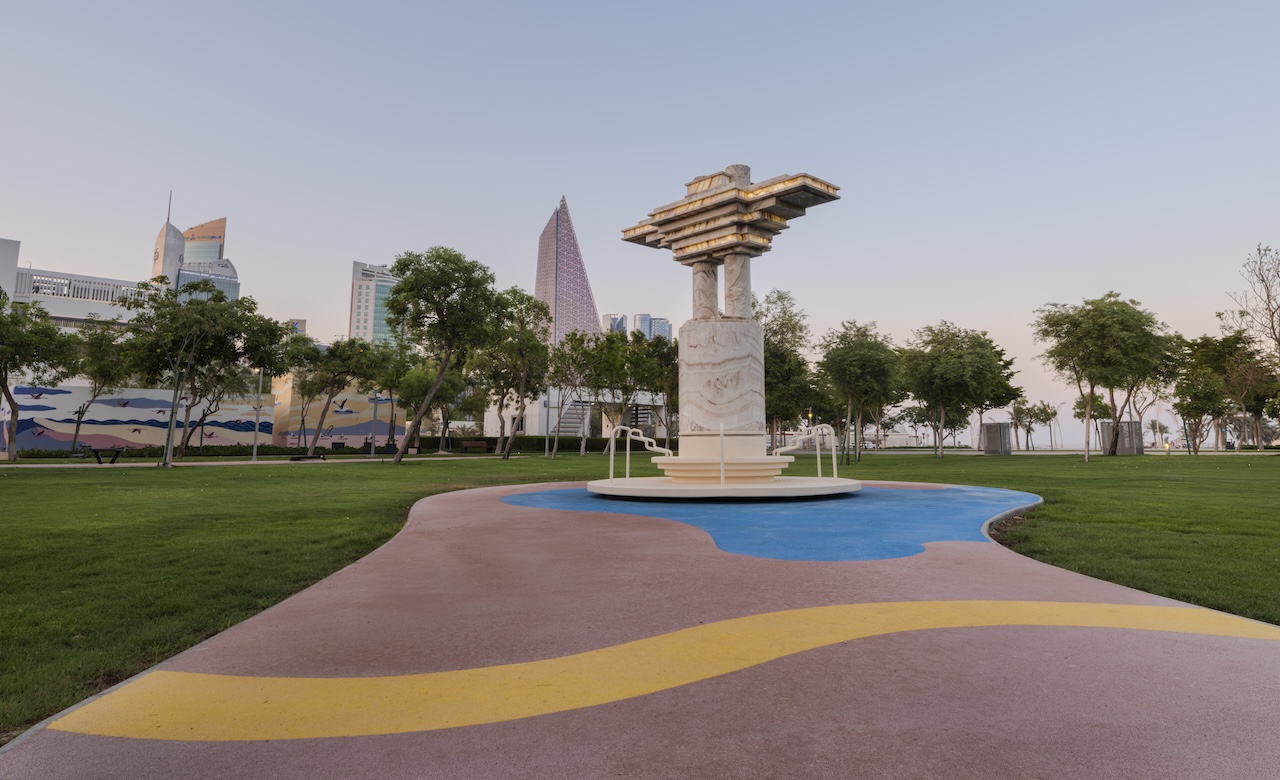
“The best artworks for me have an implicit choreography – even if it’s subtle,” says Shezad Dawood. “A sculpture shouldn’t be a dead mass, but should shift with the time of day.” In Al Masrah Park on the picturesque Doha Corniche, the multidisciplinary artist has recently completed his second playground sculpture – a work that embodies the dynamism he describes.
Playgrounds are fairly new territory for London-based Dawood, but he has always been driven to break down barriers between artists and their audiences – inspired in part by American artist and designer Isamu Noguchi, who championed the social role of sculpture and designed several playgrounds. “One of the key spaces art should operate in is with children,” explains Dawood.
The first manifestation of this thinking was Doha Modern Playground, which was completed in 2022 in the same park. The starting point for Dawood, who collaborated with Qatari architect Fatma Al Sehlawi on the work, was the late 20th-century architecture that signalled the transition of Qatar from a British protectorate to an independent state.
Six modernist buildings realised between 1962 and 1987 were reimagined by the artist as playful forms to accommodate swings, slides, tunnels and platforms, rendered in the city’s characteristic white concrete. Two of the original buildings – the Qatar National Theatre and Ministry of Information, designed by Triad CICO, and the Post Office by Twist + Whitley with Comconsult – are visible from the site, creating a visual dialogue between the art and its inspiration.
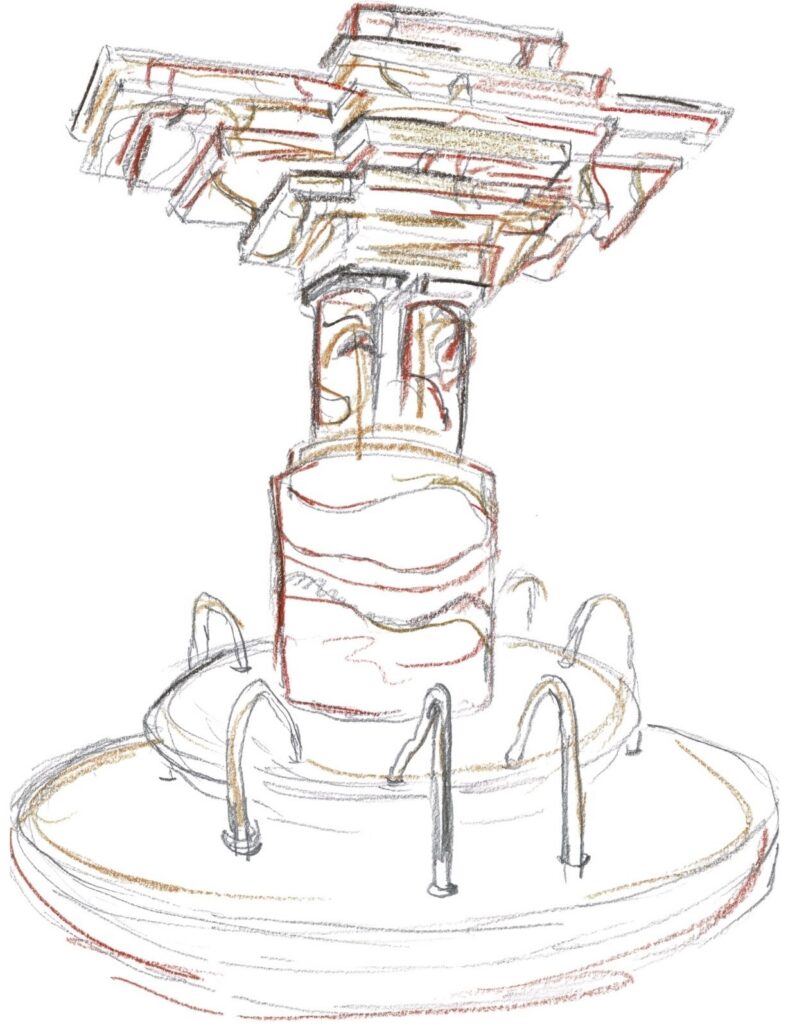
An initial design sketch of the installation by Shezad Dawood.
Illustration: © Shezad Dawood, 2026
“The idea is to give the city back... not just to children, but to all generations who have emotional memories of those buildings”
Shezad Dawood
The new playground, on the other side of the park, again takes inspiration from the city’s architecture. This time, however, it’s a building that never existed: a design proposed by the late Japanese architect Arata Isozaki for the Qatar National Library, which was a project eventually realised by Dutch practice OMA in 2017.
Isozaki had envisaged three enormous pillars topped by a cantilevered mass that lit up at night – “a floating city in the sky”, as Dawood puts it. In an effort to imagine an alternative history, he has brought the design to life, reimagining it as the central feature of a carousel-like structure.
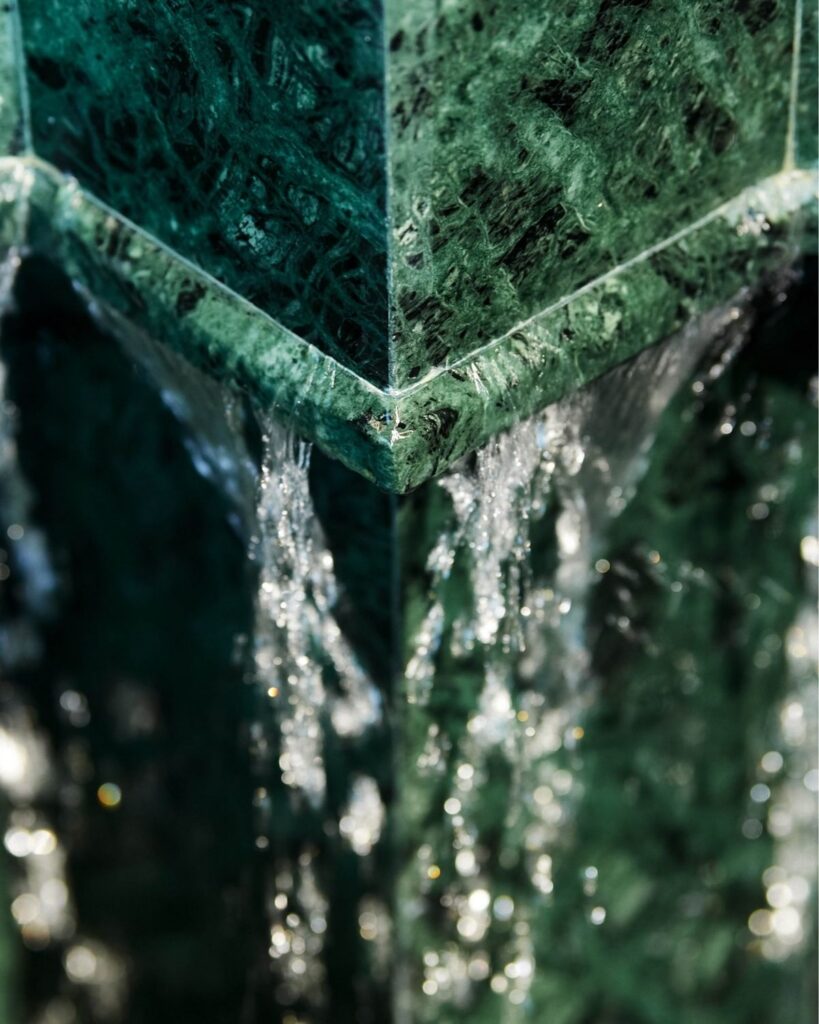
The carousel is crafted from pink onyx, a stone that Dawood says became popular as architectural decoration with the arrival of Indian and Pakistani craftspeople in the 1980s. The carousel sits where Isozaki’s library would have been if it were built, creating a poetic link between a possible past and the actual present.
While playgrounds are generally thought of as spaces for children, Dawood’s work is for everyone. “The idea is to give the city back to its inhabitants – not just to children, but to all generations who have emotional memories of those buildings,” he says. Both playgrounds offer sightlines across the city, and fertile ground for the imagination. “And I don’t just mean literal sightlines,” he adds, “but also historic and cultural ones that speak of certain decades and moments – and how those echo into the present.”