
The Design Doha Biennale's flagship exhibition Arab Design Now gathers a new generation of Arab creatives whose work offers a vivid snapshot of a region in flux
Words Francesca Perry
“A new generation of designers is re-engaging with their homelands by creating very poignant and beautiful works”
Noura Al Sayeh
The second edition of Arab Design Now – the flagship exhibition at the heart of the Design Doha Biennial – brings together a defining group of Arab designers, architects and makers working across the Middle East, north Africa and south Asia (MENASA) region and its diasporas. Encompassing diverse disciplines, from furniture and homewares to textiles and experimental work by both established and emerging designers, the exhibition is a vivid expression of the Arab experience and a response to the world we live in.
“The Arab world is such a rich and diverse place,” says Bahrain-based Palestinian architect Noura Al Sayeh, curator of Arab Design Now 2026. “It’s a huge area, and I wanted to bring all these worlds and stories to the forefront.” Al Sayeh spent more than a year curating the exhibition to bring together a powerful showcase of the best of contemporary design across the region. She selected 81 designers, from Yemen to Qatar to Morocco, and commissioned them to create ambitious new work for the event.
The exhibition – which takes place in Msheireb and first launched at the inaugural Design Doha in 2024 – considers design in its broadest sense, encompassing architecture and fashion as well as furniture and craft. It is organised around five themes: narration and ornamentation; agrarian practices; landscapes of production and extraction; crafts, technology and community; and belonging and migrating. “These topics really reflect what the designers are grappling with,” explains Al Sayeh.
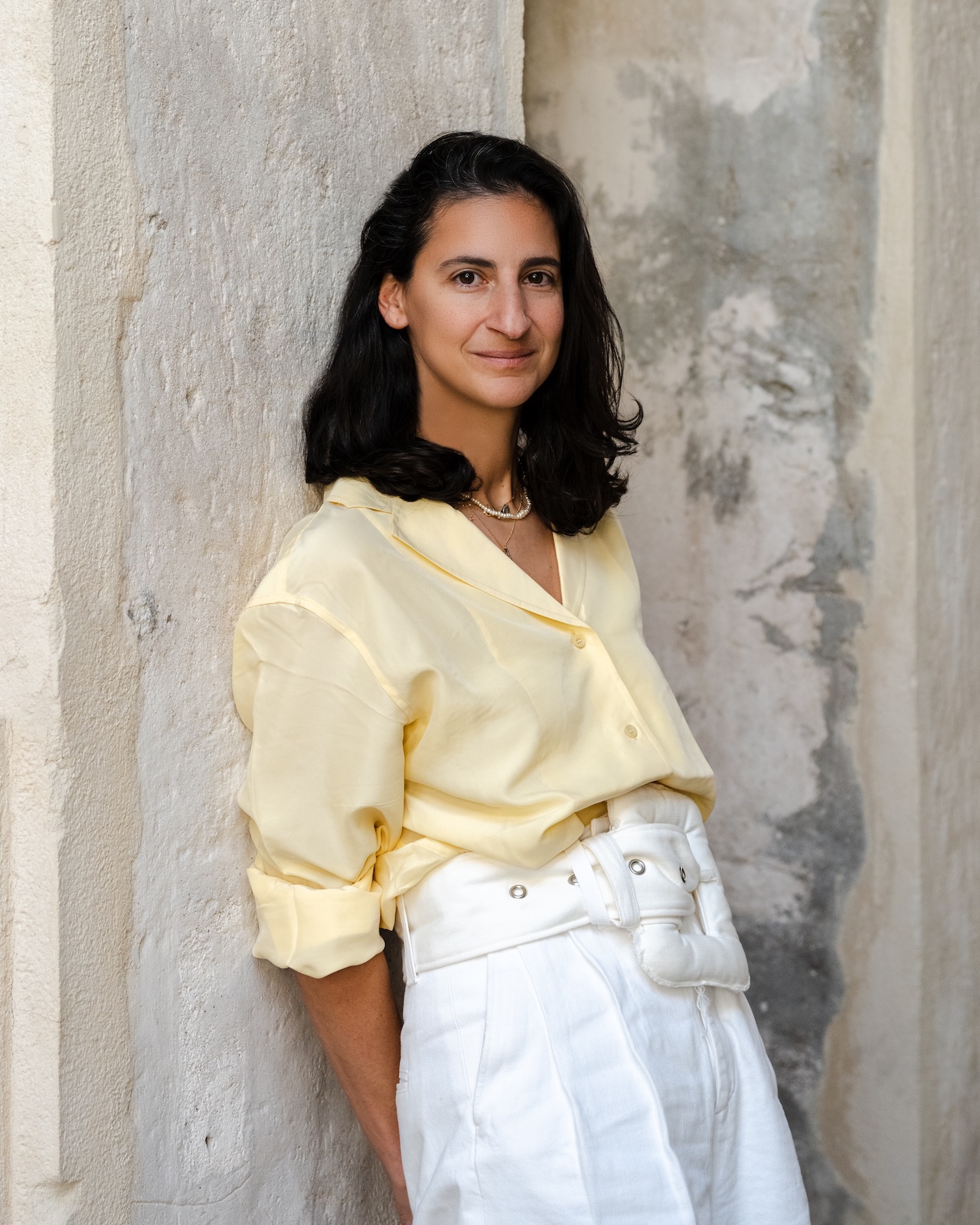
Noura Al Sayeh is curator of Arab Design Now 2026. An architect by training, she works for the Bahrain Authority for Culture and Antiquities as advisor for heritage projects. Photo: Ishaq Madan
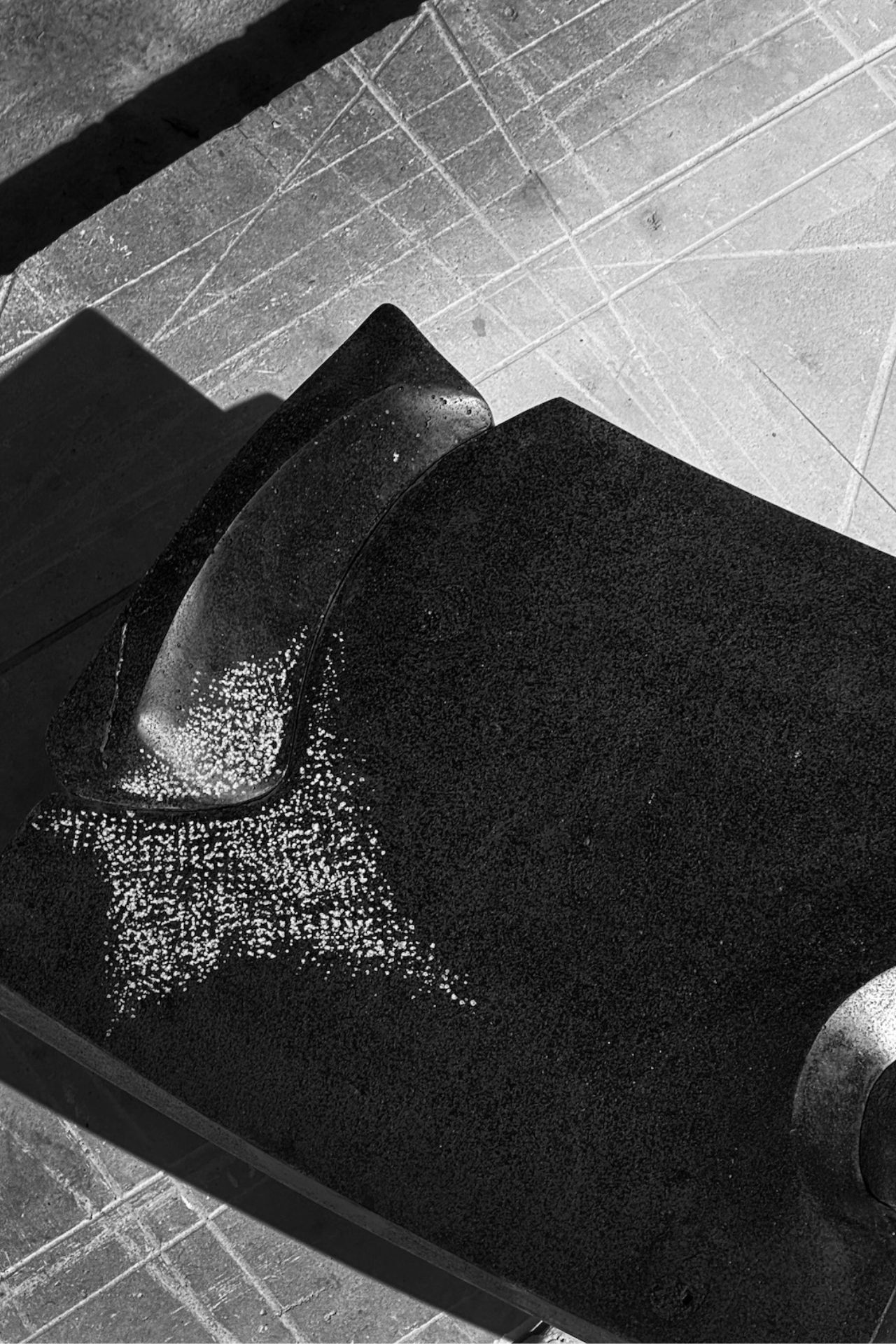
Lebanese architect and designer Shaha Raphael sourced volcanic basalt boulders from around her country to create this large stone table, made in collaboration with Beirut-based stone manufacturer Marm Group. The boulders were cut, milled, chiselled and brought together to create a continuous surface. Natural ridges were defined, hollows deepened and internal veins in the rock revealed, giving the piece a sculptural quality that references geological processes. Raphael wanted the table to appear unified when viewed from above and as an intricate surface at close range. Photo: Shaha Raphael
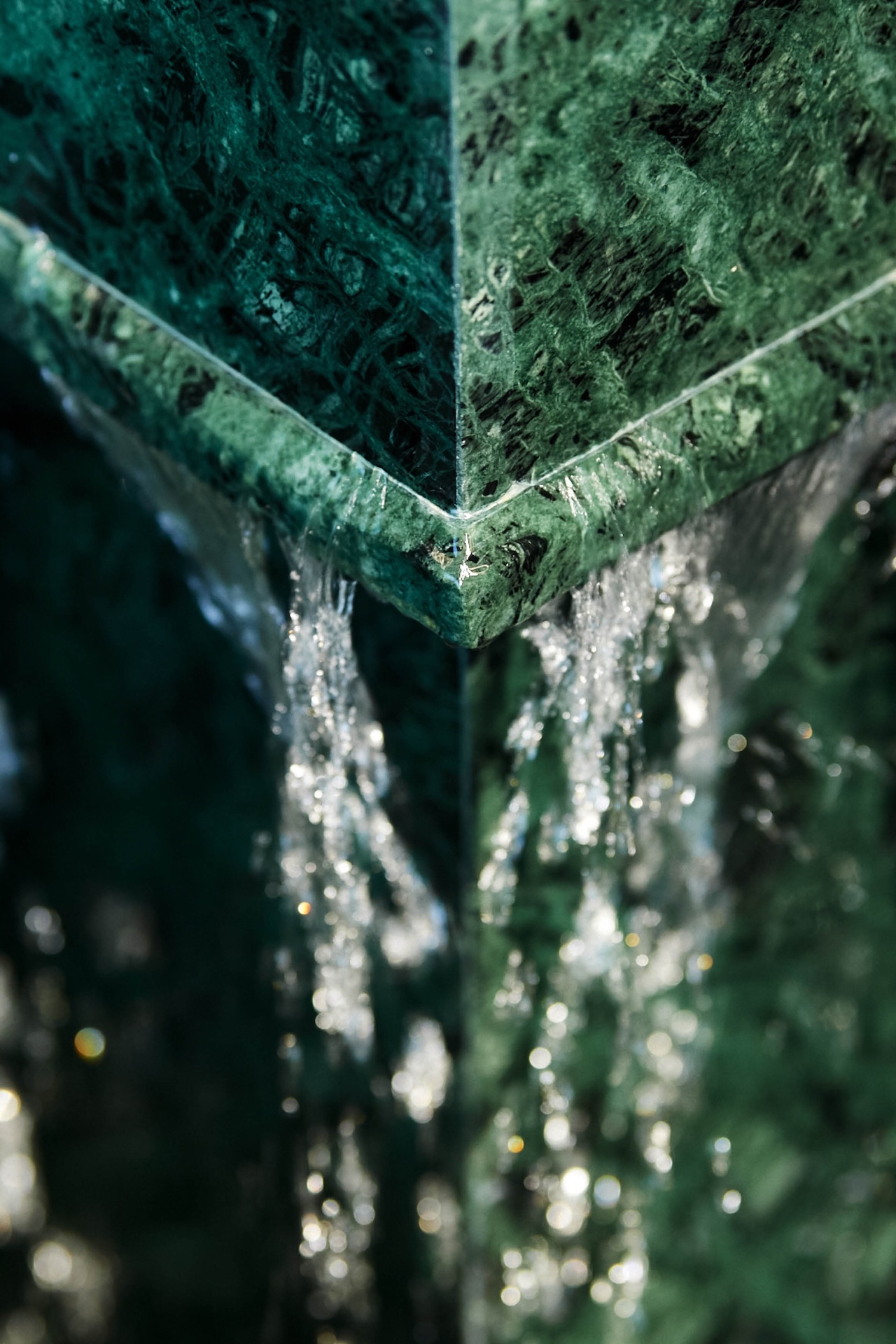
Ottoman-era Syrian fountains were inspirational for Talin Hazbar’s project. The UAE-based Syrian artist reflected on the role courtyard fountains once played in home and community life to make a geometric, multicoloured assemblage of stone and marble basins that form a monumental installation. In her practice, Hazbar is drawn to landscapes and natural materials. Having studied architecture, she applies structural knowledge and thinking to her artworks, which often recall the architecture of nature. Hazbar’s work has been exhibited internationally, including at the Louvre Abu Dhabi and the National Gallery of Victoria in Melbourne. Photo: Warehouse421
An architect as well as an experienced curator – she is currently advisor for heritage projects for the Bahrain Authority for Culture and Antiquities – Al Sayeh is deeply committed to representing contemporary Arab identity through design and the built environment, and it’s the same approach that informs Arab Design Now.
“My role was to make sure that I made space for everything that is happening in the Arab world, which is a place of immense contrasts,” Al Sayeh says. Of paramount importance was “foregrounding context” – the varied social, political, cultural and geographical conditions that influence how and why designs are produced.
In the exhibition Al Sayeh has tried to “open windows into worlds that are maybe not always legible or understandable”, she says. This approach means accompanying each of the projects with specially commissioned photographic or video documentation of the context in which the work was made – such as the artisans who contributed their skills or the landscape that influenced the finished design. Some of this documentation is shown on large screens throughout the exhibition, guiding the visitor. “You go from Nubian homes on the banks of the Nile to a landfill in Jordan to the streets of Doha – so the Arab world is really physically present,” Al Sayeh explains.
This foregrounding of a much bigger picture is all the more critical for an exhibition about the Arab world, she says, referring to representations of the region in the media. “So many stories can get lost in the process: a metalworker helping a designer to produce a piece; a grandmother teaching young designers to stitch; people from the diaspora creating designs from remnants of their homeland that their parents brought with them.”
The nature of diasporic work is of particular interest to Al Sayeh. “Waves of migration from across the MENASA region are redefining Arab culture,” she explains. “I found this a really interesting and fascinating phenomenon to look at in the exhibition – it gave me the opportunity to freeze in a moment of time what is happening across a wide geography. A new generation of designers is re-engaging with their homelands by creating very poignant and beautiful works.”
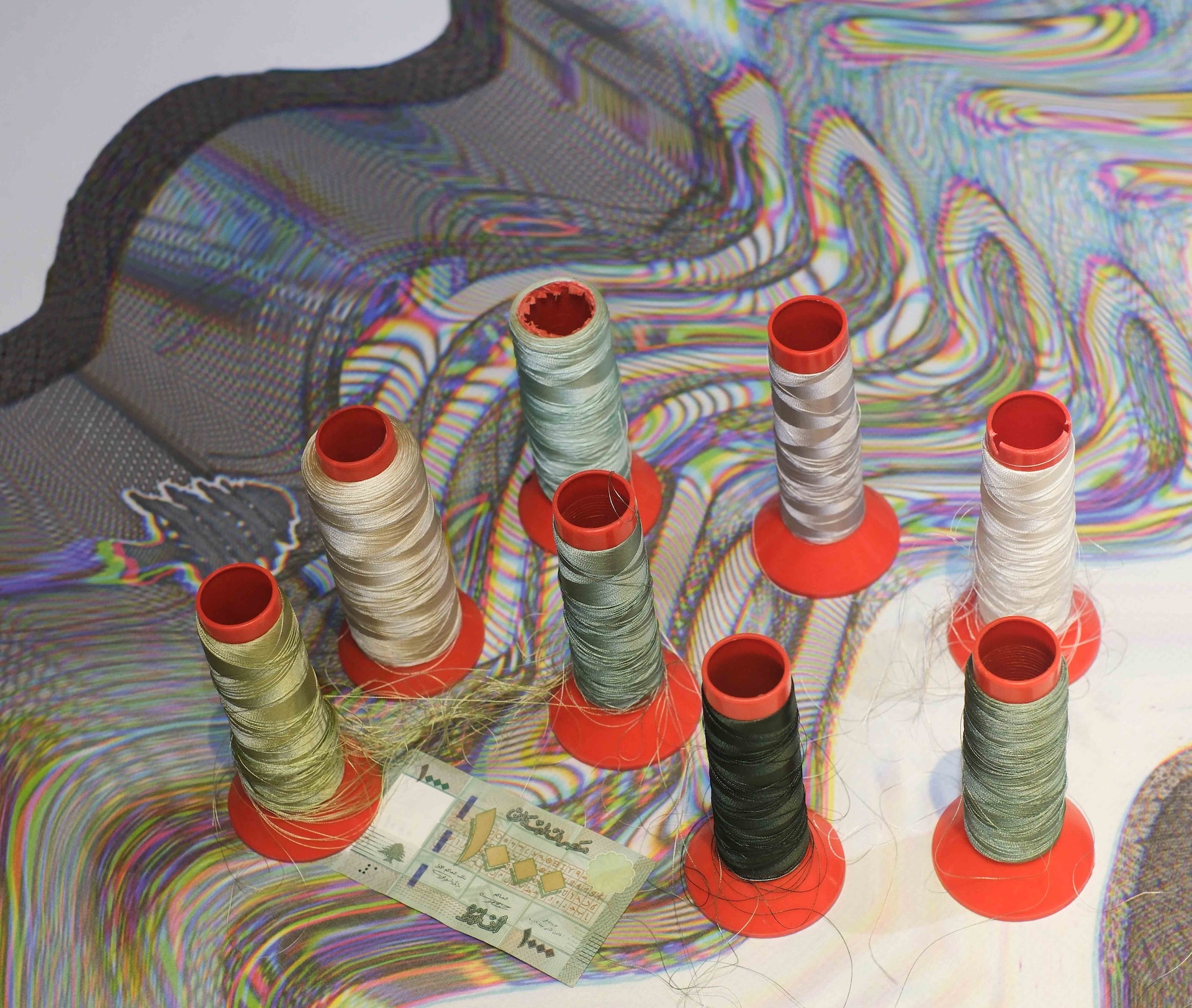
In a series of textile works, artist Tamara Kalo has transformed imagery of Lebanese currency into glitched, abstracted visions through the process of scanography – using a scanner as a digital camera. Titled Current Sea, Kalo’s series (which began in 2023) reflects on Lebanon’s economic crisis, with fluid appearances evoking the destructive power of uncontrollable forces. Each piece was produced in collaboration with local artisans as a way to value expert skill and sustain craft in the midst of extreme inflation. The large-scale scans of the bills are intricately embroidered, and Kalo has added “coins” cast in metal to the surfaces. Photo: Tamara Kalo
Syrian architect Faysal Tabbarah, for example, is based in Sharjah, UAE, where he is co-founder of the design agency Architecture and Other Things and associate professor of architecture at the American University of Sharjah. For Arab Design Now he has created a monumental installation that centres on Syria’s Barada River, which flows through Damascus. An assemblage of mosaics, glass, ceramics, brocade and woodwork – which Al Sayeh describes as a “table-tapestry” – it draws on historical research into the role the ancient river has played in community life in Syria, as well as the misrepresentation it has suffered through orientalist narratives.
Likewise, New York-based Iraqi sculptor Maryam Turkey – whose family moved to the US as refugees almost two decades ago – has created sculptural lighting pieces crafted from clay and Iraqi sand. These were inspired by mud structures she remembers from her childhood in Baghdad.
Belgian-Sudanese fashion designer Abdel El Tayeb, though based in Europe, creates garments in Sudan that preserve and celebrate the country’s ancestral craftsmanship, harnessing techniques he learned from his grandmothers. For Arab Design Now he used these techniques to create a domestic environment of furniture that he describes as “a Nubian-modernist reimagining of the traditional Sudanese household”.
The question of Arab identity, says Al Sayeh, is a “constantly evolving one, and one that is always borrowing from other cultures”. There is a fluid mix across the region of shared traditions and experiences, as well as distinct identities – something Al Sayeh has been careful to highlight through the projects on display.
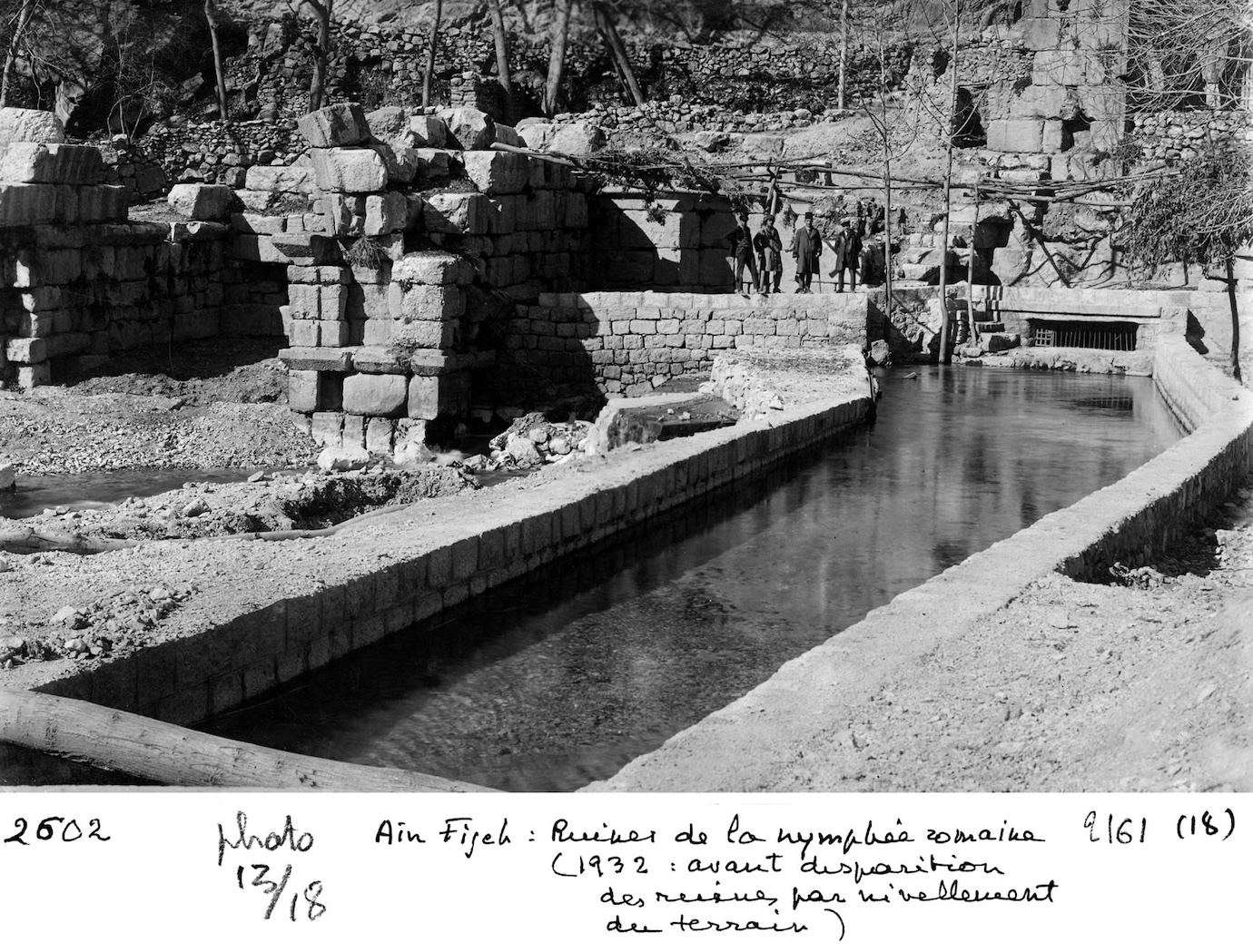
Ruins of the ancient Roman Nymphaeum at the Ain al-Fijah springs in Syria, as documented in the 1930s before they were removed. The springs are the source of the Barada River, a key waterway that flows through Damascus. Syrian architect and educator Faysal Tabbarah undertook extensive research on the river and its historic role in Syria, which informed a monumental installation. The work combines mosaics, glass, ceramics, brocade and woodwork, alongside vernacular practices such as earth bricks and water channels, representing the river as a “living archive” of spatial and material knowledge. Photo: Aga Khan Documentation Center, MIT Libraries
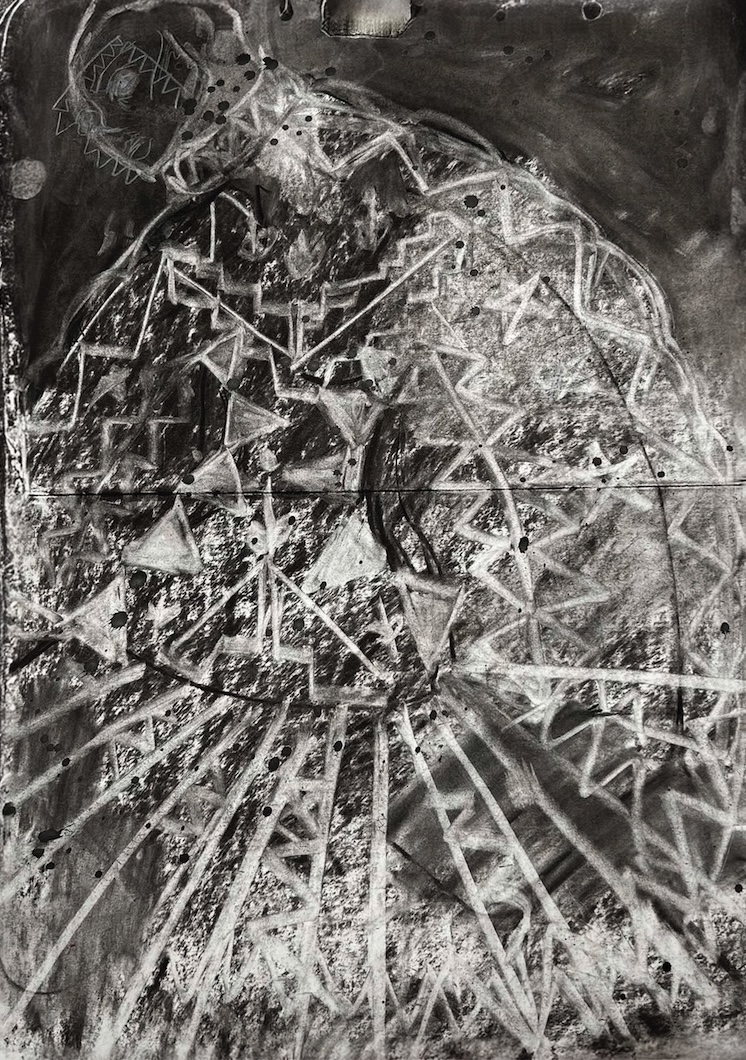
Ayham Hassan is a Palestinian fashion designer based between London and Ramallah. He recently graduated from London’s Central Saint Martins, and his debut collection, titled Im-Mortal Magenta, was featured in Vogue, Dazed and i-D. His work explores traditional Palestinian craftsmanship through tailoring, textiles and draping. For Arab Design Now, Hassan presents pieces from the collection alongside woven and collaged work that confronts cultural and environmental sustainability amid devastation in Palestine. Drawing on endangered weaving and cross-stitch traditions from the Majdool region, the work celebrates Palestinian heritage through zero-waste techniques, deadstock materials and hand-embroidery by skilled Palestinian artisans. Photo: Ayham Hassan
Lebanese-Qatari Boo Design Studio (see p34), for example, has created an installation that speaks to the shared cultural experiences of Beirut and Doha. A textural landscape of seating, carpets and wall hangings makes reference to the traditional domestic rituals and architectural vernaculars of both cities, as well as their desert and mountainous landscapes. Jeddah-based Ahmad Angawi explores the cultural ties between Saudi Arabia and Qatar through a kinetic installation that draws on examples of plaster and wood carvings in Jeddah and Doha. Meanwhile, taking a more site-specific approach, Bethlehem-based Local Industries and Milan-based Studio Folder have collaborated on a series of maps, objects, furniture and soundscapes that respond to trails across Palestine, reflecting on their topography, climate and history.
As well as examining migration and identity, Arab Design Now navigates the duality of tradition and innovation. Moroccan architect Aziza Chaouni has designed a new kind of modular, biodegradable housing for people displaced by the 2023 Morocco earthquake, which killed almost 3,000 people. It draws on the typology of vernacular huts, known as noualas, that were traditionally used by shepherds and nomadic groups.
Above
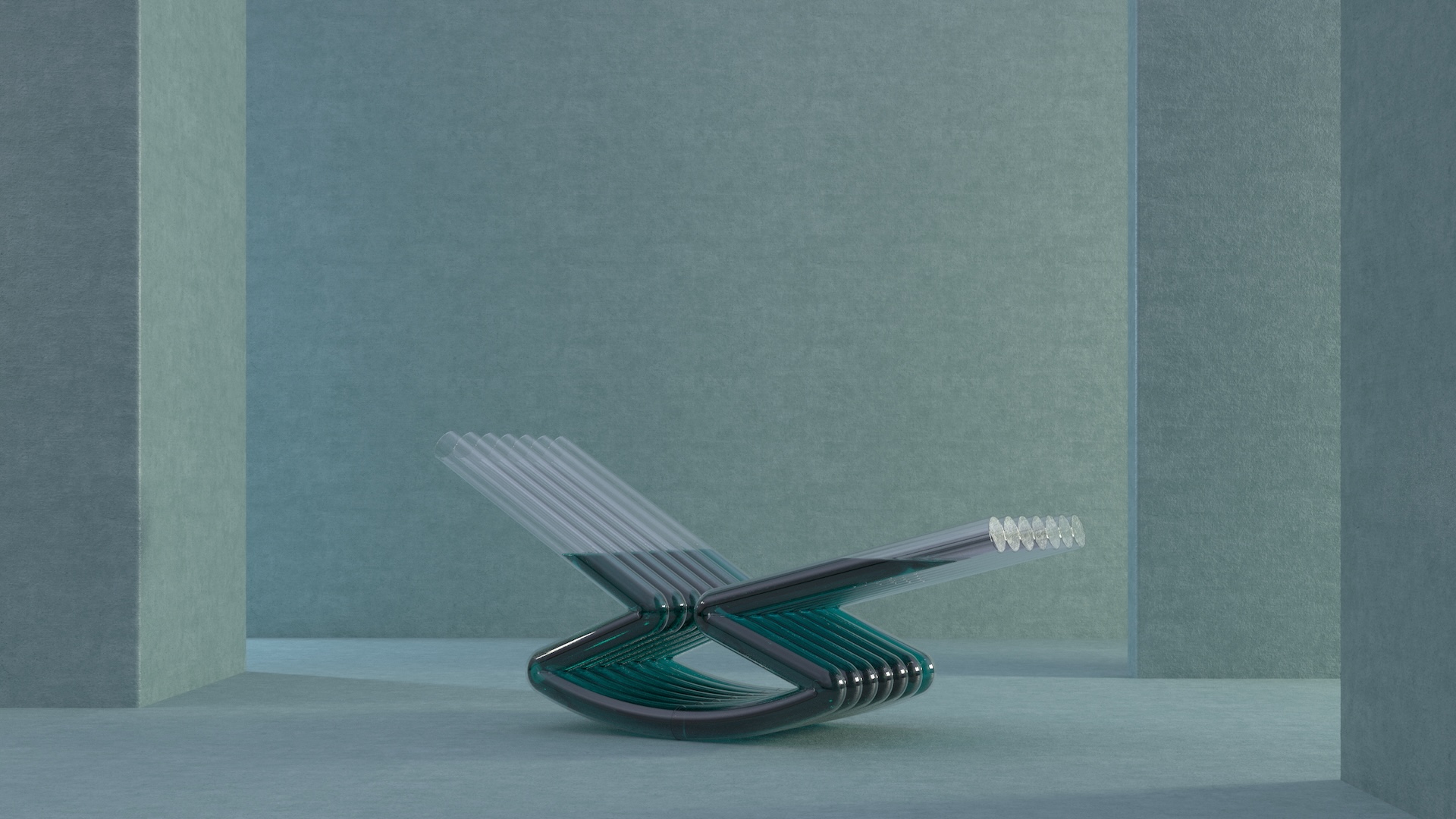
The Floa rocking chair by Bahrain-based Shepherd Studio, which practises architecture and design, references the mangroves of the Arabian Gulf, its hollow poles reflecting the structure of mangrove roots. Filled with liquid and carefully balanced, the chair represents how mangrove trees are able to survive in both air and salt water, always straddling the two. Shepherd Studio was drawn to mangroves as the “lungs” of Bahrain and other Gulf countries, and for their ability to adapt and thrive in transitional zones. Mangrove forests prevent shoreline erosion, absorb air pollution and provide habitats for thousands of species.

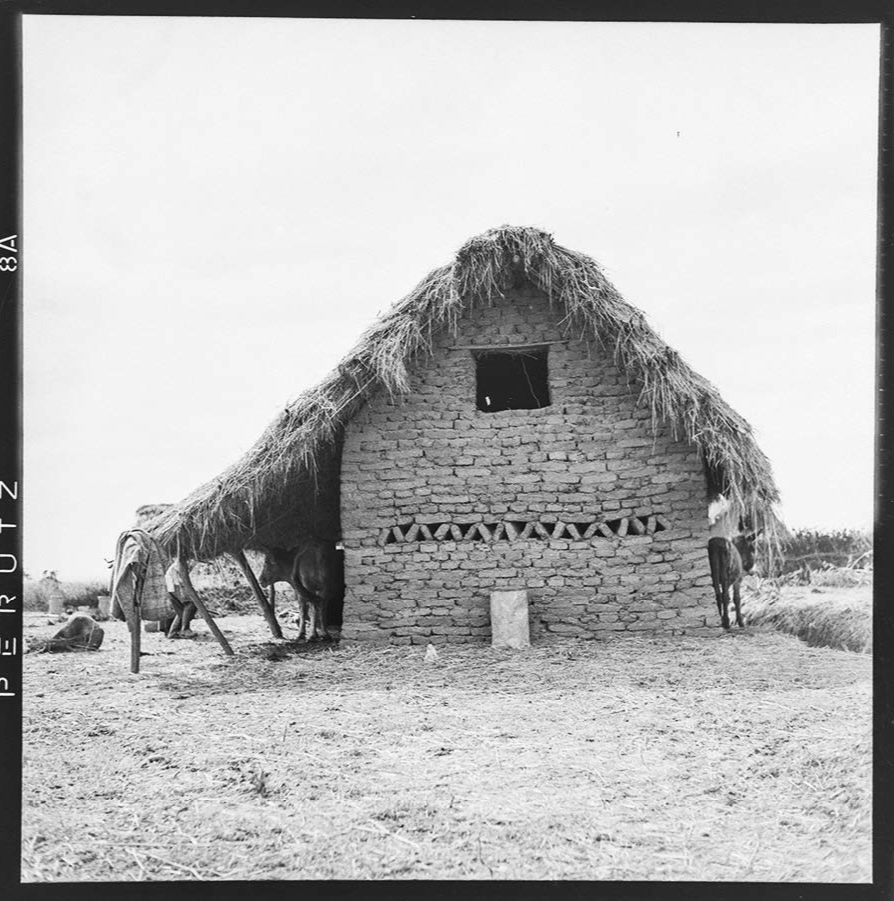
This traditional Moroccan hut, known as a nouala, would have been used by shepherds and nomadic groups. Noulas were the point of departure for rapid-response shelters constructed by the NGO Amal Biladi after the 2023 Atlas Mountains earthquake. Building on this, Moroccan architect Aziza Chaouni has developed Nouala 2.0, a modular, biodegradable emergency housing proposal in collaboration with engineers, craftsmen and local communities. Chaouni’s project includes documentary photographs by Sara Benabdallah and a DIY manual created with artist Yassine Balbzioui. Photo: Bulletin économique et social du Maroc
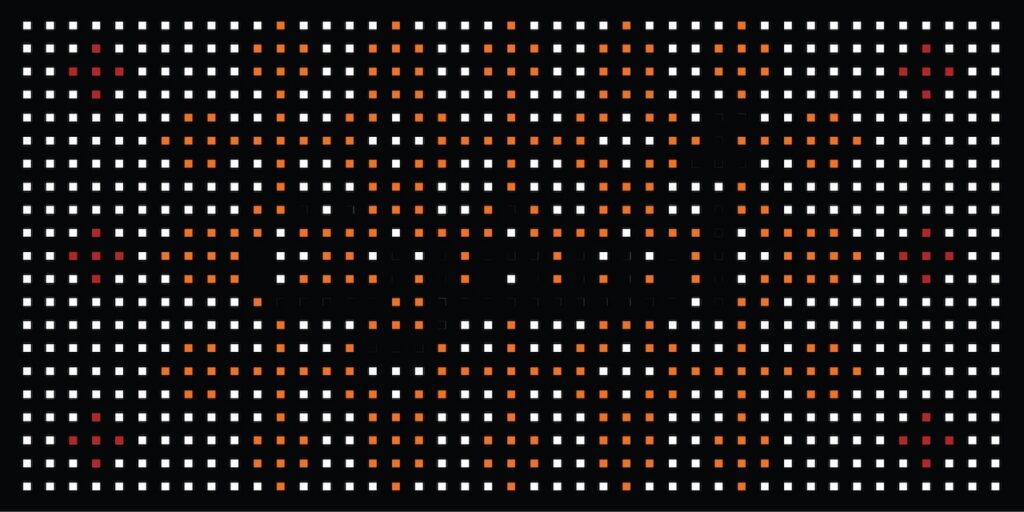
Saudi artist Ahmad Angawi drew inspiration from craft in Saudi Arabia and Qatar – including gypsum carving, stained glass and the design of astronomical instruments – for the creation of a kinetic installation that animates the facade of M7, the entrance to the Arab Design Now exhibition. One of many projects at Design Doha to marry traditional forms with contemporary expression, Angawi’s installation seeks to highlight the Gulf countries’ cultural connections and contributions to global knowledge.
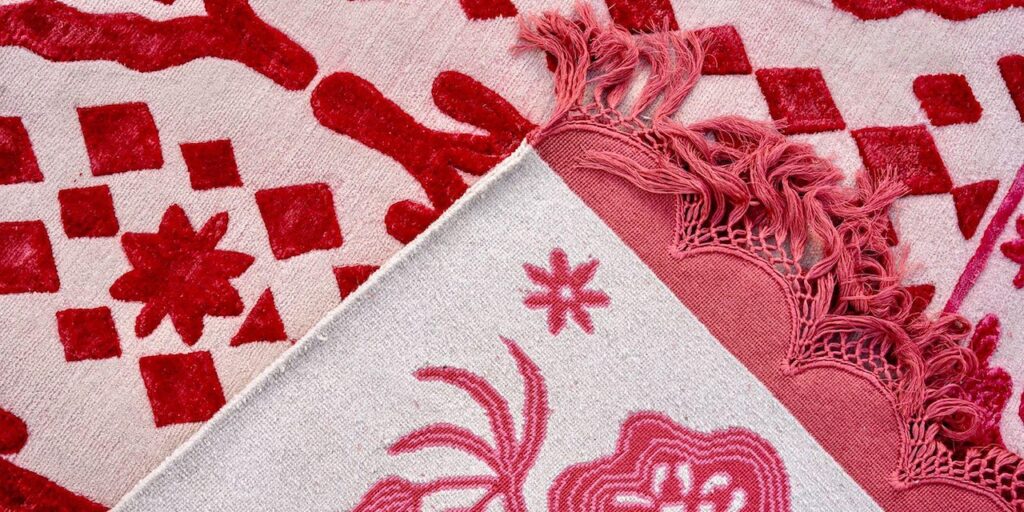
This rug by Qatari designer Shaikha Al Sulaiti celebrates Doha’s traditional majlis – spaces of gathering and hospitality. Inspired by Sadu weaving, an ancient Bedouin craft, the rug blends floral and geometric motifs, aiming to symbolise unity through contrast. Al Sulaiti’s design practice engages with notions of cultural identity and material storytelling. Through her work, she investigates how objects can act as narrative tools, preserving memory while imagining future possibilities.
The Dubai-based designer Aya Moug, meanwhile, celebrates her Egyptian heritage through characterful furniture pieces featuring ancient hieroglyphic symbols made from a sustainable papyrus-derived biomaterial that she developed herself using papyrus plants harvested from the banks of the Nile River
While the exhibition shines a light on stories and talent from across the Arab world, its host city Doha also plays a major role. “It was really important to understand and highlight the relevance of Doha,” says Al Sayeh. The exhibition features a series of 12 commissions that engage with objects and artefacts from the extensive collections of Qatar Museums.
Iraqi artist Rand Abdul Jabbar, for example, drew inspiration from the lustreware pottery showcased in the Museum of Islamic Art to create a series of ceramic pieces that reflect and reimagine the history and craft of the objects. Dubai-based designer Roham Shamekh, meanwhile, looked to traditional Iznik earthenware dishes from Turkey and Islamic ornamentation to create a sculptural yet functional bar for the exhibition that also functions as a dining table and room divider.
Al Sayeh stresses the importance of having such incredible collections in Doha, in terms of both safeguarding Arab history and acting as an accessible resource for the future of Arab creativity. “Fifteen years ago you needed to travel to London, Paris or New York to be able to see part of your own history,” she says. “Today we have it here – and it’s a tremendous source of knowledge and inspiration.”
As part of a groundswell of important design events in the region – including the Sharjah Architecture Triennial, Amman Design Week, We Design Beirut and the Islamic Arts Biennale in Saudi Arabia – the Design Doha Biennial and the Arab Design Now exhibition are contributing to a new narrative. “We’re increasingly showing Arab design within the Arab world,” says Al Sayeh. At last, the diversity of stories and creativity the region is home to is taking a deserved place on the global stage.
Discover all the exhibitions and installations taking place during Design Doha here.
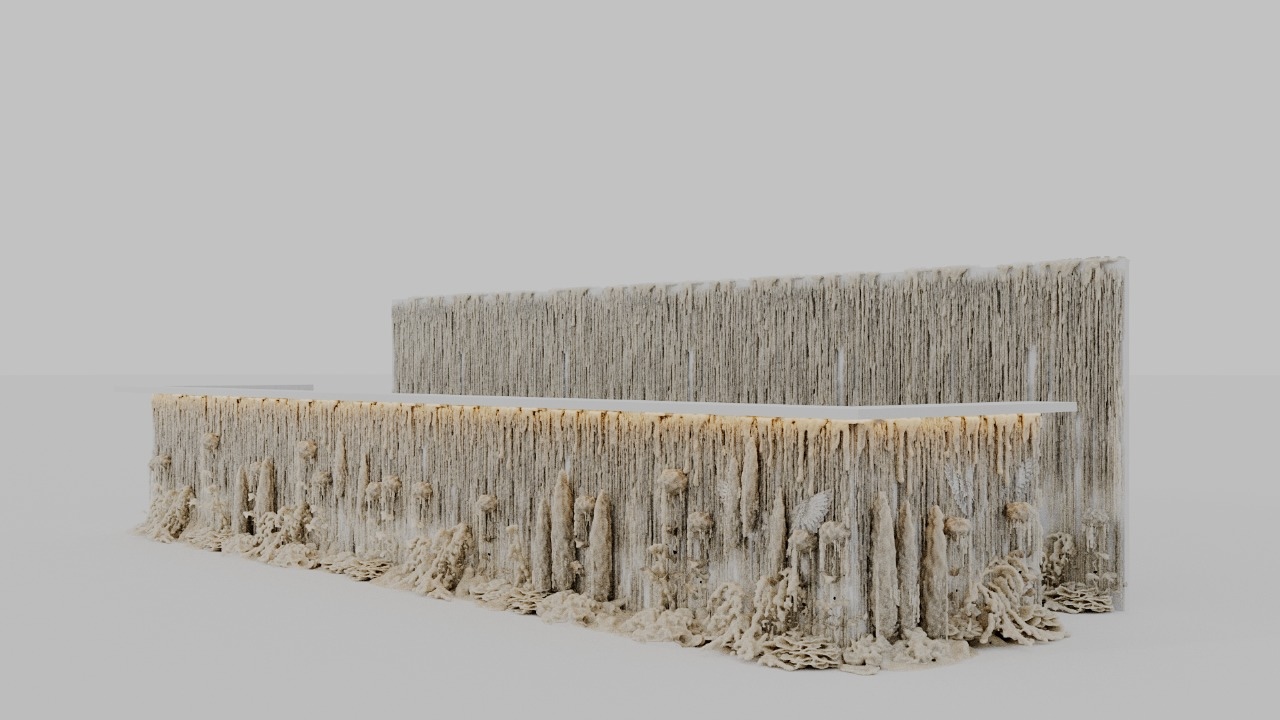
Created by Dubai-based designer Roham Shamekh, Melting Eternal Garden is a modular sculptural work that functions as a flexible dining table, room divider and ornate bar for Arab Design Now and the wider Design Doha Biennial. Blurring art and utility, the piece has been designed to adapt to both communal and private encounters within the biennial. Inspired by traditional Iznik earthenware pottery and visions of paradise in Islamic ornamentation, its melting form evokes fragility and explores the idea of transformation as a metaphor.
We use cookies to improve your experience on our site. By using our site, you consent to cookies.
Manage your cookie preferences below:
Essential cookies enable basic functions and are necessary for the proper function of the website.
These cookies are needed for adding comments on this website.
Statistics cookies collect information anonymously. This information helps us understand how visitors use our website.
Google Analytics is a powerful tool that tracks and analyzes website traffic for informed marketing decisions.
Service URL: policies.google.com (opens in a new window)