Sowing the seeds of change

Designer Fernando Laposse is cultivating connections between Mexico and Qatar for future farming practices that are rooted in culture

Words Francesca Perry

At the centre of Mexican designer Fernando Laposse’s new exhibition, The Sower, at the Museum of Islamic Art, there is a seed bank. A series of 3D-printed urns, rusted to appear timeless, contains seeds gathered in his home country. Each urn can be scanned to discover more about the seeds and their uses in Mexico – information that Laposse sees as critical to the future of farming.

“I have the motto: ‘without culture there is no agriculture’,” he says. So, while The Sower is about growing crops, it is also about the cultural and community life that develops around farming and knowledge that can be passed down through generations and disseminated across oceans. As part of the Qatar Canada and Mexico 2026 Year of Culture, the exhibition, which runs until 31 January 2027, seeks to explore existing and potential connections between Qatar and Mexico through this lens.

Laposse’s show is split into three thematic sections: past, present and future. He drew on extensive historical research for the display contemplating the past. Newly crafted lamps and furniture use materials that were fundamental to the development of global trade in Qatar and Mexico – namely, pearls and cochineal. “The best pearls came from Qatar; that was the main economy,” says Laposse. Meanwhile, cochineal – an insect that lives on the prickly pear cactus in Mexico and produces an intense red dye – became the second most valuable export, after silver, at the height of Mexico’s colonial era.

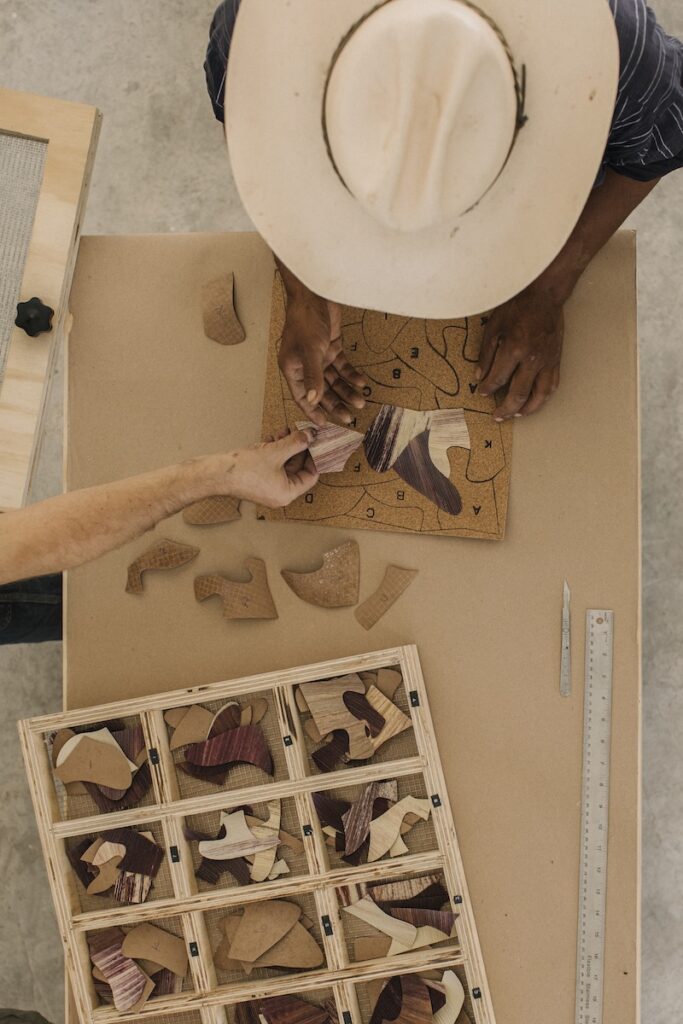
Two people, one of whom is wearing a hat, assemble a wooden puzzle at a table. A ruler and a compartment box with puzzle pieces sit nearby, all viewed from above.
Marquetry pieces made from corn husks. Photo: Courtesy of Fernando Laposse
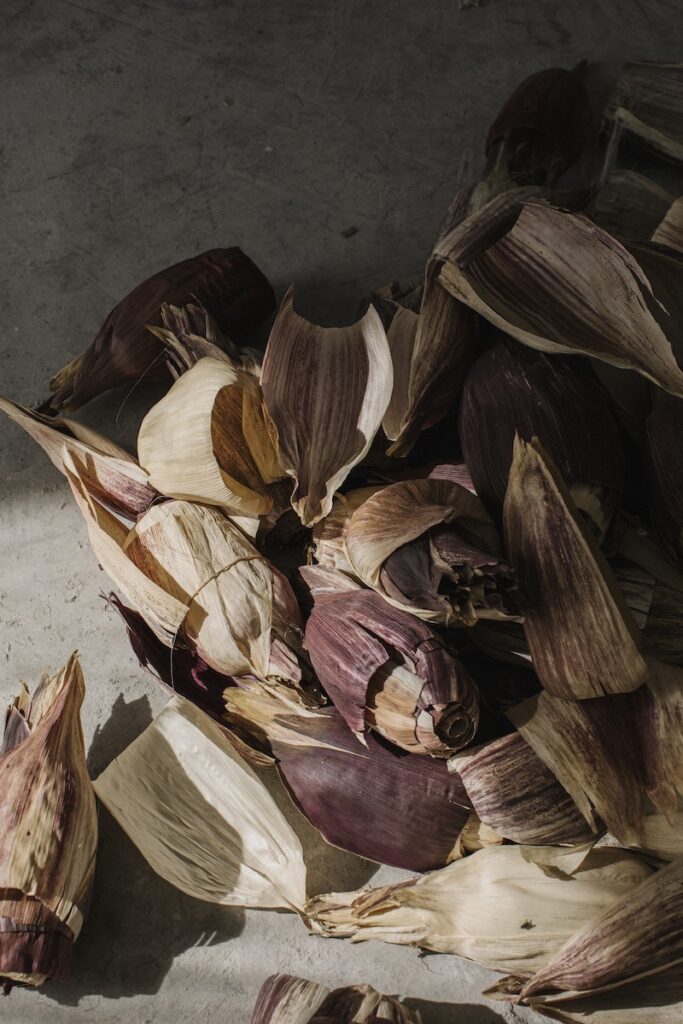
A pile of dried corn husks with shades of purple, brown, and beige lies scattered on a gray surface
The husks of heirloom corn range from deep purples to soft creams. After being peeled off the cob, the husks are ironed flat and glued onto a paper pulp or textile backing, ready to be cut into marquetry pieces. Photo: Courtesy of Fernando Laposse
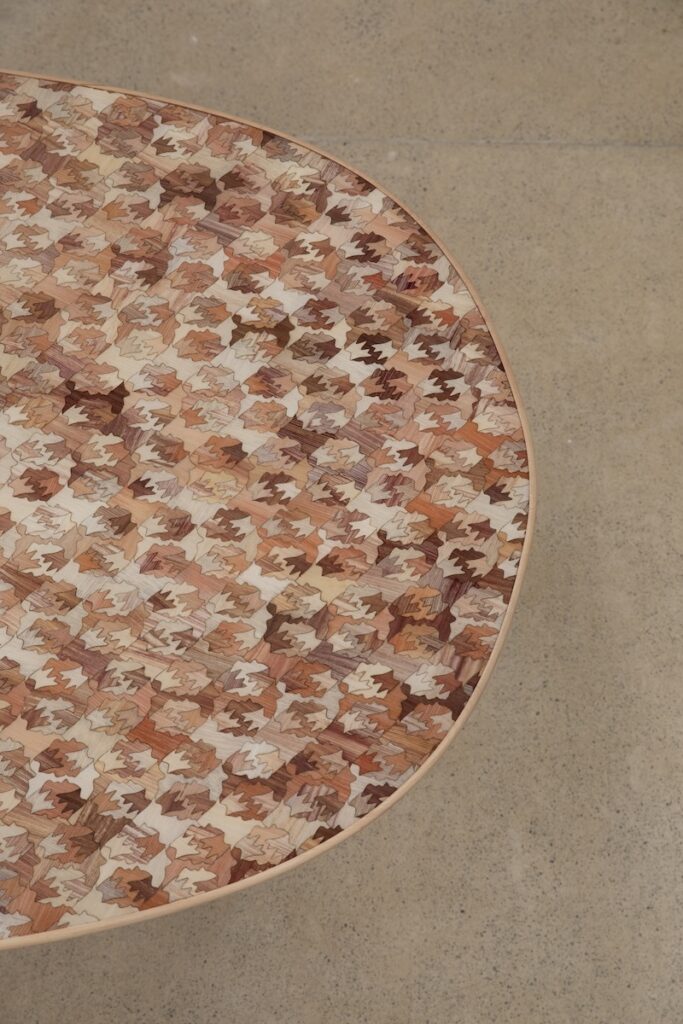
A tabletop with an intricate inlay pattern of small, multicolored wooden leaves in shades of brown, beige and tan
Laposse’s Totomoxtle corn veneer dining table. Photo: Courtesy of Fernando Laposse

“A lot of the pearls eventually went to royalty in Europe and were worn with textiles that were dyed with cochineal from Mexico,” says the designer. His use of them in the new work demonstrates the beauty of the materials but also establishes a context of histories based on extraction. “The past was really about ripping everything you could from the ocean or, on the part of the Spanish, taking as much as you could from the Indigenous populations of Mexico and shipping it to the rest of the world.”

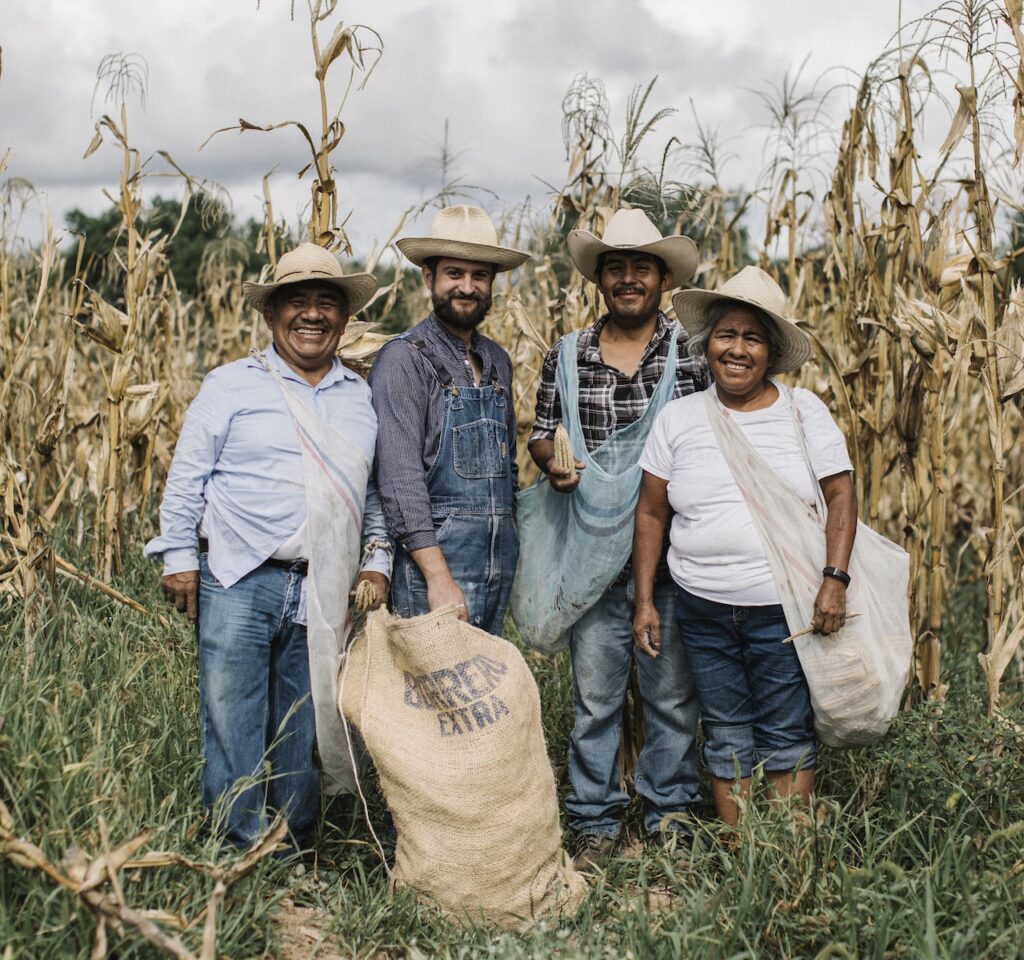
The section of the exhibition focused on the present, meanwhile, demonstrates how the relationships between design and nature can be more responsible and less extractive. Here, Laposse’s work from the past decade displays the community- and sustainability-rooted approach he prioritises. One such project, Totomoxtle, engages with the community of Tonahuixtla, a small village in southwest Mexico. Working with Indigenous farmers, Laposse produces a colourful furniture veneer made from corn husks, simultaneously regenerating traditional agricultural practices and supporting community life.

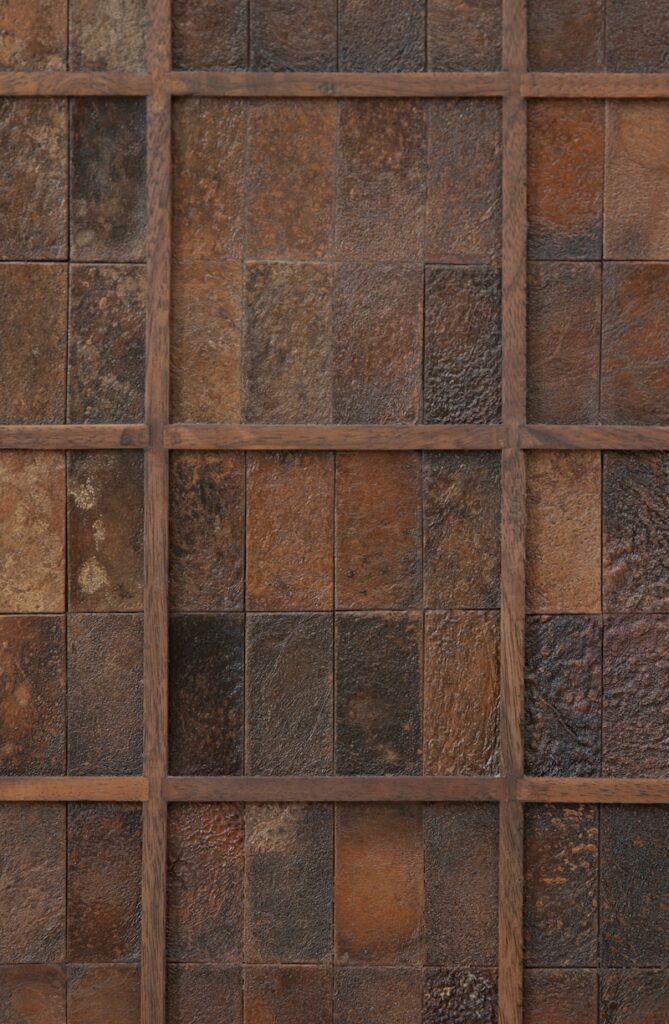
A grid of square, textured tiles in earthy brown and rust shades, separated by wooden dividers, creates a geometric, rustic pattern
Laposse developed a material using waste avocado skins – used here on a cabinet – resulting in textured brown marquetry that resembles leather. Photo: Courtesy of Fernando Laposse
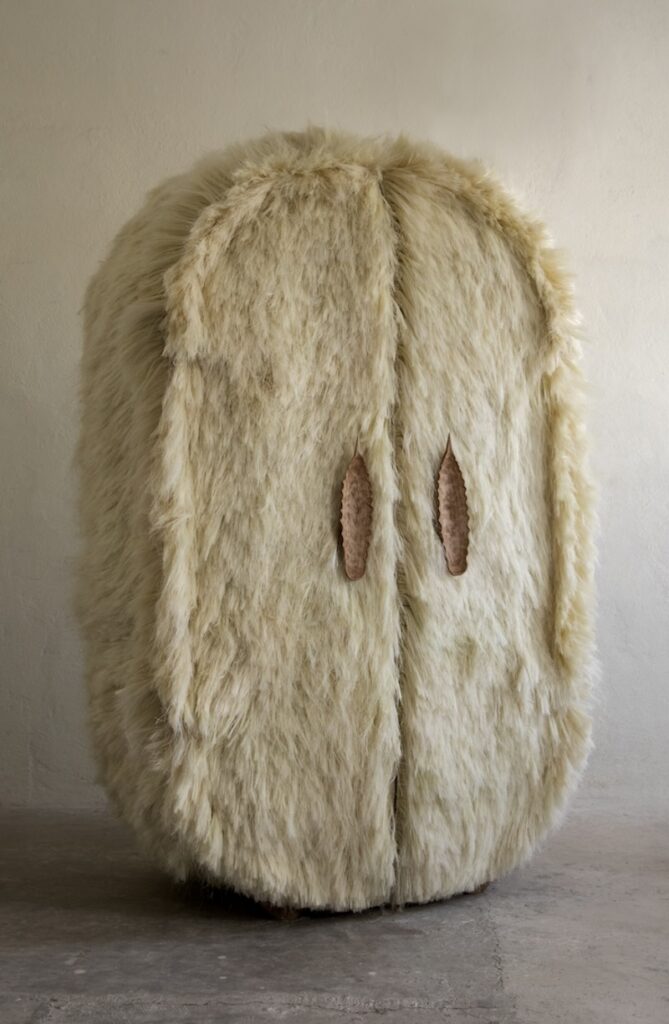
A tall, oval-shaped cabinet covered in shaggy cream-colored fur
Working with the Mexican community of Tonahuixtla, Laposse cultivates fibres from agave plants, which he uses to create fur-like textures on pieces such as this cabinet. Photo: Courtesy of Fernando Laposse
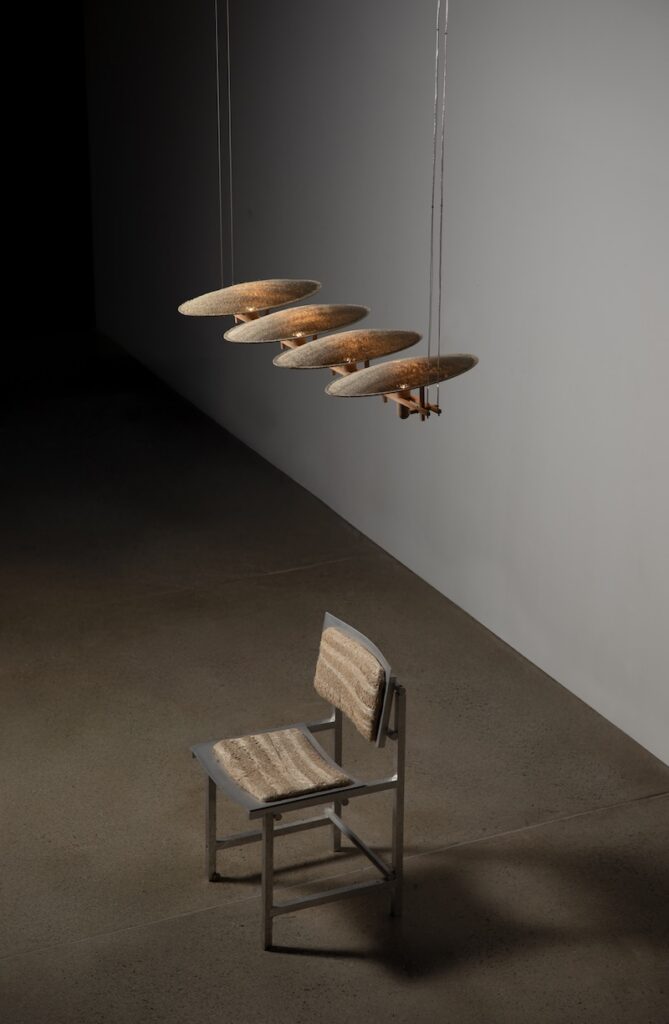
A metal chair with textured brown padding sits beneath four surfboard-shaped objects suspended from the ceiling in a dimly lit room
During his studies at Central Saint Martins in London, Laposse experimented with loofah as a material for furniture. Photo: Courtesy of Fernando Laposse

Which takes us to the future: the seed bank. Last year, Laposse visited Qatar and observed the emerging agricultural practices on farms in the desert – a similarly arid landscape to the places where he works in Mexico. He recognised from home many of the plants he saw being cultivated. It was this connection across continents, and the potential for sharing Mexico’s deep agricultural knowledge and indigenous practices for the benefit of Qatar’s future food production, that prompted the idea for a seed bank.

The bank is intended to have a life beyond the show and become what Laposse calls a “cultural exchange”. He hopes the seeds will be planted on the Qatari farms he visited. “Not all of them will grow,” he concedes, “but the ones that do will become effectively supercharged for a much hotter climate.” In return, lessons learned from cultivating these plants in Gulf temperatures can be shared with Mexico, as it looks ahead to a warmer future because of climate change.

Four people in hats and casual clothes stand smiling in a cornfield, holding and carrying large sacks. corn plants are tall and dried, and the group appears happy and united.
Laposse (second left) and some of the Indigenous farmers in Tonahuixtla. Photo: Courtesy of Fernando Laposse

“That’s what I think design should be about – shifting the needle towards new ways of thinking”

Such agricultural know-how can result in farming cultures that can thrive independently and be self-sustaining. “Having your own seed stock and knowing how to manage it – that’s the ultimate freedom,” Laposse says.

As a designer, Laposse believes his role is to facilitate knowledge-sharing that can enable better relationships between people and planet. “At the end of the day, that’s what I think design should be about: really shifting the needle towards new ways of thinking.”

Cover image: Fernando Laposse creates imagined creatures and furry benches out of agave fibres, harnessing cochineal to naturally dye some of his works. Photo: Courtesy of Fernando Laposse

Issue 000 Contents

FEATURES
NEWS

Contents

Features

NEWS

This site is registered on wpml.org as a development site. Switch to a production site key to remove this banner.