- Art
- Spring/Summer 2026
- April 2026
Interrogating
the In-Between
An exhibition at the Media Majlis Museum in Qatar asks what “Gulf Futurism” means to artists in the region
Words Francesca Perry
In 2012, the Qatari artist Sophia Al-Maria coined the term “Gulf Futurism” to represent ideas about the rapid modernisation and development of Middle Eastern cities such as Doha and Dubai. She wanted to capture the tensions underlying global narratives about the Gulf states: between oil-driven wealth and social inequality; between ambitious construction and environmental degradation; between Bedouin heritage and technological development.
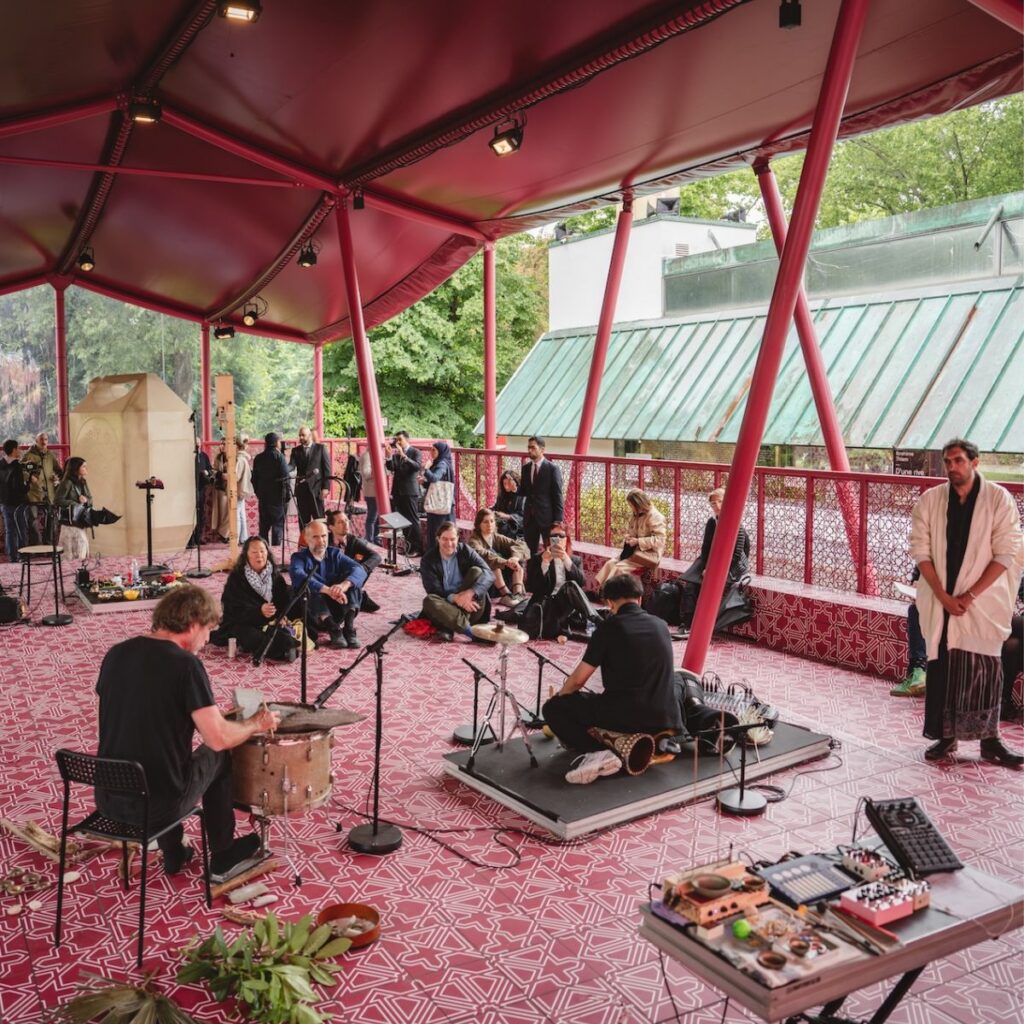
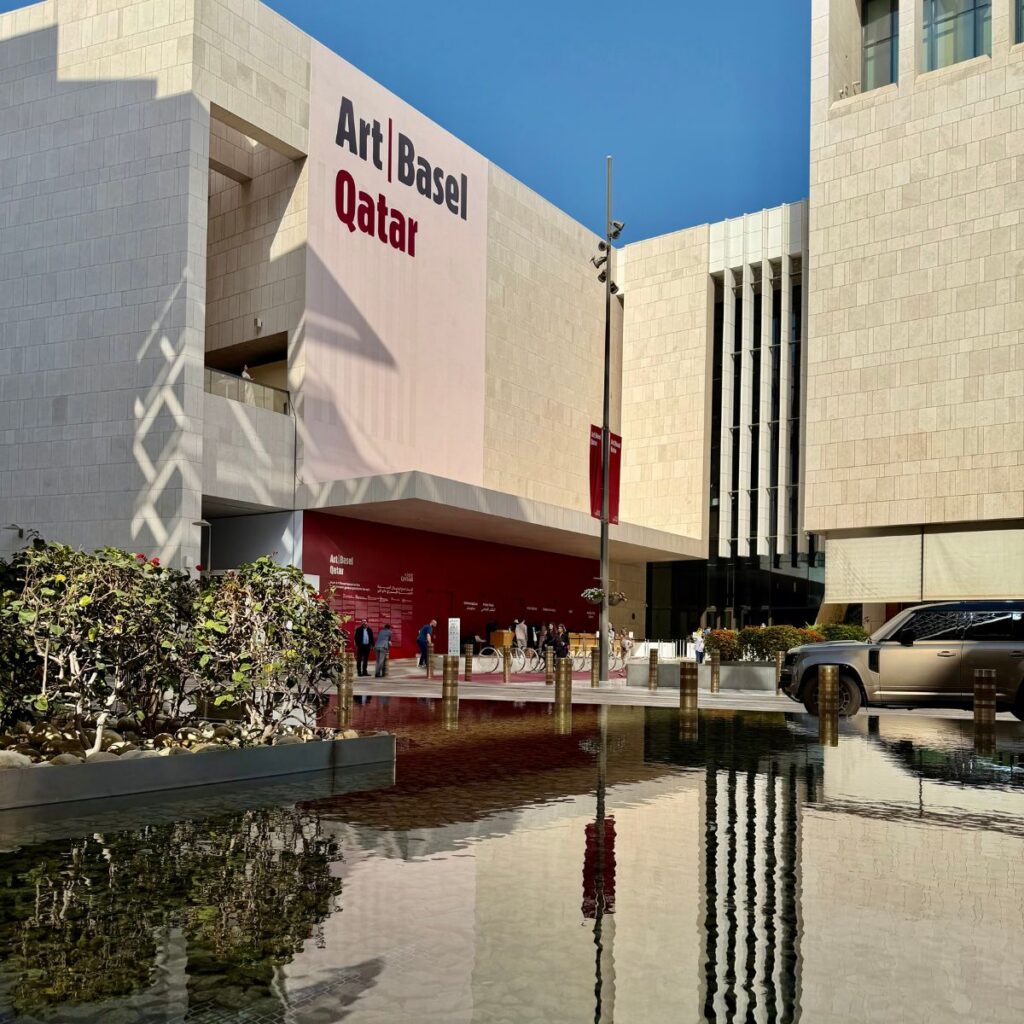
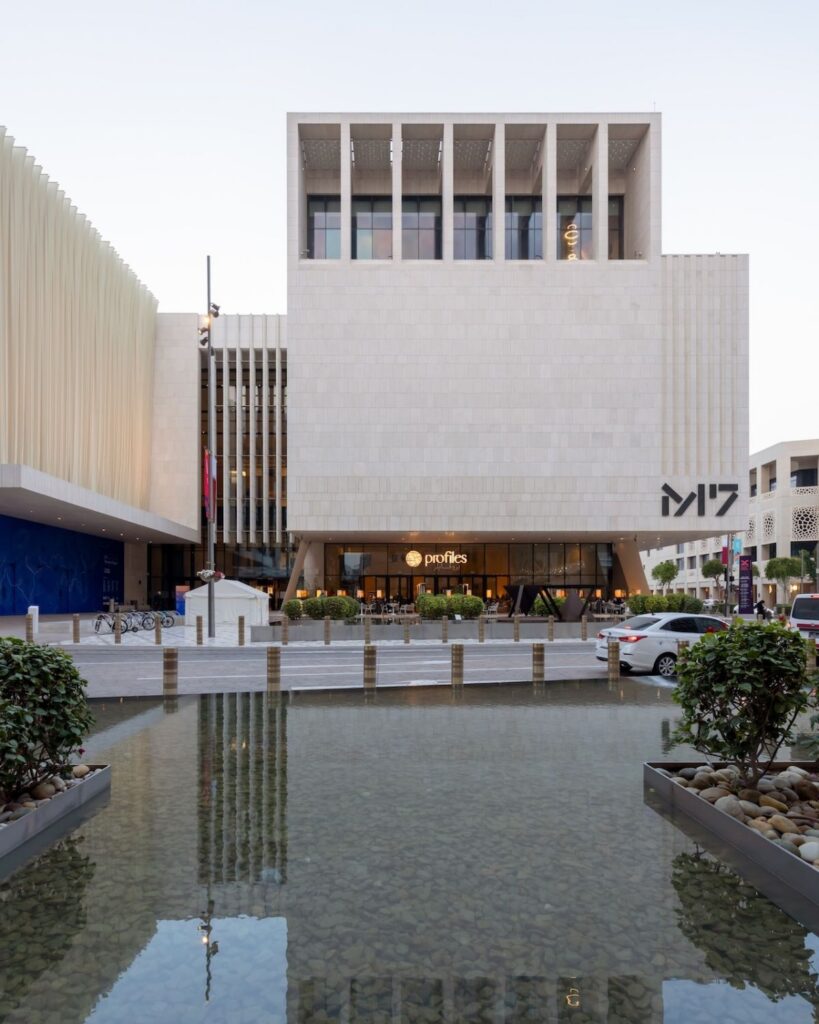
It is this concept, and its inherent contradictions, that prompted the new exhibition at the Media Majlis Museum at Northwestern University in Doha. What’s between, between? brings together 21 artists from the Gulf region and invites an examination and exploration of Gulf Futurism, as well as the diverse realities of life in the Middle East today. Curator Jack Thomas Taylor describes it as a type of “limbo” – straddling tradition and hypermodernity, past and future. “We wanted to capture that feeling of not really knowing what’s next, as an approach for artists to respond to,” he says.
Inviting the artists to engage critically with the notion of Gulf Futurism has resulted in an exhibition that shows that the meaning of the term is hard to pin down. “It is lots of things to lots of different people. There are many different degrees of ‘betweenness’.”
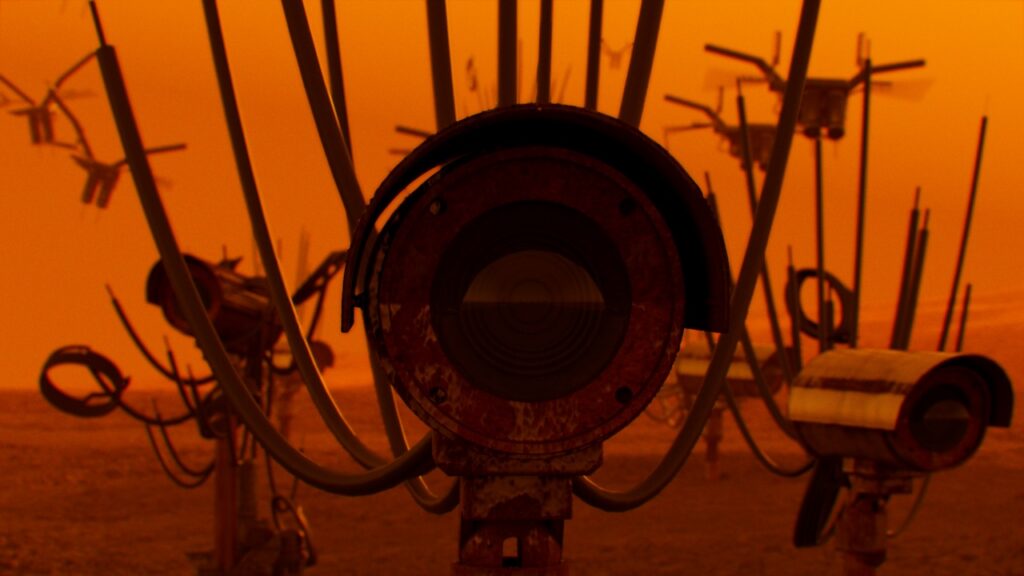
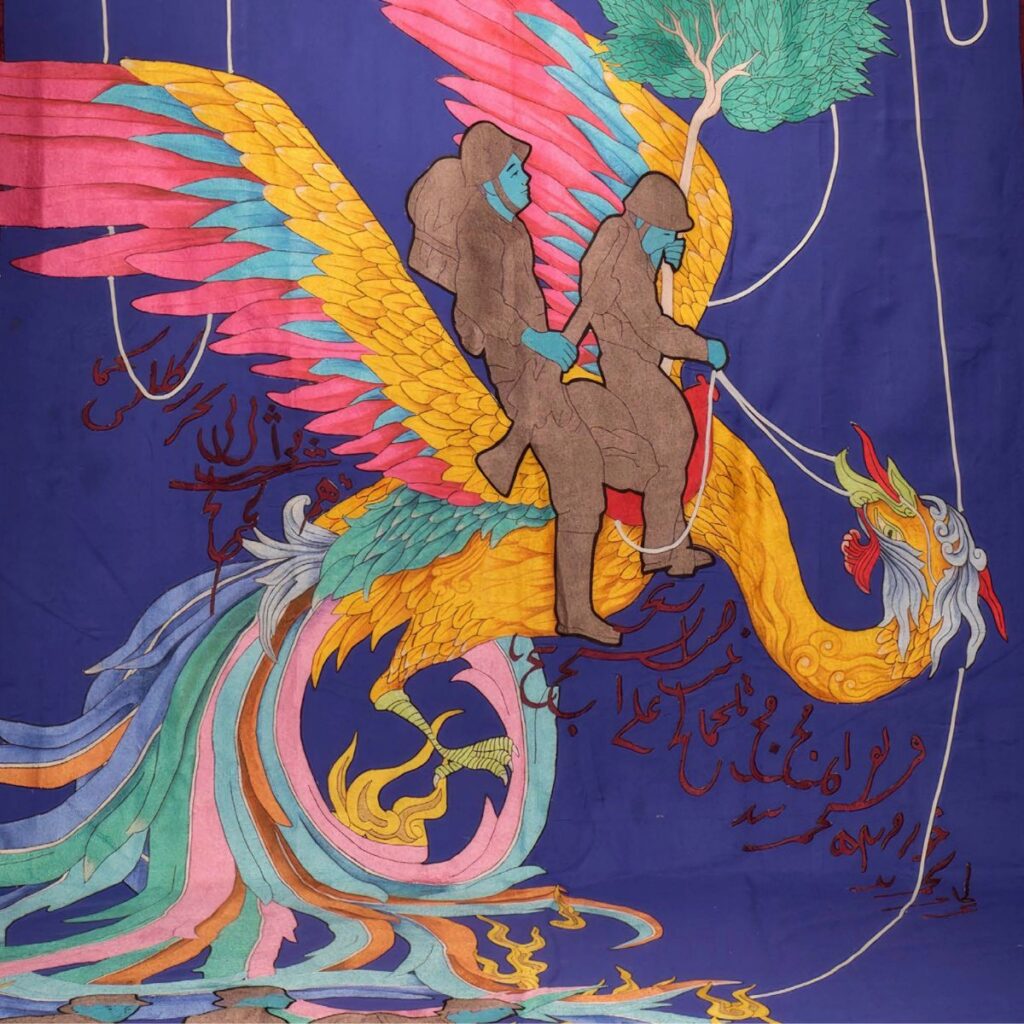
The works on show display the range of interpretations and imaginations at play when considering the past, present and future of the Gulf. Saudi artist Sarah Abu Abdullah blends photography and textiles in a blanket printed with an image of piled-up soft toys – reflecting her multidisciplinary approach to documenting and probing the sociocultural conditions of contemporary Saudi Arabia. Ayman Yossri Daydban, a Palestinian-Saudi artist whose practice seeks to deconstruct narratives of identity, presents Distortion 11, 2011, a stainless-steel sculpture representing a distorted flag. Qatari artist Tarek Darwish creates dizzying abstract works that explore the duality between the artificial and the natural, structure and chaos – asking how we conceive of beauty.
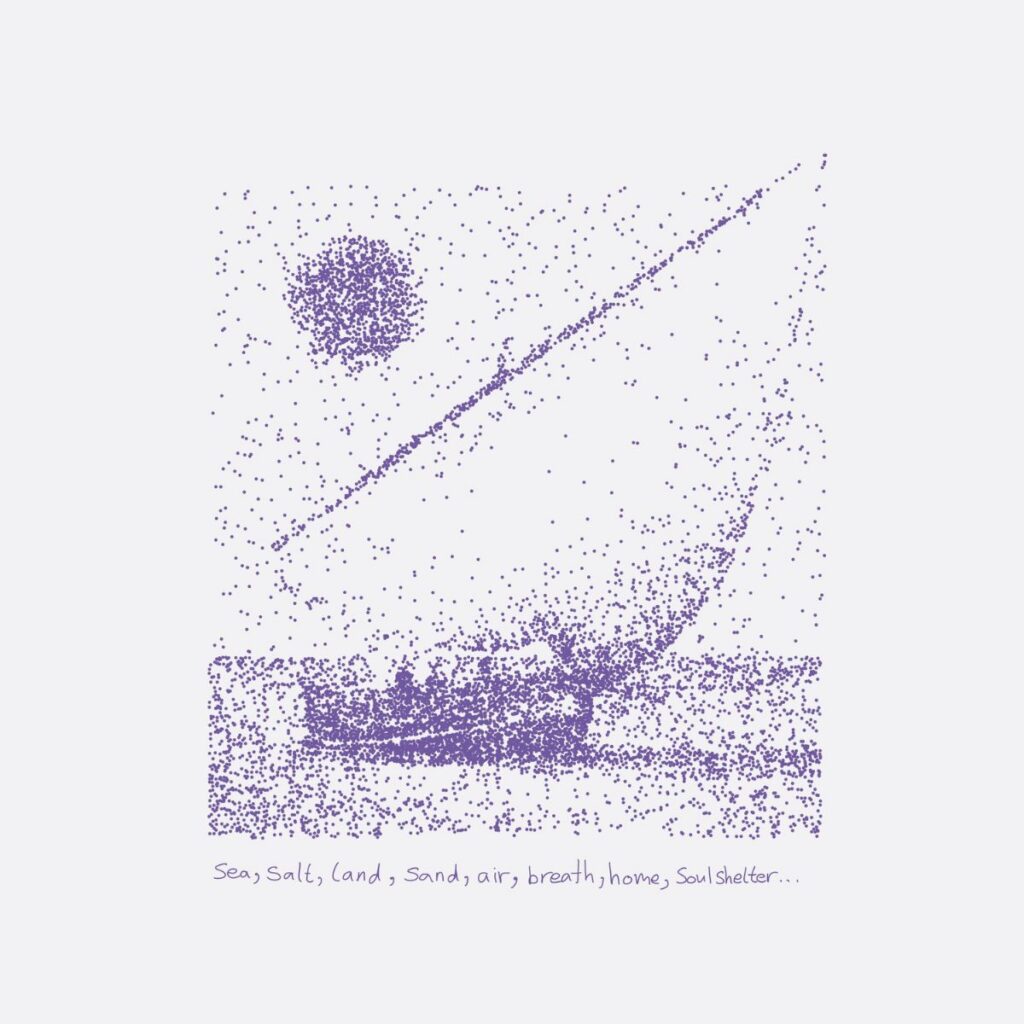
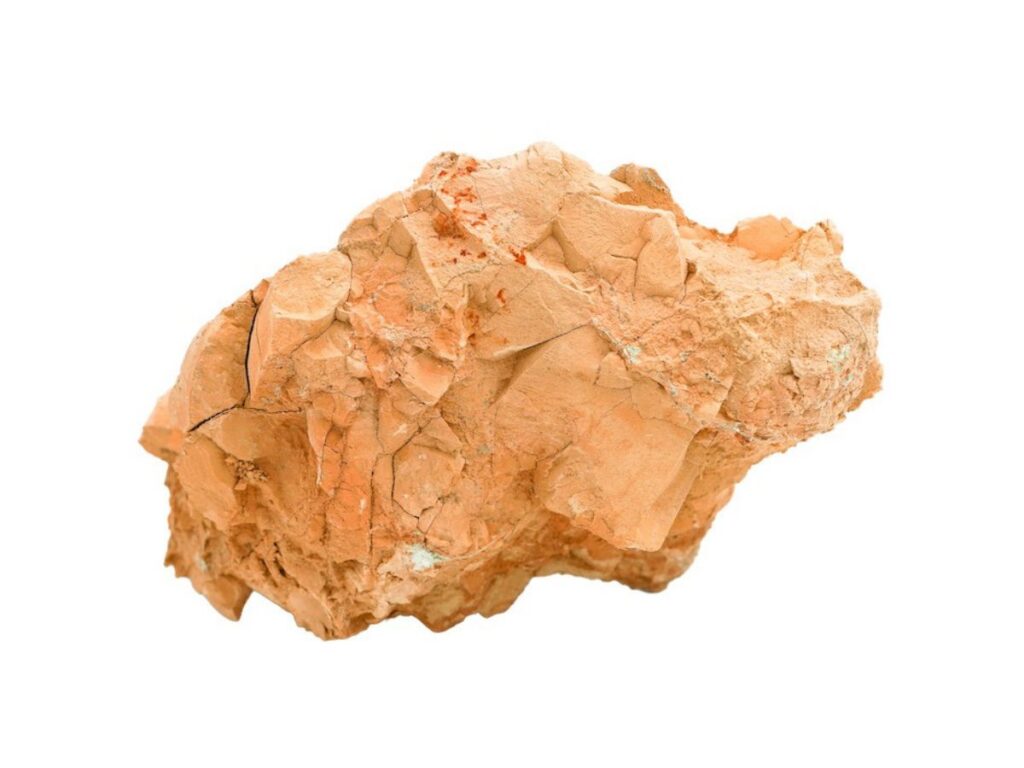
In Vitro, 2019, a film by Palestinian artist Larissa Sansour, imagines a landscape after an ecological disaster, where an orchard grows in an abandoned nuclear reactor. Eman Ali – a young Omani-Bahraini artist – has created an immersive installation titled The Right to Wonder, 2026, in which the cultural role of salt is explored. Salt has been a structuring metaphor for the whole exhibition, explains Taylor. “Everyone can connect with what salt is,” he says. As a substance it can represent vulnerability, dominance, trade, nourishment, desire and disgust.
The 1984 book Cities of Salt, by Abdul Rahman Munif, is featured in the show. Its stories trace the transformation of the Arabian Peninsula after the discovery of oil, resulting in what Munif calls “cities of salt” – susceptible to dissolution and collapse. “Salt can have multiple meanings,” says Taylor. “It’s something that can preserve or corrode.”
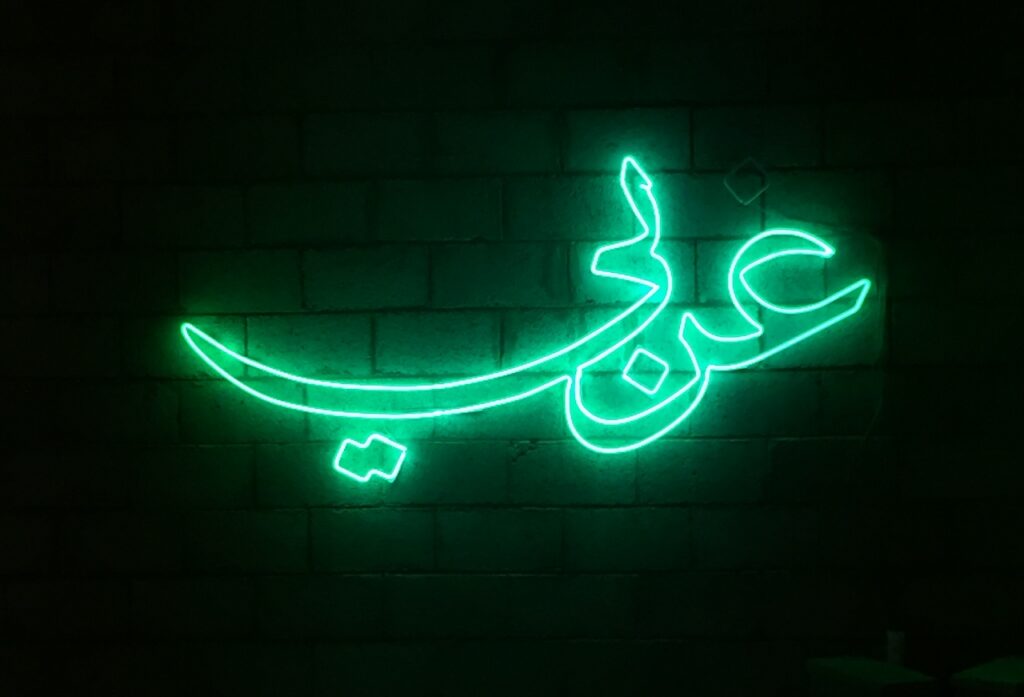
The exhibition is accompanied by a book that brings together strands of research into Gulf Futurism through a collection of original essays, dialogues and critical reflections – including from Sophia Al Maria. “Because we are a university museum we do a lot of research for every exhibition – it’s part of our core mission,” says Alfredo Cramerotti, director of the Media Majlis Museum. While the academic community of the university might be the initial audience for the show and the book, both are aimed at the wider public.
Going beyond any preconceived visions of Gulf Futurism – “shiny skyscrapers in the desert” as Cramerotti puts it – the exhibition invites critical inquiry, something that might be considered radical or unusual in an increasingly polarised world. “People often feel they can’t really have debate or dialogue, or interrogate something freely,” says Taylor. The exhibition, however, creates a space to explore, with art as the vehicle for people to engage with those issues.
“I think that ‘betweenness’ is something that everyone has to navigate on a daily basis in the Gulf,” says Taylor, who lives in Doha. “That crazy limbo feeling is actually our reality.” So, what does he think is between the between? “We’re not trying to come up with an answer,” he says. “We want people to leave with more questions.”
What’s between, between? is at the Media Majlis Museum, Northwestern University, Doha, until 14 May 2026
Cover image: Distortion 11, 2011, by Ayman Yossri Daydban. The Palestinian-Saudi artist’s works challenge ideas of national identity