
Meet the designers, makers and creative thinkers who work and collaborate from studios in a reimagined former girls’ school in Msheireb Downtown Doha
Photography Silvana Trevale
Meet the designers, makers and creative thinkers who work and collaborate from studios in a reimagined former girls’ school in Msheireb Downtown Doha
Photography Silvana Trevale
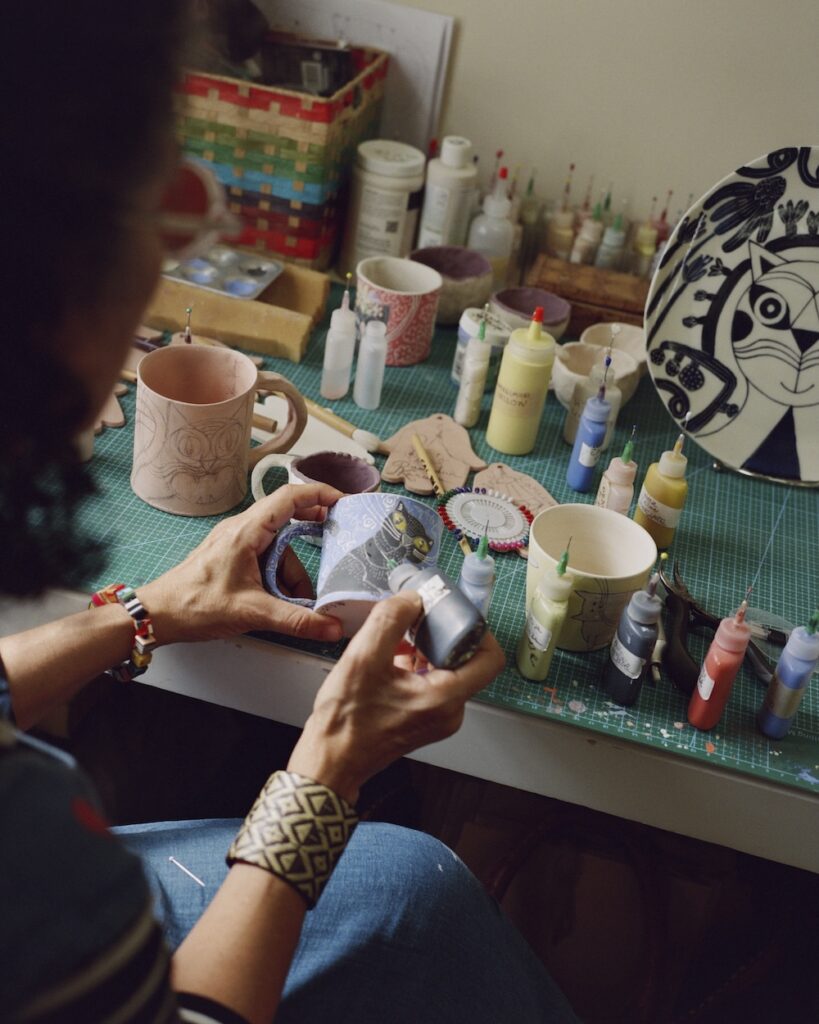
Inside, the classrooms have been reimagined as studios and specialist labs. Ceramicists experiment with handbuilding and clay 3D printing, textile artists steep fabric in natural dyes, fashion designers drape and sew and industrial designers explore the relationship between craft and production. The studios are accessible 24 hours a day, so creatives can work whenever inspiration strikes, and an open, collaborative spirit brings people together in unexpected ways.
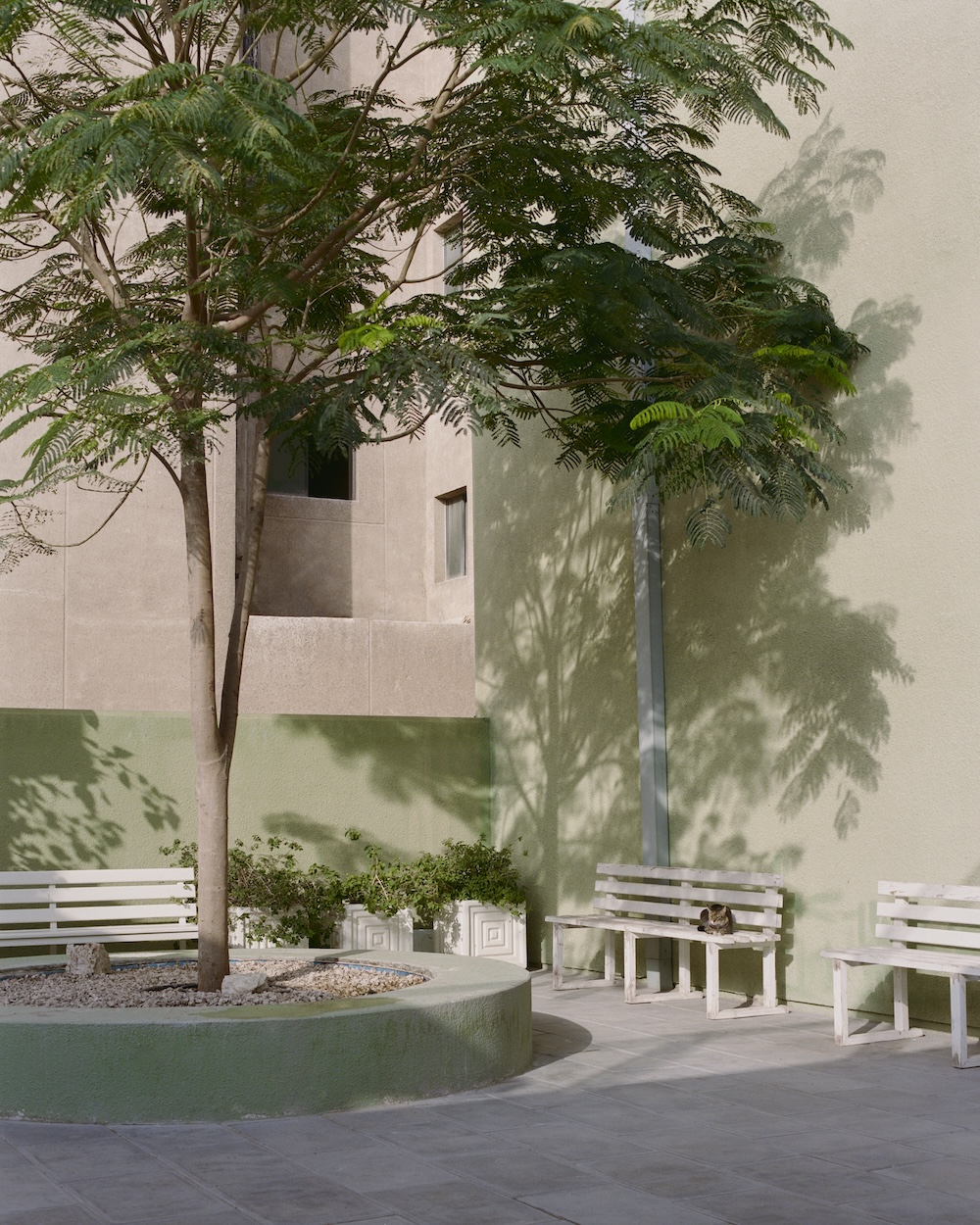
Fittingly, Liwan translates as “courtyard” and there are several open-air spaces throughout. The main entrance courtyard is often set up as a kind of majlis (communal sitting room), with sofas and rugs, to host reading groups, discussions and talks. The airy corridors become backdrops for exhibitions, and there is a library and a small museum dedicated to Liwan’s past as a school.
Liwan is also home to two newly launched residencies – one devoted to craft, another focused on production. These programmes signal Liwan’s commitment to nurturing the region’s most promising talents. Here, emerging designers are given not just space and resources, but invaluable mentorship and the tools and connections to lay a strong foundation for a career in design and the arts.
With a mission rooted in education – continuing the legacy of the former school – Liwan offers a valuable space in Doha for exchange, making and shared experimentation. As Qatar’s design community continues to grow in scale and ambition, Liwan stands as both an incubator and a meeting ground.
Where did the idea for Liwan Design Studios and Labs come from? What was the mission?
Aisha Al Sowaidi There was a direction under Qatar Museums and Her Excellency Sheikha al-Mayassa to support the creative industry in Qatar through museums, festivals and other initiatives. Through these initiatives, the Fire Station was born in 2014, a project that involved repurposing an old building – an actual fire station – into an artist residency where artists could work in the studios for nine months and have an exhibition at the end.
I began working at Qatar Museums at the Fire Station a few months before it opened. That same year, I was also selected for the first residency programme. It was such an intense year, but very exciting. I immersed myself in both worlds: designer and curator. Afterwards, I decided to continue doing this – being a part of the decision-making process and leading
design institutions, but also working as a designer.
Being both a designer and the director of a creative space must give you a very unique perspective.
Aisha Al Sowaidi I feel a great sense of responsibility. I often hear people who are not artists or designers speaking about what designers need. Because I am a designer, I know what we need – sometimes that is aligned with what non-creatives think we need, but other times it is totally off.
I wanted to create a space based on my own perspective. I was very lucky to have all the opportunities to develop and exhibit my work when I first joined the Fire Station. As a young designer, the more you produce new work, the more you get commissioned, and the more your work develops. It’s like a body of water – you need movement for it to be fresh. For me, that stream was Qatar Museums.
After the Fire Station, this idea of empowering and catering for the creative industries in Qatar expanded. I was given this space in 2019 and the opportunity to turn it into a creative hub under the vision of Sheikha al-Mayassa. I was lucky to be placed here. It feels very right, as I have an MFA in design studies and developed my thesis on memory and nostalgia under the title Finding History in the Future.
You couldn’t ask for a better space to exemplify those ideas.
How has the history of the building shaped Liwan?
Aisha Al Sowaidi I am so inspired by this space and I wanted everyone to feel that. I spent time working here before the restoration. I had a desk outside in the courtyard and no team. It was such a big responsibility, as my career was still beginning.
I began by doing an assessment of the building and looking at what needed to be upgraded. I knew that the first thing I wanted to do was to preserve and catalogue the building’s history, as it was full of books, desks and artefacts from the school and the neighbourhood.
We had four interns who began collecting the objects and the history of the school, which was built in the 1950s and closed in 2005. There was almost 60 years of history to save. We wanted to tell that story and needed to understand the objects to create the narrative.
How did you do that with so much material?
Aisha Al Sowaidi The question was: “What do we save?” We’re not a museum, but we wanted to save the building’s history. We decided to focus on the history of the school and the significance of it being the first girls’ school in Qatar. I was very set on this vision.
Once we had documented and preserved the history – which is on show in one of our gallery spaces at Liwan – we began to look at how we could transform the building. One of the interns was a trained interior designer, and she created all the floor plans and selected the furniture.
It was important to create a balance between what we brought into the building and what already existed here. It needed to connect to the past. I am a storyteller and that idea of memory always comes through in my work.
“There are all these different threads that run through Liwan and when they cross you get unexpected collaborations”
Aisha Al Sowaidi
How did you reimagine the building?
Aisha Al Sowaidi We restored the whole building and began by taking it back to its original structure. I’m very attached to the history of things, and feel the old has a narrative that should be celebrated. Every crack or discolouration tells a story and adds value. The floor tells the story of 60 years of students walking across it, and I insisted on keeping the original doorknobs as they are a part of the building’s history.
How does the architecture shape Liwan and encourage a creative community?
Aisha Al Sowaidi Our mission was always to create a sustainable future for the creative industry in Qatar – and we had to think about what the programme would be to achieve that. I started thinking about what I needed most as a young designer and realised it was a community where design could flourish through dialogue, constructive criticism and exposure to other creatives. So, we decided to turn the existing classrooms into studios. Initially, we planned an annual membership programme that people could apply to be a part of, and then the residency came later. We currently have around 40 members and we are slowly building that number up.
We try not to force anything, and people come to us in different ways. Working here, we can help them realise their potential and Liwan grows and changes with our community. For example, one of our members, Noora Al Melhim, is a ceramicist. We created a ceramic studio for her and gave her the space rent-free for two years. In the third year we hired her. She can also use the space to create workshops. We invested in her, and she helps to build our community.
Qatar’s design scene is growing very quickly – what kind of role do you think Liwan is playing in that growth?
Aisha Al Sowaidi We don’t only offer studio spaces. We have networking events that are essential to creating community, and we also have gallery spaces where we can showcase the work that is done here. One of the biggest benefits of a space like Liwan, however, is the opportunity for collaboration. Our members get to know each other and often end up working together.
We have so many different kinds of creatives working in the studios. There are a number of calligraphy artists, for example, and natural dyers who have collaborated with fashion designers based here. There are all these different threads that run through Liwan and when they cross you get unexpected collaborations.
Can you tell me more about the residency programme?
Aisha Al Sowaidi We began by incubating Qatar Museums initiatives – such as Design Doha and new design hub Qatar Preparatory School – and hosting their teams in office spaces. We then added some artists-in-residence through Fashion Trust Arabia (FTA), and have given studio spaces to FTA winners including Mo Benchellal and Roni Helou. More recently, we have been formally structuring our residencies, and have introduced a residency focused on craft and another on production and manufacturing. Last year, we also hosted our first nine-week summer residency at Campus MaNa in France.
The industrial residency is interesting – manufacturing is a very important part of creating a local design community. Yes, there are three designers taking part in the industrial residency and we have collaborated with Fromm at M7 to mentor the designers and help produce their work. The craft residency is taking place in the studios at Liwan because we have very good facilities here. The end-of-residency exhibition will coincide with the second edition of Al Journal, the Liwan magazine that comes out biennially.
Liwan member, Artist and Designer
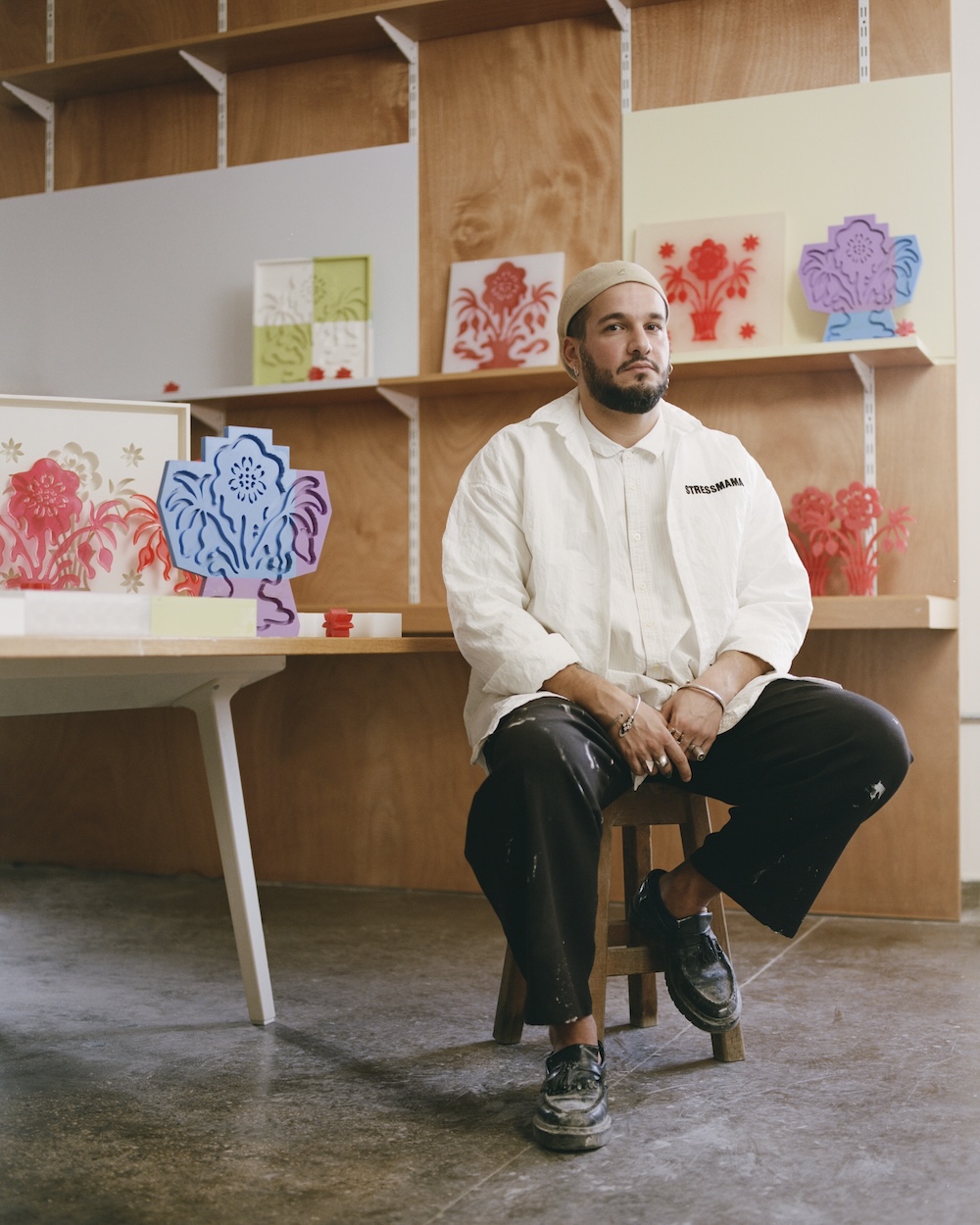
I'm a French designer and the founder of Studio Soumer. Two years ago I came to Doha for what was meant to be a two-month project: creating a large-scale 3D-printed model of Doha for the Old Doha Port. Two months became four, then six, then a year. Eventually, I closed my studio in the Netherlands, where I studied and developed my early practice, and decided to establish myself here.
My work exists in the space between art and design: a space often referred to as collectible design or functional art. In Doha, I see strong potential for this field to grow. "Made in Qatar" deserves to carry greater value, and I see my practice as part of that evolution.
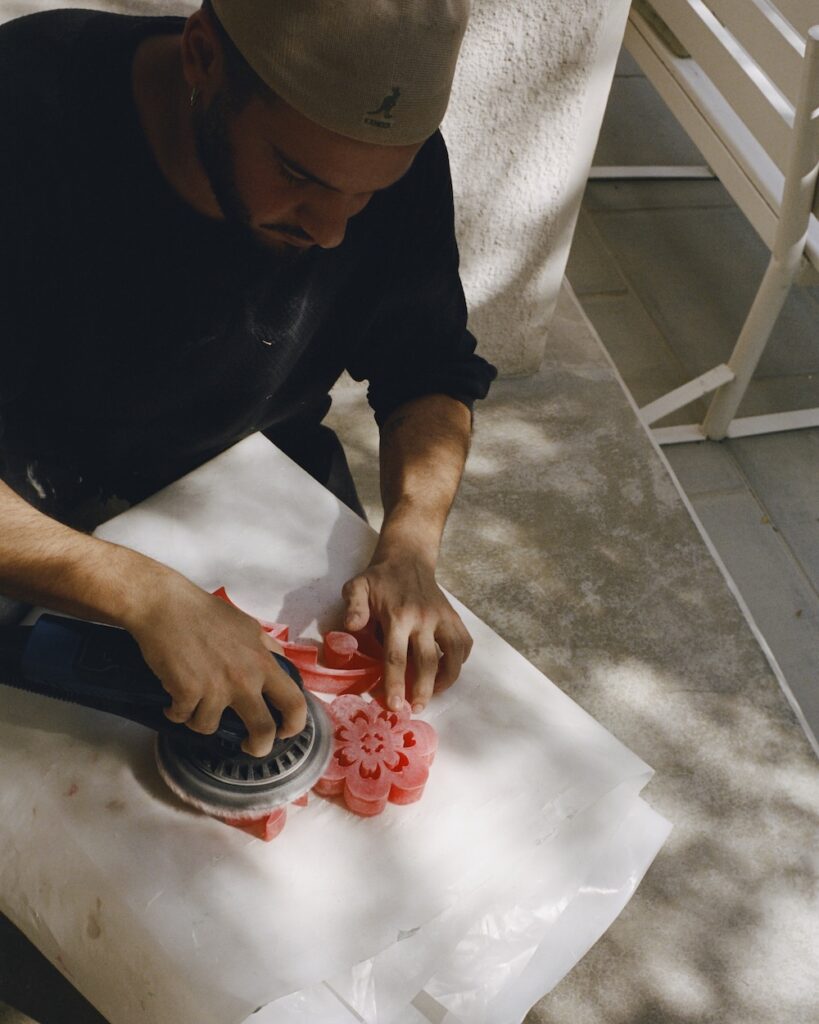
What I bring is the position of being both designer and maker. In many contexts, conception and production are separated. In my practice, they are inseparable. I don't start with a material, I start with a concept. The material adapts to it: wood, metal, ceramic, resin, plaster, 3D printing and hybrid processes. Each project defines its own technical language.
I am currently collaborating with Qatari designer Shaikha Al Sulaiti on the evolution of her Wahaj collection. We are developing a more sculptural, collectible series using her Tetris-like modular system, merging her structural logic and graphic identity with my own design language and hands-on practice.
Spaces like Liwan are essential. They allow designers to be close to making, and makers to think as designers. Design is not meant to remain theoretical; it must be tested, built and lived. An artist or designer is someone with dirty hands – that's how it should be.
Programs Coordinator, Liwan
I was fresh out of college when I had the chance to intern on a research project during the development of Liwan. I fell in love with the space and Aisha’s beautiful vision. My role now involves a lot of research to understand exactly what designers and makers need. We then develop solutions.
One of our core principles is that exciting things happen when people talk to each other and we try to create different ways for those conversations to happen – through exhibitions, informal gatherings, our book club and workshops.
Through the membership programme, we’ve seen that community develops through dialogue and learning to rely on each other. Many creative collaborations have emerged organically. That wasn’t entirely planned – we simply wanted to create a dynamic space for exchange – but we’re proud of what it has become.
The design community in Doha has grown bigger and more welcoming. You can really notice that at our community events. It’s amazing to walk around the room and see people talking to each other, knowing that the programmes we’ve built are the reason they’re there.
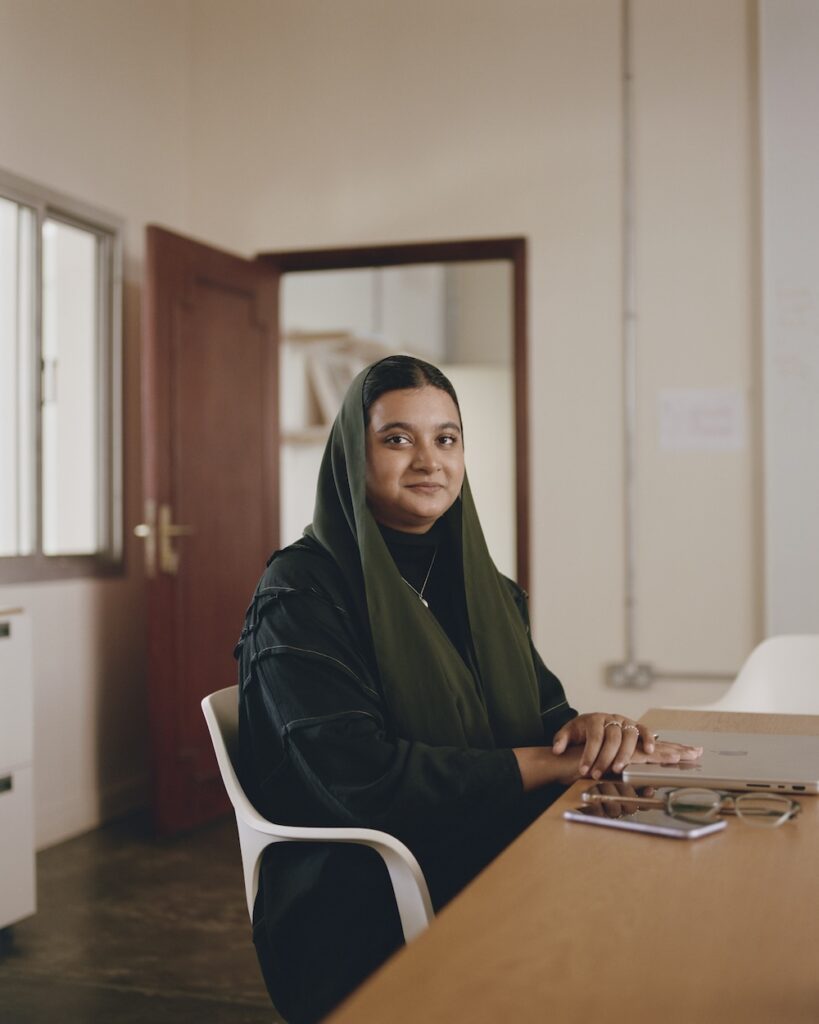
Head of Programs, Liwan
My role is about brainstorming with Aisha and connecting with other institutions within Qatar Museums. At its core, Liwan is about community and a continuation of education. There’s so much history in this building and we’re continuing that educational spirit, but in a modern way, focused on design.
We now have around 40 multidisciplinary members – architects, urban designers, interior designers, fashion designers and more. We established the labs to give members a space to experiment freely, supported by the right expertise, and then introduced the residencies. Each Craft Residency is built around a theme that allows designers to explore craft practices through a contemporary lens.
The Ideas Fromm Industry Residency connects members with local industry, as many designers don’t have a clear overview of local resources. We want to bridge that gap. We’re also encouraging factories to see the value in collaborating with designers and artists.
There isn’t another member space for designers in Doha that operates like Liwan. It’s the kind of place I wish existed when I was a young designer growing up in Doha.
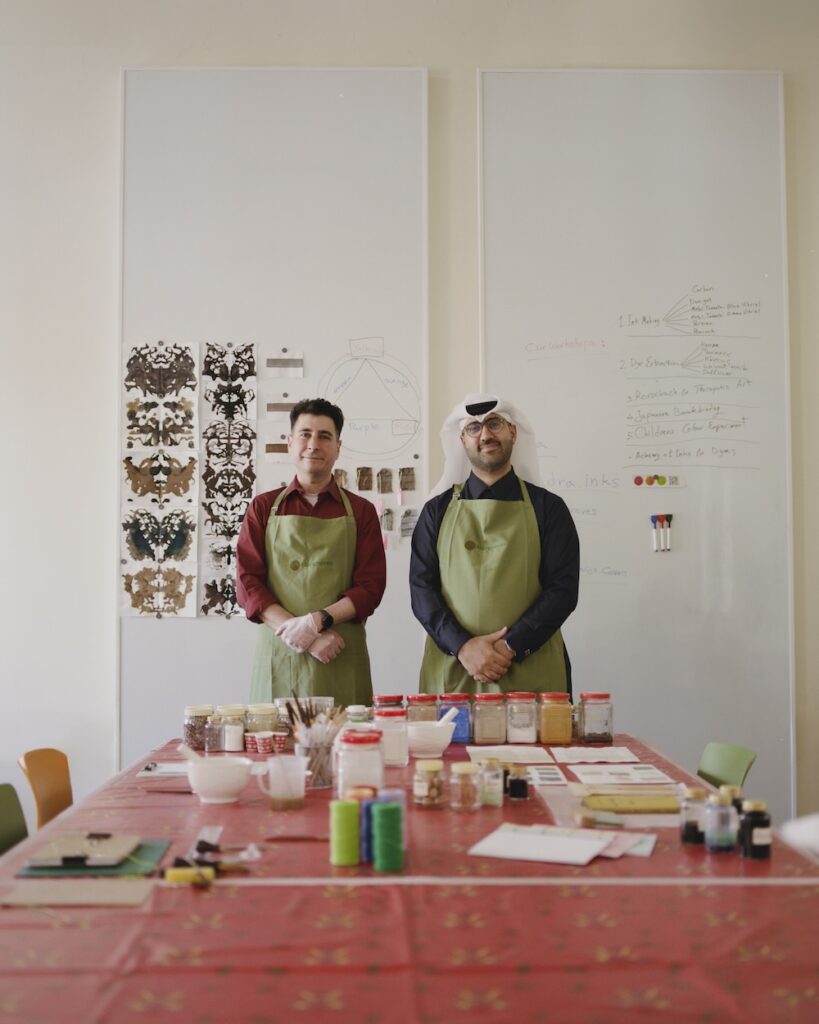
Liwan Member and Co-Founder of Mangroves
My background is in art conservation, specialising in Persian inks. I came to Doha in 2023 to run a workshop, and I moved here in 2024 to start Mangroves, a collective that runs artistic workshops.
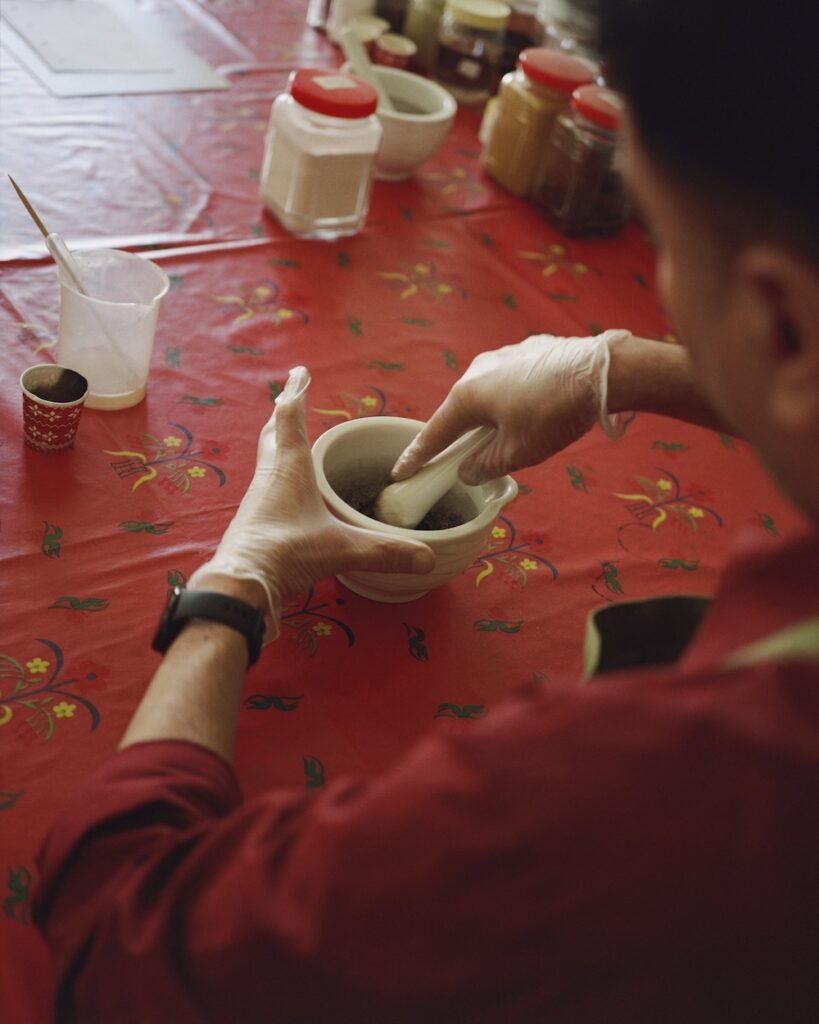
Working with your hands is very therapeutic. In our workshops, I begin with the oldest inks, then move through regional traditions. Heritage is embedded in those ingredients, and many spices from traditional medicine were historically used in inks and dyes. When I moved here I visited almost every spice shop in Souq Waqif, exploring what could produce colour.
The more we engage with others, the more we all learn – and you need an environment like Liwan, where people from different artistic backgrounds can come together, to make that happen. Our work is also about preservation. Many crafts have been lost, and we want to ensure these cultural practices remain alive.
Liwan Member and Co-Founder of Mangroves
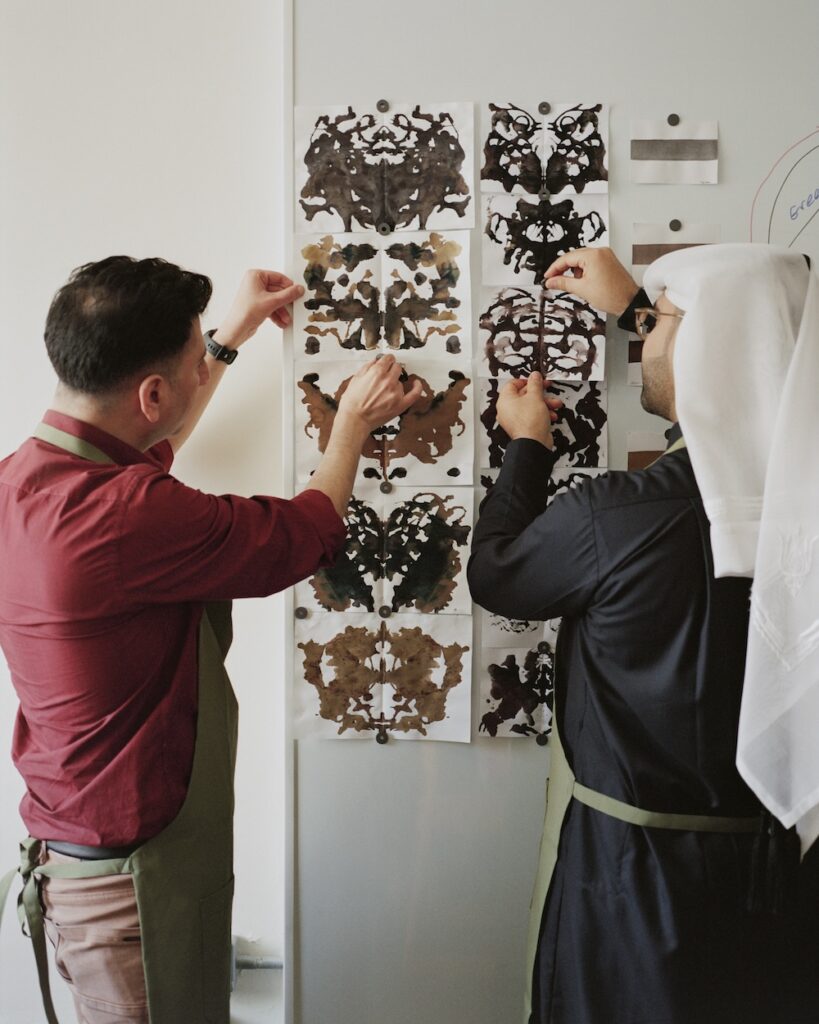
I’m a clinical psychologist, and I’ve always loved the idea of creating a community space with workshops accessible to everyone. We now run workshops at Liwan on natural dyeing, ink-making and calligraphy, and Japanese book binding. During the workshops I guide the discussion so that people can explore and express themselves. We even have a workshop where participants make inks and create a Rorschach inkblot. We want to make these traditions more accessible and desirable again, if not in their traditional form, then in a contemporary version that tells a modern story.
We joined Liwan in 2024. It has given us a space to experiment and opportunities to collaborate with other creatives. We’re learning from our experiences and giving others space to join us on that journey.
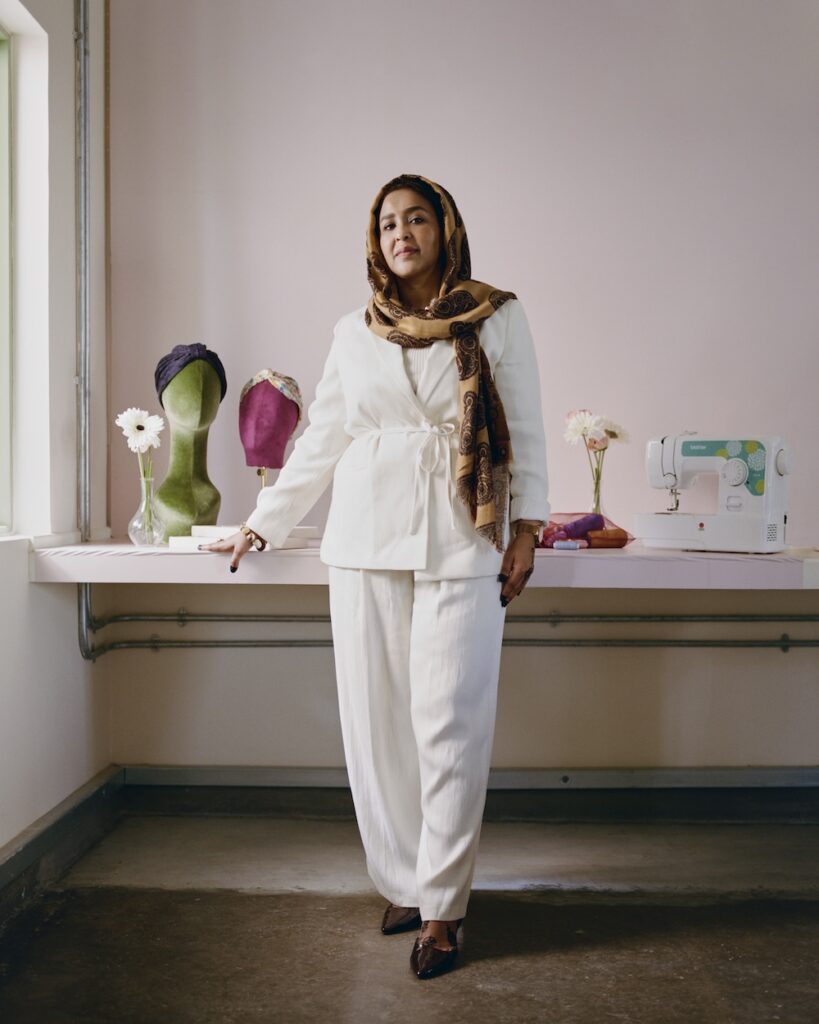
Liwan Member and Fashion Designer
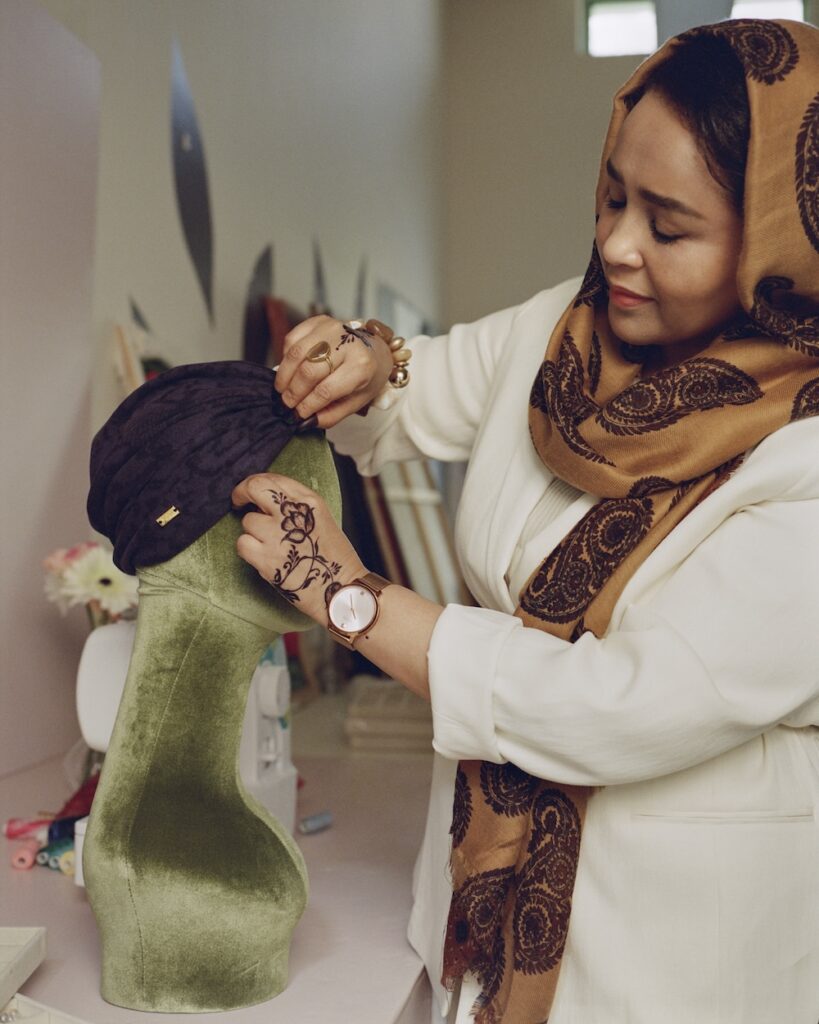
I’m a fashion designer and a creative trainer, currently working on a collection of headband turbans and abayas that look like dresses. I’m from Sudan and I came to Doha during the Fifa World Cup Qatar 2022 as a consultant on a temporary project. I decided that when that finished I wanted to do something I really love, which is sewing. I started looking for a creative space where I could work alongside other designers and surround myself with inspiring people.
I found Liwan through social media and became a member. I started teaching around two years ago, running creative fashion design workshops for youth and adults, as well as sewing workshops for all levels. I also offer educational packages for schools and summer camps. I sometimes collaborate with other designers at Liwan, too, combining our practices to create something new. There’s a real exchange of ideas here – especially through the member events that Liwan organises.
Last year, I held a mother and daughter headband-making workshop for Qatar Creates. Sheikha al-Mayassa attended with her daughter. They participated fully, making matching headbands together. That experience gave me so much energy – and it happened because I am part of Liwan. Being a member gives visibility to my work and opens so many doors.
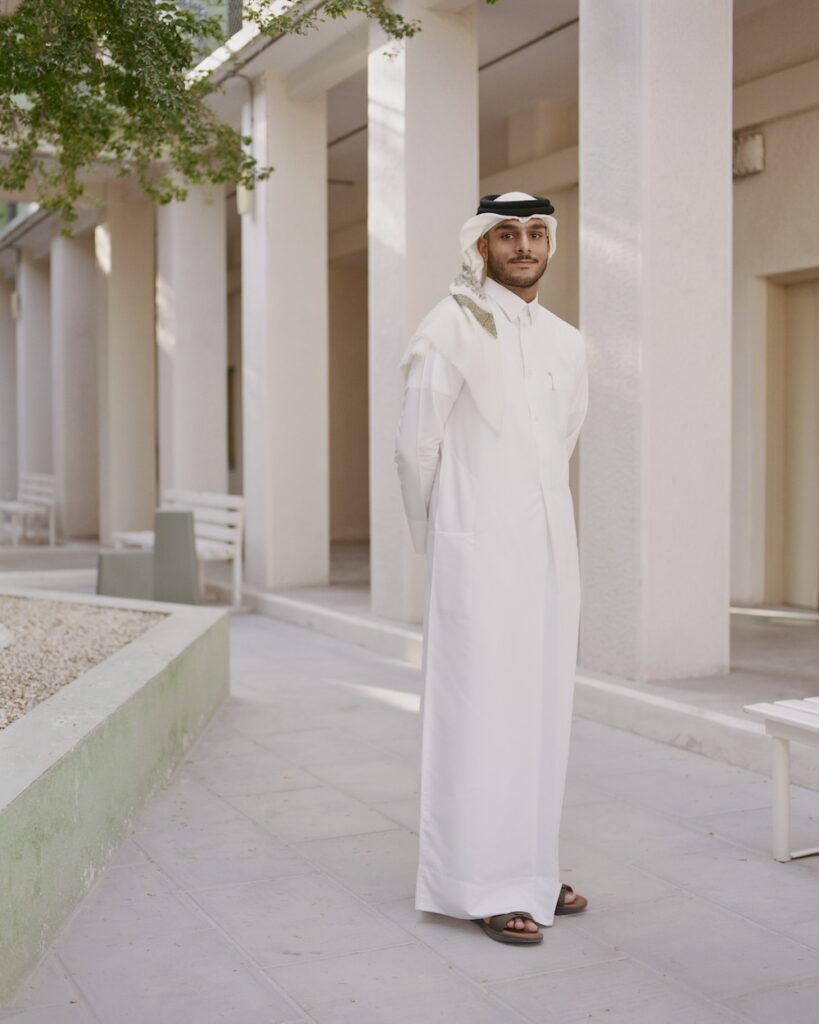
Liwan Member and Ideas Fromm Industry Resident
I’m an architect, and since I graduated in 2024, I’ve been working across different areas: architecture, graphic design, illustration and other freelance projects. My relationship with Liwan started in November 2024. I felt like I didn’t have an outlet to express myself, and so I applied to the ExxonMobil poster competition through Liwan’s open call. I ended up winning and began getting more involved with Liwan. As a member, I would often spend time in the studios, model making and talking to other designers. It’s a hotspot for creativity and you meet so many interesting people.
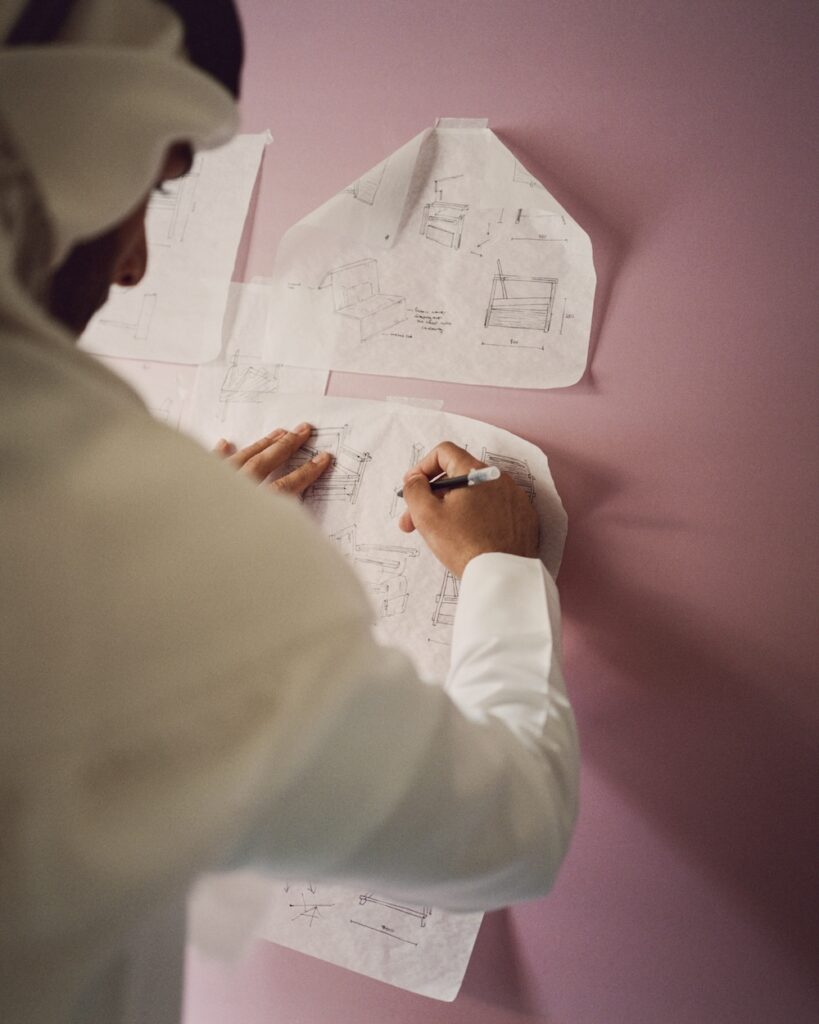
I then joined the Ideas Fromm Industry Residency with two other designers, an intensive programme that aims to connect designers to local manufacturers. I entered the residency with a very fixed idea of what I wanted to design, but the constant technical and creative feedback expanded the project. The result is the Minim collection – a series of customisable chairs inspired by childhood and wooden building blocks. The residency lasts six months, which gave us the time to properly explore different directions. One of the best moments was our first visit to Doha’s industrial area, where we toured factories and began to explore materials and fabrication methods that interest us. Looking back at our initial ideas and then at the final presentations, it’s clear how much we’ve all developed and how far we’ve pushed ourselves. Having that shared journey made a real difference.
I never imagined I’d work in furniture or graphic design at this level – but Liwan opened those doors and gave me confidence to explore those directions properly. In the future, I’d like to host workshops and help people better understand what architects do.
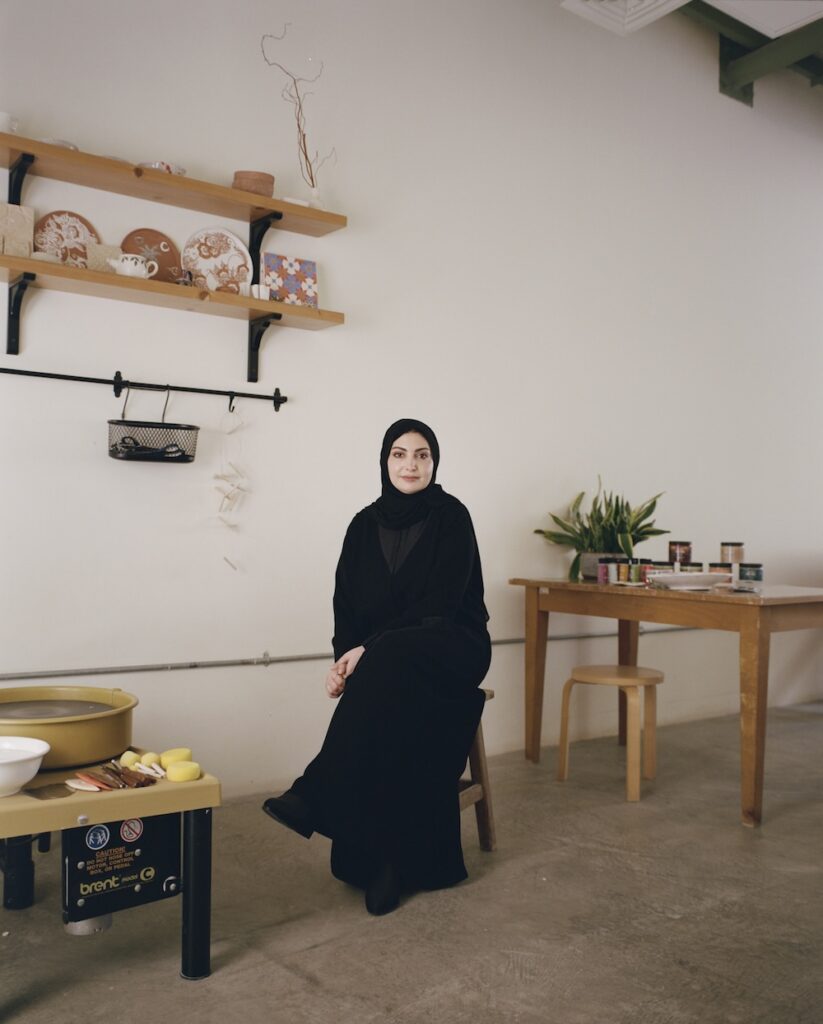
Ceramicist and Clay Lab Consultant, Liwan
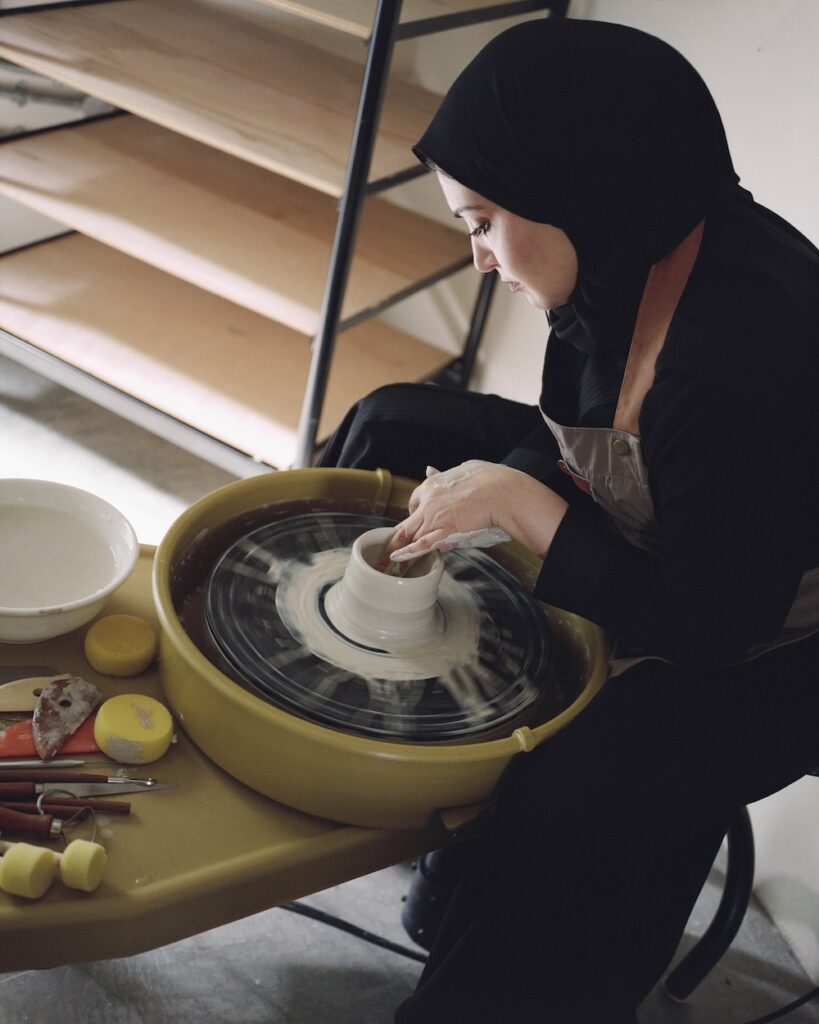
I’m an interdisciplinary designer and ceramic artist from Qatar. I’ve been involved with Liwan from 2019, when the Clay Lab was still taking shape. When Liwan opened in 2021, I joined as the Clay Lab Consultant. My role is to support the ceramic community, ensure that the Clay Lab runs smoothly and guide members throughout their projects. Some are beginners, while others are experienced artists developing more complex pieces. I help them understand the materials, explore techniques and troubleshoot challenges when they arise.
I also run various workshops, from handbuilding classes to more concept-driven sessions. One of the most rewarding parts of my role is the collaboration within the lab. The Clay Lab is not just a production space, it’s a place where people exchange ideas, learn from each other and grow together as makers.
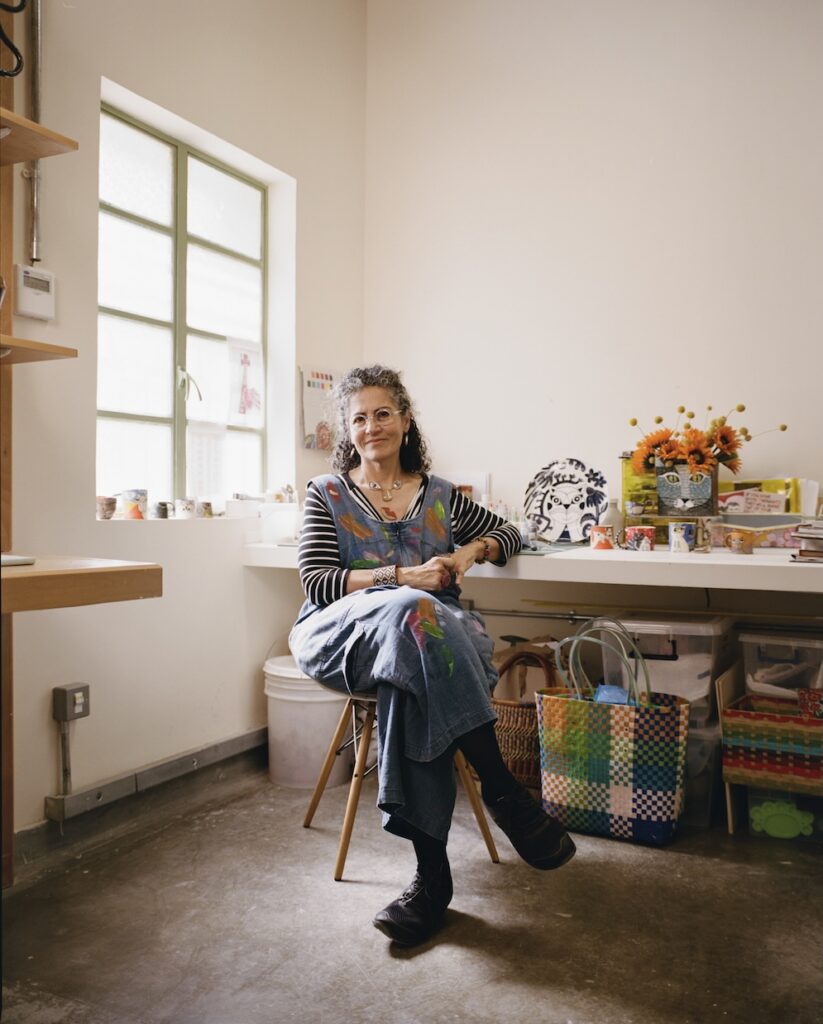
Liwan Member and Ceramicist
I started working with ceramics when I was a teenager in Colombia and have been practising more seriously since 2013. At that time, I was living in Florida and was a member of a studio there. In 2024, I moved to Doha with my husband and began looking for ceramics studios, but they weren’t easy to find. Eventually, I found Liwan and it was exactly what I needed. It was affordable to become a member and it feels very peaceful here.
I love being around people. There are lots of different artists here, and the Liwan team is very kind and supportive. As a member, I focus on my own practice but I see a lot of collaboration in the residencies. You meet a lot of interesting people, get exposure, and I’m also able to sell my work during open days and other events organised by Liwan. This space has become my refuge and it keeps me sane.
Liwan Craft Resident
I graduated in 2021 from VCUarts, majoring in graphic design. Since then, I’ve exhibited and taken part in residencies both in Doha and abroad. I’ve completed residencies at the Fire Station in Doha, the International Studio and Curatorial Program in New York, and the Akoje Residency x King’s Foundation Artist in Residence Programme in Scotland. The Craft Residency at Liwan is my fourth.
My practice sits between art and design. I’m always exploring how those disciplines intersect in interesting ways. Thematically, my work looks at the Gulf, Arabic mythology and Arab folklore. The residency theme of “the Oasis” feels very appropriate. Liwan has, in a way, been providing that environment for us.
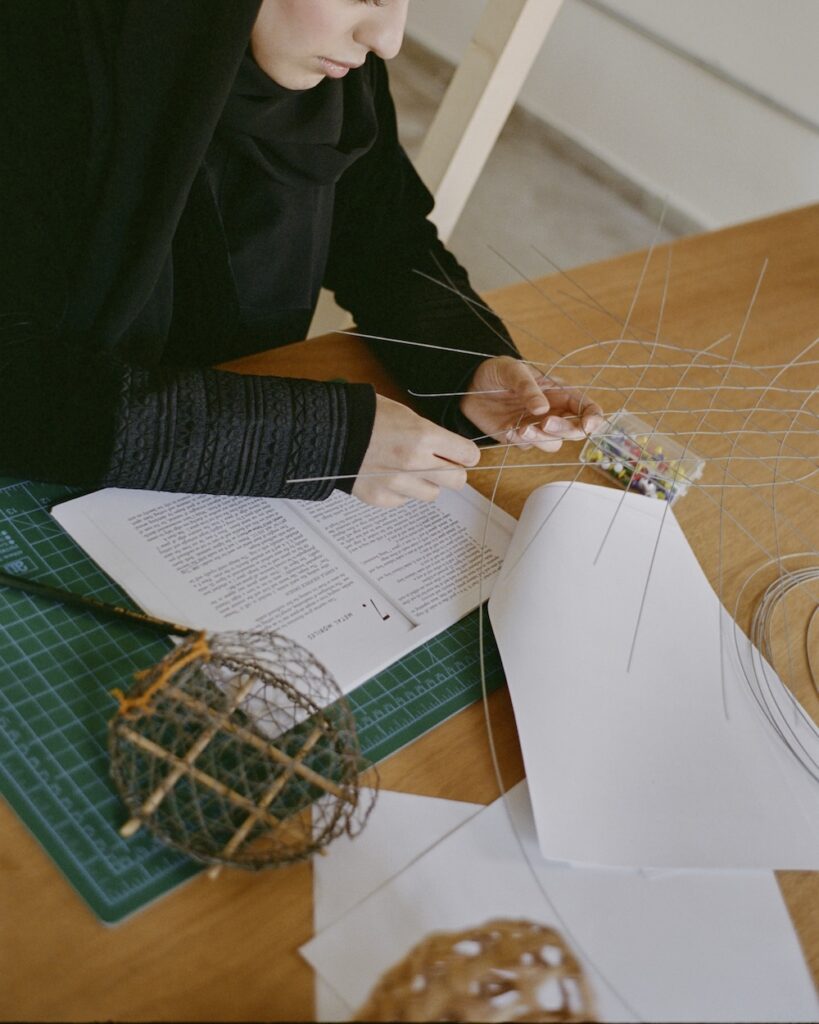
As part of the residency, we have studio space and access to the Prototyping Lab, which has been incredibly supportive. Liwan has also connected me with local craftspeople – weavers, woodworkers and others – which has been really valuable. As part of my work during the residency, I’ve been exploring gargoors (traditional fishing traps) and I had the opportunity to learn gargoor-making from local craftsmen. It was surprisingly difficult to create such simple forms.
I feel so much more aware of what’s possible in Qatar now. Before, I had an idea of what could be done, but through this residency it’s become tangible. I’ve seen the physical outcomes of collaboration with artisans and that has changed how I think about my own practice going forward.
I also run a monthly book club at the Liwan archive library, which explores how selected texts from the Arab region might influence people’s design practices. There’s always something happening here to bring people together.
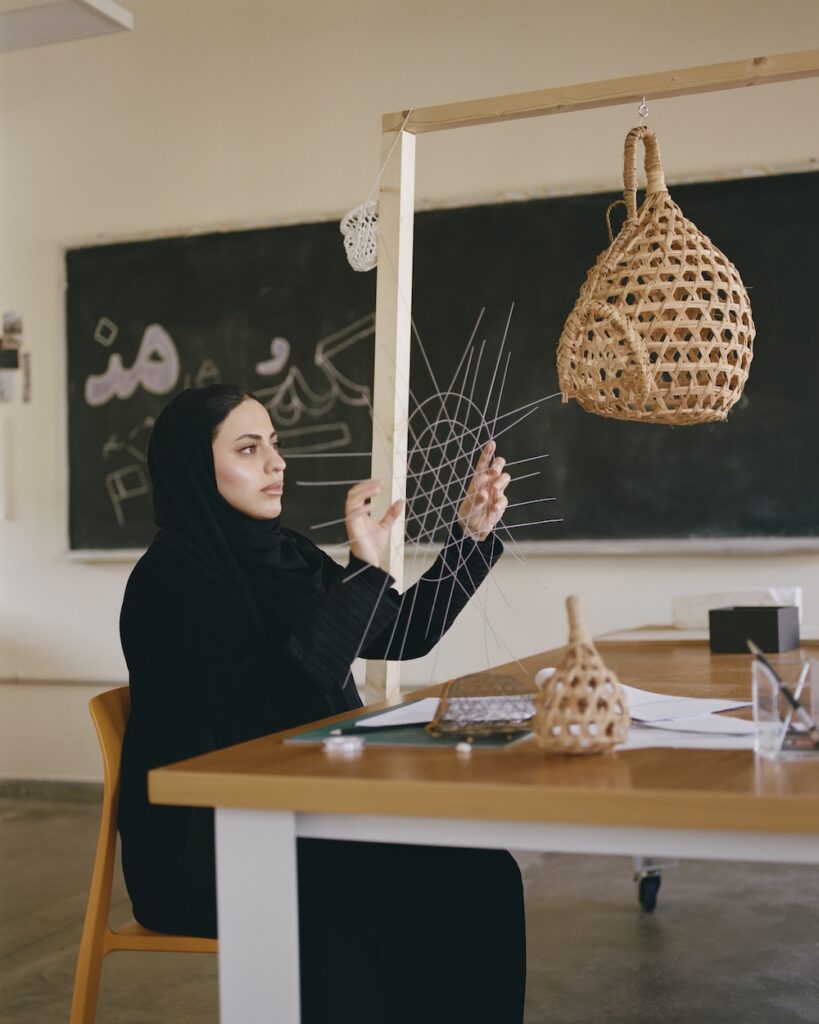
Head of Communications, Liwan
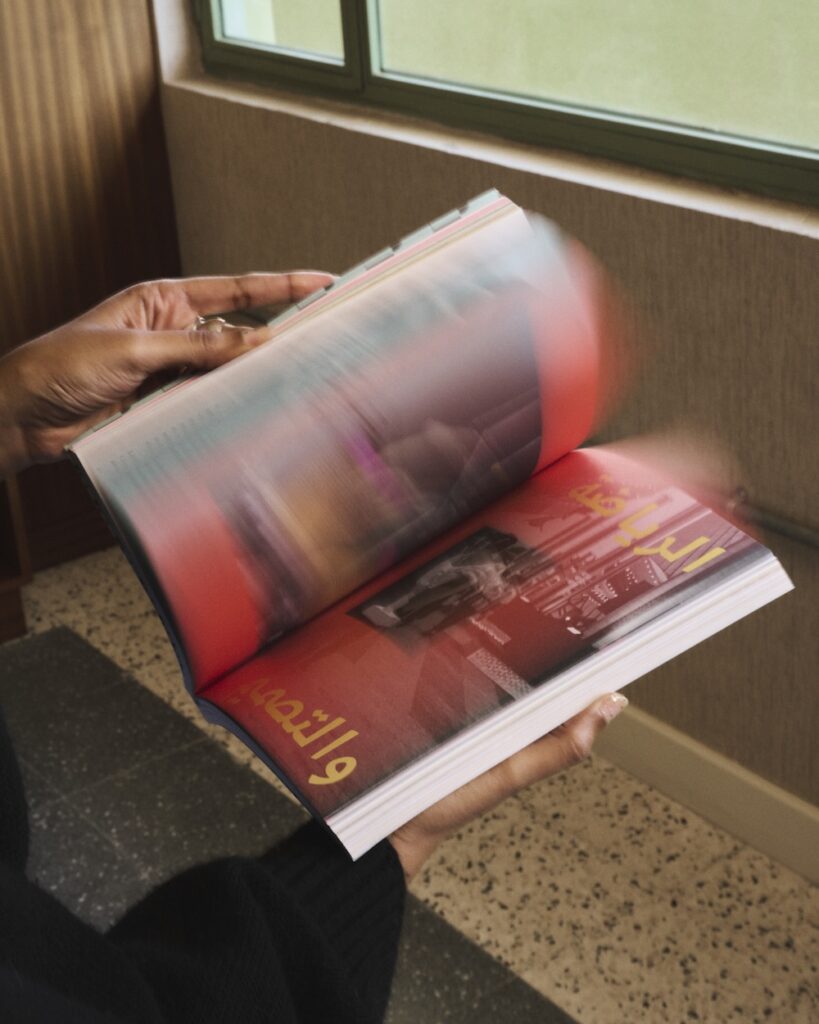
My work at Liwan spans multiple facets of communications, including our podcast, Talks on Design, and Al Journal, a biennial printed publication. The vision for Al Journal, which is spearheaded by our director, Aisha Al Sowaidi, is to bring together essays, articles, reviews and visual work to explore contemporary design themes across the Southwest Asia and North Africa (SWANA) region. Each issue engages multiple themes that respond to current conversations, building a platform to record creative work from the region.
Our second issue centres on “resilience” with sub-themes emerging around ideas such as “designing for survival”. One essay, for example, reflects on design acts that help create a sense of agency and empowerment for displaced communities. Another explores craft within a postcolonial context, examining how creatives can draw on resources from their own land and heritage. Together, these perspectives show how design operates through systems, lived experiences and cultural narratives.
The visual identity for Al Journal was developed in collaboration with Studio Safar, based in Beirut and Montreal. The patterns woven throughout the publication draw inspiration from Liwan’s architecture. The publication continues to evolve through collaborations with designers based in Doha, reinforcing its grounding in Qatar. Everything is done in Qatar, from curation to design and printing. The design team includes Pornprapha Phatanateacha, a graphic designer and faculty member at VCUarts Qatar; Reham Mohamed, founder of the graphic design collective (In)finite Thought; and students Salma Addaoudi and Lolwa Al Mulla, who assist the team.
Each issue features a distinct spine pattern, allowing individual stories to accumulate into a larger visual narrative as the publication evolves. Our hope is that Al Journal becomes both an archive of projects and a platform where creative voices from the region can be heard locally and globally.
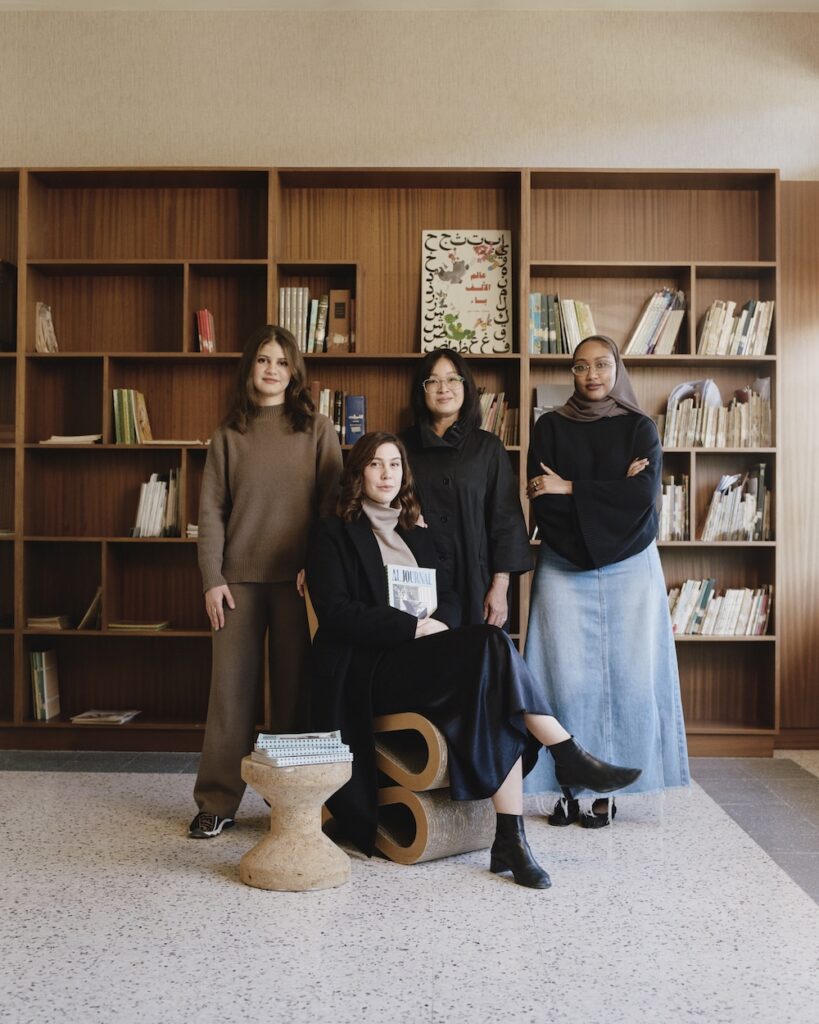
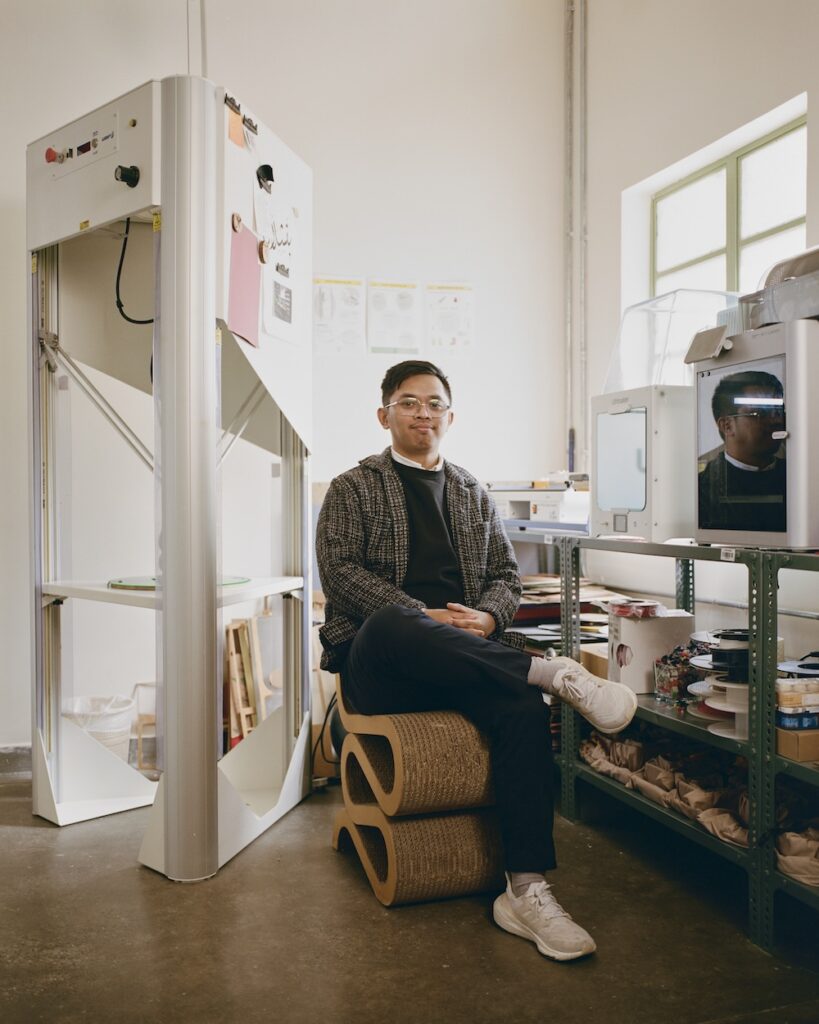
Protocol Lab Specialist, Liwan
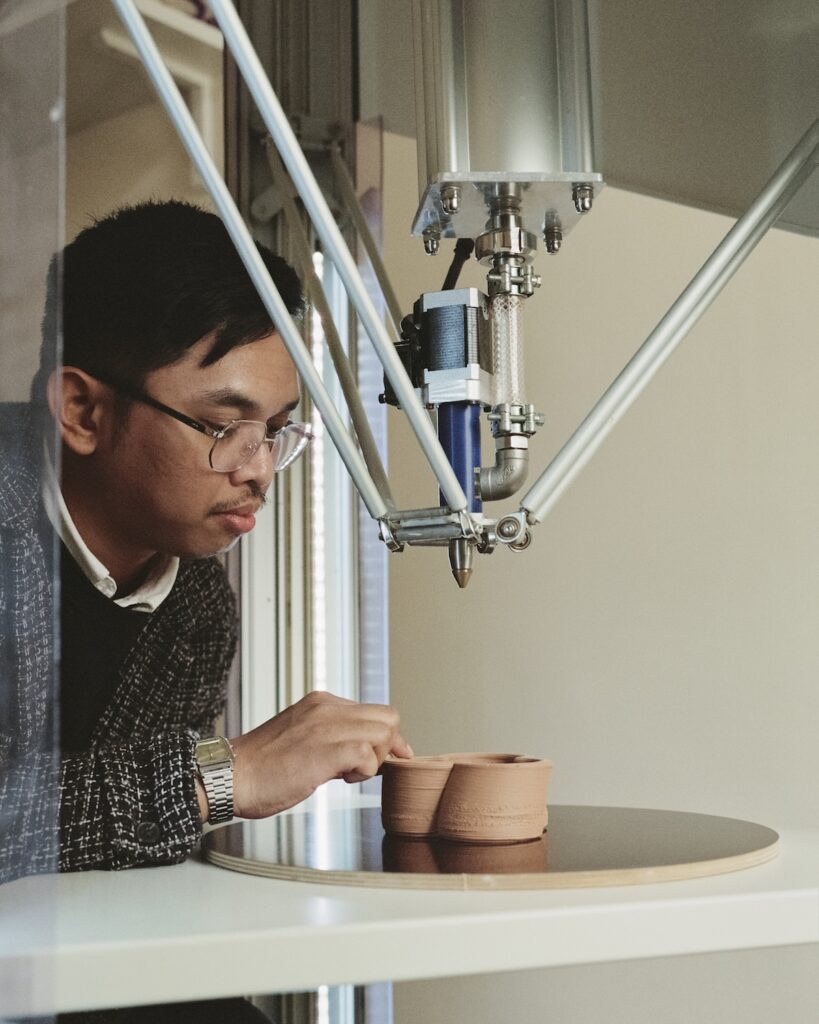
I was working in graphic design in 2023 when I saw there was an open day at Liwan and came to see what the place was about. I came across the clay 3D printer and thought: how can I bring design and clay together? I became a member and started experimenting. From there it developed and I became a part of the Liwan team a year later.
All of these machines were sleeping until then. Now, I work with the members to help them prototype and manufacture their work – in acrylic, wood, ceramics, metal, injection moulding… the list goes on – and help connect them with different suppliers.
It’s a lot of fun. The members and residents are very creative, and helping them to produce work that will be exhibited is special. I also collaborate with different institutions and departments – for example, I’ve worked with the Archaeology Department in Qatar Museums on 3D scanning and printing artefacts exhibited at the Sharjah Museum and I also collaborate with students from the Fire Station Artists Intensive Study Programme. I don’t believe in gatekeeping – I want to share what I know.
There are so many different machines in the lab, from laser cutters and vacuum formers to 3D printers, but the most popular is the clay 3D printer. You can make cups, plates, vases – anything you could make by hand. I love how the layers appear; they give the piece a story.
Liwan has a place for everyone. I never imagined I would be working with textiles, engraving fabric or making leather bags, but here there’s always something new as there are workshops across lots of different disciplines. It’s about collaboration rather than working in silos. Liwan is an opportunity for everyone to explore and make.
We use cookies to improve your experience on our site. By using our site, you consent to cookies.
Manage your cookie preferences below:
Essential cookies enable basic functions and are necessary for the proper function of the website.
These cookies are needed for adding comments on this website.
Statistics cookies collect information anonymously. This information helps us understand how visitors use our website.
Google Analytics is a powerful tool that tracks and analyzes website traffic for informed marketing decisions.
Service URL: policies.google.com (opens in a new window)