- Art
- Spring/Summer 2026
- April 2026
A Voice Beyond Borders
A conversation between Sheikha al-Mayassa and acclaimed Palestinian singer Marwan Abdelhamid, who performs under the stage name Saint Levant
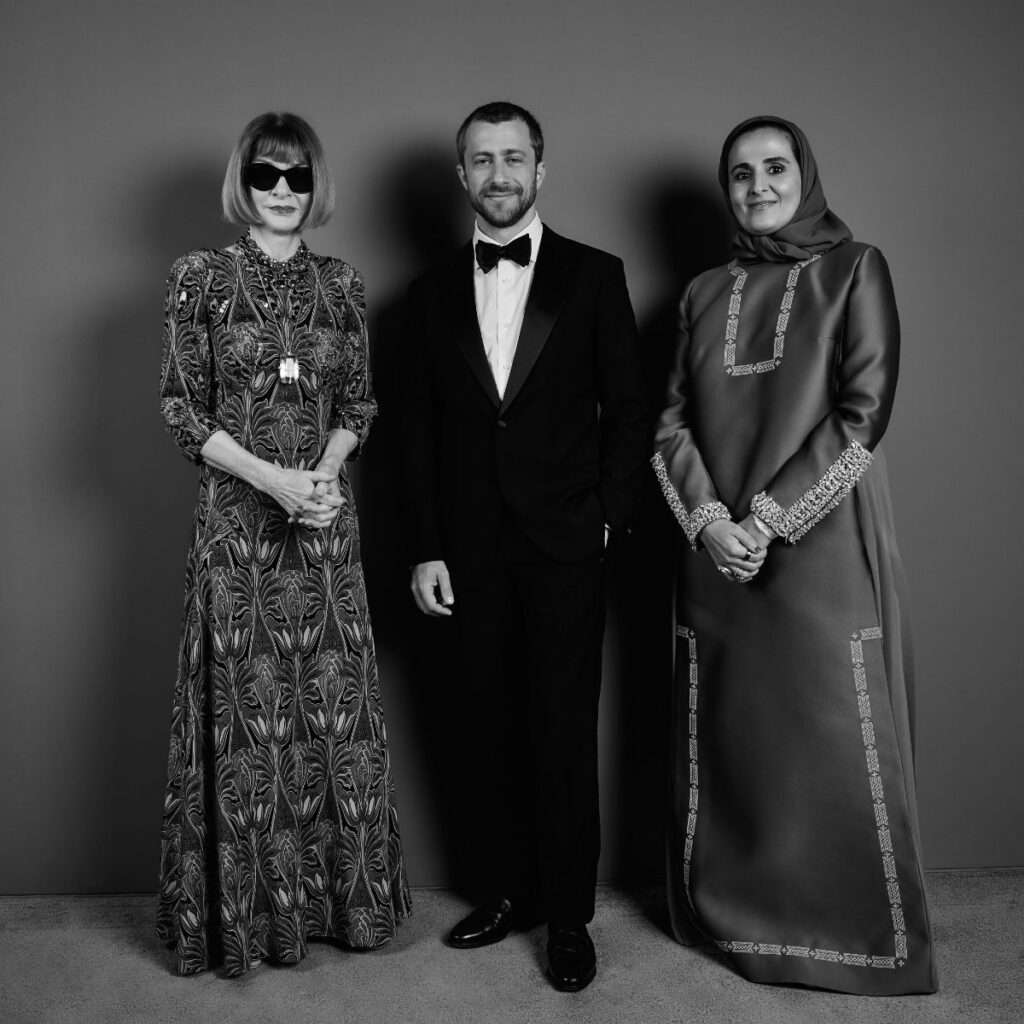
The conversation took place as part of the Georgetown University Qatar (GU-Q) artist-in-residence programme. The wide-ranging discussion centred on culture, identity and creative futures, and was introduced by Safwan Masri, dean of GU-Q.
SAFWAN MASRI In an age captivated by whatever is newest, innovation is often framed as a clean break from tradition. Yet Qatar’s trajectory suggests otherwise. This young nation has leapt into modernity with astonishing speed while drawing steadily from its heritage for orientation, depth and purpose.
Few people have defined that trajectory more than Her Excellency Sheikha al-Mayassa. Across Qatar’s expanding cultural landscape, Her Excellency has been a steadfast champion of young artistic talent: supporting artists-in-residence at the Fire Station, creating pathways through internships and scholarships, and cultivating the platforms that emerging creatives now rely on. Much of the artistic and cinematic energy coursing through Doha today can trace its beginnings to Her Excellency’s vision.
This afternoon, Her Excellency brings that vision into dialogue with an artist who stands exactly where today’s culture is being made: singer-songwriter, GU-Q artist-in-residence and my friend, Saint Levant.
He was born Marwan Abdelhamid in Jerusalem in 2000 – during the Second Intifada – to a French-Algerian mother and a Palestinian-Serbian father. He grew up in Gaza, was displaced to Jordan, and eventually arrived in California at the age of 17. From this restless journey emerged an artist whose rise has been meteoric but also richly layered.
Saint Levant’s music blends Arabic melodies with R&B and hip-hop, drawing on influences from Fairuz to Khaled and slipping between Arabic, French and English as if each were simply a different key on the same piano.
His work captures the sensibility of a generation formed by many places at once – unmistakably Palestinian, confidently global, nostalgic yet forward-looking. To me, he is a breath of fresh air: proof that truths can be a wellspring of originality rather than a restraint.
Just as striking is how Saint Levant uses his platform. He centres Palestinians in his work, and in the midst of the ongoing devastation in Gaza, uses the global stage he has been given to fearlessly tell their stories and carry their grief, reaching younger audiences that conferences and commentary alone have not.
Offstage, Saint Levant has co-founded initiatives for Palestinian creatives and entrepreneurs, demonstrating that artists can drive change through imagination and institution-building alike.
At first glance, Her Excellency Sheikha al-Mayassa and Saint Levant seem to inhabit very different constellations. Yet a thread binds them: a belief that art and culture can open doors, bridge divides and expand the horizons of heritage.
It feels exquisitely fitting that they are both here – Her Excellency lighting the cultural sky under which Saint Levant, a rising star, charts his own luminous path. Please join me in welcoming Her Excellency Sheikha al-Mayassa and Saint Levant.
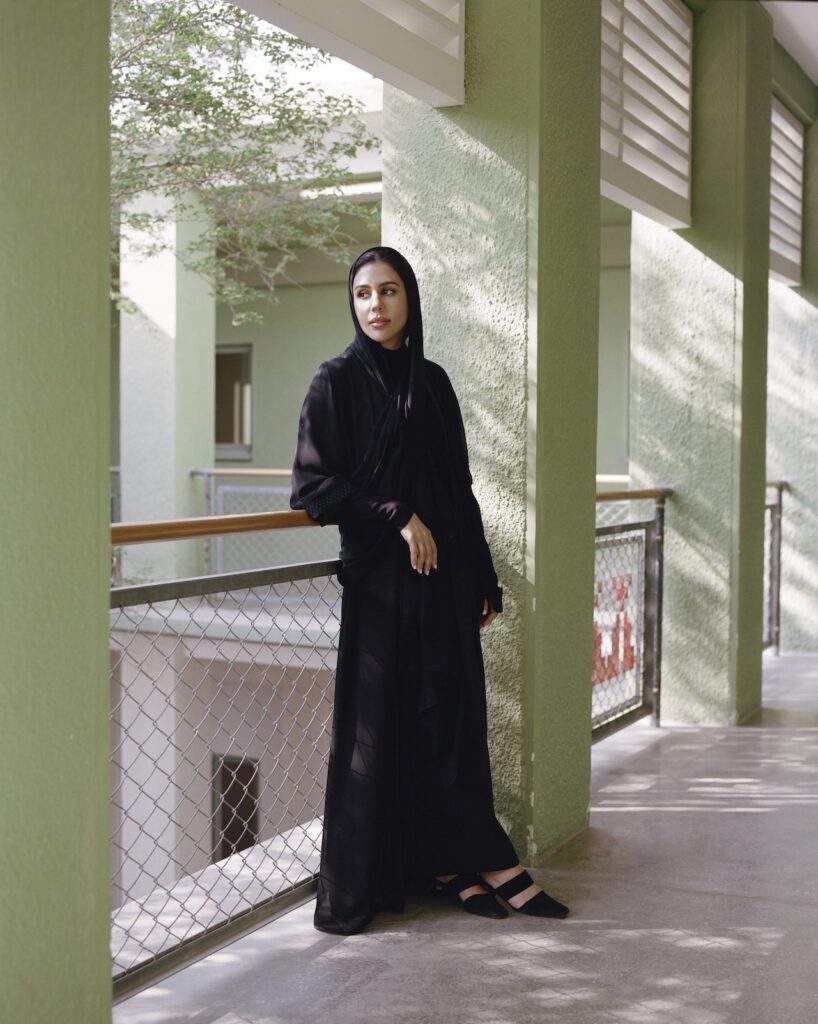
SHEIKHA AL-MAYASSA Thank you. That was a beautiful introduction. As you said, art and culture connect us all here.
SAINT LEVANT Before we start, I would love to tell the story of how you and I met. It’s a beautiful story. Last year, I was on tour in Europe when Her Excellency reached out. I had been a huge fan for a long time, and I asked if we could get on the phone and speak.
SHEIKHA AL-MAYASSA I thought maybe he wanted to come and perform in Qatar, but he wanted to know how to build a culture strategy in Palestine, because he wanted to give back to his country. I thought that was such a noble cause, and so unexpected.
SAINT LEVANT I was asking: “What do I do if I want to build a cultural ecosystem in Palestine?” The first thing you told me was to map out the stakeholders that are already there, and the second was to ask what do the people actually need?
We then commissioned a feasibility study on the Palestinian creative ecosystem. It took four months, and I presented it to you at the Louvre in Paris.
SHEIKHA AL-MAYASSA I was so impressed by his dedication and seriousness that I thought to myself: “He’s going to go far. He’s not just a performer and a singer – he’s going to empower other creatives.” I would love to know if you have found your experience at GU-Q has added value to that study?
SAINT LEVANT My week at Georgetown has been beautiful. When I’m in music-making mode I don’t take the time to sit and analyse myself and my role. A student asked me: “How does it feel to influence a generation?” I don’t know how it feels, I’m just here making music. So it’s been nice to think deeply about what it is I’m doing, and what dean Masri and his faculty are building here.
I also have questions for you. When you first started working on Qatar’s national strategy for culture, was it by yourself or with a team? For a lot of people a national strategy is such an abstract thought.
SHEIKHA AL-MAYASSA This is not my vision or my national strategy. It is a national strategy and part of Qatar National Vision 2030. When I applied to university I wanted to be the first female foreign minister of my country, and when I graduated I started working in my father’s office and in the foreign ministry. We were preparing for the Asian Games [in 2006] and the opening of the Museum of Islamic Art [MIA]. There was a change in leadership, and I ended up leading the project. At first, I was disappointed. I said: “Why am I running museums? I don’t want to run a museum – I want to be the foreign minister!”
Then I met the architects IM Pei and Jean-Michel Wilmotte. I realised how important culture is, and how crucial investing in arts, education and cultural spaces would be for the vision of my country. If you want to build things that have an impact in terms of the cultural scene, they have to be relevant to the local community and have to come from the grass roots. They cannot be imported.
We took a year to think about MIA Park [next to the Museum of Islamic Art] and how everything would come together, and opened in 2008. During that period we set up Qatar Museums, which is now celebrating 20 years, and we started to develop a 25-year strategy to align with National Vision 2030.
Let’s talk about you for a moment. How did you go from political science to music?
SAINT LEVANT I had the privilege of being in higher education in America, studying political science and international relations. Then I started running a startup. I wanted to connect investors abroad with entrepreneurs living in Palestine to help build the local tech ecosystem.
I was doing panel discussions and meetings with the World Bank. I thought: “I’m 19 – I can do this a bit later, but I need to do the music now.” I always knew deep down that I wanted to be a singer.
“The most successful people I’ve met say the secret to success is to surround yourself with young people”
Sheikha al-Mayassa
SHEIKHA AL-MAYASSA It’s very interesting that you did that. You have to have a dream, and you have to have a passion. Some of the most successful people I’ve met say that the secret to success is to surround yourself with young people.
SAINT LEVANT Going back to building national strategies, how important is it to build the national strategy with local people from Qatar?
SHEIKHA AL-MAYASSA That’s a very good question. As I told you, I landed in a job I didn’t audition for. And I love challenges. It was fascinating to start trying to understand the landscape. My father’s ambition was one thing, the human resources were another – and there was a gap we had to analyse and fill.
I’m happy to say that 20 years later we have amazing people at the museums, with people specialising in different areas. That then leads to small and medium-sized companies and the expansion of the private sector. We cared about having the best experts and it didn’t matter where they were from – America, Europe, Asia or Africa. What mattered was: What do we need, and how are we going to proceed?
I think the most important thing to ask yourself is why you are doing what you are doing. If you’re doing it for your country, then you have to ask: “What does my country need? How does this help my country grow locally and globally?”
Today, Qatar’s reputation globally is immense. We’re a small country – we don’t deny it. But we’ve become an efficient country because of our clear strategy. And I think every country will have to develop its own.
SAINT LEVANT How do you deal with hesitancy? I can be quite indecisive, and I feel like sometimes that stifles me.
SHEIKHA AL-MAYASSA In life, you learn that you cannot please everybody. You have to do what’s best for your country and for the position you’re in. Most of the time I make decisions based on intuition.
For young people it’s important to remember that your intuition is very important. We’re often stuck on our phones and iPads, and this digital space disconnects us from how we feel. We also have a long-term strategy and I have a very good team around me. We often make decisions by consensus.
I want to ask you about your childhood – your dreams then and your dreams today.
SAINT LEVANT I have always had a passion for music – and the reason I wasn’t pursuing it was because I was scared of other people’s opinions. There were no examples of someone from Palestine or Jordan making it internationally in the way that I saw myself making it.
I always say that if you have something you aspire to, you have to vote for that version of yourself every day. If you do it long enough you will end up closer than when you started.
SHEIKHA AL-MAYASSA I agree. This goes back to having a long-term strategy and a clear vision. You had a vision, you had intuition, and you knew where you were going.

SAINT LEVANT I realised that if I actually did something every day for a year – like with the startup – things would happen. I applied that same energy to my music. And alhamdulillah [praise be to God], it ended up working. Reverse engineering is a really interesting way to live life. You set a goal and ask what steps you need to take to achieve it. I’m sure the national strategy also works like that.
SHEIKHA AL-MAYASSA That is why you have to understand why you’re doing something. You have to have a purpose in life; you have to have a mission, and you have to impact on your community.
I’d like to talk about your foundation, 2048. Where did the name come from?
SAINT LEVANT The year 2048 will be 100 years after the Nakba, when Palestine was stolen from us. When I was in college I read a book called Palestine +100: Stories from a Century After the Nakba, which is a collection of short stories by 12 different Palestinian authors set in 2048. It is a very dystopian book and it made me sad.
Being in the diaspora and not having to live under the occupation, I have the privilege to think about what Palestine might look like in 2048, if it is liberated. I believe in a future where our kids are going to be running in the streets of Gaza and on the beach like I used to. I believe in a future where the creative economy in Palestine is one of the biggest in the world. I don’t see why we can’t do what you have done here.
SHEIKHA AL-MAYASSA I’m very happy that you’re starting to think about these questions in this community of Georgetown. I really want to see where this journey takes you, and I’d be very proud to be part of it. I think power is in the community.
SAINT LEVANT I’m very interested in how you, as the leader of the cultural charge in Qatar, make sure that you are in synergy with the rest of the economic and political agendas.
SHEIKHA AL-MAYASSA We have the framework of Qatar National Vision 2030, and a lot of it is also personal effort and relationships. You have to be curious and ask questions. It’s important to coordinate across sectors – not just government but also the private sector. You also have to be very open – know your strategy but be porous to opportunities. When an opportunity comes you need to claim it, as it may not come again.
Marwan makes what he does look easy, but it’s hard work every day. If you’re passionate about it and you believe in yourself, others will too.
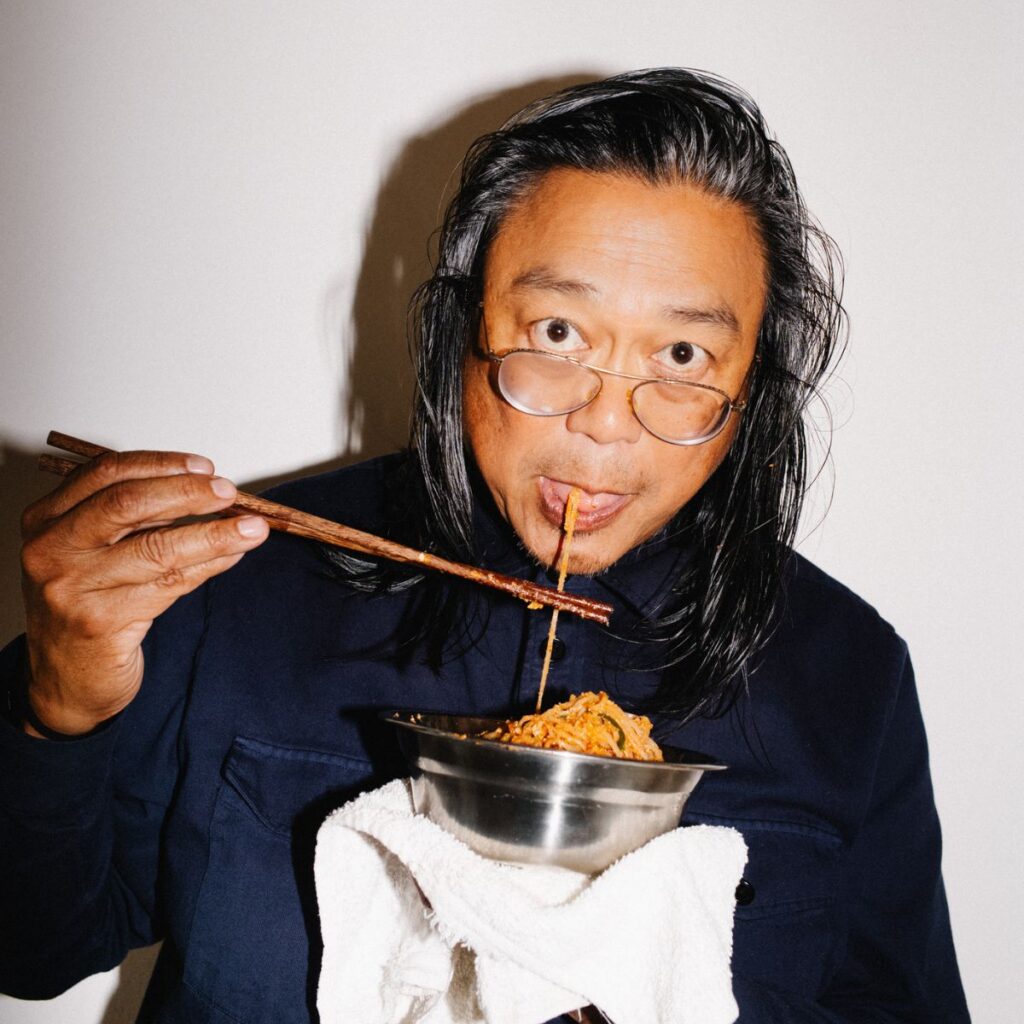
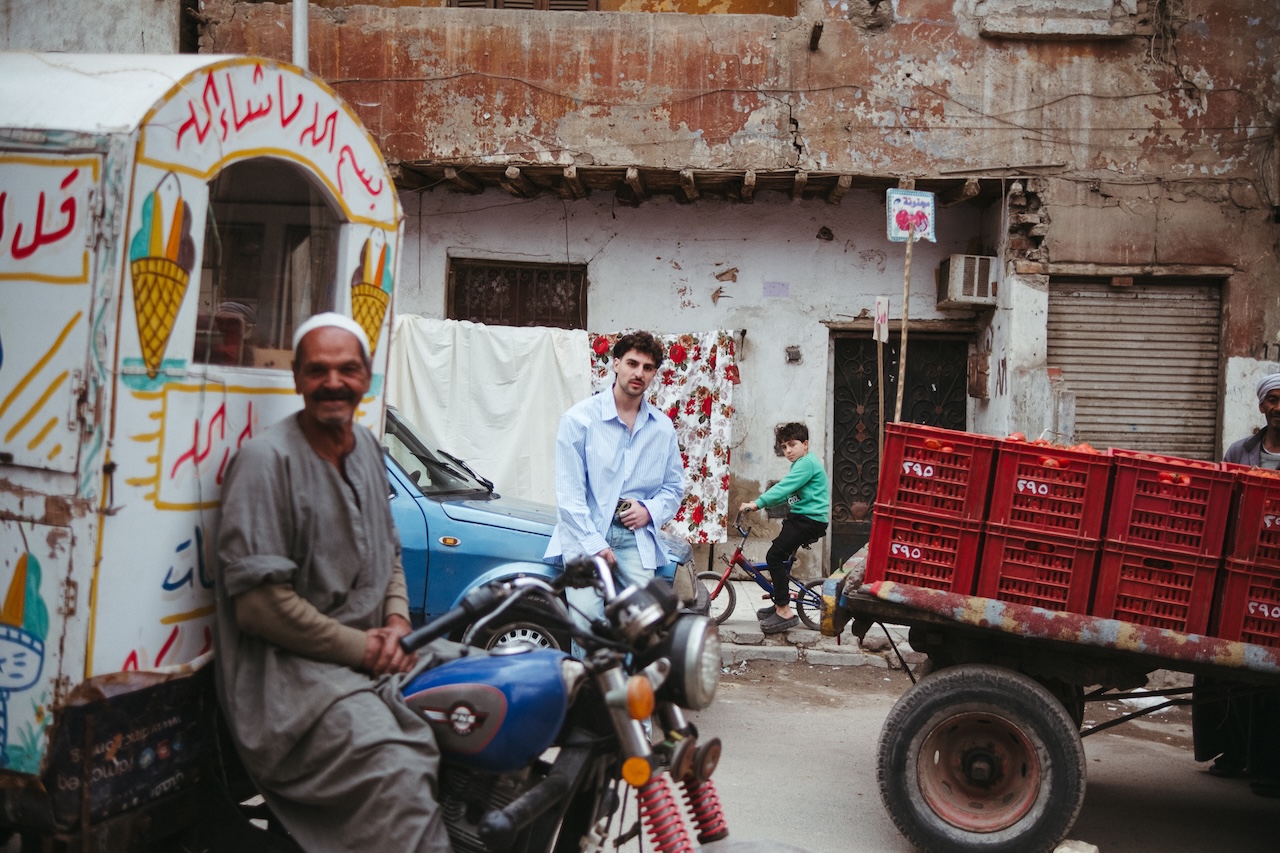
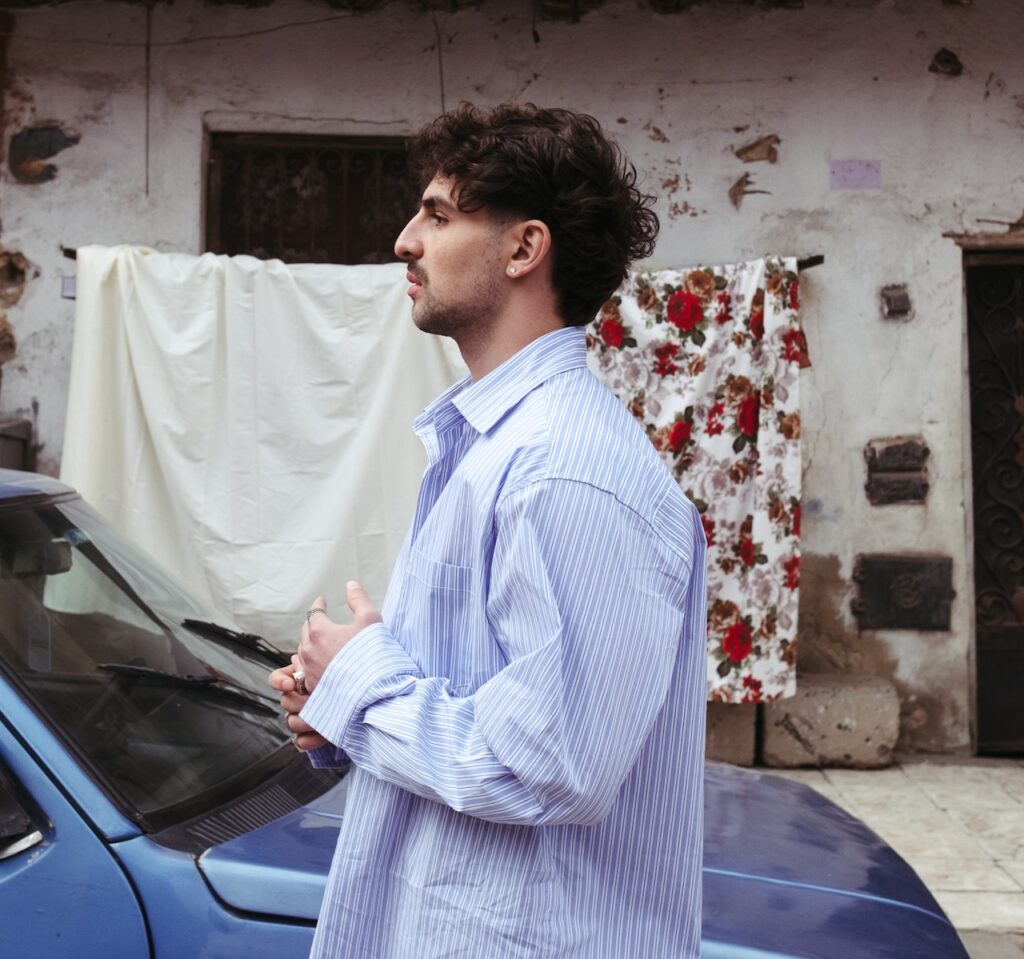
Cover image: Marwan Abdelhamid, known as Saint Levant, photographed by Hussein Mardini for Vogue.