- Art
- Spring/Summer 2026
- April 2026
In New light
A landmark exhibition at Doha’s Museum of Islamic Art traces five millennia of Afghan creativity
Words Jessica Klingelfuss
At Doha’s Museum of Islamic Art (MIA), Empire of Light: Visions and Voices of Afghanistan asks visitors to meet Afghanistan beyond a familiar binary: a glittering ancient past on one side, and a present too often reduced to crisis on the other. The exhibition’s ambition, say co-curators Nicoletta Fazio and Thomas W Lentz, is to restore continuity, celebrating a culture shaped over millennia by exchange and reinvention.
The hope is, says Lentz, that audiences can “look beyond today’s headlines and see Afghanistan for what it has always been – one of the world’s great repositories of artistic creativity and imagination”, while acknowledging that it remains “resistant to understanding”. The project emerged from a partnership between the Aga Khan Trust for Culture (AKTC) – active in Afghanistan since 2002 in conservation and heritage work – and MIA, with its mandate to explore the breadth of Muslim visual creativity.
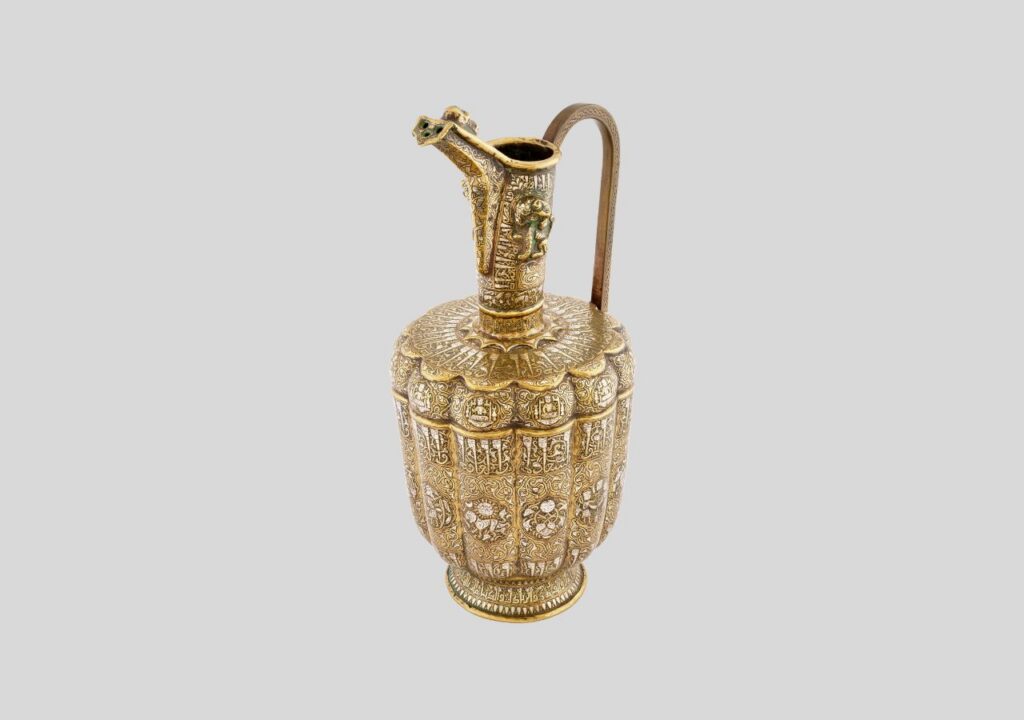
At the exhibition’s centre are large-scale wooden architectural models – hand-carved in Kabul at the AKTC Jangalak Vocational Training Centre – that recreate some of Afghanistan’s most significant historic monuments. The exhibition is divided into five thematic and chronological sections, which guide visitors through more than five millennia of Afghanistan’s history. The models provide an organising thread, around which are arranged historical objects that are contemporary with the structures depicted in the models.
This approach does more than organise the material; it helps make visible a larger historical pattern. Lentz describes Afghanistan as “the ultimate and forever frontier”, and argues that frontier zones – so often narrated as places of conflict – are also sites of transformation, where peoples, languages and ideas meet.
One small object in particular encapsulates this spirit of transformation for Lentz: a single manuscript page associated with the last Timurid sultan, Sultan Husayn Mirza. The page’s illumination is exquisite, but what arrests him is a technical sleight-of-hand: verses that look like coloured ink are actually decoupage – paper cut and glued to the surface. For Lentz, it symbolises “the surprising transformation of steppe warriors into cultural patrons of the highest order”.
Fazio also points to an opacity in outside perceptions of Afghanistan’s history. Public attention, she suggests, tends to settle on two “frozen moments”: an extraordinary pre-Islamic past and a difficult present. The centuries in between – where much of the country’s artistic and cultural life took shape – can fade from view. Empire of Light is, in part, an attempt to illuminate that longer continuum. The aim was to make space for present-day realities alongside the historical record, without allowing one to flatten the other.
It also invites viewers to follow the threads that resonate most strongly with them. The contemporary works bring that openness into sharper focus, extending the exhibition’s historical arc into living memory, diaspora experience and present-day visual culture.
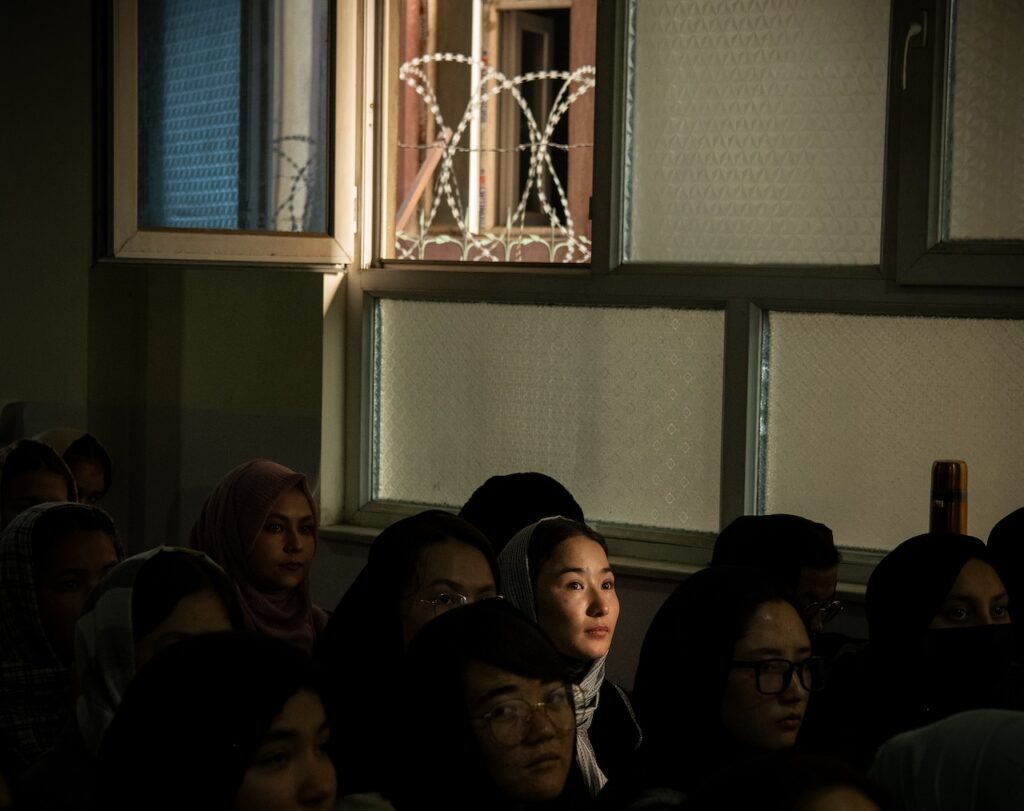
A specially commissioned textile work by Khadim Ali brings a personal dimension to the show’s themes of memory and belonging, while photography by Kiana Hayeri and Morteza Heidari anchors the show in contemporary lived experience. Elsewhere, Afghan-Canadian artist Hangama Amiri’s textile work Bazaar, 2020, evokes the visual and social life of a Kabul street, and video works by Francis Alÿs and Lida Abdul bring movement, fragility and immediacy into the galleries.
The exhibition’s mission is, as Fazio puts it, to return “an image of Afghanistan that commands dignity and humanity”. If viewers to the exhibition at MIA leave with a widened sense of what Afghanistan has been and still is, then Empire of Light succeeds.
Cover image: A tapestry work by Sydney-based Afghan artist Khadim Ali – titled Unsafe Haven, 2025 – was commissioned for the exhibition. Photo: Museum of Islamic Art