
The inaugural Art Basel Qatar offered a new take on the conventional art fair format, defined by solo presentations, site-specific commissions across the city and a curatorial vision led by Egyptian artist Wael Shawky and Vincenzo de Bellis, Art Basel's chief artistic officer and global director
The inaugural Art Basel Qatar offered a new take on the conventional art fair format, defined by solo presentations, site-specific commissions across the city and a curatorial vision led by Egyptian artist Wael Shawky and Vincenzo de Bellis, Art Basel's chief artistic officer and global director.
During Art Basel Qatar, which took place in February, South African architect Sumayya Vally’s installation In the Assembly of Lovers transformed the heart of Barahat Square in Msheireb Downtown Doha into a sculptural landscape that invited togetherness. The dark, angular forms, made from plywood and micro cement, were accompanied by an eight-channel sound work that called out to passersby. Each day, the installation shifted into a new configuration, hosting a different gathering or performance.
“In the Assembly of Lovers is rooted in a longing for collective spaces that have been lost,” explains Vally. “By assembling fragments from places across the Muslim world, the installation gestures toward a shared architectural memory – one that insists on gathering as an act of love, hope and resistance.”
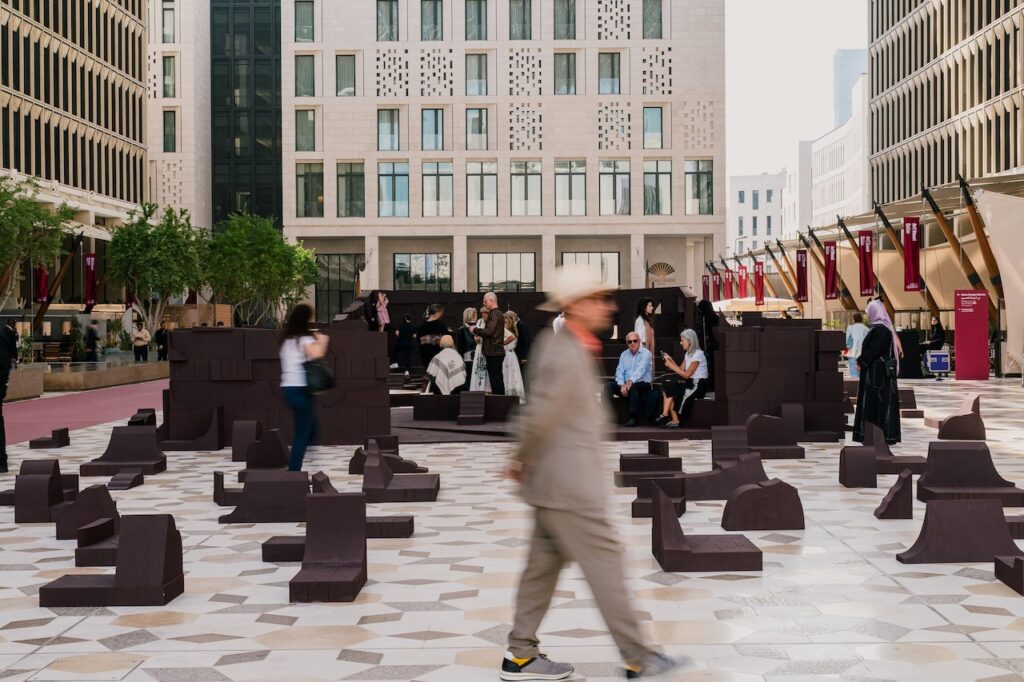
It was a fitting centrepiece for the inaugural Art Basel Qatar, a fair that was, in many ways, about the act of gathering. Over five days, 87 galleries from 31 countries showed work across the M7 creative hub and Doha Design District. More than 17,000 people visited, including private collectors and representatives from over 85 museums and foundations, among them the Guggenheim, Tate and the Pinault Collection.
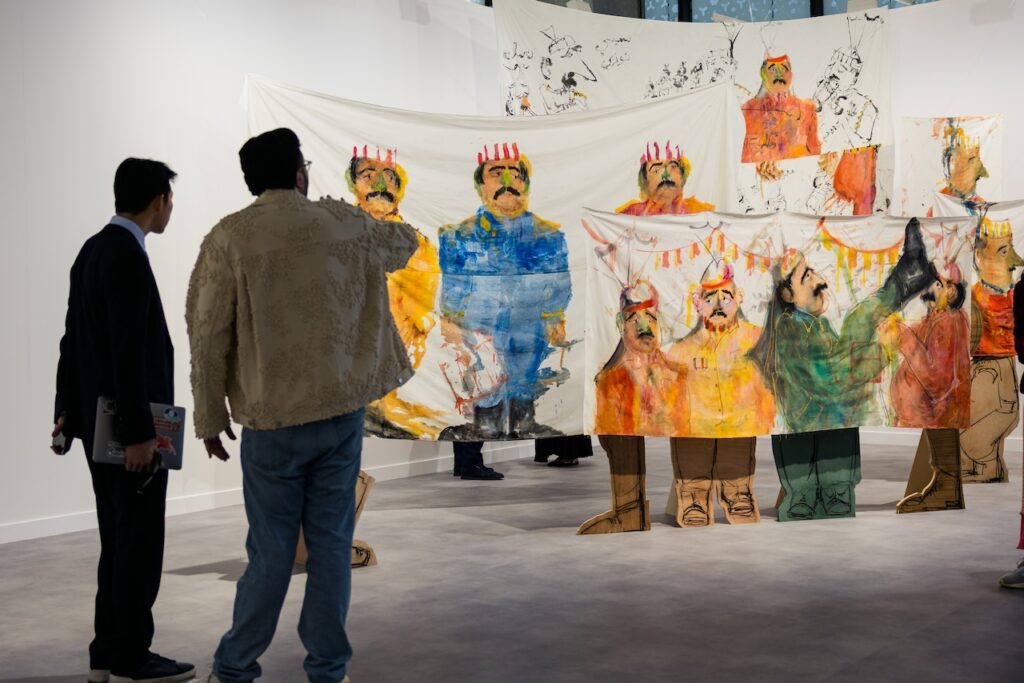
Egyptian artist Wael Shawky served as the artistic director and, alongside Vincenzo de Bellis, built the programme around the theme “Becoming”. In a departure from the usual art fair format, the galleries were encouraged to showcase solo presentations with a focus on new commissions, resulting in a much more intimate experience for collectors and visitors.
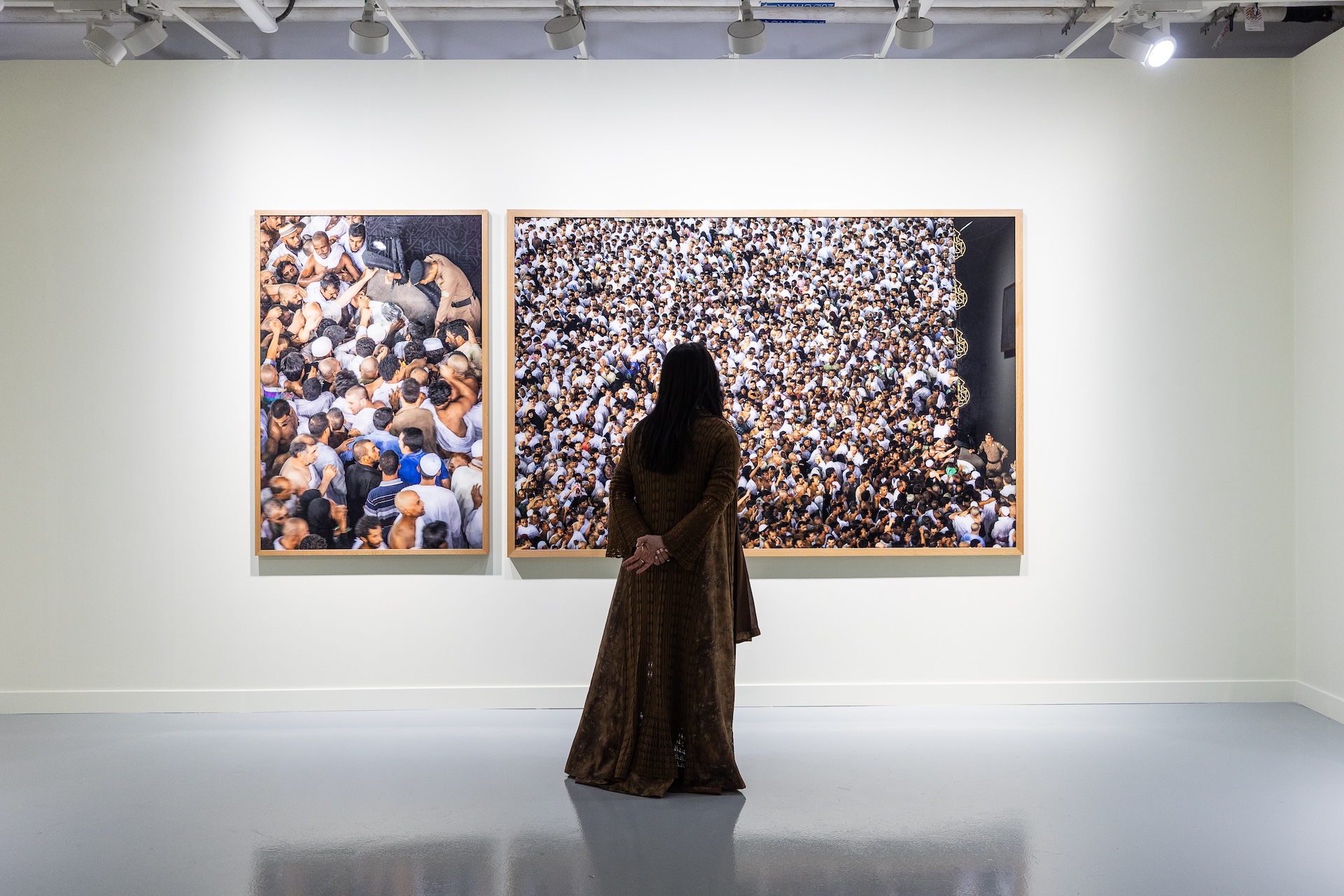
Jeddah-based Athr Gallery showcased work by acclaimed Saudi artist Ahmed Mater
The new fair mixed international artists with key figures from the region, and the range of work on display was impressive. Hauser & Wirth brought three major late-period works by US giant Philip Guston, while Gagosian presented very early canvas-wrapped works by Christo dating back to the 1950s and 60s, including one unrealised project for a desert mastaba, or ancient Egyptian tomb. Berlin gallery Thomas Schulte showed a condensed version of Matt Mullican’s New Edinburgh Encyclopedia, 1825, 1991, a sprawling work consisting of 446 printing plates and a complete set of rubbings. And Sprüth Magers presented Light Room with Mönchengladbach Wall, 1963-2013, by Otto Piene, co-founder of the influential post-war Zero group, who made a series of these spiritual, light-based environments from the late 1950s onwards.
Regional artists were equally prominent. Among the Qatari artists showing at the fair, Doha gallery Al Markhiya presented a linen, thread and ceramic sculpture by artist Bouthayna Al Muftah that evoked braided hair; Dubai’s The Third Line gallery brought large-scale watercolours tacked directly to the wall by Qatari artist Sophia Al-Maria; and London-based painter Raqib Shaw’s work Echoes Over Arabia, 2025, resonated with international and local visitors alike. Brazilian artist Solange Pessoa’s earthy paintings and bronze organic forms, contemplating the entanglement of people and nature, were presented by São Paulo gallery Mendes Wood DM, while Hong Kong-based Rossi & Rossi brought early and late works by Iranian-born artist Siah Armajani, well known in the US where he emigrated to but less familiar elsewhere, offering a fuller sense of his practice.
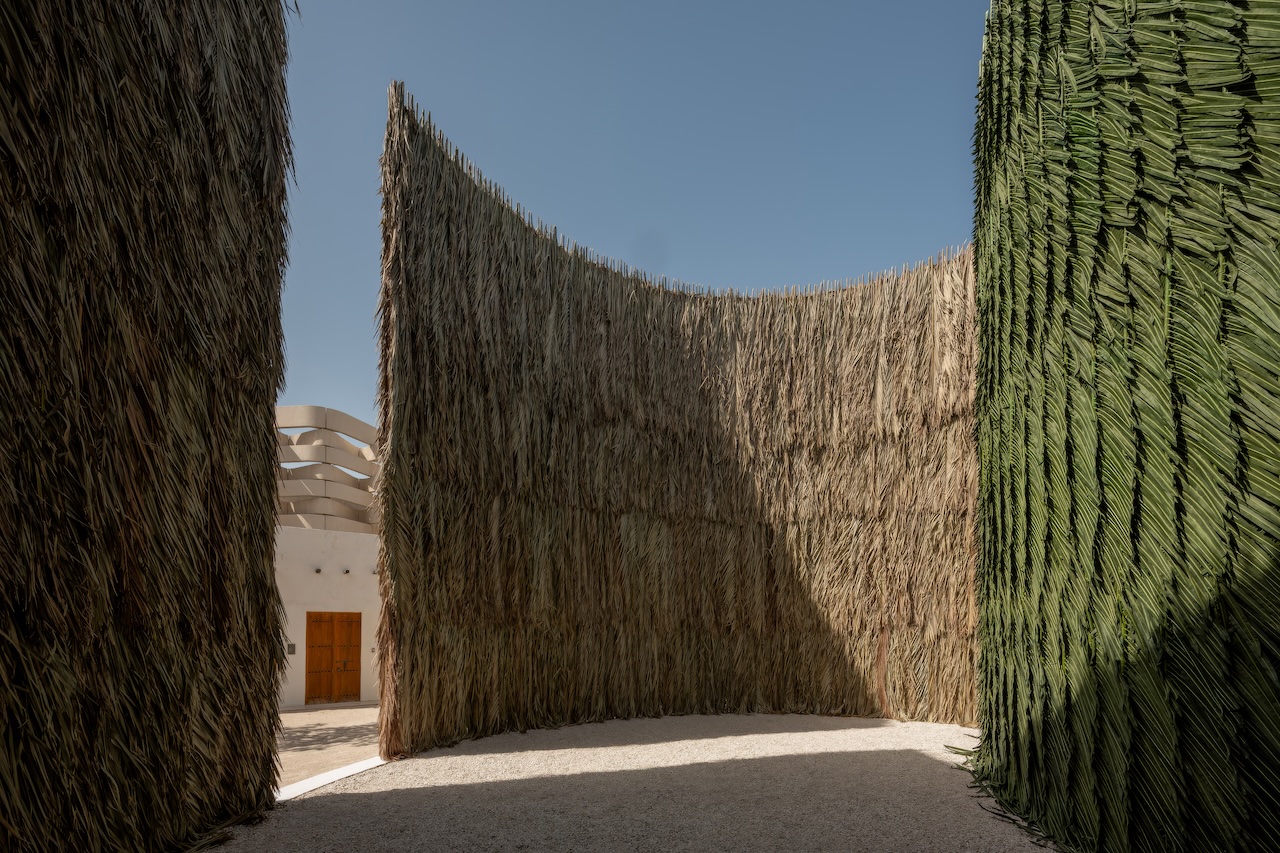
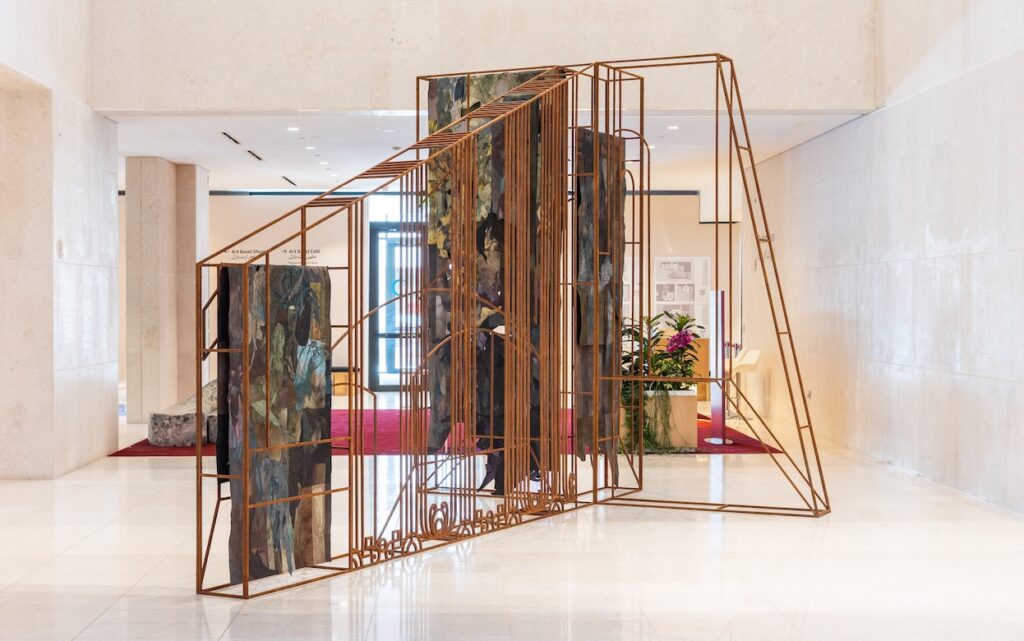
Special Project What Dreams May Come أ.ُّ أﺣﻼم ٍ ﻗَﺪ ْ ﺗﺄﰐ, 2026 by Lebanese artist Rayyane Tabet was an experiential pavilion constructed at Mohammed Bin Jassim House. Photo: Courtesy Art Basel Qatar
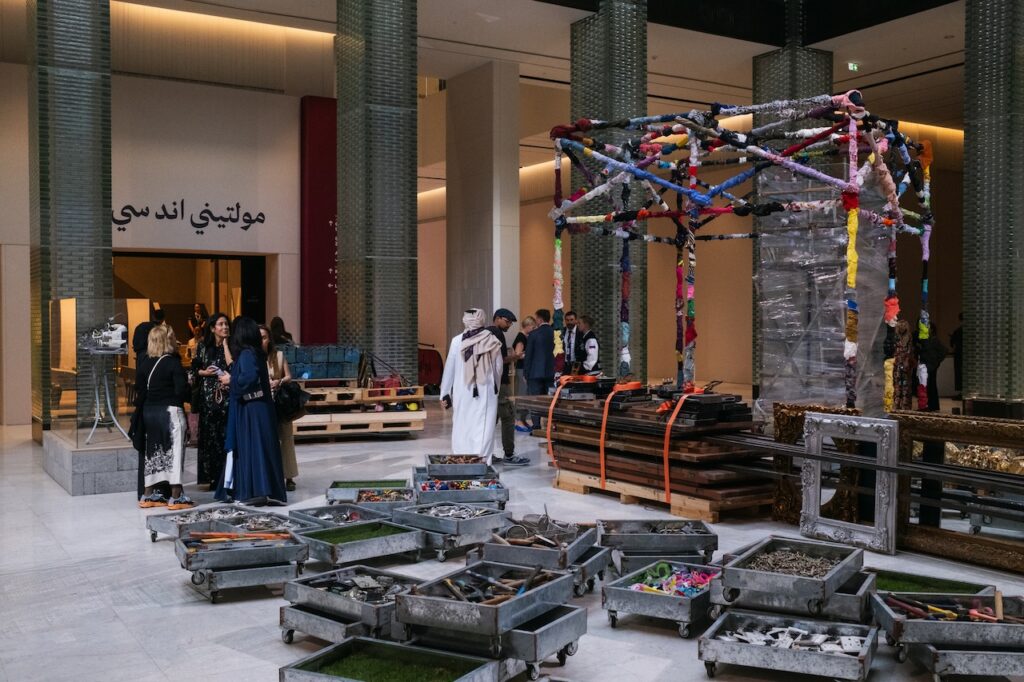
Ten special projects also extended the programme into the city, including Khalil Rabah’s Transition, among other things, 2026, an installation of salvaged objects reflecting on emigration and nomadism. Another highlight from the special commissions was SONG, 2026, by conceptual art star Jenny Holzer. The nightly text projection on the facade of the Museum of Islamic Art presented poems by the late Palestinian poet Mahmoud Darwish and acclaimed Emirati poet Nujoom Alghanem on a monumental scale in Arabic and English script. On the opening night, this was accompanied by a performance of over 700 drones in the sky above the museum.
“From the outset, the ambition was not to replicate an existing fair model, but to respond meaningfully to context – to the artists, the city and the wider region,” says de Bellis. “Seeing how audiences engaged with focused presentations, thematic narratives and projects unfolding across Msheireb and beyond has been deeply rewarding. The way the fair extended into the city, and the visibility given to artists from the region within a global framework, felt both natural and necessary.”
The conversations programme, held at M7, added another dimension to the fair and drew nearly 2,500 attendees. It opened with a panel featuring Sheikha al-Mayassa, collector Maja Hoffmann and curator Hans Ulrich Obrist, and brought together cultural leaders to discuss the region’s evolving arts ecosystem. “Art Basel Qatar presented a new way forward for the art market,” says Shawky. “Seeing the artist-led presentation format resonate so clearly has been incredibly rewarding, and it reinforces my belief that this approach can meaningfully shape future editions of Art Basel Qatar and, more broadly, how the art market evolves.”
We use cookies to improve your experience on our site. By using our site, you consent to cookies.
Manage your cookie preferences below:
Essential cookies enable basic functions and are necessary for the proper function of the website.
These cookies are needed for adding comments on this website.
Statistics cookies collect information anonymously. This information helps us understand how visitors use our website.
Google Analytics is a powerful tool that tracks and analyzes website traffic for informed marketing decisions.
Service URL: policies.google.com (opens in a new window)