
Qatari chef Noof Al Marri uses food to build connections across cultures, reimagining the dishes of her childhood for diners around the world
Words Caroline Eden
Photography Adriana Glaviano
“Every detail of Desert Rose Café means something to me,” she says. “I was with the construction workers from the beginning. They would tell me that I should go home, but I couldn’t – the museum is my home and I wanted to check every corner.”
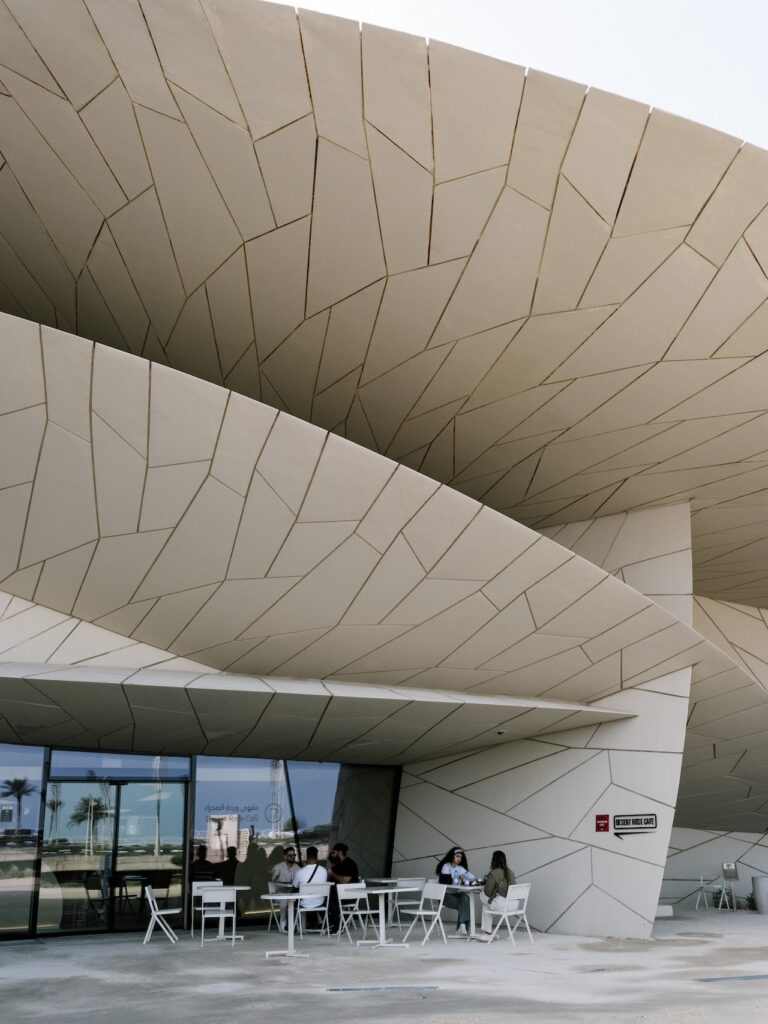
Nouvel’s design for the museum was inspired by the desert rose, a naturally occurring crystal formation that resembles the flower, and so is the cafe. The architecture of the building is formed of interlocking discs that look like futuristic petals, and this language extends inside the cafe, where customers sit in rose petal-shaped booths.
They can choose from a menu that mixes traditional Qatari cuisine with global influences. There is balaleet, a classic sweet and savoury Qatari dish of vermicelli noodles infused with cardamom, rose water and saffron, with egg scrambled through it, and a new-to-me non-alcoholic “mocktail” called a Black Lumi, named after the sour black lime that flavours it. Then there is karak chai, a classic spiced milk tea, alongside dishes to satisfy global cravings – from saffron milk cake to breakfast-friendly egg chapatis and regag, a popular Arabic snack of crispy flatbread filled with labneh or feta cheese.
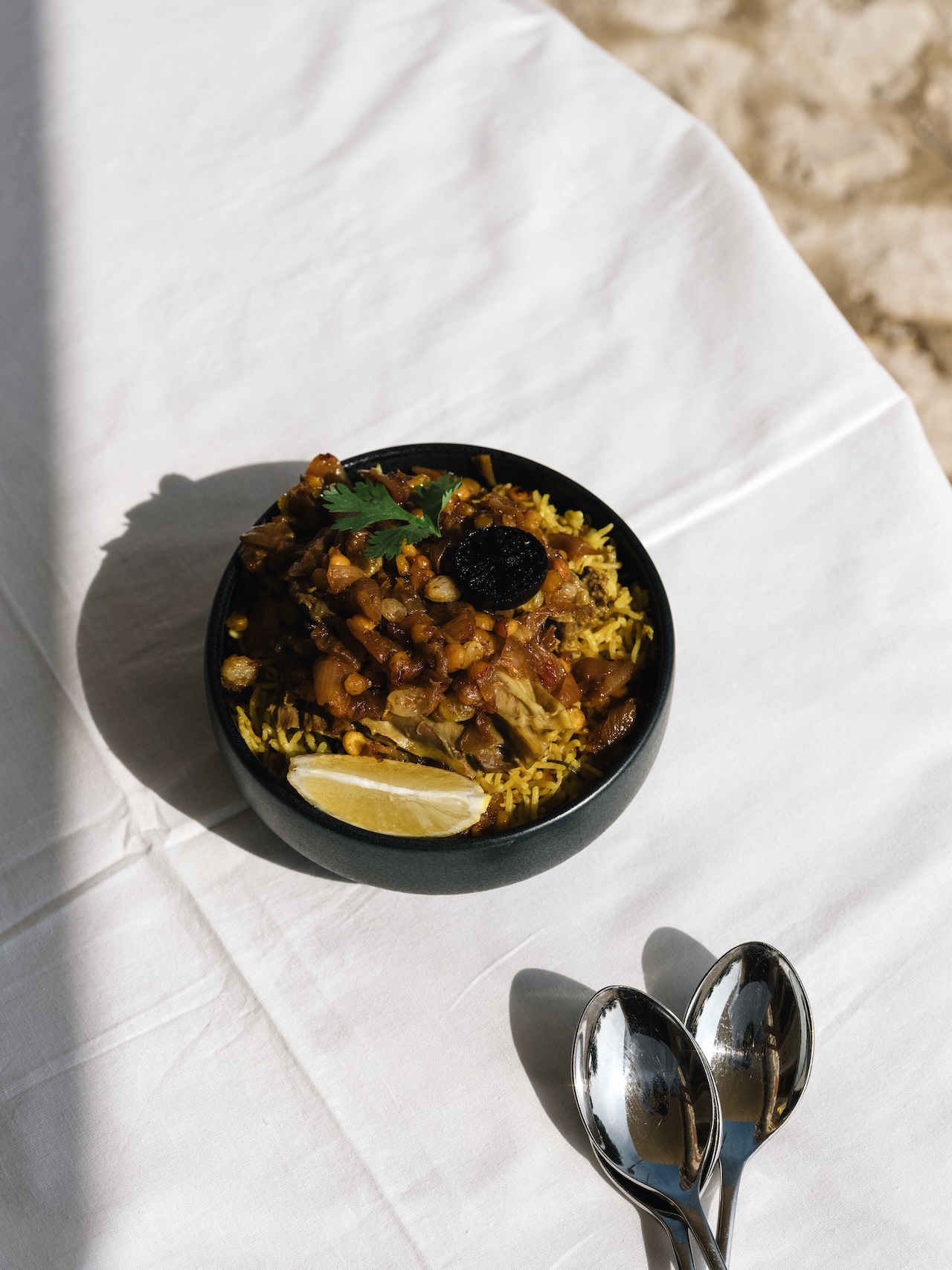
In the kitchen, as a couple of classic Desert Rose dishes are being plated up, I look for hints to how Chef Noof translates culture into food. She carefully places micro herbs onto a plate of harees, a savoury porridge made with lamb and oats, which she tells me is traditionally eaten during Ramadan. She reveals more of its mysteries with obliging charm, telling me that the most important ingredient is spiced Qatari butter, with its unique richness. From its scent, I detect turmeric and fenugreek.
Chef Noof’s late grandmother was her greatest teacher, and an encouraging voice for her as a young cook. “I loved my grandma’s food and absolutely viewed her as a chef,” she recalls. “She taught me how to cook from scratch.” As Chef Noof talks about the connection between her version of harees and her family history, she visibly glows. “During Ramadan, when I was a child, my grandma would make it,” she recalls. “The wheat was soaked for 24 hours, then the dish took six hours to prepare. When it was finally ready, I’d go with a tray, after sunset, to deliver pots of it to our neighbours. I’ve wanted to cook since I was a little girl.”
Located on Doha's waterfront, the National Museum of Qatar (NMoQ) – home to Chef Noof's Desert Rose Café – stands as an architectural and cultural landmark in the city. French architect Jean Nouvel's dynamic building was constructed around the original royal palace of Qatar's former amir, Sheikh Abdullah bin Jassim Al Thani, which is a piece of national heritage sitting at the heart of the museum. NMoQ's extensive collections span ancient artefacts to modern objects, focused on telling the rich story of Qatar's history, present and future. Alongside Desert Rose Café is Jiwan restaurant and the vegan-focused Thalatheen cafe.
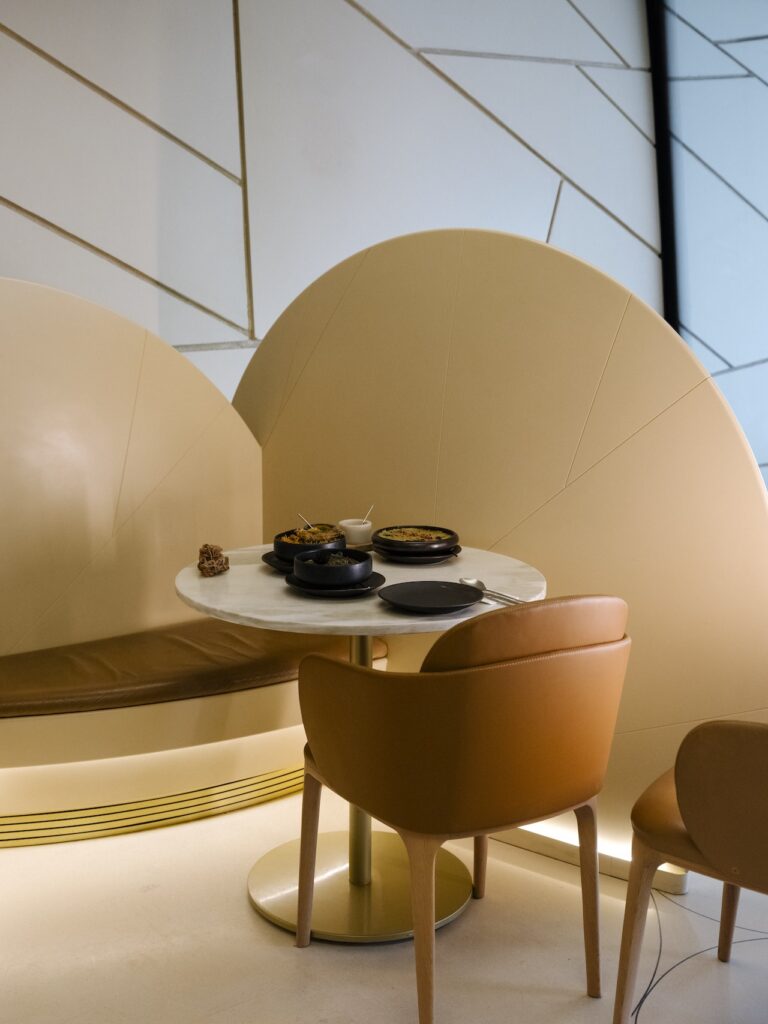
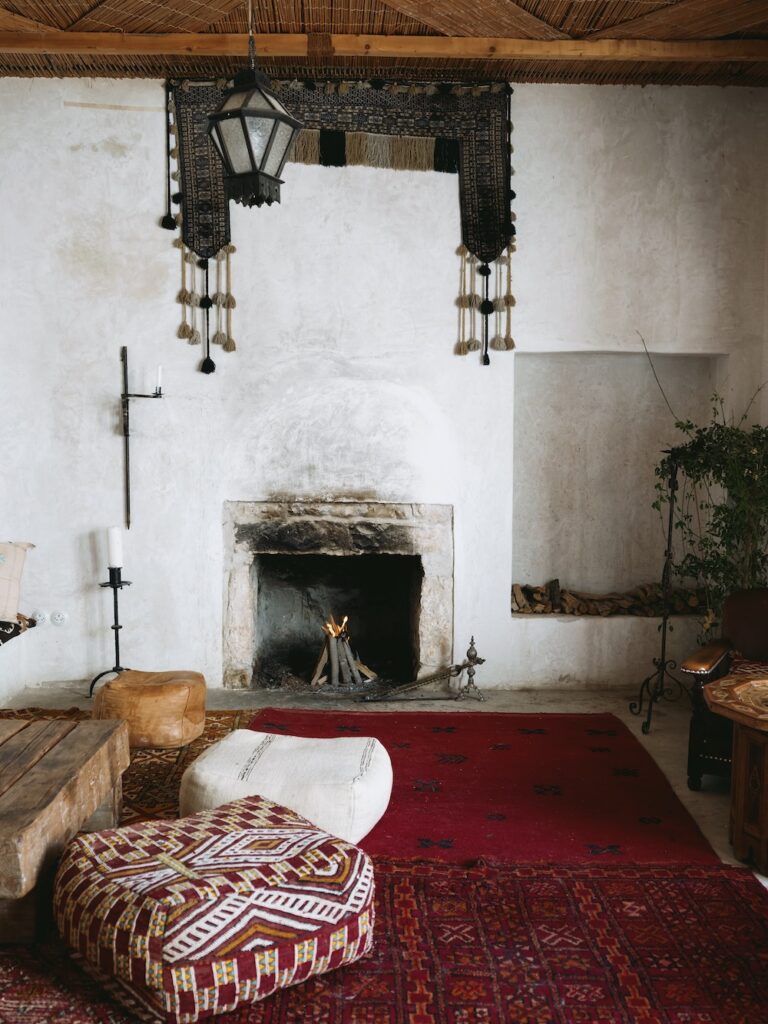
The interiors of Desert Rose Café echo the architecture of the National Museum of Qatar by Jean Nouvel
Today, she doesn't only cook – she represents Qatar's culinary heritage on a global stage. She has recently returned from Miami, where she ran a pop-up restaurant during Art Basel Miami Beach, having previously done the same at Art Basel Paris. Of course, she doesn't work alone. Her executive chef, Jihad, and other team members travel with her and play a vital role in bringing the culinary vision of Desert Rose Café to life.
Together, Jihad and Chef Noof share a seamless creative partnership that reflects years of close collaboration and mutual trust. This strong teamwork has been essential in supporting Chef Noof's dynamic schedule – catering high-profile events, managing Desert Rose Café, presenting Qatari cuisine internationally and balancing busy family life. Their combined passion and harmony in the kitchen are evident in every experience they create.
At one point during my visit to Doha it was raining so heavily that crowds gathered to film the unexpected weather with their phones, yet a steady stream of diners continued to arrive at Desert Rose Café. On display is a framed football shirt, a nod to the Fifa World Cup Qatar 2022, and the Michelin Guide Doha, in which Desert Rose Café earned a place in both 2025 and 2026, sits prominently on a shelf. “I feel proud,” says Chef Noof of these mementos. “All I want is to make Qatari cuisine known to the world.”
This absolute belief that food can communicate in a variety of ways – transmitting culture, atmosphere and emotion – permeates Chef Noof’s kitchen and every aspect of her practice. “If I’m in a restaurant and I sense that the cooking isn’t coming from the heart, it makes me feel sad,” she says. “I’m very sensitive to the energy in the kitchen. I once noticed that one of the cooks seemed unwell and distracted, and when I asked, he shared that his wife was about to give birth. I immediately encouraged him to go and be with his family. When someone is anxious or carrying a heavy concern, it shows in their work – you can truly feel it in the food.”
As we talk, she drizzles deeply rich golden butter on the top of madrouba (beaten rice), a spicy, savoury porridge of mashed oats, rice and chicken with cardamom, cumin, cloves and ginger. “Madrouba is my favourite,” she says. “It also speaks of my childhood, and my grandma. To make it healthier I add spinach and herbs.”
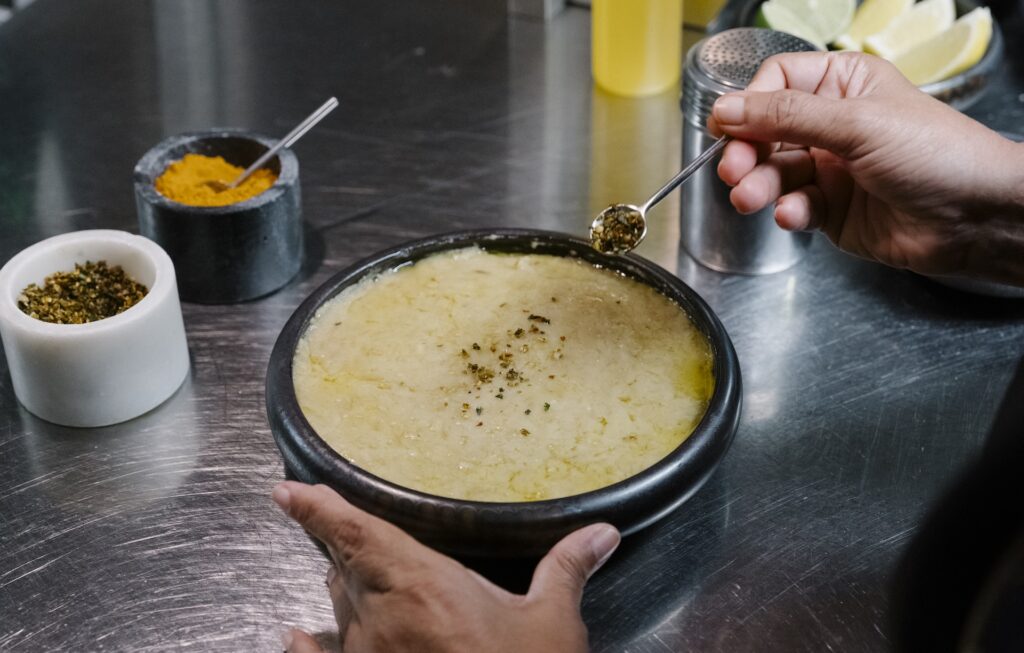
“I loved my grandma’s food and absolutely viewed her as a chef... I’ve wanted to cook since I was a little girl”
Chef Noof
Presenting Qatari food as a healthy cuisine is central to Chef Noof’s vision. I ask her about her earliest childhood memories, and she immediately mentions aseeda, a comforting dish made of a thick flour dough that can be served either sweet, with honey, or savoury, with a stew or broth. “We would make it with caramelised sugar or dates because when I was a child there were not that many ingredients available,” she says. “Today, I make it healthier by using pumpkin, or dates to make it a dessert.”
With her passion for nourishing and comforting food, I can see immediately why it is Chef Noof’s signature dish. As I eat, I pick out the familiar flavours of chicken, lumi (dried lime), turmeric, garlic and fenugreek, but it is the texture – tender and welcoming – that provides something fresh and unique. While madrouba is typically eaten at lunch or dinner, I say that I think I’d enjoy it for breakfast.
At this, Chef Noof laughs. “During the World Cup, people visiting Qatar ordered it in the morning,” she recalls. She goes on to describe how elderly Qataris have said that her madrouba reminds them of eating it 30 or even 40 years ago. There it is again: food as communication, charting a course through time and place.
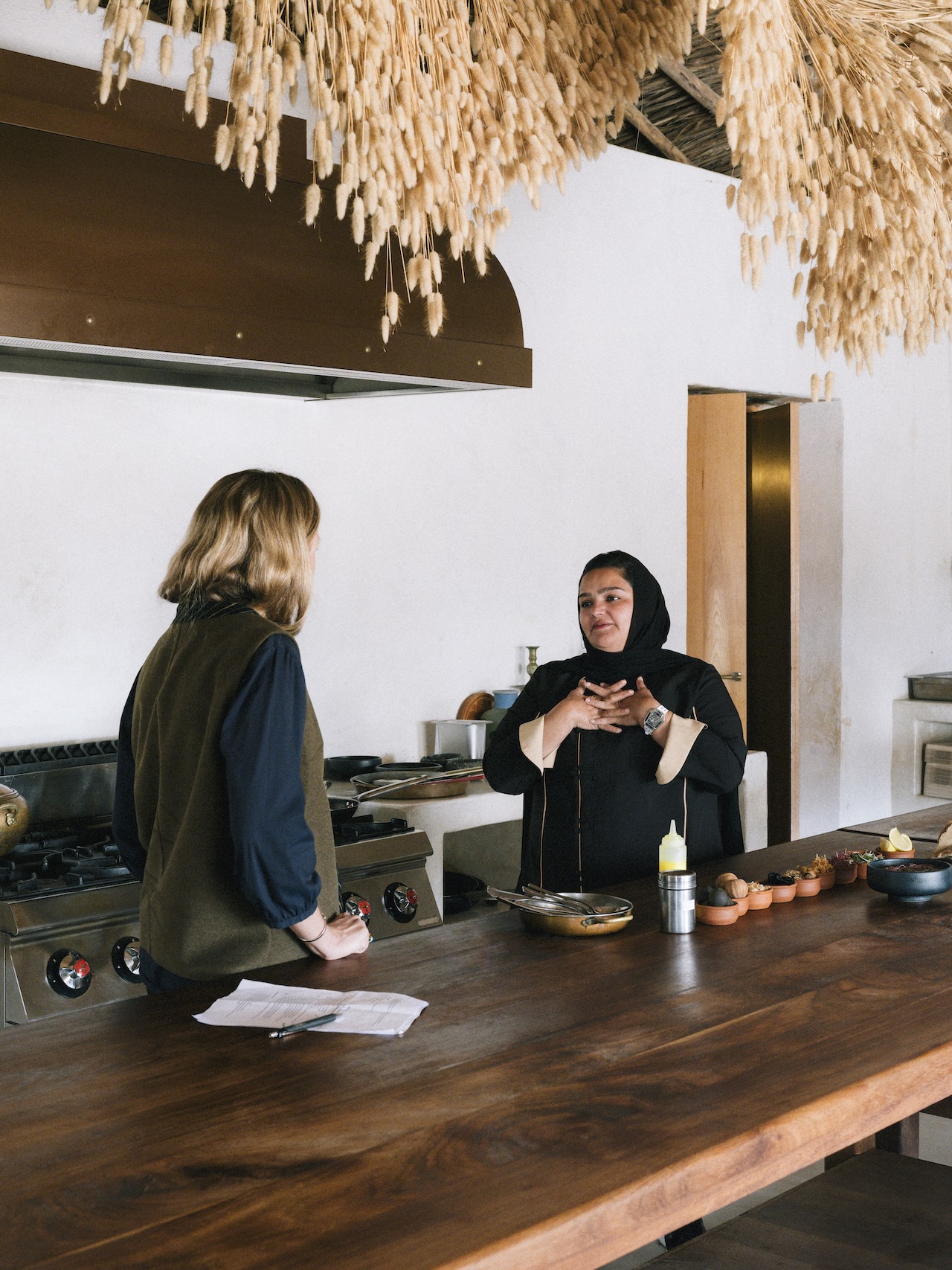
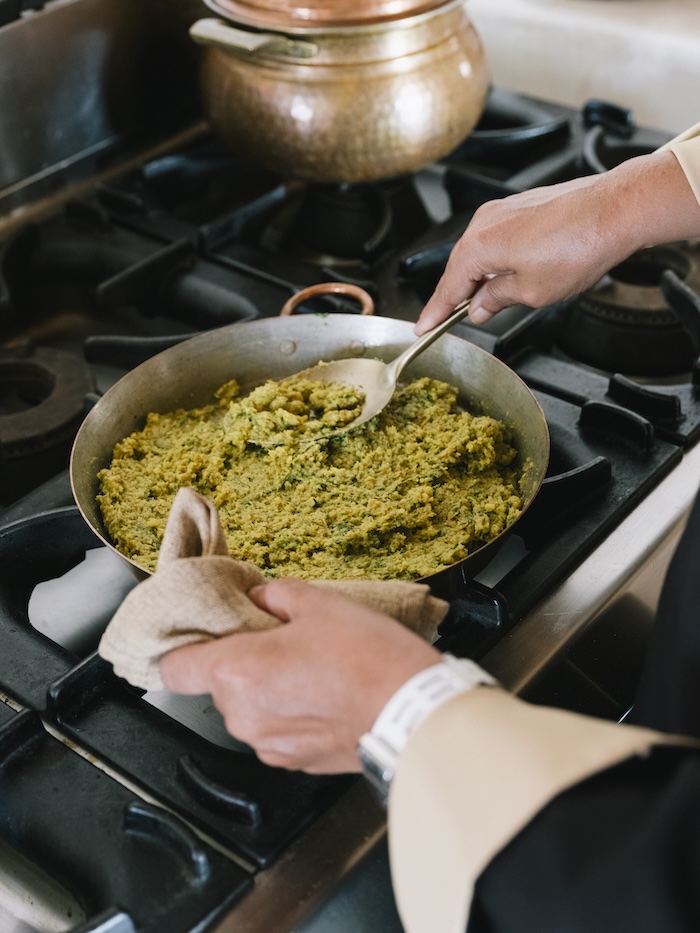
Various dishes on the stove at the Heenat Salma Farm, which also holds cooking workshops
Most people don’t imagine agriculture when they think of Qatar’s desert landscape, but the greens and micro herbs used at Desert Rose Café are sourced from Heenat Salma Farm, just a 35-minute drive north-west of Doha. When I visit with Chef Noof and Jihad – who have led farm-to-table dining experiences here – beads of rain are clinging to ferny fenugreek plants, purple kale, rocket and collard greens, and farmers are moving slowly, loading pink, green and red tomatoes into wheelbarrows. The cooing calls of doves fill the air along with the heady scent of sandalwood incense. A blooming oasis in the desert, Heenat Salma is a popular holiday destination, with luxury tents surrounded by palm trees, a small swimming pool, and a boutique that sells jewellery and Uzbek kaftans.
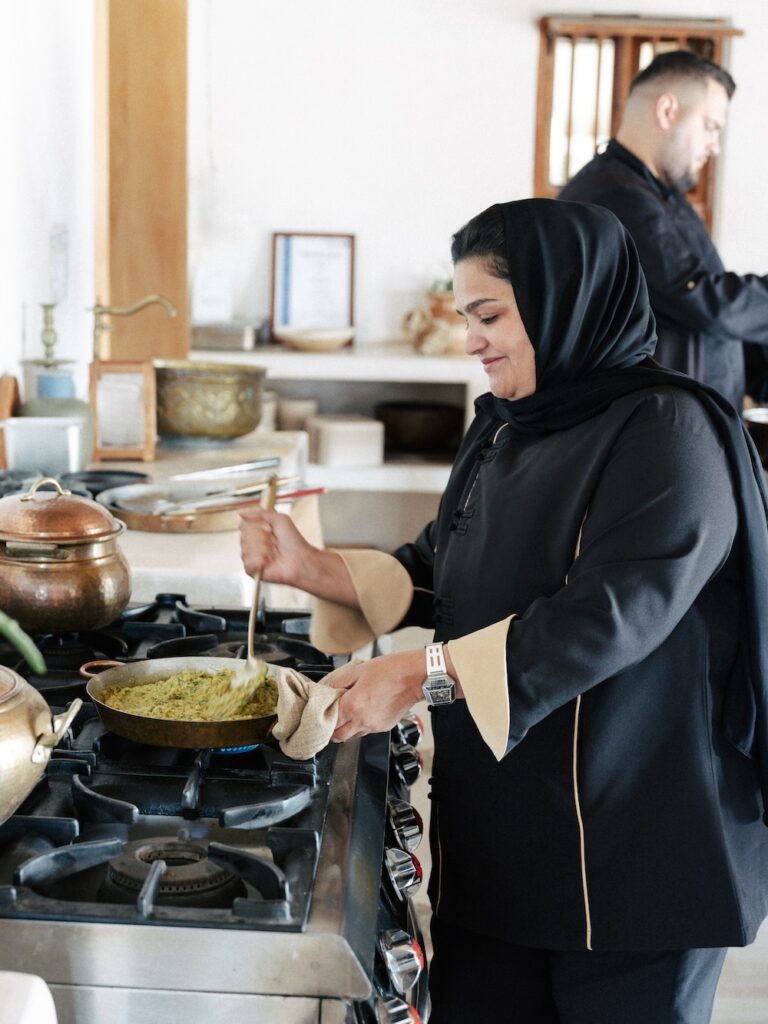
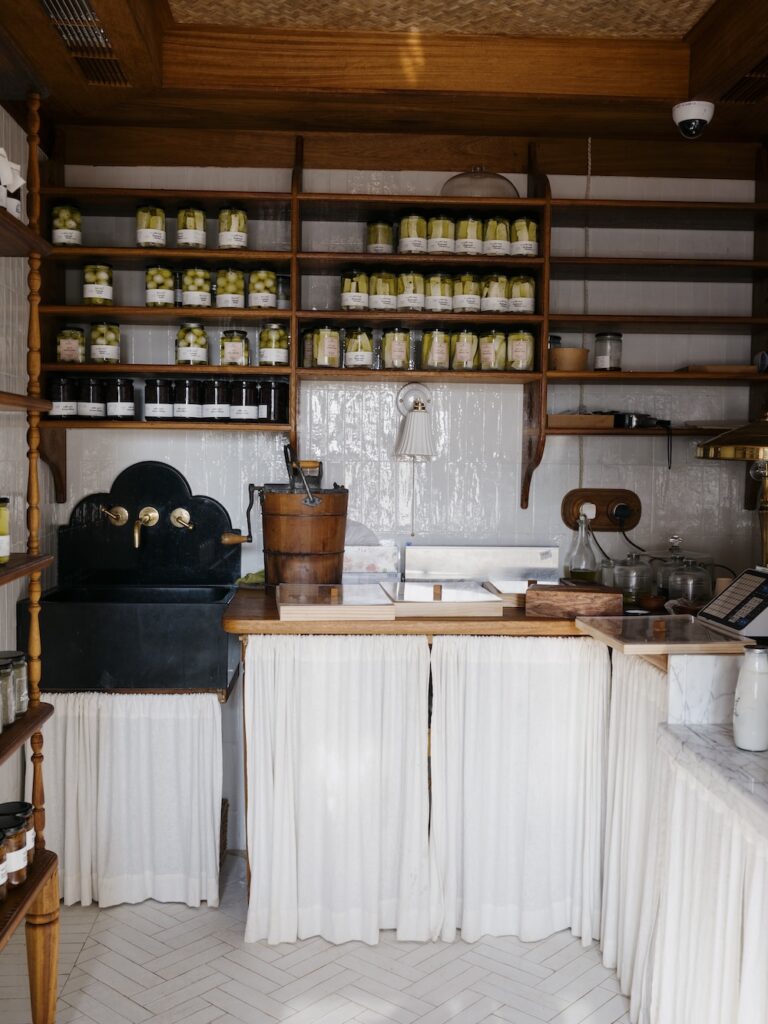
Wandering through this peaceful desert hideaway, I stop in at a tiny immaculately designed cafe, decked out in pearly white marble and dark wood, and with slices of hot desert sun falling onto the white cupboard skirts. The menu offers karak chai, courgette and pistachio cakes, along with bottles of tangy kefir and shanklish, fermented cheese rolled in za’atar. I leave with a cup of Arabic coffee. Next door, in the kitchen, Chef Noof and Chef Jihad are at work preparing the balaleet, flavouring vermicelli with cardamon, saffron, sugar, cinnamon, and adding Qatari butter and scrambled egg. Jihad says he could not have imagined this dish before he tried it. “Vermicelli with egg? Sweet and savoury? But it’s delicious.”
As Chef Noof cooks, we talk about why she rarely needs fancy equipment; that the most important ingredient in any kitchen is the ability to cook from the heart. I ask about her most treasured culinary possessions. “I have one pot at home, it’s from my grandma, and I swear that when I cook in that pot, the food is amazing,” she says. “It’s very small but filled with history. She cooked everything in that pot – main courses and desserts. Now, it is with me.”
The next dish to come to the table is sago, a warm sweet dish, similar to tapioca, that is infused with saffron. Its starchy translucent pearls glow a fiery amber colour. Chewy and ideal for winter, we collectively sigh as we taste it, steam lifting invitingly off our spoons.
But we’re not done yet. “Now, try this special dessert,” she says. “It’s called elba and we serve it at Desert Rose Café. It’s similar to creme caramel, but flavoured with saffron. Traditionally, it is made with goat’s milk. Yalla (come on)! Try, try! My children love this!” It is delightfully rich, custardy and cool, the perfect partner for my cup of strong coffee.
“Now, when you go to a Qatari restaurant, you’ll know what to order,” remarks Jihad. How right he is.
“I feel proud. All I want is to make Qatari cuisine known to the world”
Chef Noof
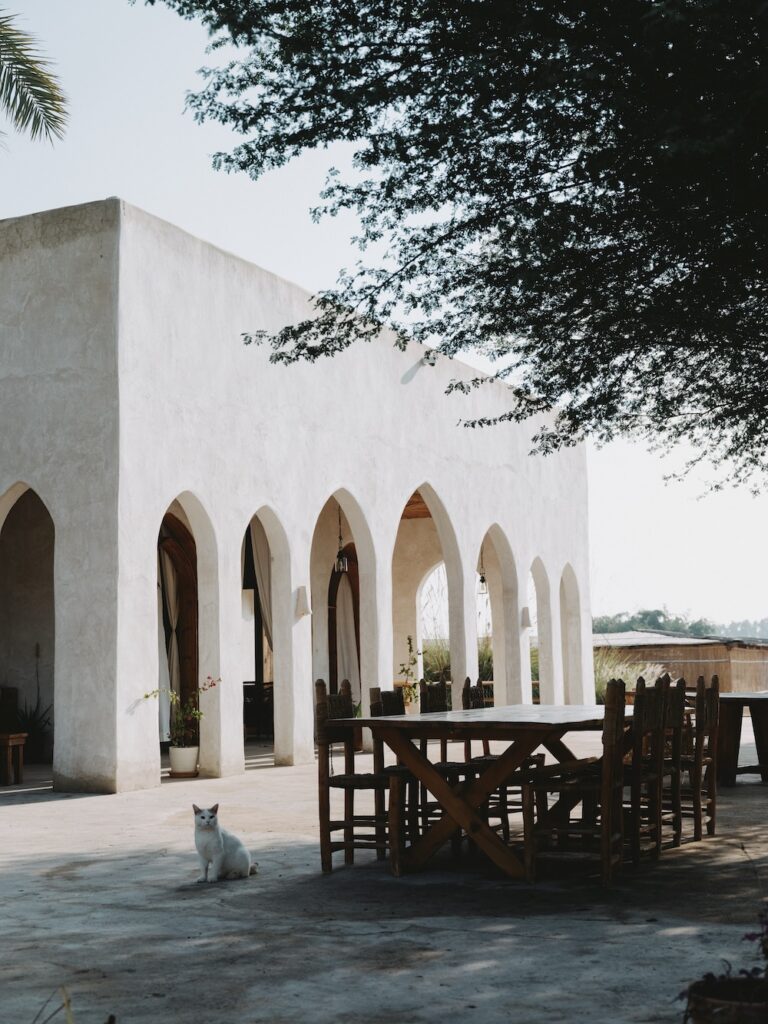
Located in the peaceful desert landscape just outside Doha, Heenat Salma Farm blends regenerative agriculture with hospitality, education and culture. Founded in 2018 by Caravane Earth – an international foundation focused on social, cultural and ecological transformation – the farm pioneers the sustainable and ethical production of organic food in Qatar. Visitors can stay in Bedouin tent lodges, book spa treatments, join Pilates and meditation classes, take part in craft workshops and enjoy organic dining.
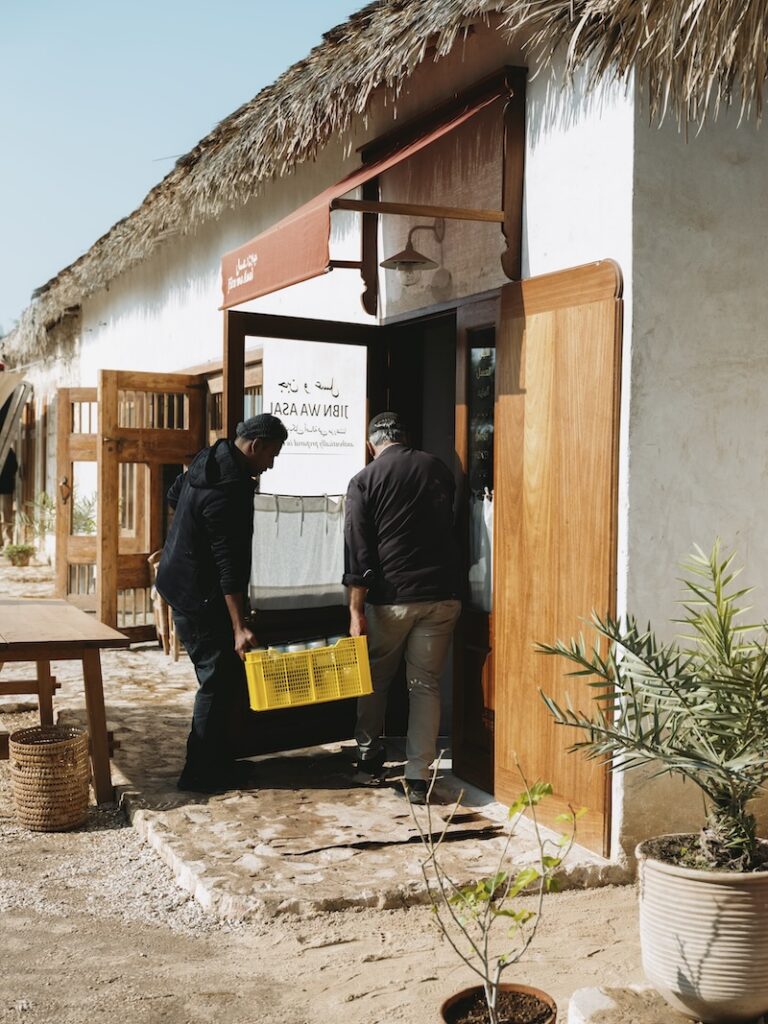
A delivery to the deli at Heenat Salma Farm, which sells preserves, molasses and kefir
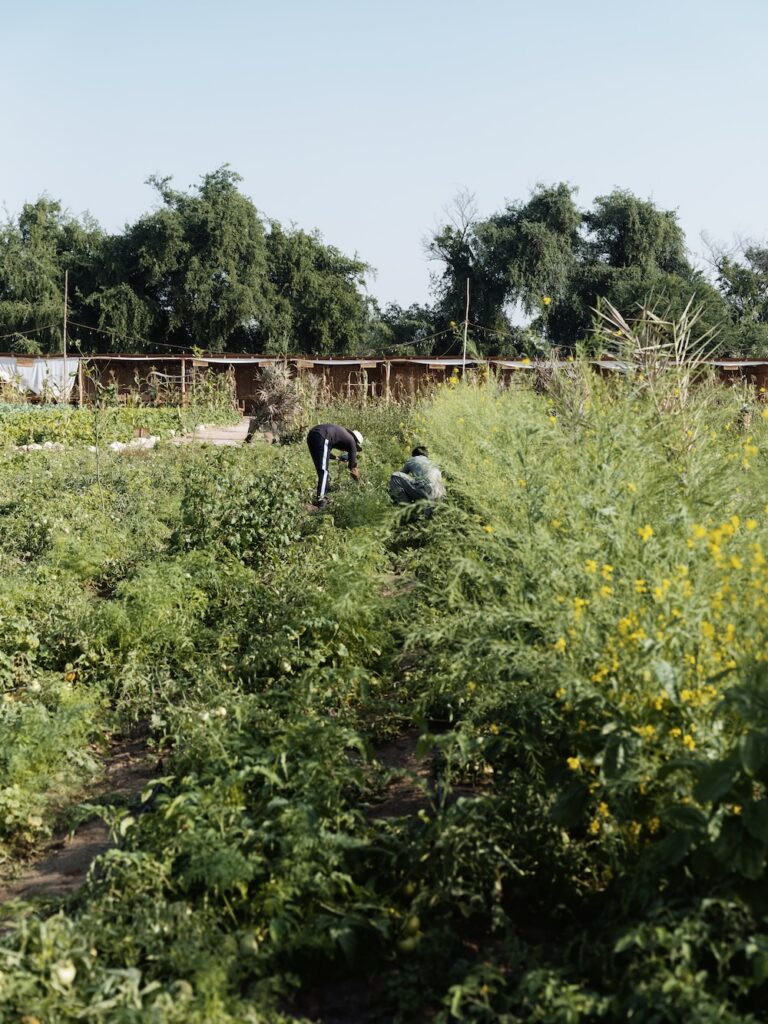
Tomatoes, rocket and collard greens growing at Heenat Salma Farm, where Chef Noof sources ingredients for Desert Rose Café
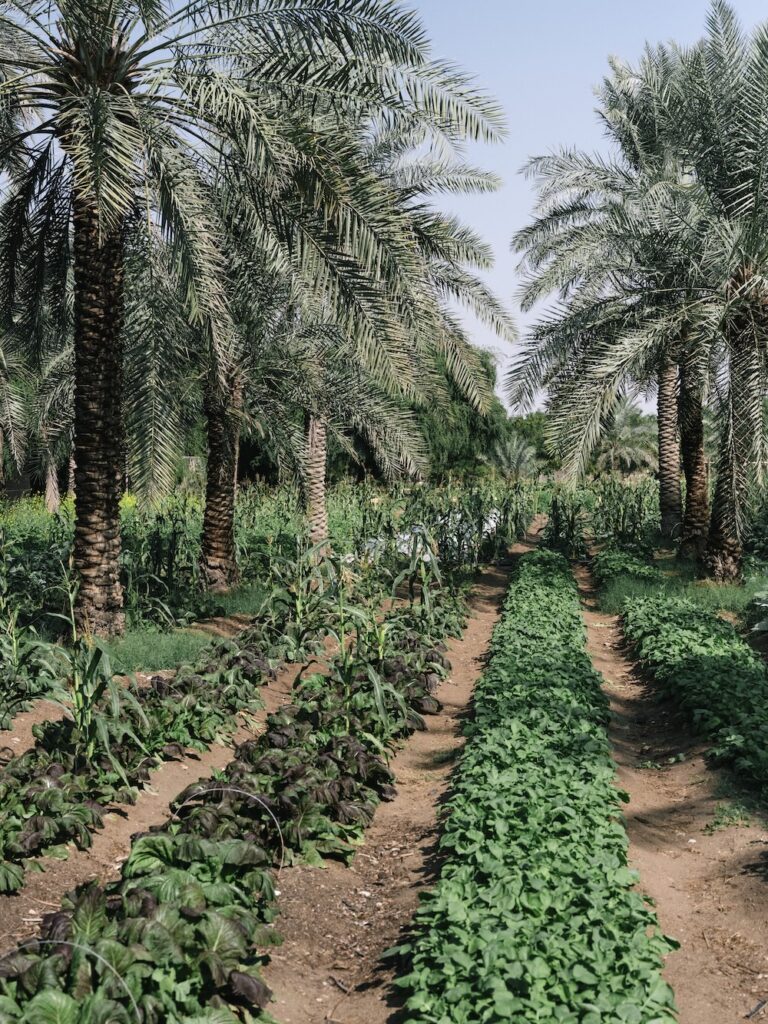
“This absolute belief that food can communicate in a variety of ways permeates Chef Noof’s kitchen and every aspect of her practice”
Caroline Eden
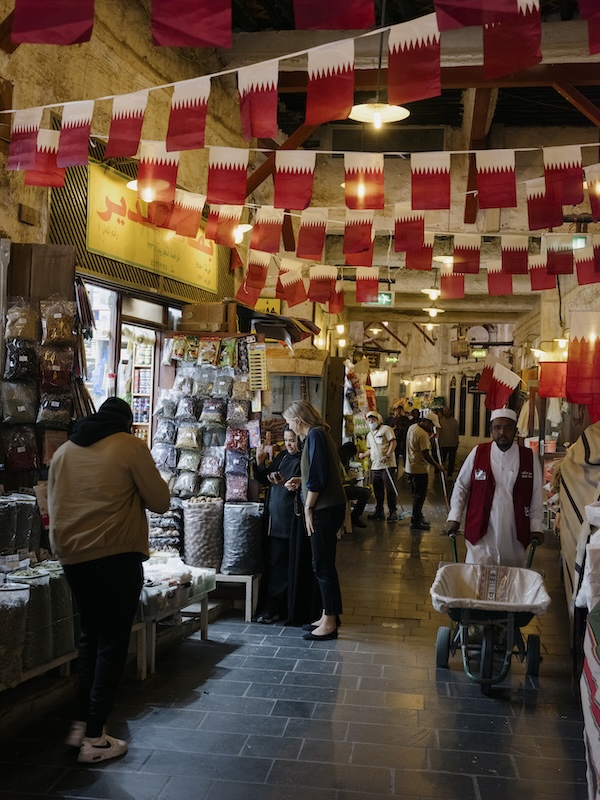
Souq Waqif is a traditional marketplace that engages all the senses. Winding alleys are lined with shops selling perfume, spices, jewellery and handicrafts, with restaurants and cafes spread throughout. The Souq Waqif Art Center and Al Rayyan Theatre cater to culture enthusiasts, while animal-lovers can visit the Falcon Souq, camel pen and horse stables. The market surrounds a large courtyard, where street vendors offer food, from stuffed vine leaves to meat stews. On the market's south side is a major public artwork: French artist César Baldaccini's Le Pouce, based on a cast made in 1965. The sculpture, a giant golden thumb, has become an Instagram favourite and local landmark.
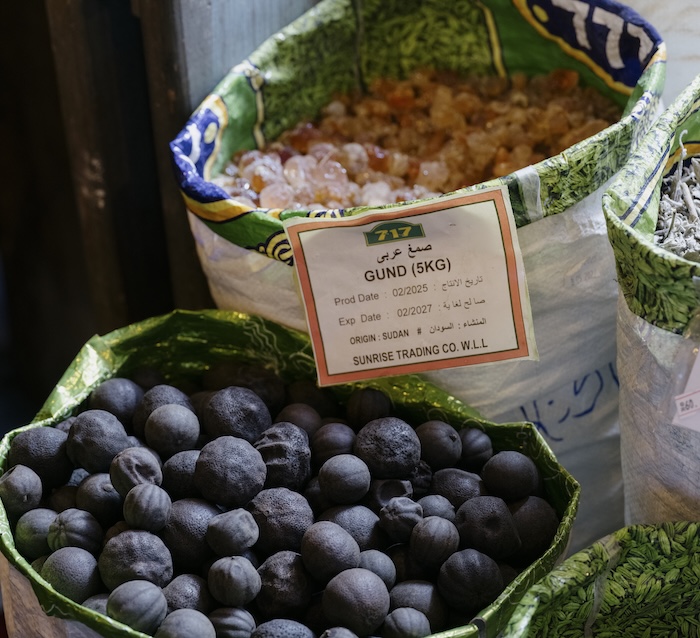
A sack of lumi (black limes), next to pink-hued hashab (acacia gum), sourced from Acacia senegal trees in Sudan
Caroline Eden and Chef Noof exploring spices at Souq Waqif
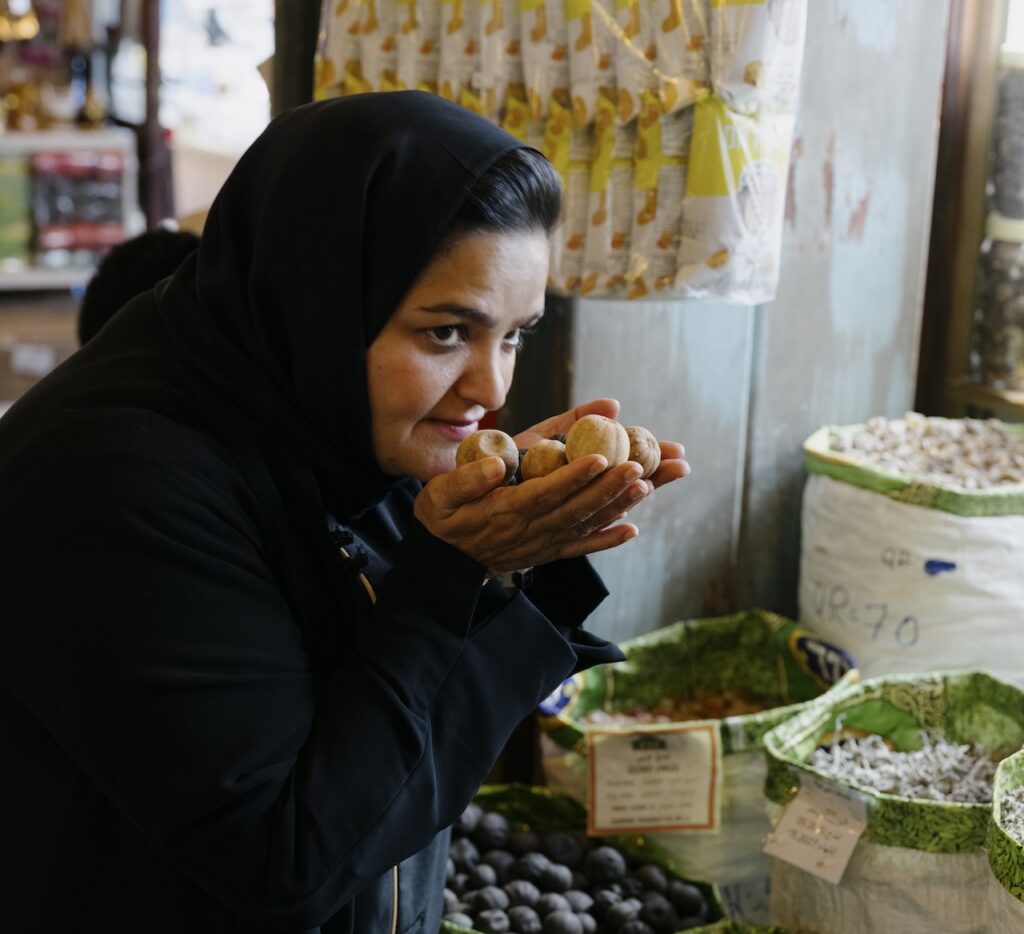
On my last day in Doha, Chef Noof and I meet once more for a walk through the spice stalls of Souq Waqif, the historic market at the heart of Doha where her grandmother would take her to buy spices as a child. “She taught me to never buy packets of blended spices,” she recalls. “We take the raw spices home, wash them, let the sun dry them, then roast them and blend them ourselves.”
She is a fount of knowledge, and I take mental notes: the best dried limes come from Oman. The brown variety is sour and the black is smokier. It is an ingredient sometimes used as a garnish, with powdered lime sprinkled onto the top of madrouba. “Is smokiness an important flavour for you?” I ask. “Yes,” she exclaims emphatically. Himalayan salt is the best to cook with. Chef Noof runs cream-coloured sliced discs of dried garlic from China through her fingers and then shares an on-the-spot recipe for pickles: “Soak the garlic, then combine with apples and vinegar,” she advises. As she finishes recounting the process with a flamboyant chef’s kiss gesture, two female fans rush up to her almost on cue.
As we smell the spices, encouraged by the sellers, the conversation returns to family. “My family is traditional,” she says. “Fifteen years ago, they didn’t want me to work in a kitchen but now they are supportive and proud.” Her father died when she was very young and Jihad adds that he has also suffered losses, and that the pair of them work like a family. “We support each other,” he says.
“As I always say, the magic is your hands. That’s it. When you cook, just do what you love”
Chef Noof
Men with carts rush through the tight lanes under timber beams and past cool mud-plastered walls, and I examine Iranian saffron and think about how, as a trading nation, Qatar has always absorbed flavours from surrounding countries and the sea. The souq is nicely shaded, well-swept and very orderly – and refreshingly hassle-free – but it is also rich with history. Dating back over 250 years, one shop sign states that the same family has sold fishing nets and traps here since 1940, and it wasn’t so long ago that traders would arrive at the souq on camel rather than by truck.
We take a photo together in the souq but are out of time – Chef Noof must get back to her busy life. But before she goes, she leaves me with some words of advice: “As I always say, the magic is your hands. That’s it. When you cook, just do what you love.”
Cover image: Chef Noof cooking in the Heenat Salma Farm kitchen
We use cookies to improve your experience on our site. By using our site, you consent to cookies.
Manage your cookie preferences below:
Essential cookies enable basic functions and are necessary for the proper function of the website.
These cookies are needed for adding comments on this website.
Statistics cookies collect information anonymously. This information helps us understand how visitors use our website.
Google Analytics is a powerful tool that tracks and analyzes website traffic for informed marketing decisions.
Service URL: policies.google.com (opens in a new window)