- Architecture
- Spring/Summer 2026
- April
The Architecture of Belonging
From her Paris atelier, Lina Ghotmeh reveals how memory, place and a belief in architecture’s power to connect people are guiding her vision for Qatar’s permanent pavilion in Venice
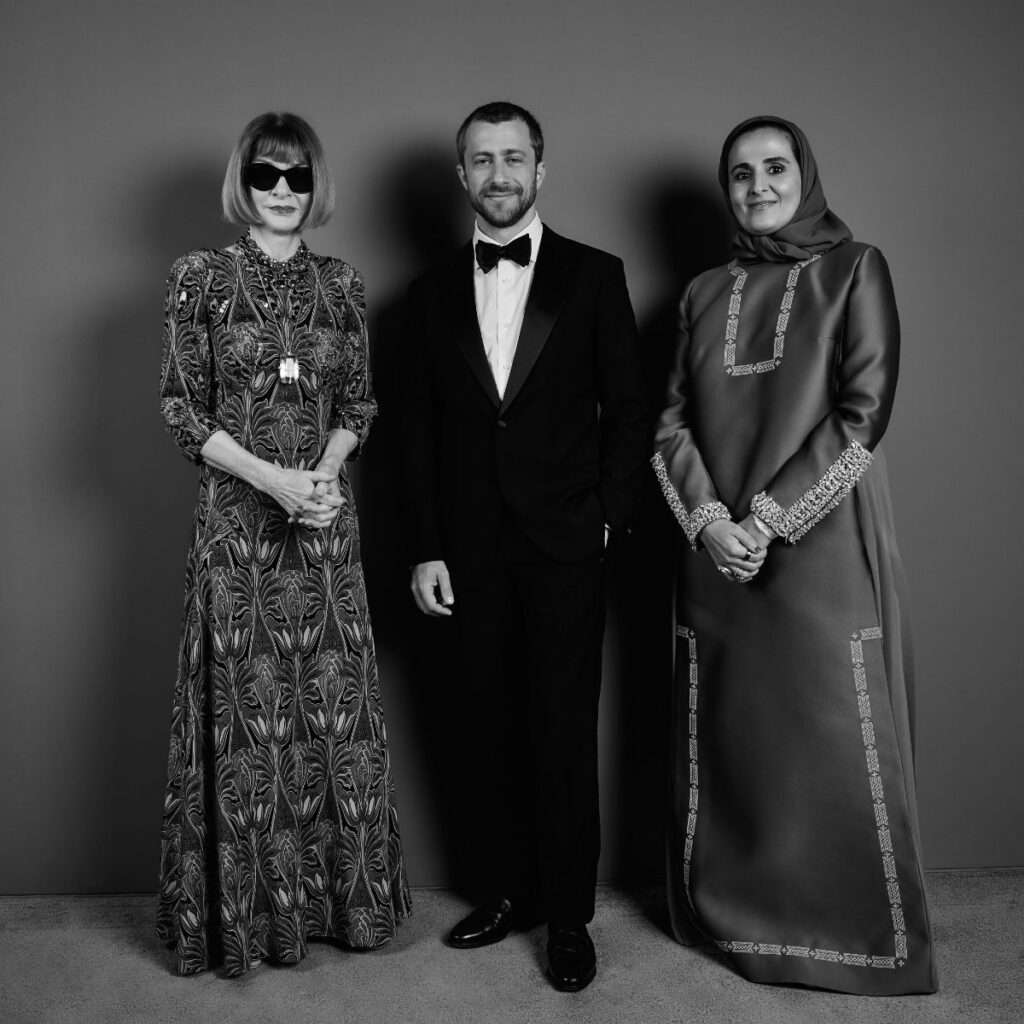
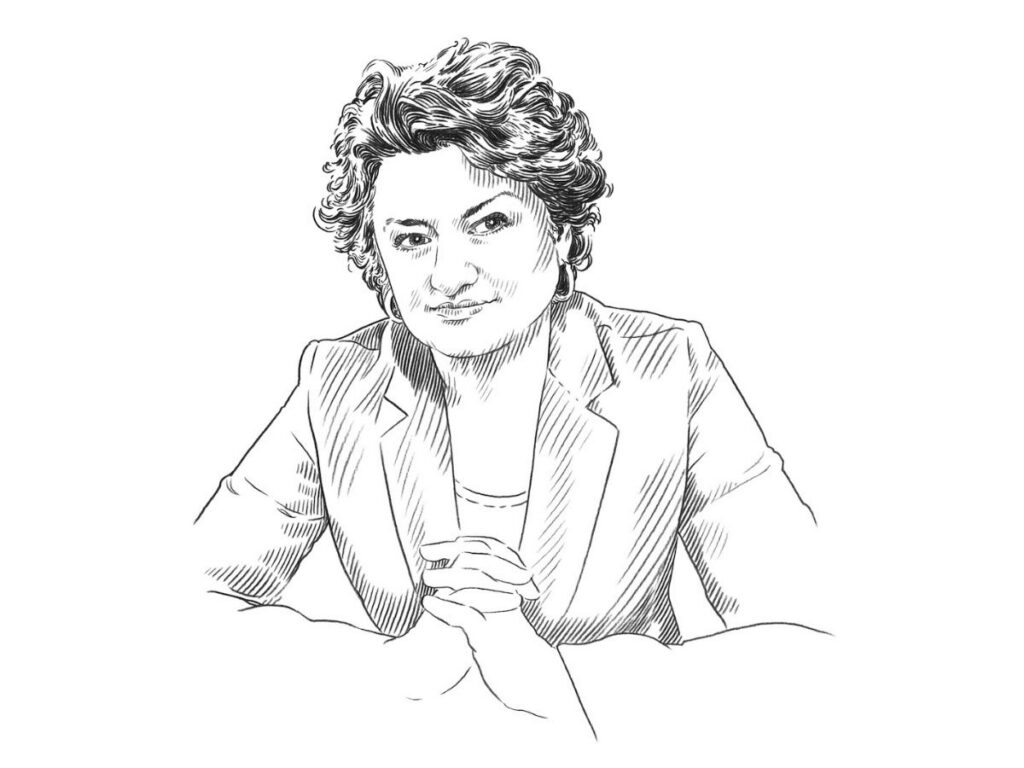
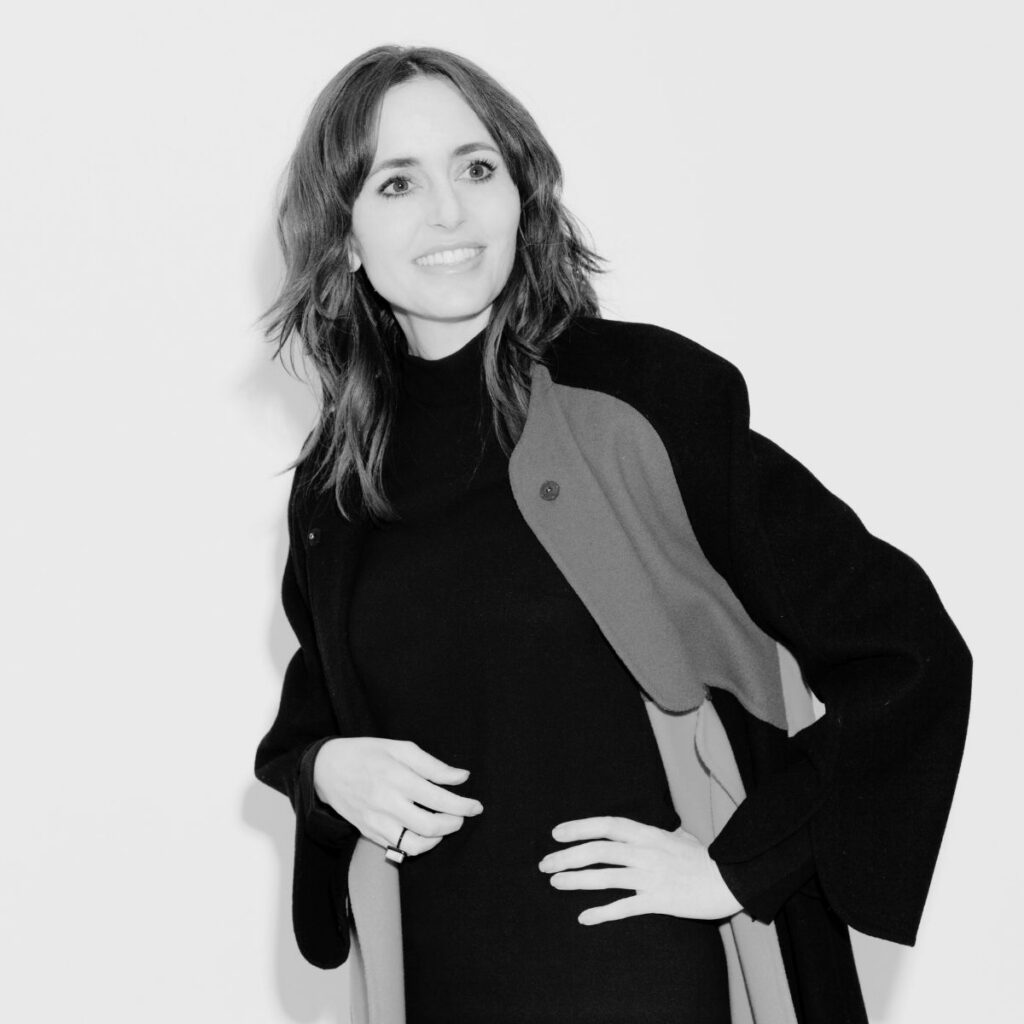
Photography Brigitte Lacombe
Words Mandi Keighran
Lebanese architect Lina Ghotmeh has been commissioned by Qatar Museums to design a permanent national pavilion for the Venice Biennale, the third to be added to the Giardini in 50 years and the first by a female architect. As the 61st International Art Exhibition opens, the project signals a new chapter for the Arab world on one of contemporary culture’s most important stages.
At the heart of each Biennale is the Giardini, a landscaped park in the east of the city that houses 29 national pavilions plus a large Central Pavilion, each one a permanent architectural marker of a country’s presence. When the 61st International Art Exhibition opens in May, visitors will find a new name on the Giardini map: Qatar. The highly anticipated pavilion project marks a significant milestone not only for Qatar, but also the broader representation of the Arab world in one of the most symbolically loaded sites in contemporary architecture and the global art world.
“It’s a very important moment,” says Ghotmeh, founder of Lina Ghotmeh Architecture (LGA). “It’s about bringing a voice for Qatar and the Arab world into the Giardini, a place where art, architecture and different forms of creativity are present at every biennale. It’s so important that there is diversity and representation here.”
Ghotmeh brings to the project a deeply personal understanding of memory, place and cultural expression. Born and raised in Beirut, she lived through the city’s destructive conflicts and reconstruction, an experience that inspired her early interest in the built environment and that continues to shape her architectural approach today. “Growing up in a war-torn city – where you constantly see buildings being demolished – there is a desire to heal, rebuild and to bring beauty back into the environment,” she explains. “Living through moments of conflict also made me consider the role architecture plays in bringing people together. It’s a way to rebuild the connection between people and our surroundings.”
“Growing up in a war-torn city… there is a desire to heal, rebuild and to bring beauty back into the environment”
Lina Ghotmeh
Beirut has a history that stretches back more than 5,000 years, and this rich past is another reference in Ghotmeh’s work. Inspired by these layers of history – evident in the city’s many archaeological sites – much of her work is an exploration of what defines place in social, historical and material terms, and how this can be expressed in a way that feels relevant today. This thinking followed her to Paris, where she relocated after being invited to work on a project in Beirut by renowned French architect Jean Nouvel. Soon after this move, Ghotmeh participated in and won an architectural competition for the design of the Estonian National Museum, which prompted her to set up her own studio. “Fate and destiny brought me to Paris,” she recalls. “It’s a context that allows you to see things differently, to look at your own heritage with a new perspective. There’s a sensitivity to history, to heritage and to beauty that’s very present in France. It is very different to how beauty might be approached in Lebanon.”
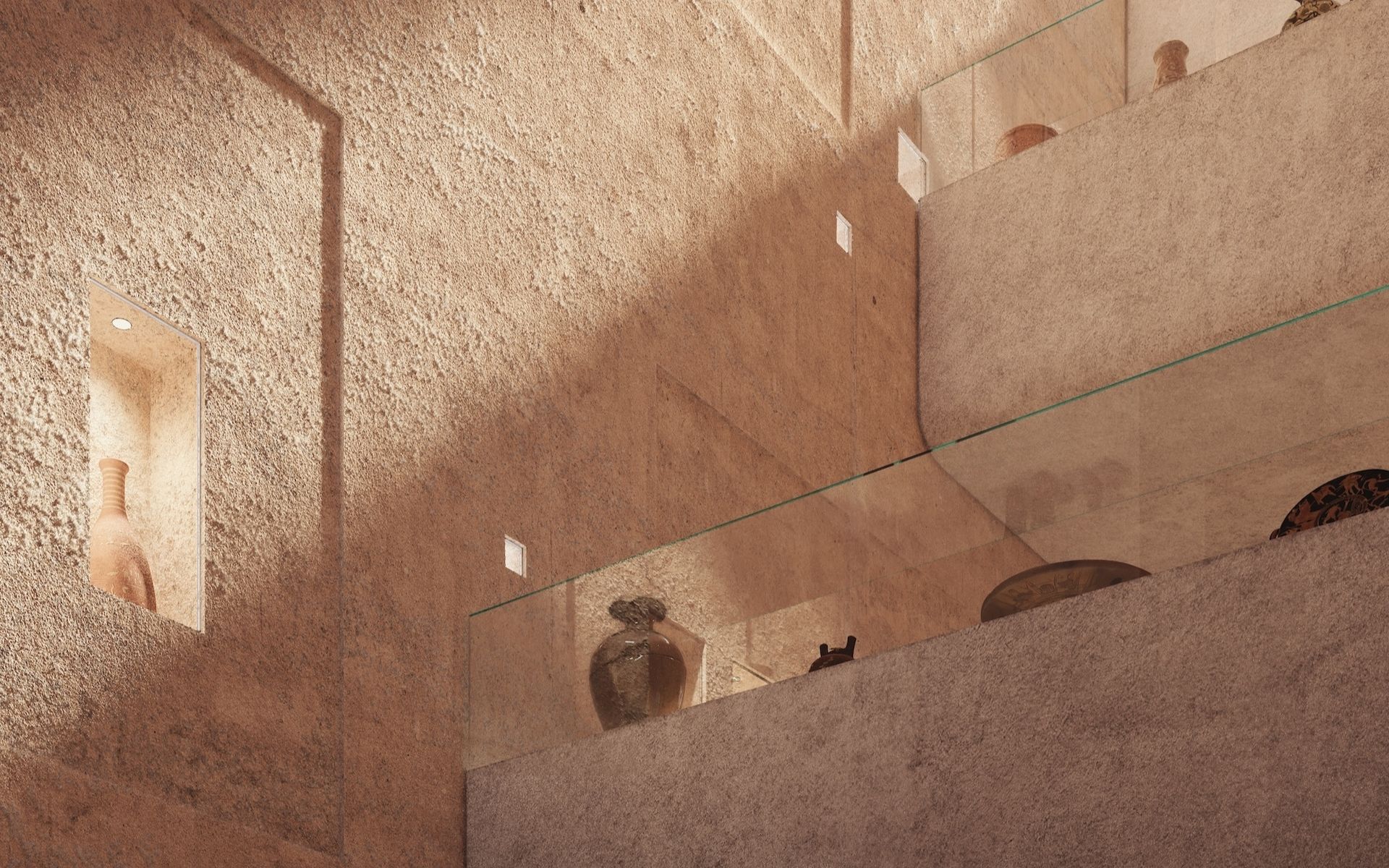
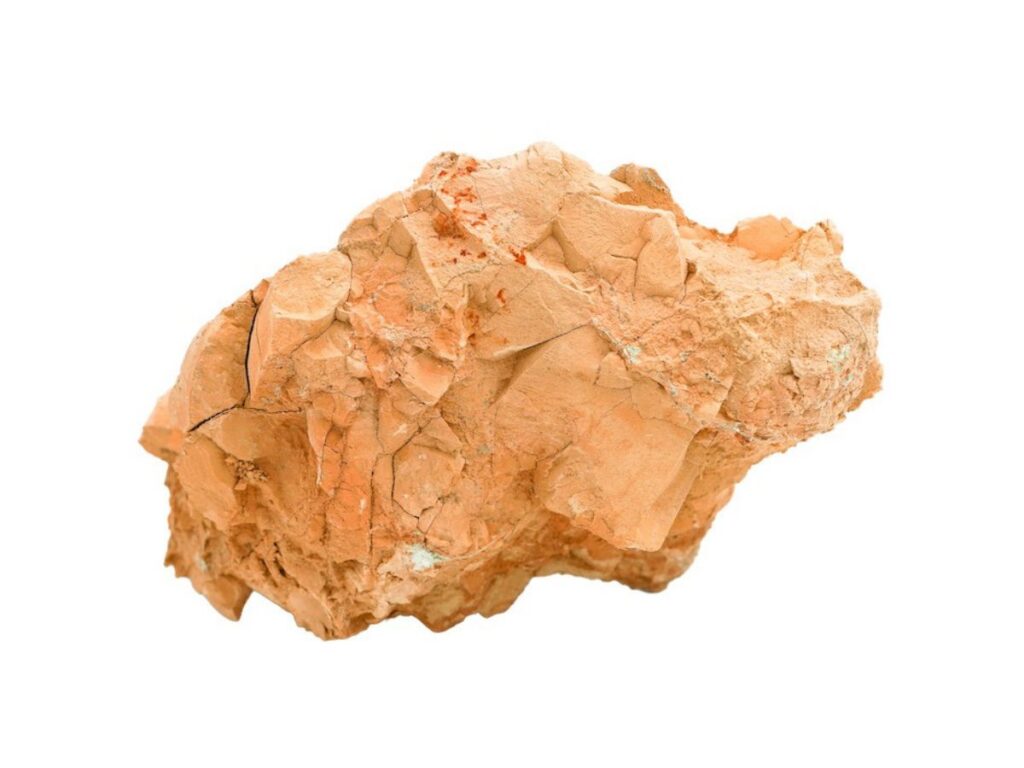
from Portland stone quarries, suggestive of excavation and archaeology
In Ghotmeh’s proposal for the British Museum in London, walls would be lined with waste materials from Portland stone quarries, suggestive of excavation and archaeology
While Ghotmeh is reluctant to define contemporary Arab style – “We’re still in a moment where questions of identity are being asked and rebuilt” – the strong throughlines in the region’s architectural heritage do inform her practice. She refers to the work of noted Egyptian architect Hassan Fathy (1900-89), who championed the use of vernacular construction methods, and she speaks passionately about the ways in which traditional Arab architecture can offer solutions to contemporary concerns about climate, ecology and resources.
Perhaps most notable is the way Ghotmeh encourages togetherness in the spaces she creates. “Architecture should offer spaces of hospitality that embrace people,” she says. “That’s something that is very present in Arab architecture.” It is this sense of hospitality that underpins her design for the Qatar Pavilion.
The commission came as a result of a competition launched by Qatar Museums. Ghotmeh was on a shortlist of nine competitors chosen to present initial design concepts developed over a 20-week period. The jury, chaired by Dutch architect Rem Koolhaas, selected her proposal for its clarity and sense of cultural rootedness.
While construction on the pavilion is yet to begin, the site – which is adjacent to the James Stirling-designed Book Pavilion at the centre of the Giardini – has been occupied by two temporary projects commissioned by Qatar Museums.
During the 19th International Architecture Exhibition in 2025, it was home to an installation by Pakistani architect Yasmeen Lari. Titled Community Centre, the structure represented Qatar’s first official involvement in the Architecture Biennale and is part of a larger programme titled Beyti Beytak. My Home is Your Home. La mia casa è la tua casa. The domed structure by Lari is constructed entirely of bamboo and explores how craft, community and hospitality are integral to the architecture of the Middle East, North Africa and South Asia (MENASA) region.
For the 61st International Art Exhibition, opening on 9 May, it is occupied by Untitled (a gathering of remarkable people), 2026, a project by artists Rirkrit Tiravanija, Sophia Al-Maria, Tarek Atoui and Alia Farid with Palestinian chef and author Fadi Kattan.
These two installations poetically foreshadow Ghotmeh’s themes for the Qatar Pavilion. “The challenge was how to create a pavilion that expresses Qatar without falling into cliché or a reductive identity,” she says. “It needs to express something deeply rooted in Qatari culture, but also reference the meeting point between Qatar and Venice.”
Ghotmeh began by exploring Qatari culture, looking at the value placed on handicrafts and hospitality, as well as the tradition of pearl-diving, which is ingrained in the country’s national identity. In parallel, she explored the history of Venice, the identity of which has long been defined by water, and started to draw connections between the two places.
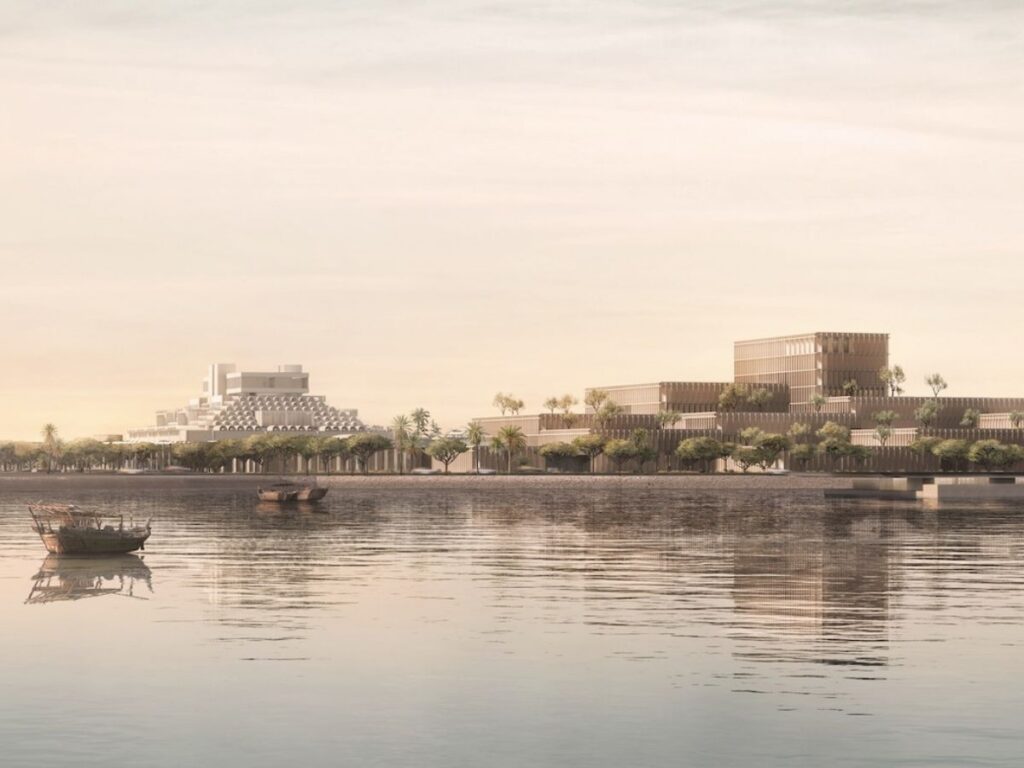
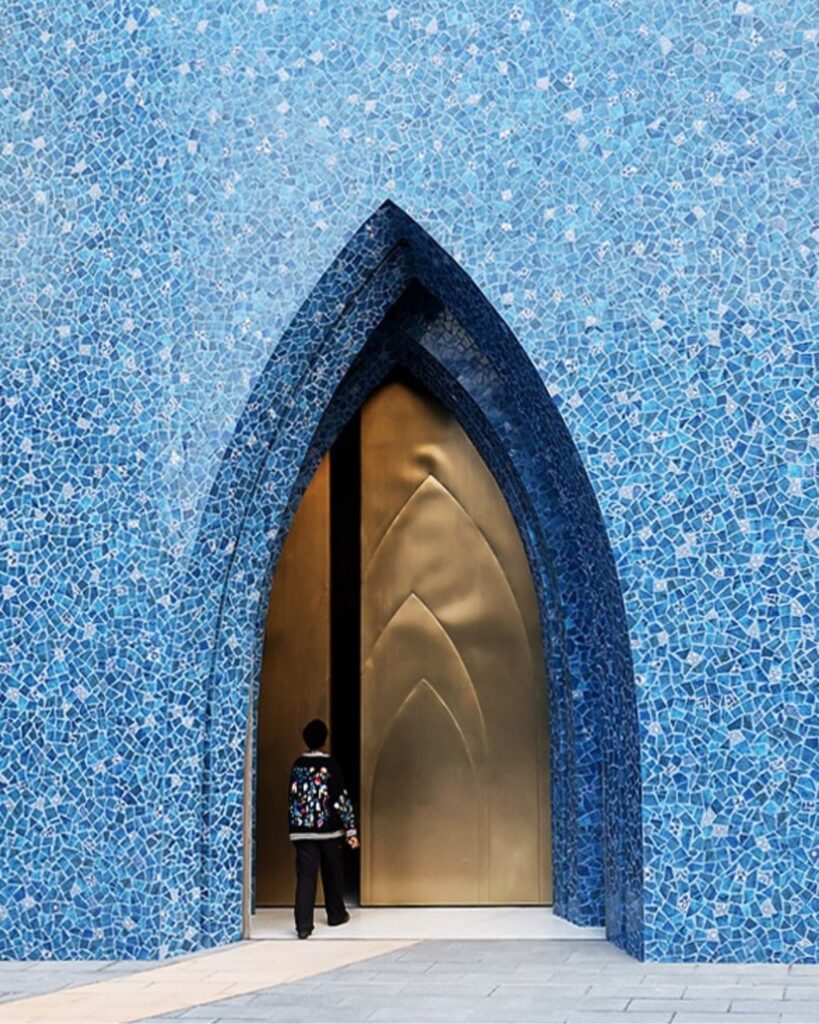
“The facade has a sense of verticality, of rhythm – it’s almost as if the whole building is a waterfall,” she says of her design. “There’s a sense of the built form rising up but also flowing down. This rhythm also echoes some of the stonework you see in Venice.” Local materials that hint at artisanal traditions of both Qatar and Venice – weaving, glasswork and stone – are celebrated.
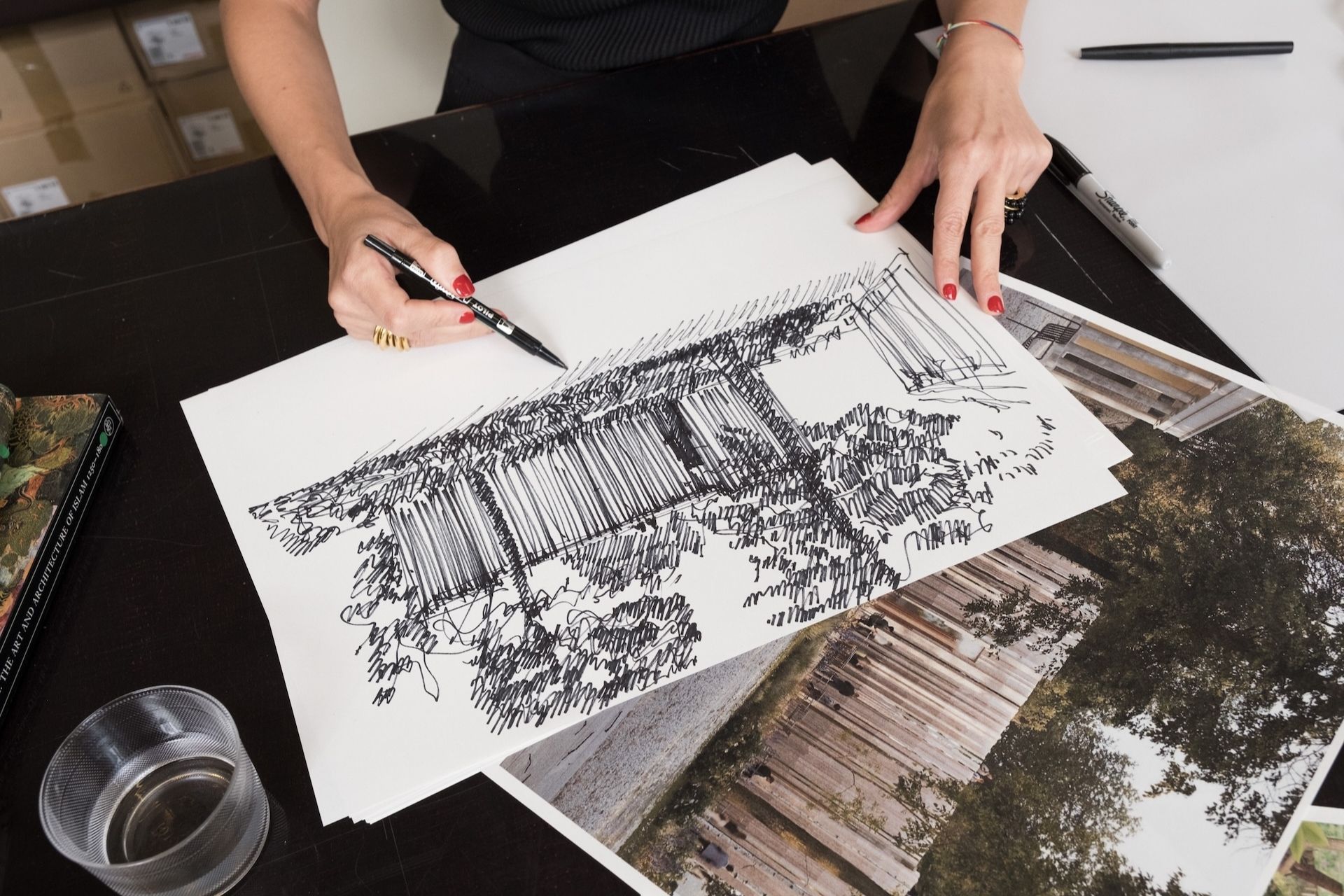
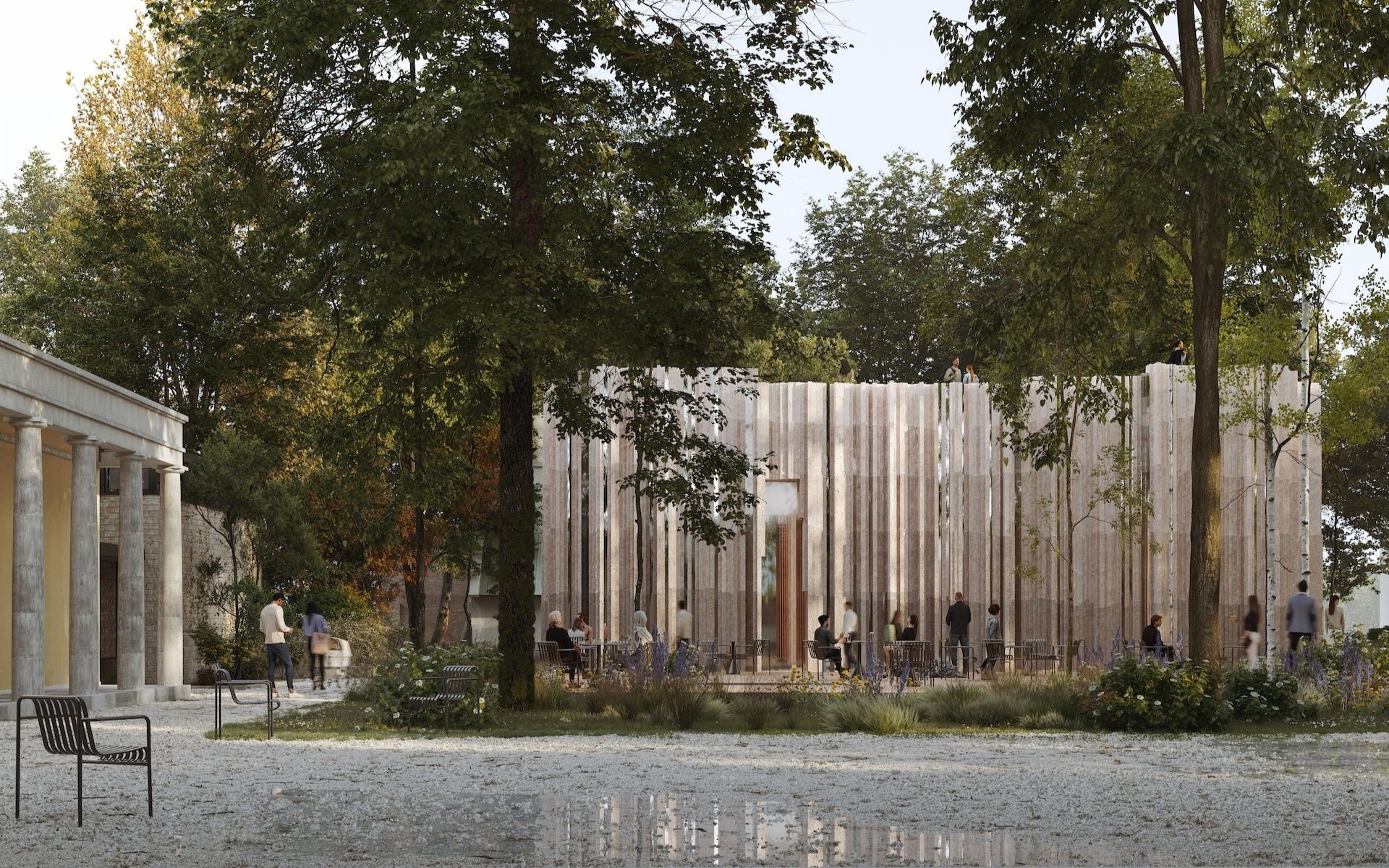
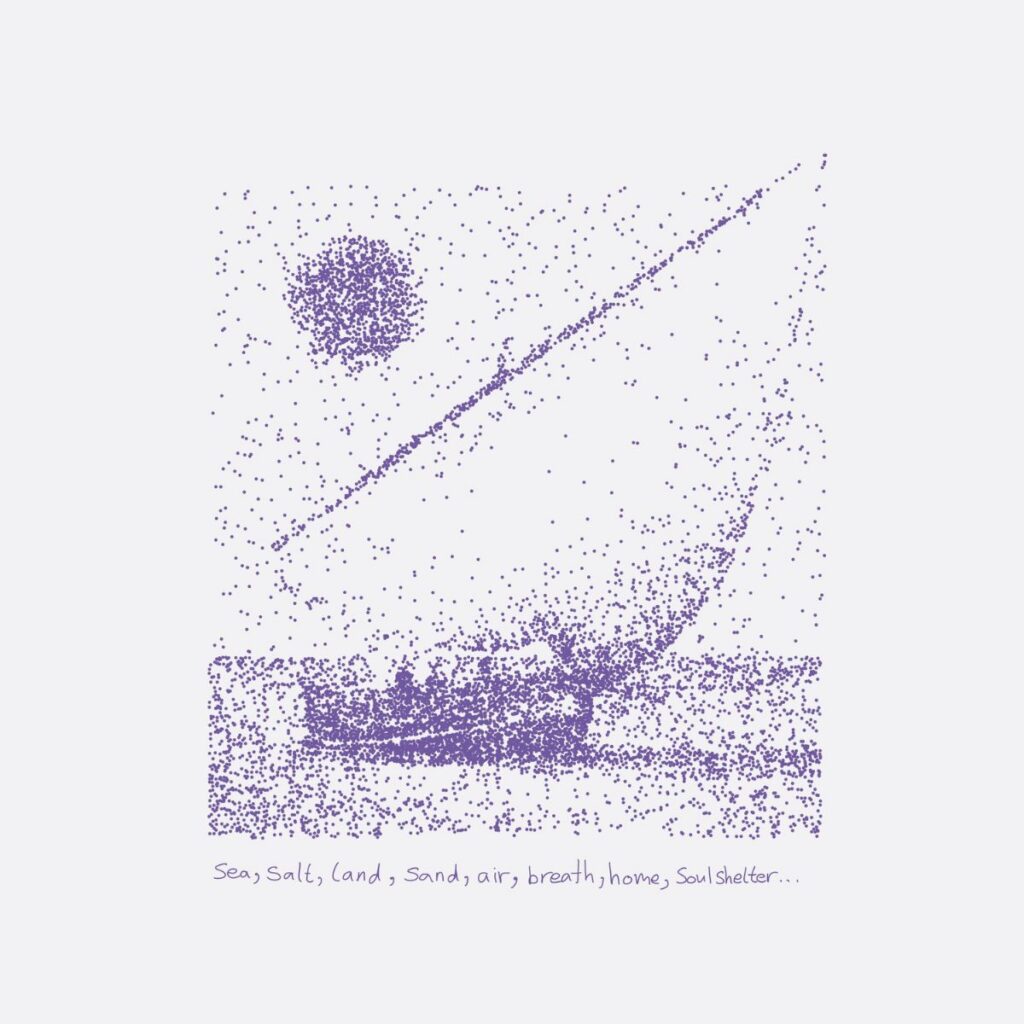
First Image: Ghotmeh sketching designs for the upcoming Qatar Pavilion. Second Image: The first render of Ghotmeh’s design for the permanent Qatar Pavilion in the Giardini della Biennale in Venice, revealed at the Venice Architecture Biennale in May 2025
As a result, the new pavilion not only invites the public to explore Qatari culture, but is conceived as a collaborative platform to bring together artists, curators and other creatives from Qatar and the region. “I want people to feel welcomed into an environment that transports them into another way of seeing the world,” says Ghotmeh. “They should come away having had a meaningful experience, and feel a sense of hospitality and place.”
The sensitivity to context that the Qatar Pavilion so beautifully captures runs through all of Ghotmeh’s work. “Every place has its own dynamic, its own resources, its own history,” she says. At the British Museum in London, for example, where Ghotmeh has been selected to renovate the Western Range galleries, she has proposed lofty, light-filled spaces punctuated by clerestory windows and arched openings. The galleries house objects from the Middle East, Syria and Egypt collections, and the renovated space will encourage visitors to explore the relationships between the objects and their current context.
“It’s about how architecture can play a role in helping people gain a deeper understanding of that history,” she says. “We also wanted to bring breathing space back into the museum and restore the sense of the extraordinary that museums have the potential to offer.”
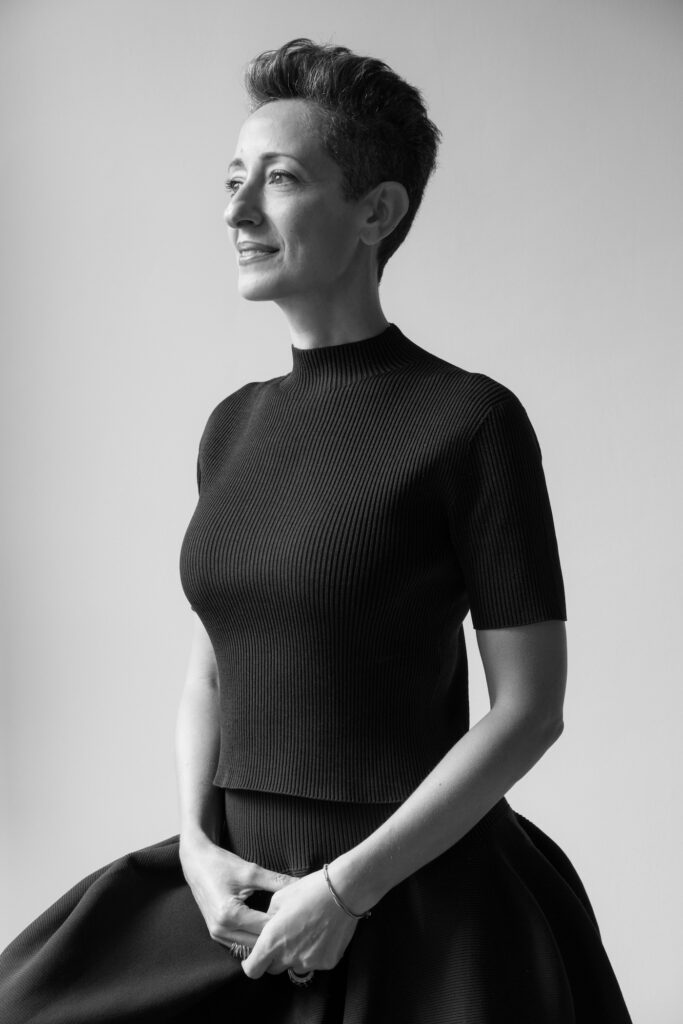
“I think the world urgently needs beauty – moments that bring us together and build peace”
Lina Ghotmeh
In Seoul, South Korea, LGA is working on a library and in Toyama, Japan, it is designing an observatory, both intended to foster a strong sense of public engagement. In Normandy, France, Ghotmeh’s practice has recently completed a low-carbon, energy-positive atelier for luxury brand Hermès. “That project was about the work of the hand,” she explains. “About using earth from the site, building sustainably and valuing craftsmanship.”
Most recently, in September last year, it was announced that she is to design the Jadids’ Legacy Museum in Bukhara, Uzbekistan. Created to tell the story of the Jadid movement – a reformist group in the late 19th and early 20th century that operated across Central Asia – the museum is a conversion of a 19th-century house that was once home to the first president of the Bukharan People’s Republic.
Each project led by Ghotmeh takes a different form, but they are all rooted in the same careful attention to place, material and meaning that defines the upcoming Qatar Pavilion. For Ghotmeh, it is clear that the power of architecture lies in its ability to act as a bridge between cultures, and the way it can preserve memory, while opening space for future possibilities.
“What excites me most about being an architect is working across different cultures, and the capacity of architecture to link people and bring beauty,” she says. “I think the world urgently needs beauty – moments that bring us together and build peace.”
Cover image: When Ghotmeh was announced as the architect of the Qatar Pavilion in Venice, Sheikha al-Mayassa said in a statement: “[Ghotmeh’s] work is inspiring new and traditional audiences with its sensitivity to the human condition and its confident, innovative flair”