The Couture Sculptor
Q+A JANUARY 2026
Mohamed Benchellal explains why Qatar has been so inspirational for his stunning fashion creation
Photography Tim Verhallen
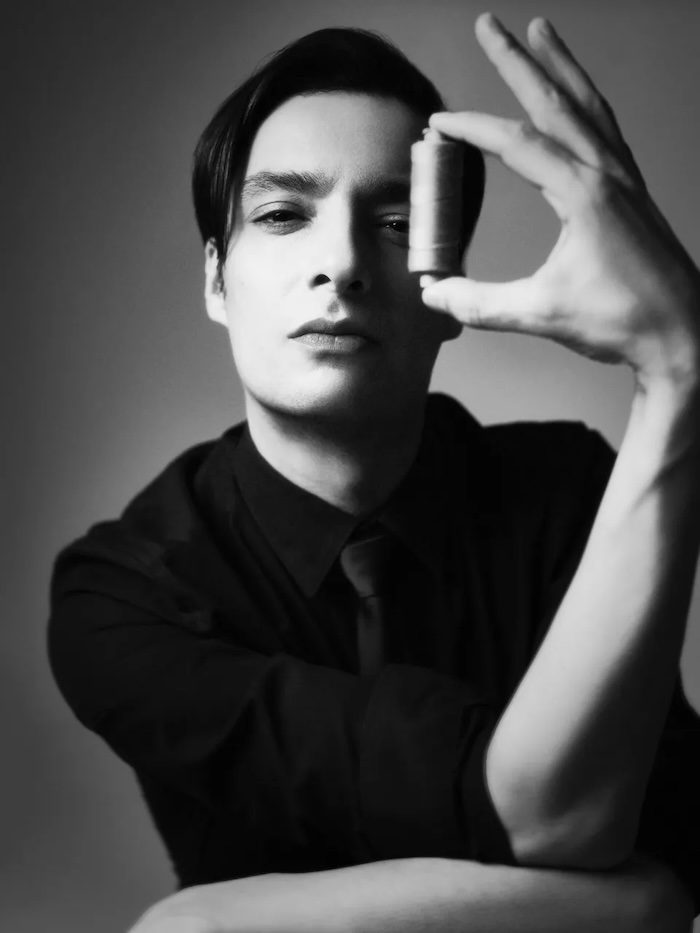
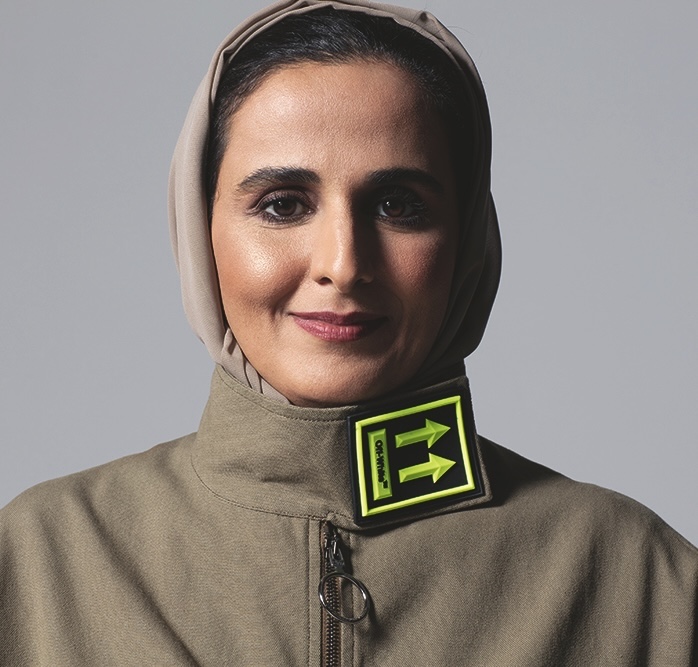
“Before the West really celebrated me, it was actually Qatar that embraced me. By winning the Fashion Trust Arabia prize, I think the success really started here. And how beautiful is it then to have your first solo exhibition at the National Museum.”
Mohamed Benchellal
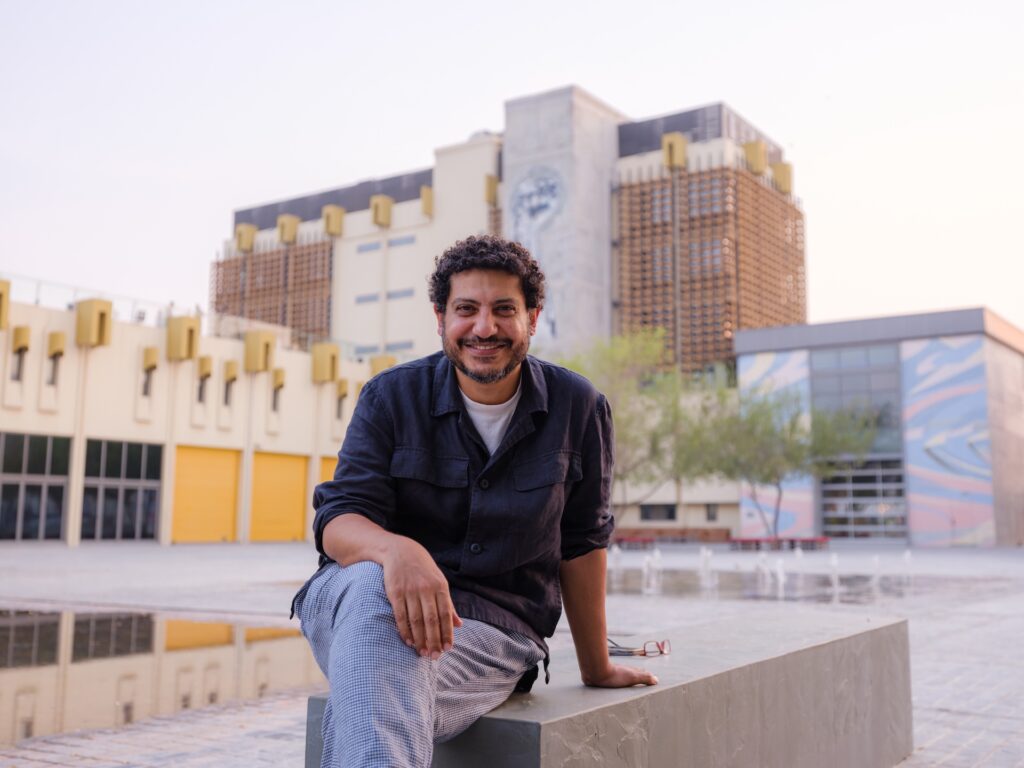
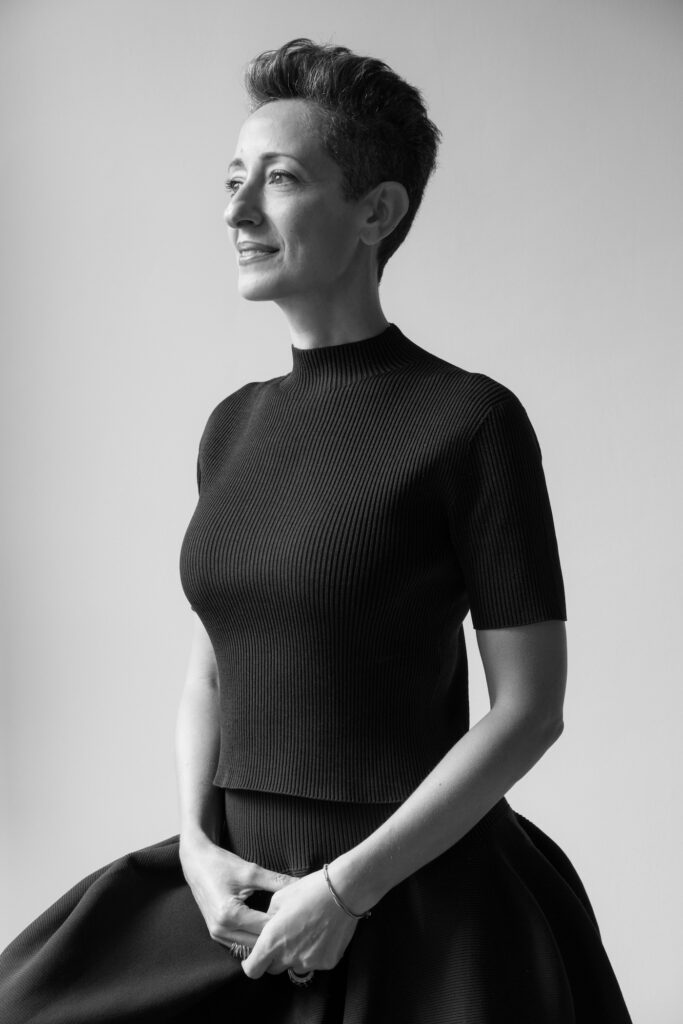
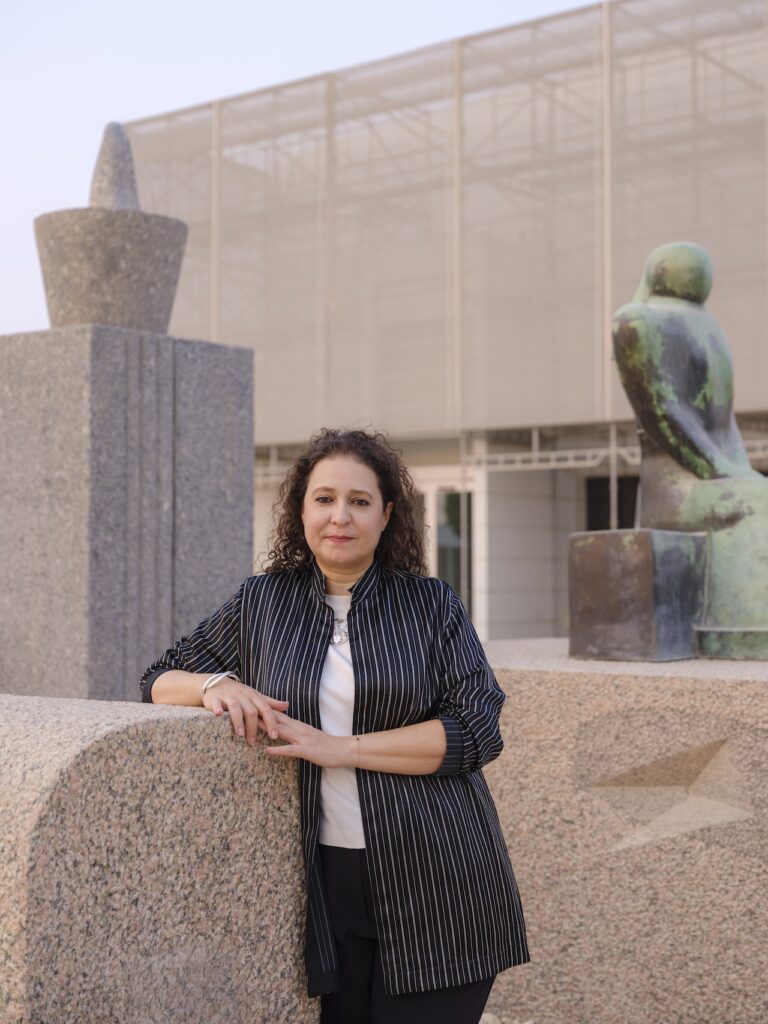
Dutch-Moroccan fashion designer Mohamed Benchellal is known for transforming fabric into fluid, almost gravity-defying forms. His journey began at the Amsterdam Fashion Academy and he launched his own label, Benchellal, in 2015. He won the Vogue Arabia Fashion Prize in 2020, the Fashion Trust Arabia Prize for Eveningwear in 2021, was named in the BoF 500 list of fashion’s most influential people in 2023, and has dressed royalty and A-listers, from Sharon Stone and Monica Bellucci to Queen Rania of Jordan. From November 2024 to January 2025, he had an exhibition, Benchellal: Monumental – Sculpting Past Tomorrow, at the National Museum of Qatar.
Q+A How would you describe your practice?
Mohamed Benchellal I don’t see myself as only a fashion designer. Of course, people need a reference point, but I see myself more as a nomadic textile artist or couture sculptor. I love approaching fashion differently and I see fashion as an art form. To be able to empower women has always been my inspiration. I’ve also always had this hunger to experience new places and make connections with people. I draw a lot of inspiration from these interactions around the world.
What drew you to work in Qatar?
My parents are Moroccan but I was born and raised in the Netherlands, so I didn’t have a direct connection to the Middle East – I grew up in a European context. My journey with Qatar began in 2021, when I won the Fashion Trust Arabia Prize for Eveningwear.
When I first stepped off the plane in Doha I was in awe. People have this stereotypical idea of the Middle East – camels, the burning sun, the desert, the sound of flutes – but what I found was architectural masterpieces, amazing public art, museums of the future… I was floored. It opened up an entirely new world for me and I really started to connect with my roots.
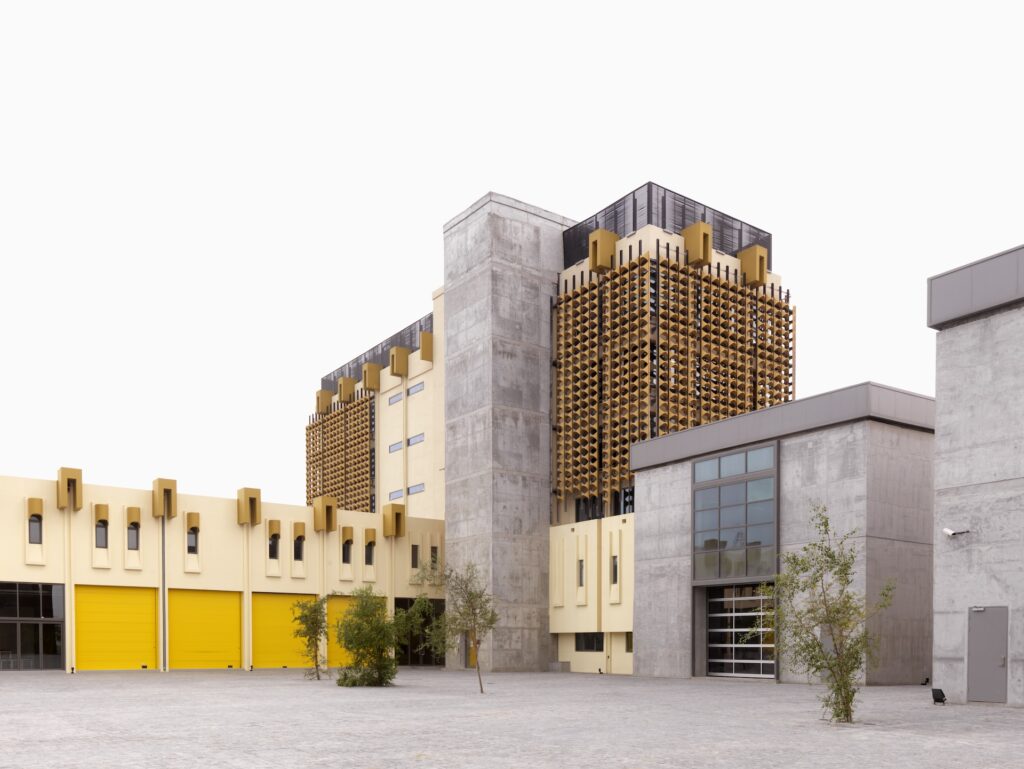
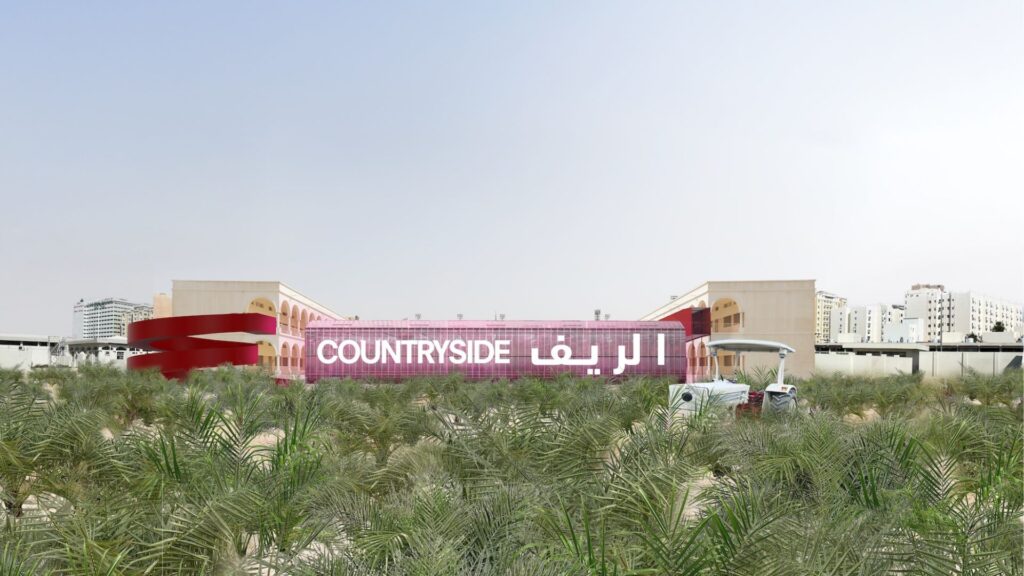
I knew I wanted to create a collection inspired by Qatar and suggested doing a residency. Sheikha al-Mayassa connected me with Liwan Design Studios and Labs, an incubator for artists and designers housed in a former girls’ school from the 1950s.
What was it like to undertake the residency in Doha?
I was staying in Msheireb, a design district that is one of the most beautiful and inspiring places in Doha. It’s also where Liwan is based. Each former classroom is occupied by a different artist – tapestry makers, ceramicists, printers and so on – and the entire experience is very community driven. In my studio, it was just me, a sewing machine, an iron and a lot of improvisation. I would visit different parts of Qatar and just soak everything up. I never make sketches or think about what I’m going to design, though. It all comes out in the moment of creation.
Where did the inspiration come from for the Sculpting Past Tomorrow collection?
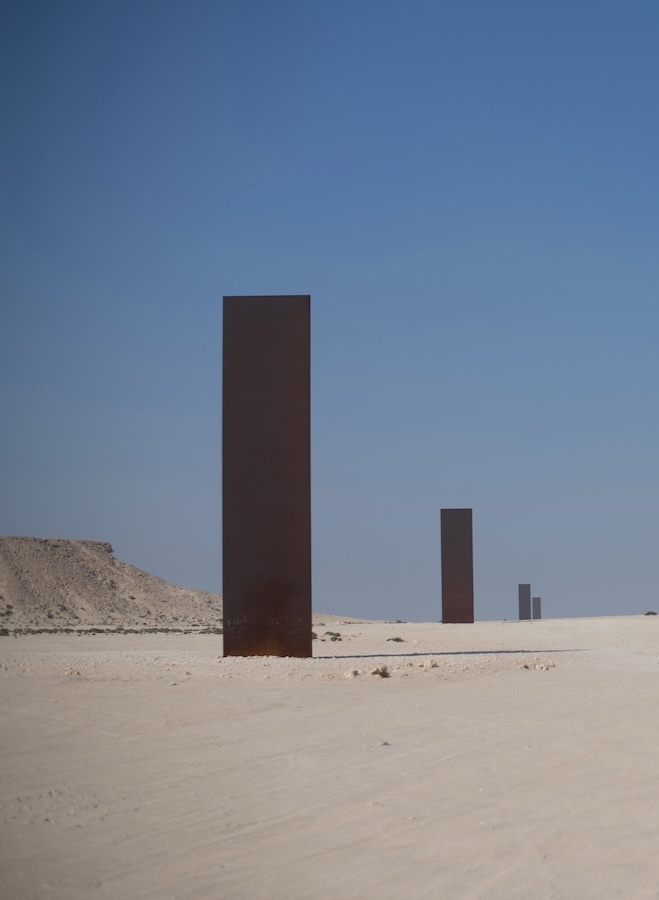
All the pieces in the collection evoke different landmarks in Qatar, from Richard Serra’s East-West/West-East in the Brouq Nature Reserve to Jean Nouvel’s National Museum of Qatar. When the collection was finished we did a photoshoot with each piece at the location that inspired it. We photographed a black piece on the roof of the Museum of Islamic Art, for example, which shows how the geometry of the building inspired the sculptural form of the dress. As we were shooting, a falcon – the national bird of Qatar – flew by. It was a magical moment.
How did this collection shape your relationship with Qatar?
I think this is going to be a long-lasting relationship. Some countries have a very rich history, but Qatar also has a very rich future. It’s a land of endless possibility, with a strong focus on architecture and art. It’s a really exciting time for artists and young creatives to be involved in that world.
What have you been working on since your residency in Doha?
Fashion Trust Arabia really showed me that there isn’t only one way to be a designer. Its platform is connected to museums and artists across disciplines, and I find that incredibly inspiring. After Qatar, I went to Hong Kong and did something similar. Earlier this year, I returned to Doha to create another collection, this time inspired by more traditional Qatari architecture. I’m now in Uzbekistan, creating something new. I go somewhere, I absorb everything, I create a collection, an exhibition, and then I move on. It’s how I live – a kind of nomadic sculptor of fashion.
“Before the West really celebrated me, it was actually Qatar that embraced me. by winning the Fashion Trust Arabia prize, I think the success really started here. And how beautiful is it then to have your first solo exhibition at the National Museum.”
Mohamed Benchellal
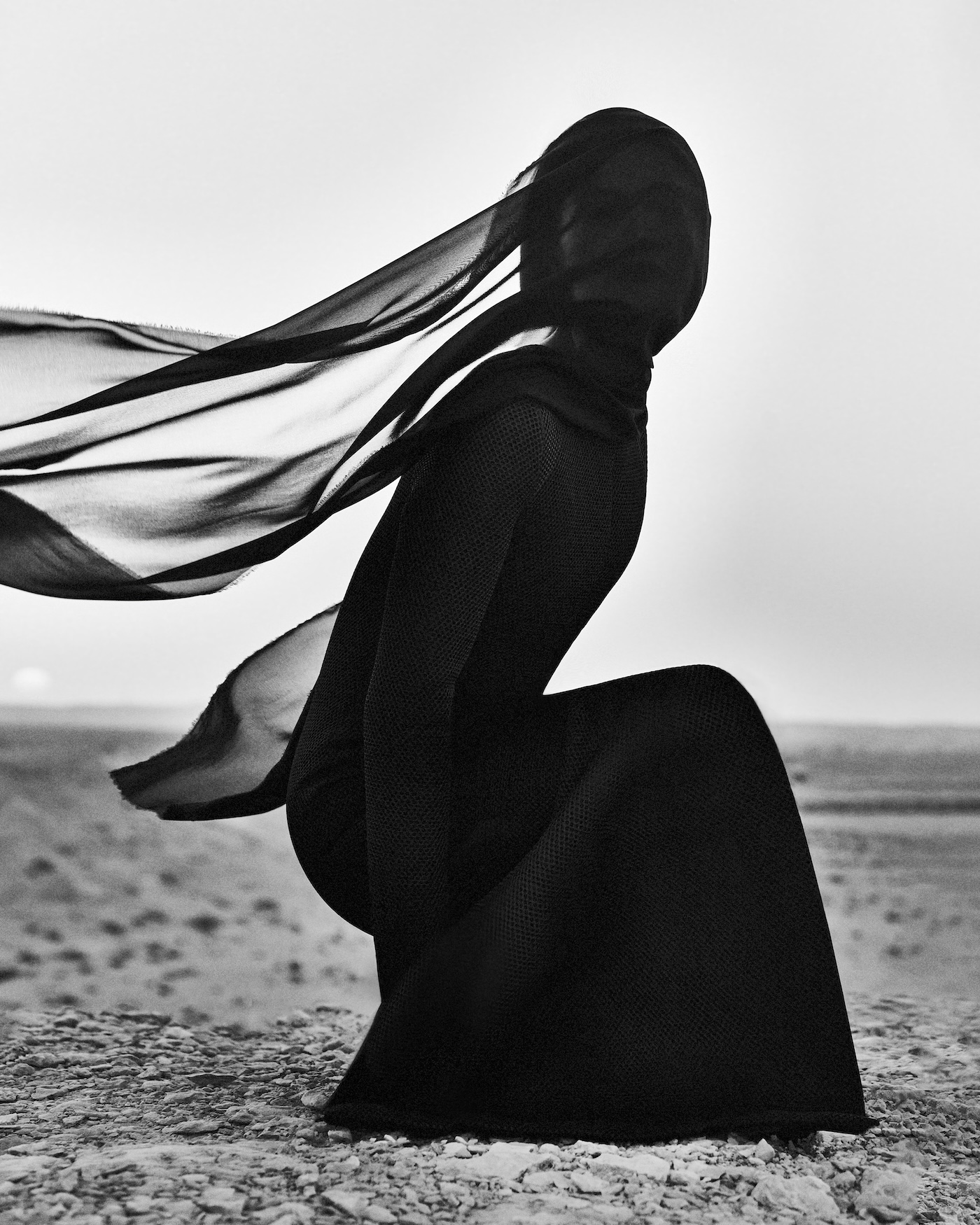
Ras Abrouq Nature Reserve
This photo was taken in Ras Abrouq on the Zekreet Peninsula to the north of Dukhan. It’s adjacent to the Unesco-protected Al Reem Biosphere Reserve and has incredible rock formations that inspired the first dress I made for this collection.
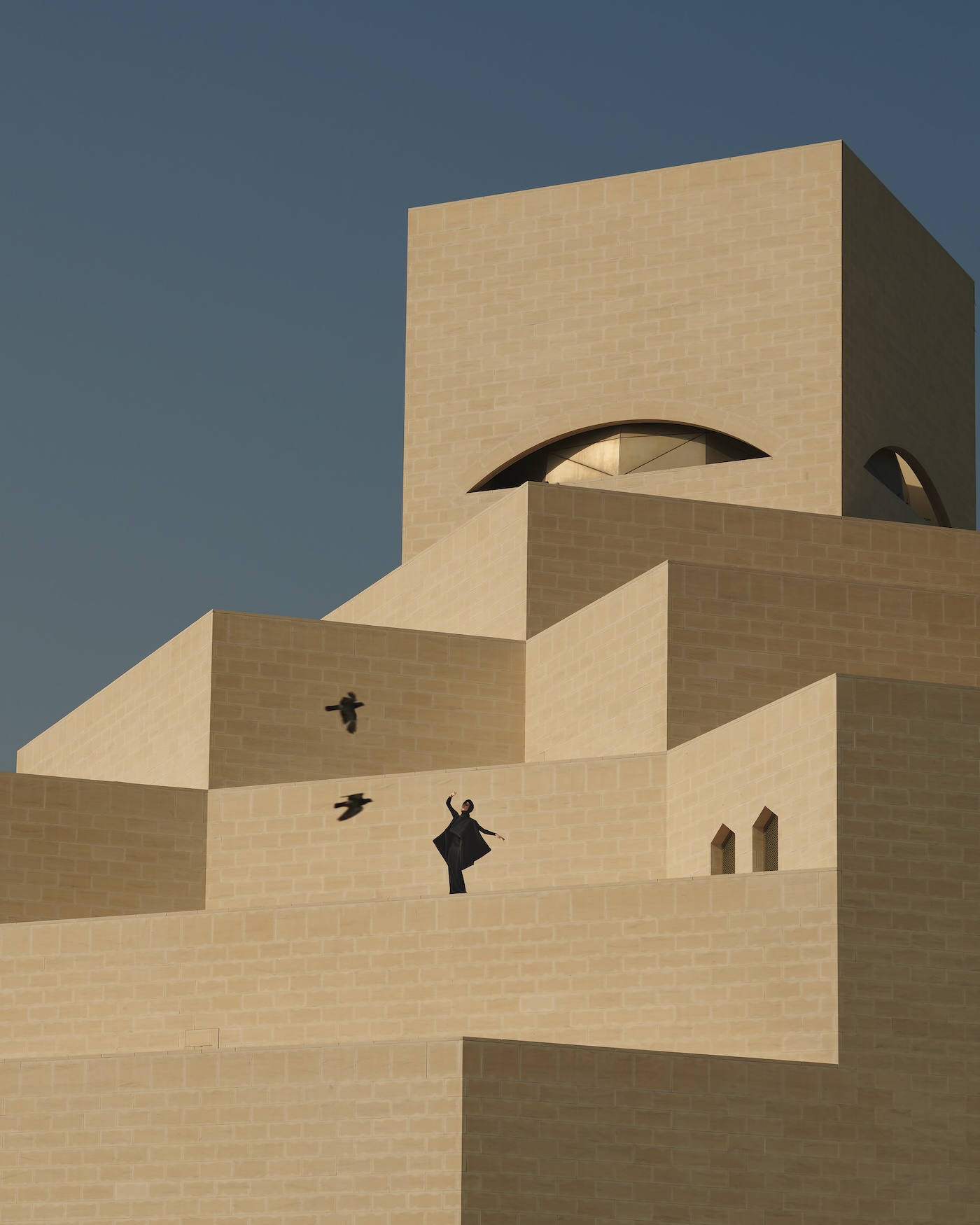
Museum of Islamic Art
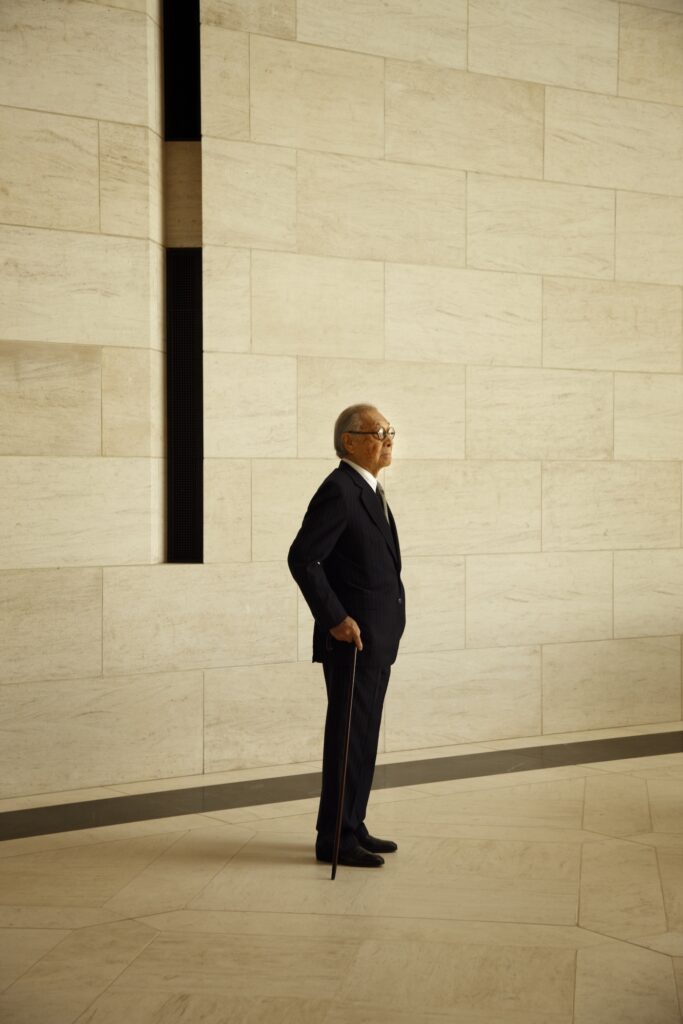
The Museum of Islamic Art is a masterpiece by architect IM Pei that draws inspiration from Muslim architecture and history. The geometric shapes of the building are reflected in this dress, with flowing, feminine cubic forms – particularly at the back. When the falcon appeared in the shot, it was so magical. It felt like a symbolic moment for the whole collection.
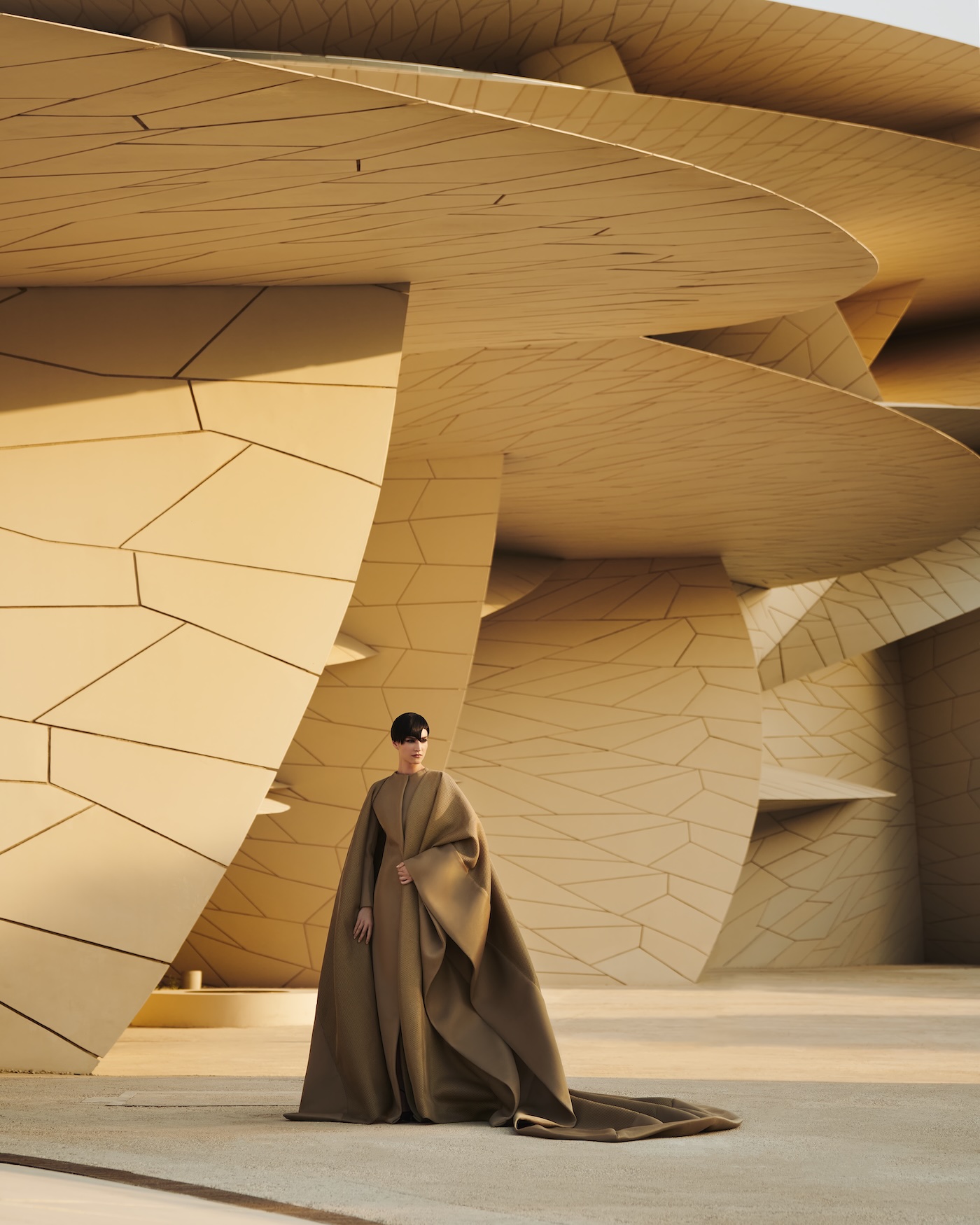
National Museum of Qatar
The National Museum is a special place for me – it’s where I received the Fashion Trust Arabia Eveningwear Prize and also where I had my first solo exhibition. The striking architecture by Jean Nouvel evokes the complex form of the desert rose, a crystal formation found in Qatar. I was inspired by the beauty of the building and the style and grace of Her Highness Sheikha Moza bint Nasser to create this robe manteau (coat dress). The luminous fabric has the same tones as the building, and a very specific structure. It’s the last dress I made for the collection.
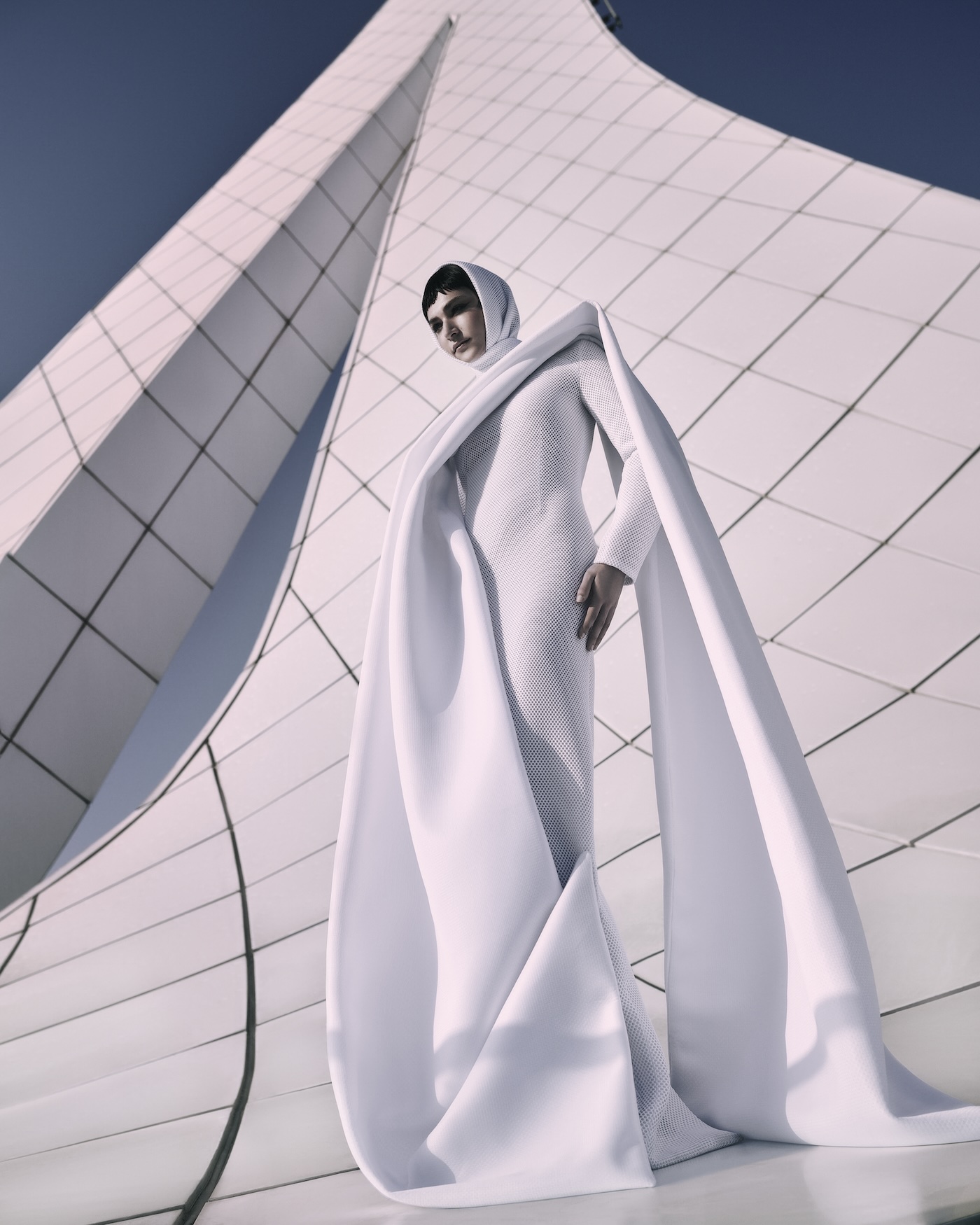
Education City Mosque
Education City Mosque is an architectural masterpiece. It’s a very modern and futuristic interpretation of Islamic architecture. It almost feels like a spaceship. I wanted to capture that juxtaposition between tradition and the future in this dress. Both feel like they go beyond contemporary aesthetics, shaping a possible future that doesn’t yet exist.
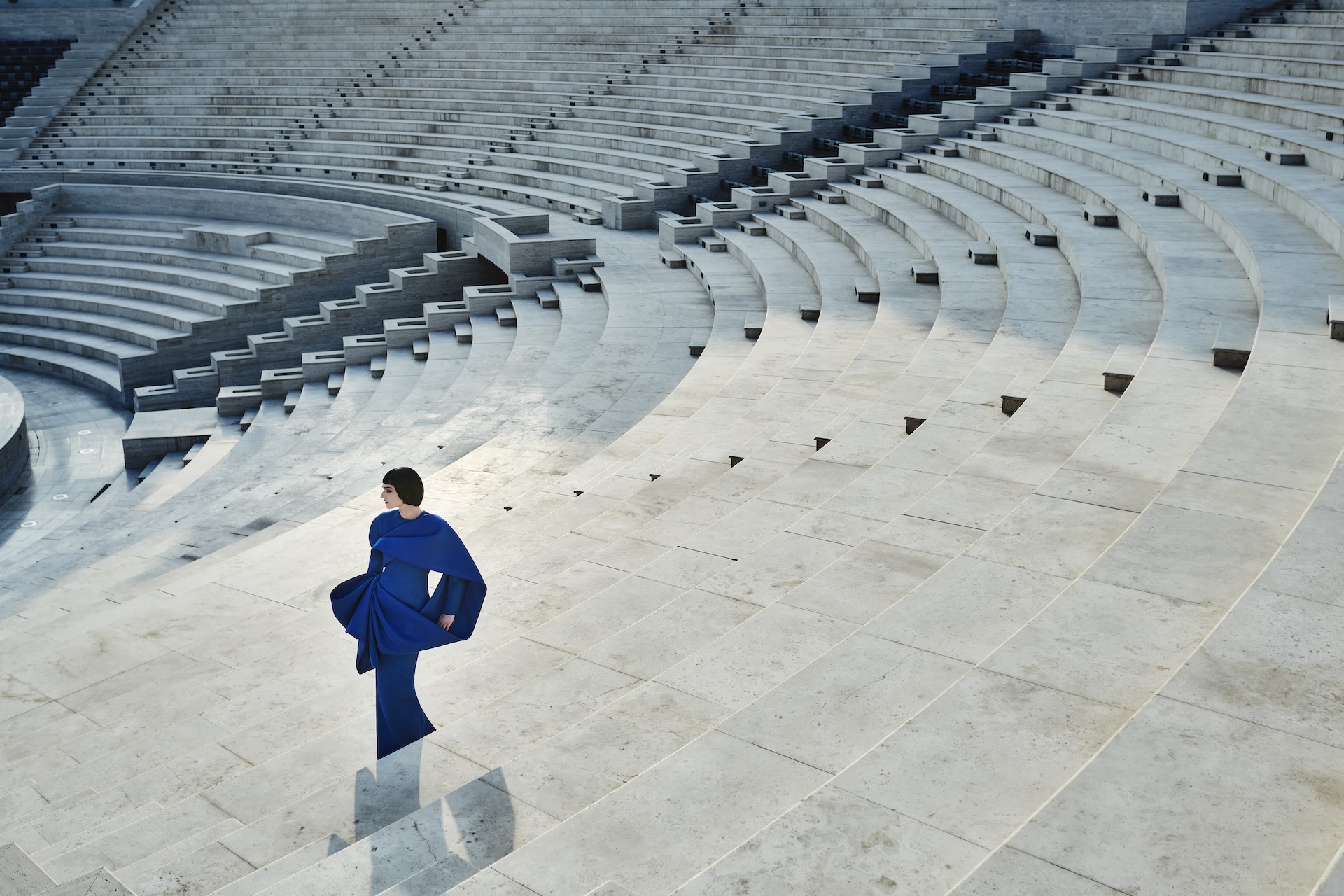
Katara Amphitheatre
The amphitheatre at Katara Cultural Village pays tribute to classical Greek and Islamic architecture, and I wanted this dress to reflect that beautiful synergy of two cultures coming together. I found the royal blue fabric at a store in Souq Waqif. It’s actually a fabric for upholstering car seats, so is perforated on one side and shiny on the other. The draping of the fabric is reminiscent of a sari or toga: rolling off the shoulder, hugging the back of the arm, wrapping around the body and secured at the hip.
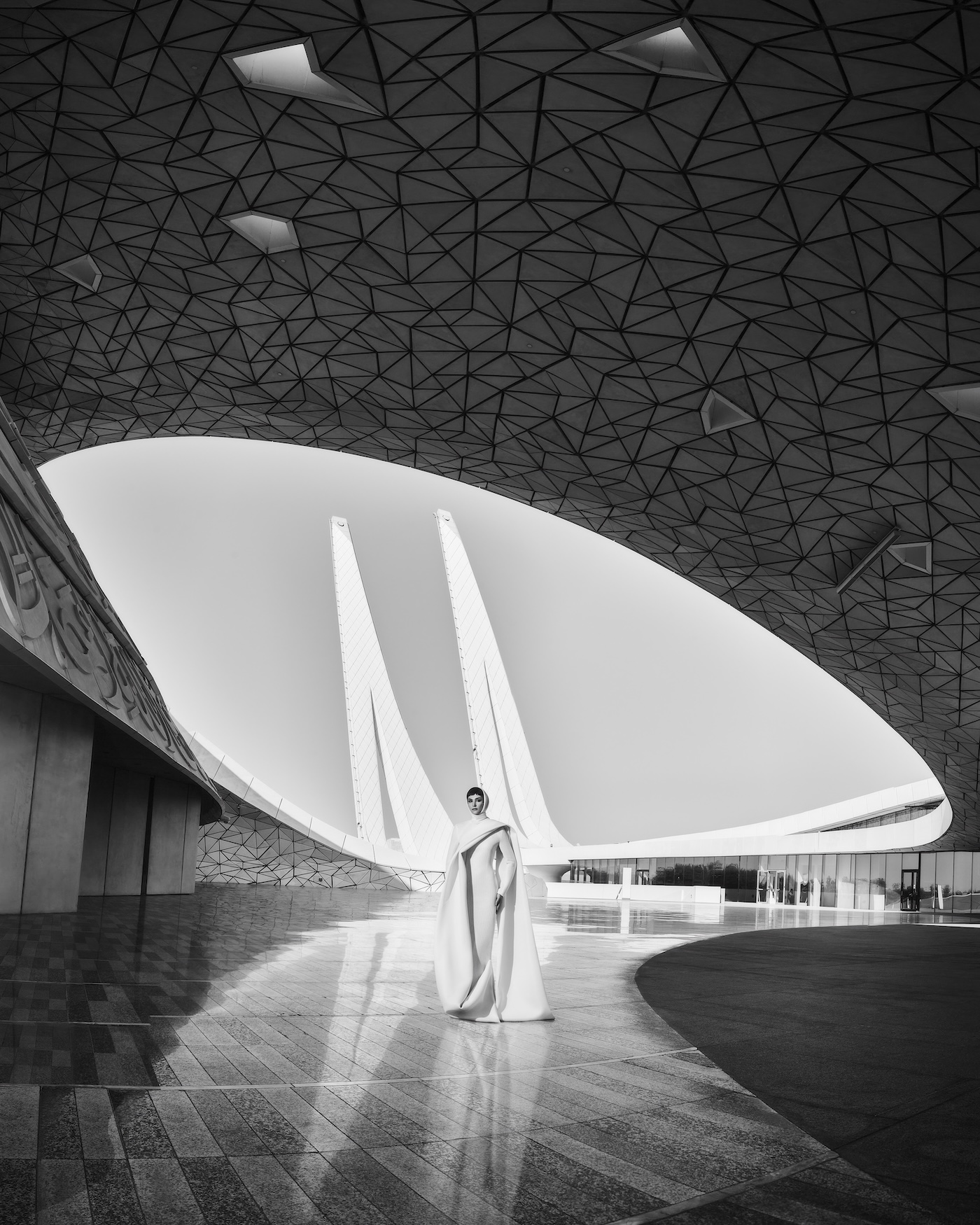
Education City Mosque
This couture sculpture has a direct link to the building – the architectural elements of Education City Mosque are really reflected in the lines of the dress. The headscarf ties the whole look together and shows that modest fashion can also feel futuristic. I love that juxtaposition, it’s such an interesting mix.
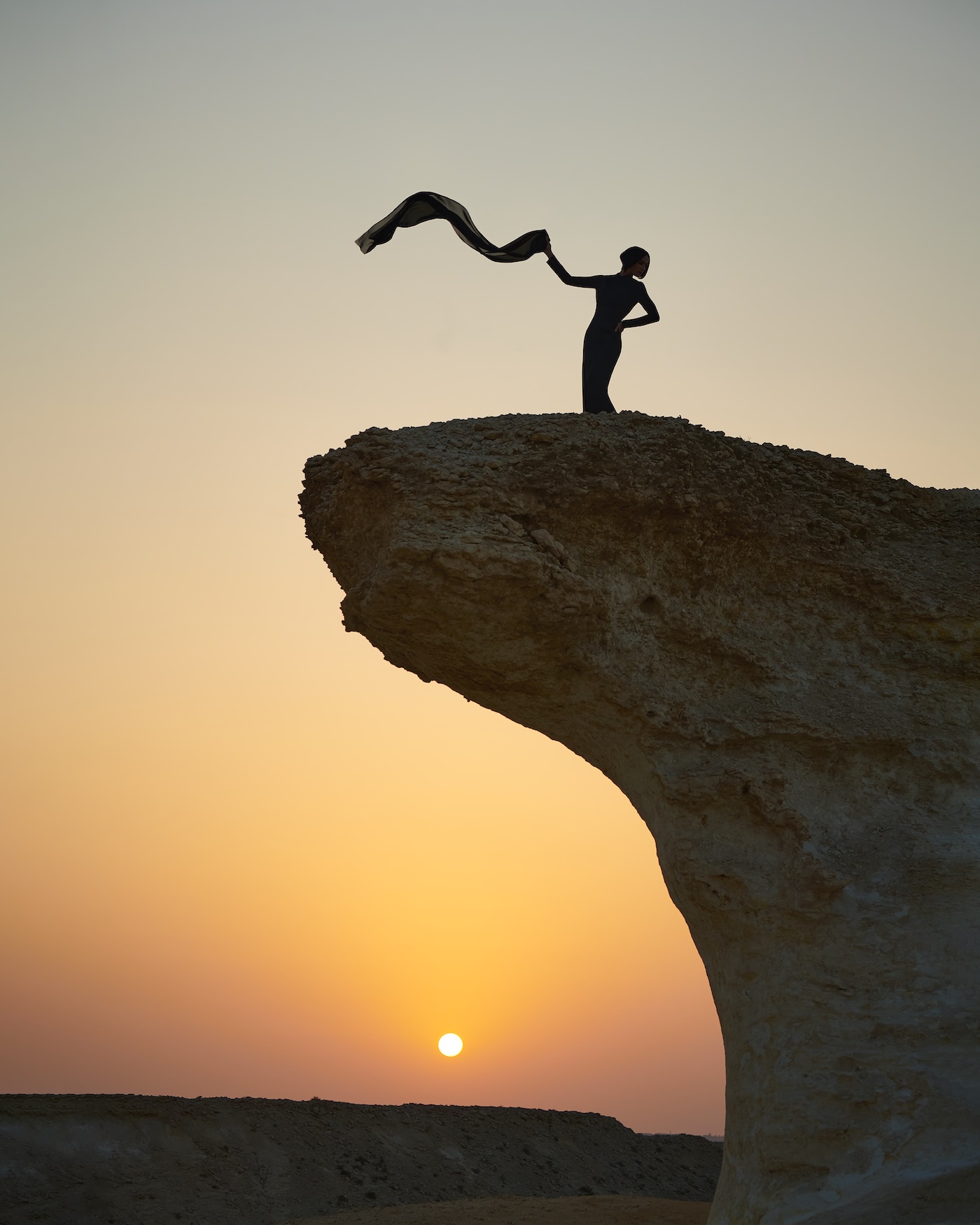
Ras Abrouq Nature Reserve
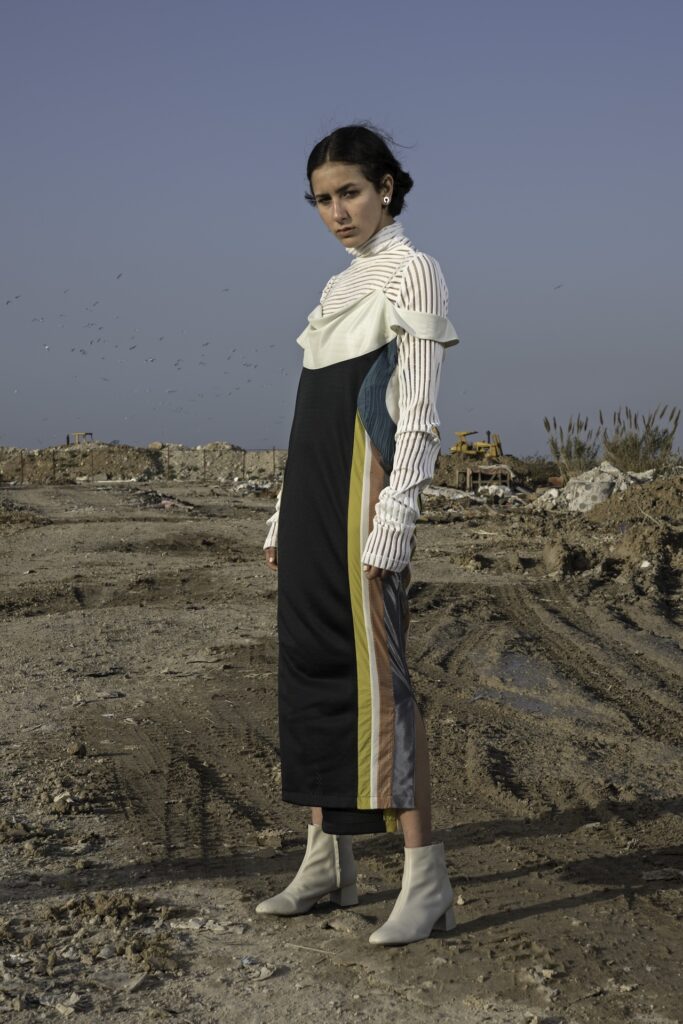
The dramatic rock formations of Ras Abrouq have been made by saltwater and wind erosion over millennia – and they create an almost alien landscape. It’s phenomenal, and inspired me to create a simple silhouette that highlights the beauty of nature. This sculptural dress is fitted to the body and celebrates the female form.
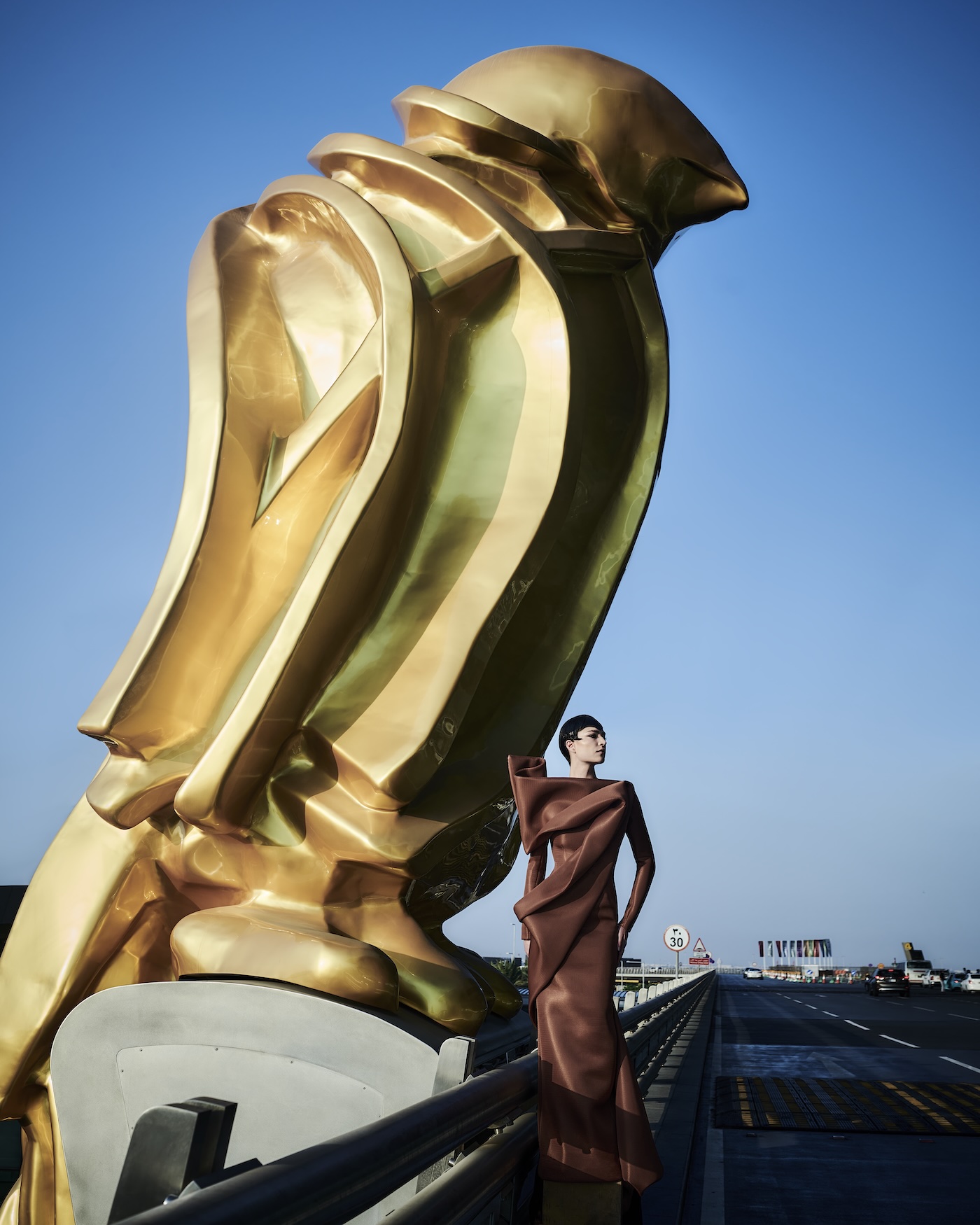
Tom Claassen, Falcon at Hamad International Airport
It’s always emotional for me leaving Qatar – and the Falcon statue at HIA is one of the last things you see. I wanted to pay tribute to that experience and Qatar’s national bird. The dress I’ve created is very sculptural and architectural. I used the shiny side of the fabric so the dress feels like it’s cast in bronze and resembles an ancient statue. It feels very powerful and has a highlight on one shoulder that evokes the way a bird might perch on a falconer’s shoulder.
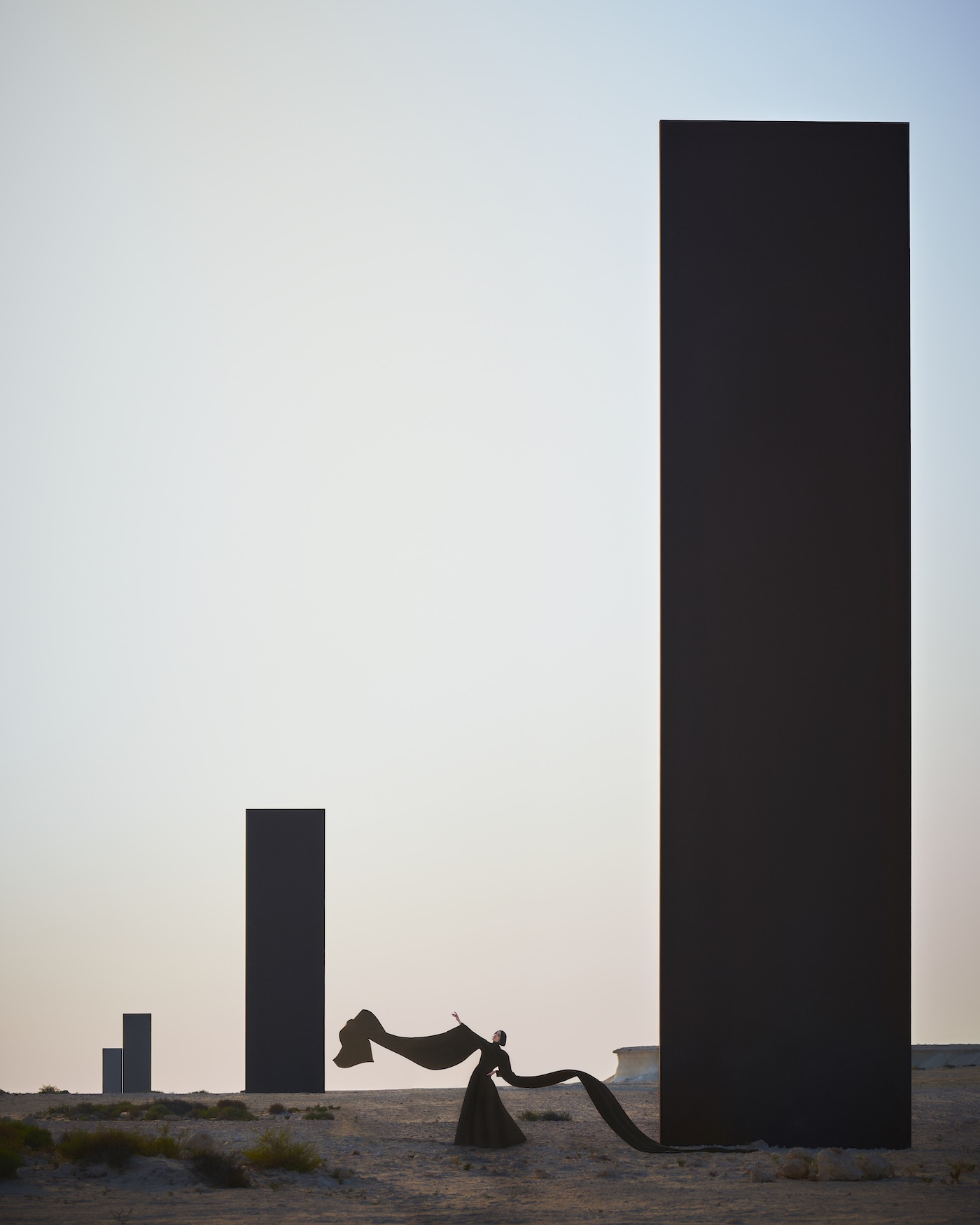
Richad Serra, East-West/West-East
Richard Serra’s public art has always been driven by a desire to take sculpture off the pedestal and onto the street, which perfectly aligns with taking couture off the runway and onto real bodies. East-West/West-East in Ras Abrouq spans more than one kilometre and comprises four steel plates, each more than 14m tall. The black signature robe manteau is very flowing and complements the strict geometry of the monolithic artwork. I always think it’s interesting to combine opposites like this.
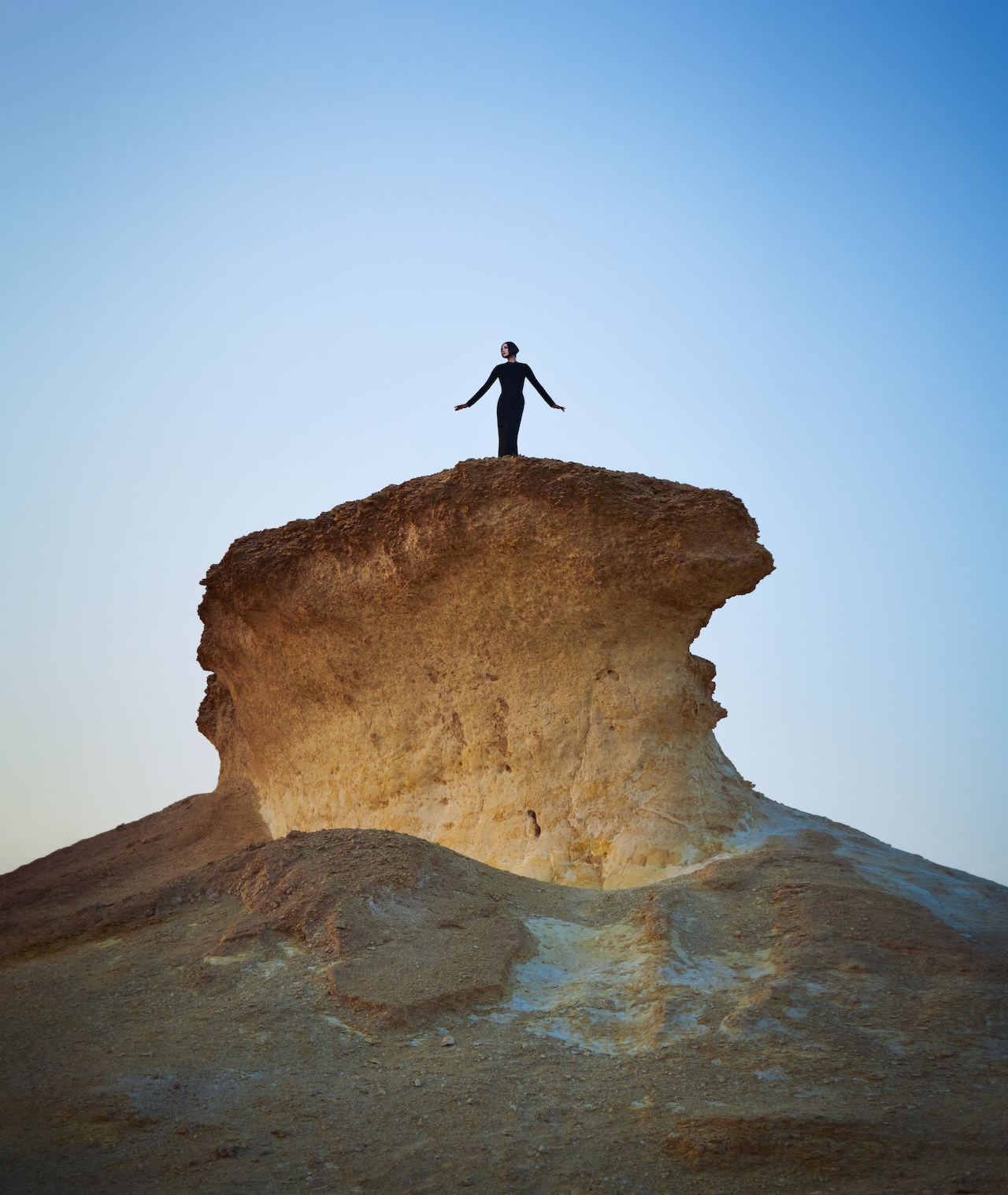
Ras Abrouq Nature Reserve
This was the very first piece I created for the collection – a simple bodycon dress that became the foundation for everything that followed. Every sculpture was draped around this base. I wanted to photograph it here, in this beautiful landscape near the Richard Serra installation in the Brouq Nature Reserve, to reflect the purity of both the landscape and the form.
Model: Valentine Bouquet
Hair & Make-up: Ilham Mestour
Producer: Ashiq Abdulraheem Khan
Captions by: Mohamed Benchellal
Transcribed by: Mandi Keighran