Epic vision
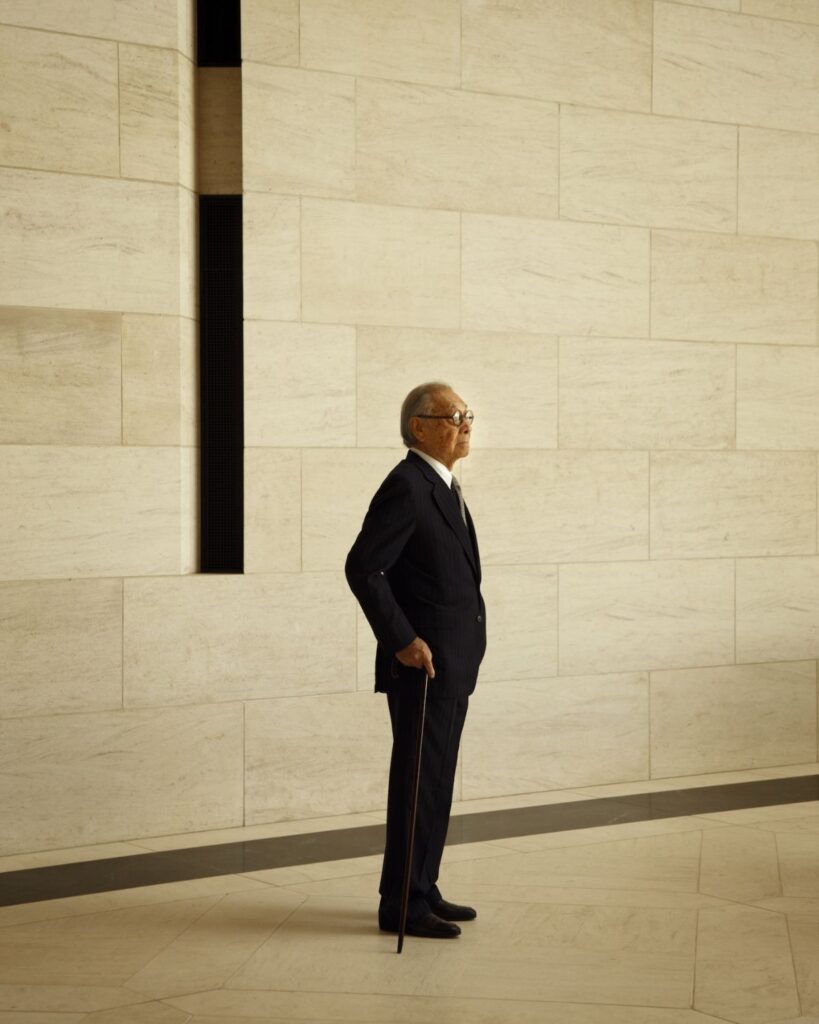
One of the world’s most celebrated contemporary artists, Wael Shawky, is curating the highly anticipated inaugural edition of Art Basel Qatar
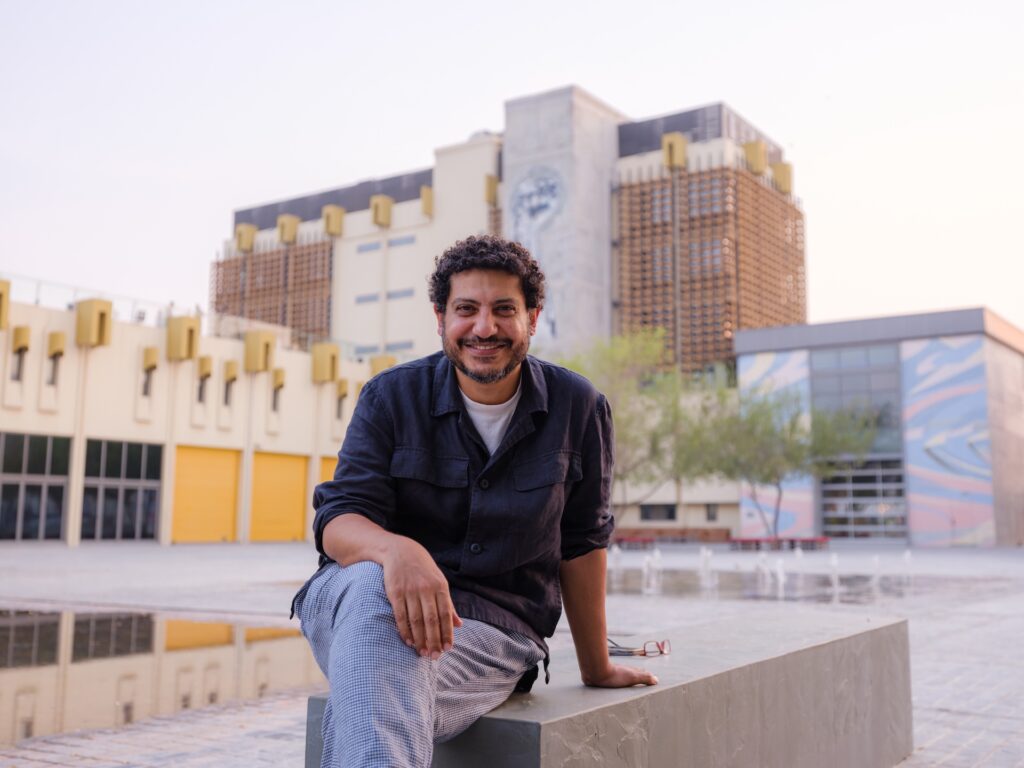
Last summer, Egyptian artist Wael Shawky presented his interpretation of the ancient Greek myth of creation at LUMA Arles in France (I am Hymns of the New Temples). He had previously staged a similarly epic recreation of the clashes between Muslims and Christians using puppets in his film trilogy Cabaret Crusades, 2010-15.
On a smaller scale, his three-part film Al Araba Al Madfuna, 2012-16, used child actors to investigate the relationship between villagers and the nearby archaeological site of Abydos in Egypt. And for the Egyptian Pavilion at the 60th Venice Biennale in 2024 he created Drama 1882, a film about a revolt led by Colonel Ahmed Urabi against the Egyptian monarchy and British imperial influence.
But as well as investigations into the past, Shawky has a deep commitment to the future, particularly when it comes to art and creativity. Unhappy with the state of art education in Egypt, he turned his own studio in his home city of Alexandria into an informal art school called MASS Alexandria, inviting international artists and curators to visit and give talks and workshops.
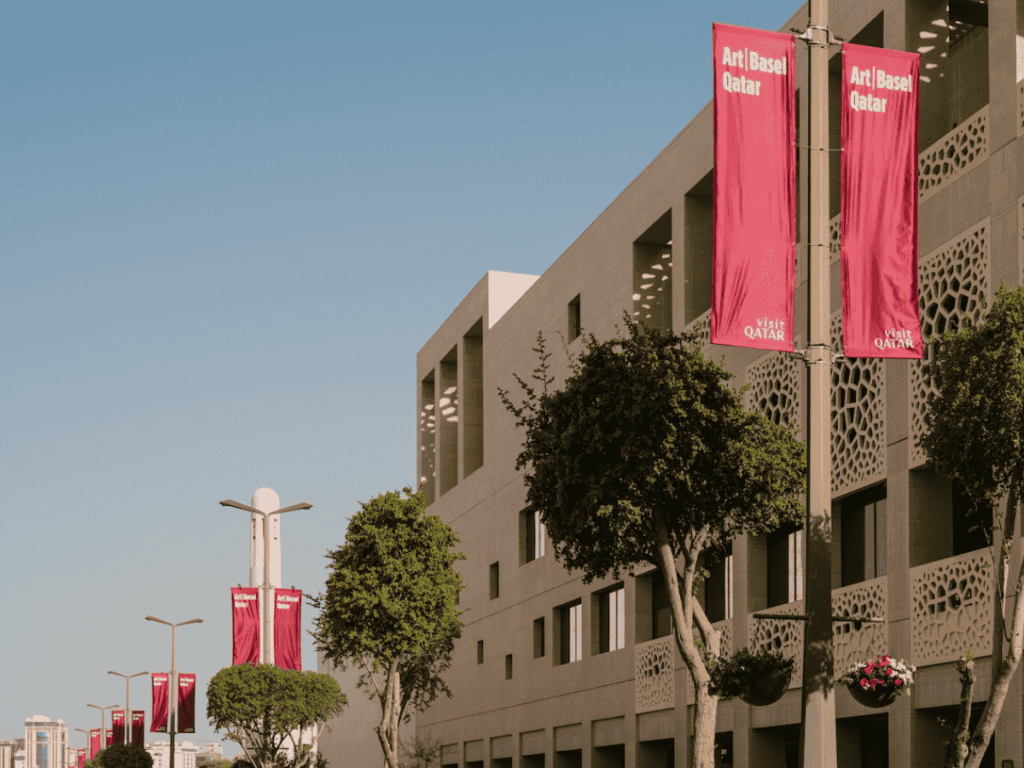
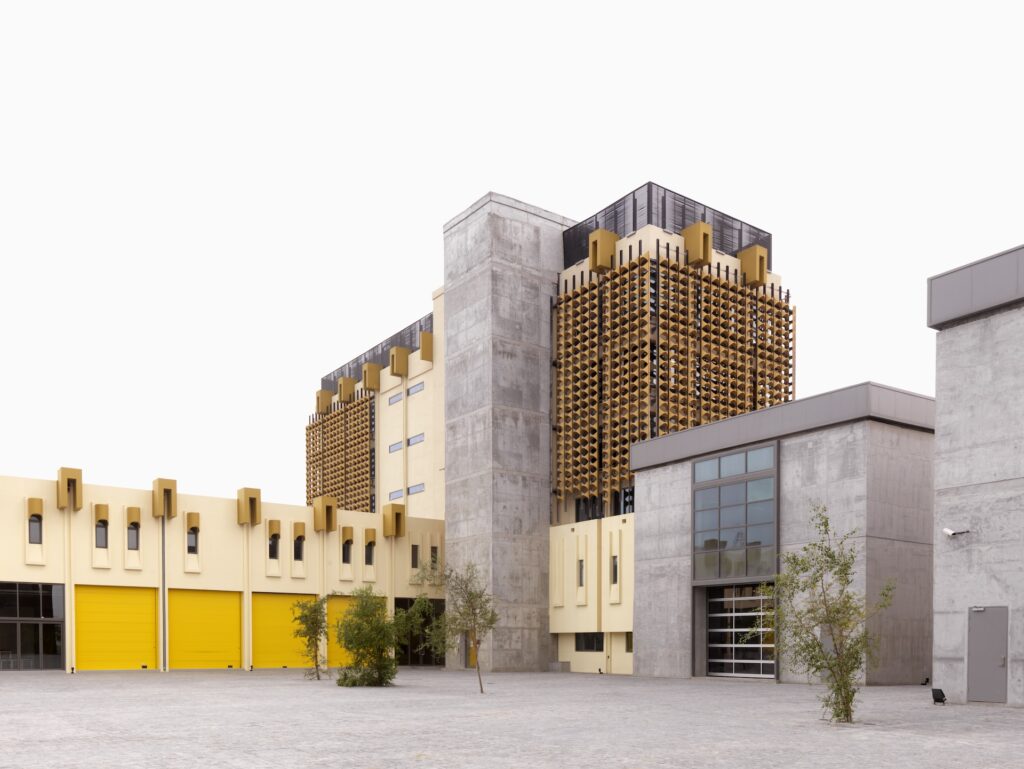
In 2024 Shawky was appointed artistic director of the Fire Station in Doha, a contemporary art space offering residencies designed to foster professional development for emerging international and Qatari artists. In 2024 he was named as the artistic director of Art Basel Qatar.
Q+A Your relationship with Qatar stretches back at least 10 years, to your exhibition Crusades and Other Stories at Mathaf in 2015, is that right?
WAEL SHAWKY Yes, and Qatar Museums also collaborated on the third of my films about the Crusades, The Secrets of Karbala. They co-produced the film and it was shown at Mathaf during the exhibition. Around this time I began a conversation with Abdellah Karroum, director of the museum – it had always been my dream to make a film about the history of the Gulf region, but for me to do this I needed to meet academics and historians who could teach me more about the subject. Abdellah gave me a studio at the Fire Station in 2017, and I went back and forth between Doha and other places. Then the pandemic arrived and everything completely stopped. After that came my work for the Venice Biennale. Once that was finished I decided it was time to really make this film about the Gulf, so I started to plan to come back to Doha, and then they asked me to become the artistic director of the Fire Station.
The Fire Station is all about its artists-in-residence programme, which has been running for more than 10 years, offering emerging artists studio space, mentorship and support – similar to the school you ran in Alexandria. Where does your commitment to education come from?
I studied at the Faculty of Fine Arts at the University of Alexandria, and I saw the problems with my own education. It was very academic, with no connection to the real art world. There would be maybe 1,000 graduates every year – 1,000 artists – but you look around and there were no professional galleries in Alexandria, no art scene. So I started a scene in my studio. I invited 30 students from Alexandria to come and work there and at the end of the year we made an exhibition. The second year we had students coming from Cairo and in the third we had people from China, the UK and elsewhere.
How was the school funded?
Alhamdulillah, I was already a successful artist, so I was paying from my pocket. I was also travelling everywhere and had very good relations with some incredible, amazing people. For example, when I was invited to take part in [German contemporary art exhibition] Documenta 13, in 2012, I asked Carolyn Christov-Bakargiev [its artistic director] to invite my students to Kassel, Germany, and they were able to attend all the talks. Documenta also held two weeks of seminars in my school in Alexandria. I did the same with curator Hoor Al Qasimi and the Sharjah Biennial. It was the most beautiful form of education.
So your new role at the Fire Station is in some ways a continuation of the work you were doing in Alexandria?
Doha is much bigger. It’s more about the whole region. For the upcoming programme we received more than 1,000 applicants from all over the world. Unfortunately, we can only accept 23. But for the upcoming year we are turning the whole residency into an educational programme, a bit like MASS Alexandria, where we will host curators, artists, philosophers and architects from all over the world to teach the students. Every week a new person will be making studio visits and holding seminars and workshops. It’s not so much a residency programme any more, it’s a school.
How are the students selected?
In Egypt I used to interview all the applicants, no matter how many. In Doha that’s not possible. There are too many. I did some interviews, but mainly we went by the quality of the artwork in the applications. It was really amazing, the quality of the work we were seeing. We have students coming from Saudi Arabia, Kuwait, Bahrain, Egypt, Jordan, India, Pakistan, Nepal, the US, the UK – and three from Qatar.
Let’s talk about Art Basel Qatar. The other projects we’ve mentioned are educational but Art Basel is a commercial operation. What made you decide to take on the role of artistic director?
I was hesitant at the beginning: I don’t go to art fairs. Sometimes I’m shocked when I see my work in galleries because I feel it’s not what I intended. There is a story and layers of historical references, and when you take a single piece and put it up for sale, like at a fair, you lose all the context. You lose the presence and the energy of the artist completely. The reason I opened my school in Alexandria was the lack of infrastructure for artists, and that includes a lack of places to exhibit. The same situation exists here in Doha. Everyone I speak to is a graphic designer and an artist, an architect and an artist, a fashion designer and an artist – no one is simply an artist. It doesn’t seem to exist as a career or profession. We need a commercial art market to allow us to be artists.
Are you taking a different approach to the standard art fair for Art Basel Qatar?
Each gallery will be presenting only one artist, like a small solo show. We are also aiming to have as many galleries from the region as possible. It’s difficult because even some of the best artists here in the Arab world are not represented by strong, established galleries.
What do you imagine somebody who regularly visits Art Basel in Basel, Paris, Miami or Hong Kong might get from adding Art Basel Qatar to their diary?
It’s extremely interesting what is happening in Qatar today. It’s not the case that Art Basel is just trying to have the same art fair in Doha as in the other places. They are really trying to look at the region and its artists and present something quite fresh. We will be including artists from Pakistan, from India, from Ghana – we are a hub for the wider region. I hesitate to use the word experimental, but they are willing to take risks. It’s still Art Basel, but I feel in Doha it will also embrace the idea of being an educational platform. I think the idea of what is a museum, what is a gallery and what is an art fair is changing. The traditional separation between artists, curators and the art market is dissolving. I think that what we are doing at the Fire Station and Art Basel Qatar will push forward the process of discovery.
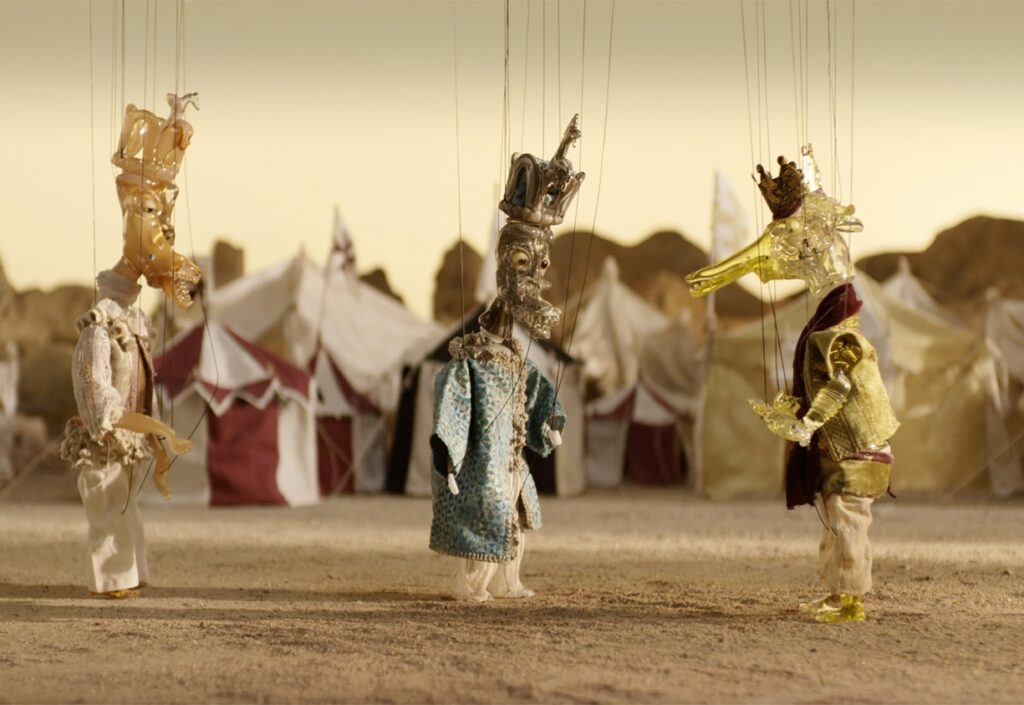
Cabaret Crusades III: The Secrets of Karbala (2015) is the third film in a trilogy exploring the medieval Crusades from an Arab perspective, inspired by the book The Crusades Through Arab Eyes by Amin Maalouf. Using Murano glass marionettes, Shawky presents a non-linear history focused on the power struggles within and between Islamic and Christian factions from the seventh to the 12th centuries.
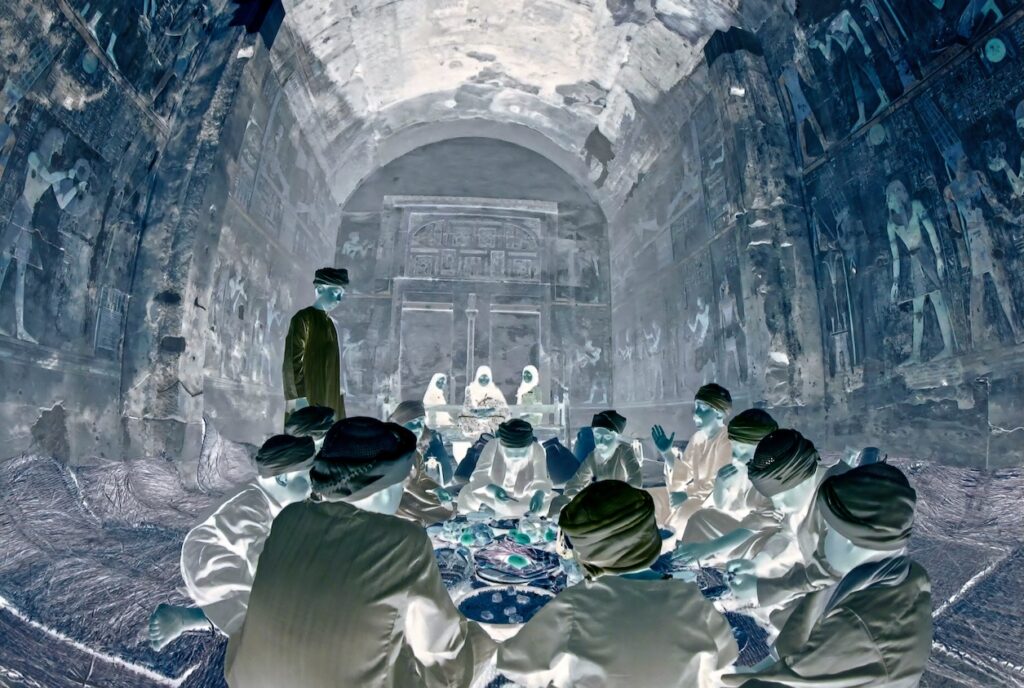
Al Araba Al Madfuna III (2015) is the final instalment of a film trilogy inspired by the literature of Mohamed Mustagab and set in a semi-fictionalised southern Egyptian village. Shot in negative and featuring children acting with dubbed adult voices, the film explores society’s shifting relationship with tradition.
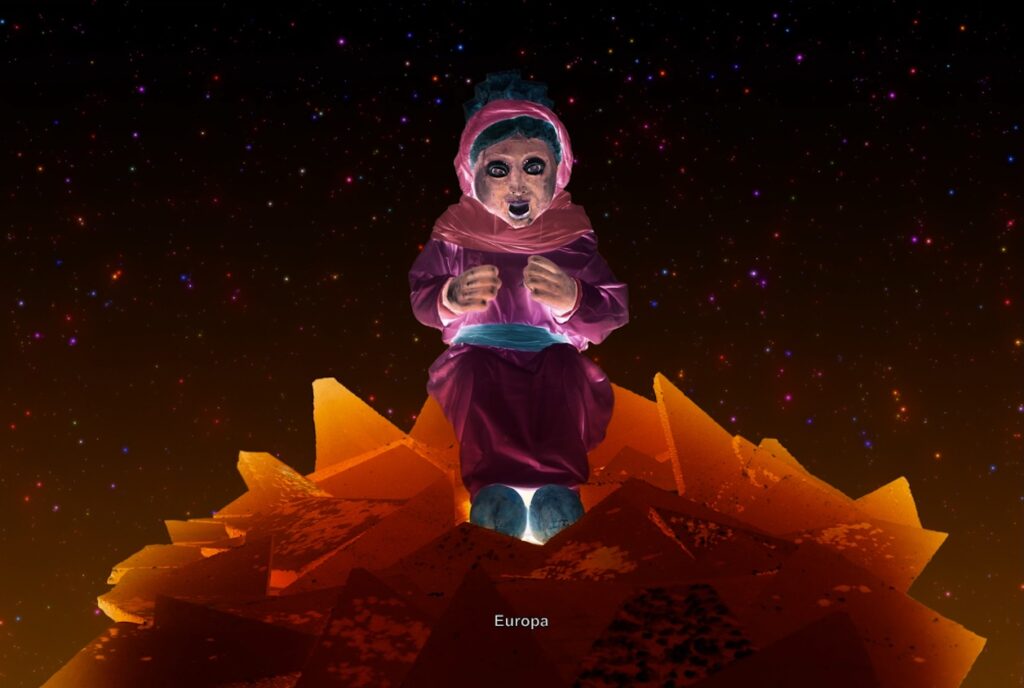
Isles of the Blessed (2022) was Shawky’s sixth solo exhibition with the Lisson Gallery, and the second in New York. It featured film works and oil paintings exploring how myths become beliefs. The artwork uses his signature marionettes to narrate a version of the Greek myth of Europa and Cadmus in classical Arabic.
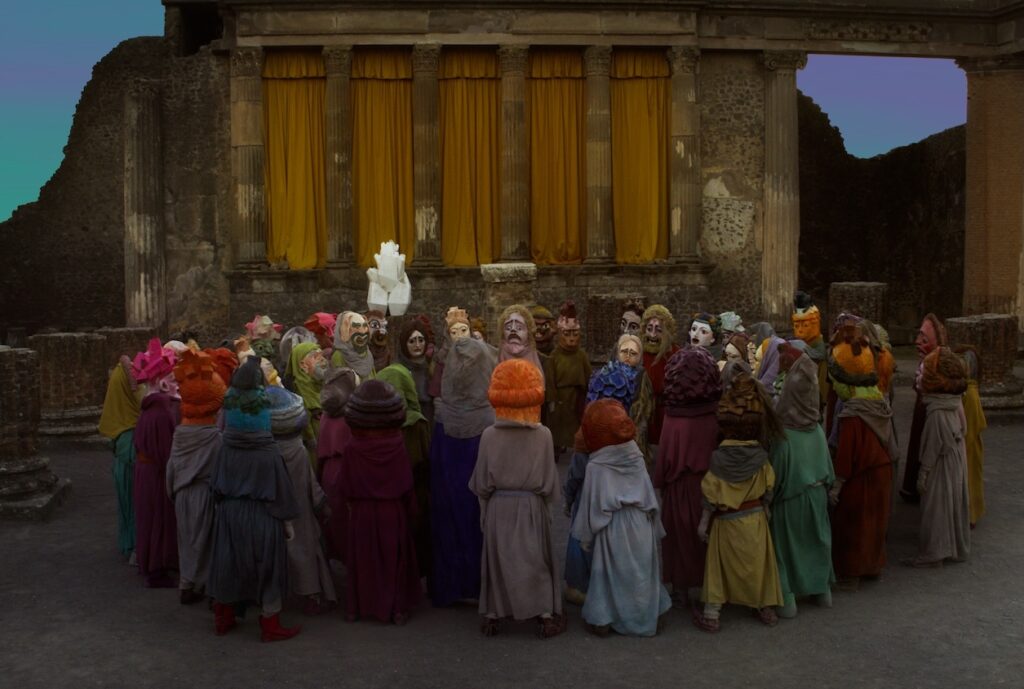
I am Hymns of the New Temples (2023) was commissioned by Pompeii Archaeological Park as part of its contemporary art programme. Set against the backdrop of the ancient town, the cinematic work explores the persistence of Greek myths across cultures and the human need to pass these stories down through generations.